We’re often shocked by the fraud that’s uncovered in America. Call it naivety, ignorance, or complacency, but to frame this the right way, we quote Christopher Wallace in his 1994 hit, “Juicy,” where he prolifically declared, “If you don’t know…now you know.” Today, in part two of this story, we apply this to the FMCSA Drug and Alcohol Clearinghouse. The fraud that surrounds the Clearinghouse return-to-duty program is pushing drunk and drugged “Prohibited” drivers back on the highway. In a public Facebook comment thread posted under a verified account, Wayne Hudson, the man this investigation identifies as the administrator of the largest known fake SAP network operating inside the FMCSA Drug and Alcohol Clearinghouse, was responding to a community member who had defended Brandon Blackburn. Hudson wrote: “man shut up Im the one did Brandon RTD I know all his info and background so like I said he a junkie and he not certified to do nothing and Correct yourself illegally messed with ppl CDL if you glorify being a junkie then you don’t need a CDL either.”
Hudson is publicly stating, under his verified name, that he conducted Brandon Blackburn’s return-to-duty process in the FMCSA Clearinghouse. He knew Blackburn’s background. He cleared him anyway. Then, in the same breath, he called Blackburn a drug user who is not certified to do anything and who illegally manipulated people’s CDL records.
By August 2025, the man Hudson cleared was driving a commercial truck through a Mississippi construction zone while impaired, with cocaine in his possession, falsifying his own federal logbook records. At some point on that same day, Blackburn was also clearing other drug-positive CDL drivers through the very same Clearinghouse system Hudson had used to clear him.
Hudson cleared Blackburn. Blackburn went back in a truck. Blackburn got arrested with cocaine in his cab. The drivers Blackburn cleared went back in trucks too. That is a chain of events with a named starting point.
This is what the FMCSA Drug and Alcohol Clearinghouse’s self-certification architecture was always going to produce once someone with enough nerve figured out it had no floor.
FMCSA’s own fraud alerts page carries a section with its own header: “Fraudulent SAPs entering false Clearinghouse violations.” The agency describes the scheme in plain terms: scammers convincing commercial drivers to hand over their CDL number, date of birth, and name under the guise of a SAP resolving open violations, or an employer willing to report negative test results for tests that do not exist. A second page on the Clearinghouse subdomain goes further, describing the extortion mechanism specifically: operators entering fraudulent violations on a driver’s record and then demanding payment to remove them. Both pages are live. Both were findable with a basic search at the time of publication. FMCSA documented this fraud, named the mechanism, described the extortion pattern, directed victims to contact a help desk, and then left the self-certification registration architecture that enables it all completely unchanged. There is no pending rulemaking to require credential verification when a SAP registers in the Clearinghouse. There is no anomaly detection flagging accounts that log hundreds of completions with no affiliated treatment facility. There is a warning. The warning has been there while the network described in this investigation was processing thousands of drivers. A warning posted on a government website is not an enforcement action. It is not a structural fix. It is documentation that the agency knew.
Wayne Hudson
Hudson did not just build the infrastructure. He personally cleared Brandon Blackburn’s prohibited Clearinghouse status. He said so in a public comment thread reviewed for this article. “Im the one did Brandon RTD,” he wrote. “I know all his info and background.”
In the same thread, a driver named Zapp Duval posted: “My counselor Wayne Hudson is the best bro.” A driver is calling Hudson his counselor. Hudson holds no verified clinical credential. There is no Wayne Hudson listed in the NAADAC SAP directory. There is no Wayne Hudson on SAPList.com.
The thread tells the rest of the story on its own. When one community member told drivers to get with Blackburn, Hudson called Blackburn a junkie. When another member pointed out that Blackburn had hundreds of drivers who would vouch for him, Hudson replied that Blackburn took drivers’ money and went to smoke it up. Hudson was simultaneously the person who put Blackburn back in a commercial truck and the person mocking Blackburn’s drug use in the same Facebook groups where both of them were pulling in clients.
Hudson administers a private Facebook group called “SAP Friendly Trucking Companies. That’ll Hire All SAP Drivers,” documented at 5,800 members in screenshots reviewed for this article and described in the same documentary record as exceeding 7,000. Per that record, Hudson has cleared thousands of drivers and runs at roughly ten times the volume Blackburn did. A documented driver exchange confirms his pricing at $500 for all six Clearinghouse steps with no test administered. The driver described the transaction plainly: “Naw he do it up front. Den you pay.”
If the volume estimate holds, Hudson’s operation alone may represent approximately 10,000 fraudulent return-to-duty completions in the federal system. At $500 a driver that is $5 million extracted from prohibited CDL holders in exchange for federal records that employers, law enforcement, and state DMVs have queried 38 million times since 2020, trusting the data is real.
Hudson knew the people he was clearing. He said so. He knew Blackburn’s background and cleared him regardless. What he knew about the thousands of other drivers he allegedly processed and cleared anyway is a question for federal investigators.
Wayne Hudson did not respond to a request for comment.
How the network recruits
What makes this operation different from a simple fraud scheme is its structure. Based on the investigation, this is not a group of independent operators who happened to find the same loophole. It is a network that actively recruits from its own customer base.
The model works like this. A CDL driver with a drug violation ends up prohibited in the Clearinghouse. Desperate to get back to work, he finds one of these operators through a Facebook group and pays to get cleared. Once he is back in the system with a green dashboard, someone higher up the chain offers him a cut to start clearing other drivers himself. He is handed Clearinghouse access and put to work. He makes sales. He keeps a percentage. The rest goes up the ladder to whoever brought him in.
The record reviewed for this investigation includes a message in which an operator described keeping as little as 10 cents on the dollar from each sale, kicking the remainder back to the people above him who set up the accounts and brought him into the network. It is the trucking industry’s version of a multilevel marketing scheme, except instead of selling supplements out of a spare bedroom, the product is fraudulent federal safety records, and the sales force is made up of drug-positive CDL drivers who are themselves prohibited from operating a commercial motor vehicle.
The pricing conversations inside these groups are direct. In one Facebook exchange reviewed for this investigation, a prospective driver asked what it would cost for all six Clearinghouse steps. David Handy replied with a price of $300. Brandon Blackburn jumped into the same thread and told Handy, “We need to stop undercutting each other and do at least $350.” Two operators in the same public group are arguing over the floor price for fraudulent federal clearances, treating it as if it were any other competitive market.
That exchange tells you what this is. It is not a side hustle that got out of hand. It is a market with pricing norms, competitive pressure, and informal agreements about what the product is worth. The product provides drivers who were previously prohibited from using it access to the road.
How the fake SAP network works: a step-by-step
The Clearinghouse fraud network operating inside the FMCSA Drug and Alcohol Clearinghouse is not a collection of independent scammers. It is a self-replicating recruitment chain that converts its own victims into its next sales force. Here is how it works, step by step, based on the documentary record reviewed for this investigation.
Step 1: The driver fails. A CDL holder tests positive for cocaine, methamphetamine, marijuana, or alcohol. The violation is reported to the FMCSA Clearinghouse. The driver is placed in prohibited status, legally barred from operating a commercial motor vehicle. Under Clearinghouse II, the driver’s CDL is flagged for downgrade within 60 days. The clock is running and the driver is desperate.
Step 2: The driver finds the network. Searching Facebook groups for SAP-friendly carriers, the driver lands in communities like SAP DRIVERS USA or CDL JOBS SAP and DUI FRIENDLY. Posts in those groups advertise clearance of all six Clearinghouse steps in five minutes for $100 to $500. Pay when you see the green light. No drug test required. No counselor visit. No treatment program. Just a Zelle transfer and a new federal record.
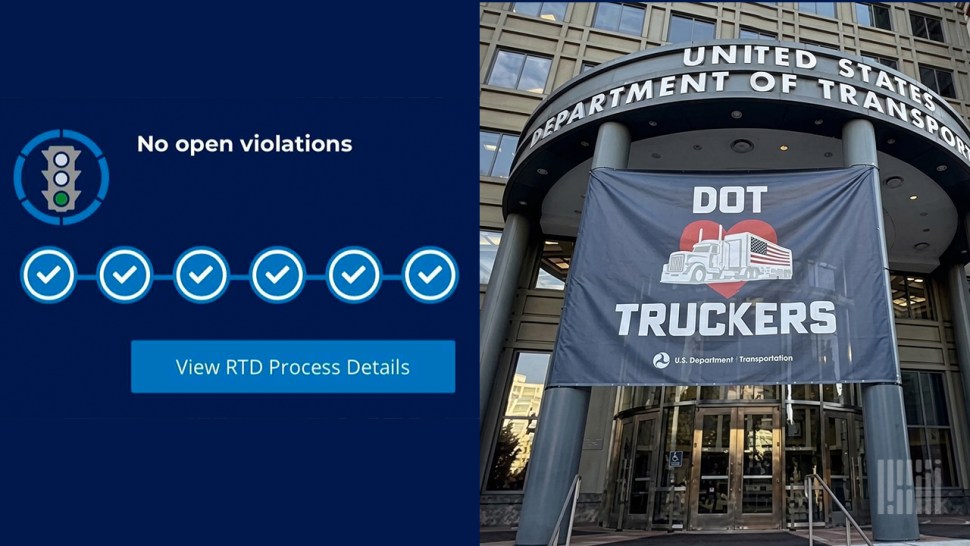
Step 3: The fake SAP clears the record. An operator with no clinical credentials, no state license, and no qualifying training logs into the FMCSA Clearinghouse using an account registered through the system’s self-certification process and enters fraudulent return-to-duty completion dates for the driver. The driver’s dashboard flips. Six green checkmarks. No open violations. The federal system now says this driver completed a substance abuse program he never attended and passed a return-to-duty drug test he never took.
Step 4: The driver goes back to work. The driver is now hirable. Carriers run a Clearinghouse query, receive a clean result, and bring the driver on. The carrier has met its legal obligation. The driver is back behind the wheel of a commercial vehicle. Nobody who made that possible holds a clinical license. Nobody who cleared that driver ever asked whether he was actually clean.
Step 5: The driver becomes a recruiter. Here is where the network sustains itself. Once a driver is cleared and back on the road, someone in the network approaches him with an offer. Bring in new clients. Earn a commission. You already know how the system works. You already know where the desperate drivers are. You have credibility in the groups because you went through it yourself. The documentary record reviewed for this investigation includes an operator describing keeping as little as 10 percent of each sale, kicking the rest up to the people who brought him into the network and set up his Clearinghouse access.
Step 6: The cycle repeats. The newly recruited operator begins clearing other prohibited drivers. Some of those drivers will eventually be recruited to clear others. The network grows from the bottom up, fueled by the same desperation it exploits, with each layer of operators owing a percentage to the layer above them. The people at the top, the Wayne Hudsons of this network who create the accounts, administer the groups, and collect commissions from every operator beneath them, generate revenue from thousands of fraudulent federal clearances they never personally processed.
Step 7: The drivers keep driving. The men and women moving through this pipeline are not abstaining from the substances that got them prohibited in the first place. The entire premise of the federal return-to-duty process is that a driver who tested positive has a serious substance problem that requires clinical evaluation, monitored treatment, and sustained follow-up testing before being trusted behind the wheel of 80,000 pounds of steel on a public highway. This network skips all of it. Brandon Blackburn, the operator documented in the first investigation, was cleared through this network and returned to the road. Wayne Hudson, who cleared Blackburn, described him publicly as a drug user in the same post where he admitted doing it. Blackburn was arrested with cocaine in his cab eight months later. The drivers he cleared went back in the trucks too. Nobody in the pipeline ever got clean. They just got a green dashboard.
That is the business model. Clear the addicted. Recruit the cleared. Keep the commissions. Keep the trucks rolling.
The other end of the transaction
Wayne Hudson did not name his Facebook group “SAP clearance services.” He named it “SAP Friendly Trucking Companies. That’ll Hire All SAP Drivers.” That distinction matters because it describes a business with two revenue events, not one.
The clearance is the first transaction. The job placement is the second.
In multiple posts reviewed for this investigation, Hudson promoted employment opportunities with a carrier he identified as Fast Freight LLC inside the same communities where his clearance operation ran. The carrier’s relationship with Hudson’s network beyond what appears in his public posts is under ongoing investigation. What is documented is the structure. A driver with a drug violation pays for a clearance. His federal record flips to green. He is now hirable. And inside the same Facebook group where he paid for that clearance, job postings are waiting for him.
The comment thread that produced Hudson’s public admission about clearing Blackburn also contains a post from a community member who dropped a direct application link to a carrier called Best 3 Logistics with a personal referral parameter embedded in the URL. That is a driver application link with a referral commission code in a fake SAP clearance thread. Someone in that community is collecting a cut when a freshly cleared driver gets hired.
The clearance creates a hirable driver. The job posting monetizes that driver a second time. The group that started as a clearance marketplace doubles as a staffing pipeline, and the people running it are positioned to profit at both ends of the transaction.
David Handy and Donny Darko: same number, two names
Identifying a second major operator in this network does not require investigation. It requires reading two Facebook posts side by side.
A post from an account named Donny Darko in SAP DRIVERS USA reads: “SAP drivers. Your CDL is useless when you have a RED LIGHT. I can get you the GREEN LIGHT right now today. $100 and YOU PAY WHEN YOU SEE THE GREEN LIGHT. In less than 5 minutes and it will show on your clearing house immediately. Yeah no shit. 956 221 0222 I PUT MY NUMBER HERE FOR A REASON.”
A post from David Handy in Sand Haulers of West Texas, cross-posted to SAP Drivers Opportunities, CDL Jobs USA and SAP Program, reads: “To any SAP drivers out there. I can clear your step 5 RTD or 6 in less than 5 and it will show on your clearing house immediately. $100 and YOU PAY WHEN YOU SEE IT CLEARED. 956 221 0222. (You must be on step 6 for 6 months) NO BULLSHIT.”
Same phone number. Same price. Same five-minute promise. Same language. One person in multiple Facebook groups under two different names.
Running under an alias while making entries in a federal database is not a coincidence. It is a decision. Donny Darko is not a screen name. It is a constructed identity used to expand reach in communities where David Handy’s legal name also appeared, keeping a layer of separation between the two while serving the same customers.
The documentary record establishes that Handy handled steps 1 through 4 of the return-to-duty process, the SAP-side entries that require clinical determinations in the Clearinghouse, as part of a revenue-sharing arrangement with other operators who covered the employer-side steps. Different people, different Clearinghouse access roles, shared proceeds from the same scheme.
David Handy did not respond to a request for comment at 956 221 0222.
Zeph Nealy: eight months of documented operations
A third confirmed operator is Zeph Nealy. His activity is documented in public Facebook posts from at least November 2024 through January 2026.
His most recent advertising reviewed for this article ran January 12 in CDL JOBS SAP and DUI FRIENDLY: “Schedule your free consultation today 720-869-9276 50% off all services! Highly recommend and reputable! 50% OFF ALL SERVICES STRUGGLING WITH SAP VIOLATION, THEN THIS IS FOR YOU. Trust us to get you back rolling in no time.”
His operations are documented not just through his own posts. Drivers he cleared posted public thank-you messages in SAP DRIVERS USA with their federal Clearinghouse screenshots attached.
Andre Klutch Graves posted November 18, 2024, the same day Clearinghouse II took effect and made CDL downgrade automatic for prohibited drivers, that Nealy had completed steps 1 through 5 for him in a single day. He publicly recommended Nealy to any driver trying to get out of prohibited status.
Mark Wallace posted July 3, 2025, thanking Nealy alongside a screenshot of his federal Clearinghouse dashboard showing all six steps complete and “No open violations” under the greeting “WELCOME MARK.”
Prentis Baker Sr. posted March 2, 2025, crediting Nealy with clearing his record after two years in prohibited status. His post included a six-checkmark Clearinghouse screenshot and noted he had been hired at a carrier he identified as Monarch Xpress.
Three named individuals. Clearinghouse screenshots on public posts. The oldest documented clearance lands on the most significant enforcement day in the history of the Clearinghouse, the day prohibited drivers faced automatic CDL downgrade and were most likely to pay anything to avoid losing their license. Nealy was advertising that day.
There is no Zeph Nealy in the NAADAC SAP directory. There is no Zeph Nealy on SAPList.com. His advertising directed drivers to forthedrivers.net, which was also separately recommended in SAP DRIVERS USA as a place to complete Clearinghouse steps. That site is no longer active.
Zeph Nealy did not respond to a request for comment at 720-869-9276.
Marc Massie: 535 entries, one extortion victim on the record
Marc Massie was introduced in the first investigation as a second Clearinghouse operator advertising the same pay-after-clearance model as Blackburn. What has come out since warrants the full account.
A screenshot reviewed for this article shows a Clearinghouse account registered under “Massie Transportation, Employer Admin” with 226 negative RTD test results and 309 follow-up plan completion dates logged. That is 535 total entries in a federal safety database, made under a company name that does not appear in the FMCSA motor carrier registry.
The Clearinghouse employer admin account under the Massie Transportation name cannot be matched to Harrelson Inc., to any Texas-based FMCSA carrier, or to any DOT number Massie provided. Two corporate entities named Massie Transportation exist in national business records. Neither is in Texas. The account that logged 535 entries in the federal safety database is registered under a company name that, as far as any public record shows, exists only within the Clearinghouse.
One victim is on the record by name. Bradley Baucom told us in a documented exchange that Massie collected $1,000 for the initial clearance and then returned three weeks later, demanding $500 more.
Massie did not respond to follow-up requests for comment.
What this means for carriers and who carries the risk
Every carrier that hired a driver cleared by this network did not hire a drug user. As far as they knew, they hired a compliant, fully screened driver who had completed a federally mandated substance abuse program, passed a return-to-duty drug test, and was authorized to operate a commercial motor vehicle. The Clearinghouse said so. All six steps were green. The carrier ran the required query. The query came back clean.
The Clearinghouse was built specifically to give carriers certainty at the point of hire. Before it existed, carriers had to rely on self-reported work history and the honesty of previous employers. The Clearinghouse was supposed to fix that. It is a federal, government-administered database, and when a carrier runs a pre-employment query and receives a clean result, they are entitled to rely on it. They have met their legal obligation. Or so they believe.
Now consider what happens when that driver, who the Clearinghouse said was clean, gets into a serious crash. The plaintiff’s attorney starts digging. The driver’s actual violation history comes to light. The fraudulent clearance is exposed. The SAP who cleared him turns out to be a truck driver in North Carolina with cocaine in his cab. No drug test was ever taken. No clinical evaluation happened. The driver who just put someone in a hospital or a grave had a documented cocaine violation that was never legitimately resolved.
At that point, the carrier’s defense, that it ran the query and relied in good faith on a federal database, runs directly into one of the most aggressive legal theories in transportation litigation: negligent entrustment. The argument is not complicated. You put a dangerous person behind the wheel. It does not matter how you came to believe he was safe. What matters is that he was not, and someone is dead or paralyzed because of it.
The good faith reliance defense has merit and a reasonable court should recognize it. But reasonable courts have not always been the venue for catastrophic crash litigation in the past decade. Nuclear verdicts, verdicts in excess of $10 million and sometimes $100 million, have become a defining feature of commercial trucking litigation. Juries in those cases are not parsing the FMCSA Clearinghouse regulatory framework. They are looking at a dead family member and a trucking company with insurance money and a driver who, it turns out, had an unresolved drug violation when he was hired.
The carrier checked the box. The box lied. The carrier may still pay.
That is a systemic problem that goes beyond any individual fraud operator. It means that every carrier operating today that has hired SAP-cleared drivers in the past five years has potential exposure in its fleet that its safety team cannot see, because the data it relied on to screen those drivers may have been falsified before the query was ever run.
“Hiring regulated drivers with past drug or alcohol violations is risky, plain and simple,” says Brandon Wiseman, partner with the Childress Law Firm. “Even if a driver candidate has successfully progressed through the return-to-duty process and is cleared to perform safety-sensitive functions per federal safety regulations, there’s still a real risk of relapse. By deliberately placing that driver in the seat, knowing what you know about their history, you are assuming that risk, and it could come back to bite you if the driver is later involved in an accident while under the influence. That exposure is why a majority of carriers in the U.S. refuse to qualify SAP drivers.”
The liability question does not end at the carrier. There is a reasonable argument, and plaintiff’s attorneys are likely already constructing it, that FMCSA bears some measure of institutional responsibility for a fraud it documented, published a warning about, and then declined to fix. The agency knew. It said so on its own website as early as February 2026. It directed victims to a help desk. It did not propose a rulemaking to require credential verification at registration. It did not build anomaly detection to flag accounts logging hundreds of clearances with no treatment facility on file. It posted a warning and moved on.
Whether that rises to actionable government liability is a question for the courts, not for this investigation. But the families of anyone killed by a fraudulently cleared driver, and the carriers holding the liability bag for a federal database they trusted in good faith, will be asking it. The answer matters because it determines whether FMCSA has any incentive beyond embarrassment to fix what it already knows is broken.
What Hudson’s admission means on the highway
Pull back from the regulatory language for a minute and look at the facts in sequence.
Hudson cleared Blackburn’s prohibited Clearinghouse status. He knew Blackburn’s background. He called Blackburn a drug user. He cleared him anyway. Blackburn went back in a truck. He was driving 2,000 miles a week by his own account. He was clearing 20 drivers a day. In August 2025, he was arrested in Mississippi with cocaine in his cab, impaired, falsifying his own federal logbook records, in a construction zone.
Every driver Blackburn cleared after Hudson put him back on the road is a question mark. Every carrier that hired one of those drivers on the strength of a green Clearinghouse record has exposure it may not yet know about. Every highway those drivers traveled is a highway where the last checkpoint between a documented drug violation and 80,000 pounds of commercial truck was replaced by a Facebook Messenger conversation and a Zelle payment.
The return-to-duty process exists for a reason. A driver who tests positive for cocaine or methamphetamine or alcohol behind the wheel of a commercial vehicle is presumed to have a problem serious enough that a licensed clinician needs to evaluate them, prescribe a course of treatment, confirm they completed it, and only then sign off on their return to safety-sensitive work. That is not bureaucratic red tape. It is the considered judgment of federal regulators who reviewed crash data involving impaired CMV drivers and concluded that the public needed a real checkpoint, not an honor system.
Hudson replaced that checkpoint with a checkbox. He did it for Blackburn. He did it, by his own public account, for thousands of others. He knew what he was sending back out onto the road.
The scale
The first investigation found that Blackburn’s estimated 1,000 fraudulent clearances accounted for roughly 1 in every 85 negative return-to-duty test results logged in the FMCSA’s national Clearinghouse. That math was based on one operator.
This investigation has confirmed five operators and has two more under active investigation. The documentary record references additional operators beyond those named here. Based on communications reviewed for this investigation, ten active operators could be identified on the spot, with others in the network described as doing 20 times the volume of any individual already named.
A conservative combined estimate across the five confirmed operators, Blackburn’s documented 1,000, Massie’s logged 535, Nealy’s confirmed multi-month activity, Handy’s revenue-sharing arrangement across referrals, and Hudson’s estimated volume at ten times Blackburn’s, puts the number of potentially fraudulent Clearinghouse clearances in this investigation above 11,000.
Against the 85,136 logged negative return-to-duty test results in the FMCSA December 2025 Clearinghouse data, that is roughly 1 in 8 entries.
Those are CDL holders operating real trucks on public highways, cleared by people with no clinical credentials, no treatment programs, and in most documented cases, no drug test ever administered. Drivers who, like Blackburn himself, may have been sent back behind the wheel before they were ready, before they were clean, and before anyone qualified to make that call ever looked at them.
Hudson knew that was true of Blackburn. He cleared him anyway and built a system that allowed others to do the same to thousands more.
Where this goes from here
The Prentiss County felony cocaine case against Blackburn is working through the Mississippi circuit court system. The DOT OIG referral from the first investigation is pending. This investigation adds a public admission of fraudulent RTD clearance from the network’s primary operator, four additional named operators with confirmed phone numbers and documented activity, a structured revenue-sharing model described by participants in their own words, a documented dual-revenue pipeline combining fraudulent clearance with job placement, one extortion victim on the record by name, two additional operators under active investigation, and a volume estimate that places the contamination of the national Clearinghouse database at a scale no single operator could have produced.
For any carrier that hired a driver on the strength of a green Clearinghouse record, the question is not whether your data could have been affected. The question is how you find out if it was, and whether you find out before or after a crash puts you in front of a jury.
For any driver who paid for clearance services from any operator named in this investigation, the legal exposure is real and growing. Under Clearinghouse II, a reversed fraudulent clearance results in an automatic CDL downgrade, reinstatement of the original violation, and potential civil liability for any incident that occurred while operating on a falsified federal record.
For FMCSA, Wayne Hudson publicly admitted performing a fraudulent return-to-duty clearance for a man he simultaneously described as a drug user who had illegally manipulated CDL records. That post has been publicly visible for eight weeks. The self-certification architecture that enabled his entire operation remains unchanged. The credential verification layer that would have stopped it at registration has never been built. The anomaly detection that would have flagged an account logging thousands of completions with no affiliated treatment facility has never been built either.
A federal agency that documented a fraud, published it on its own website, and then took no structural action to prevent it from continuing has questions to answer. Those questions are coming from investigators, from plaintiff’s attorneys, and from carriers who trusted a federal database and may now be holding a liability they never saw coming.
The door is still open. The man who made the keys said so himself.
Sources for this investigation include Facebook group posts, comment threads, and screenshots from SAP DRIVERS USA, CDL JOBS SAP and DUI FRIENDLY, SAP Drivers Opportunities, CDL Jobs USA and SAP Program, Sand Haulers of West Texas, and SAP Friendly Trucking Companies; Facebook Messenger exchanges and related communications reviewed in full; documented exchanges with Bradley Baucom, Jimmy Jordan, and additional driver sources; public comment threads including posts under the verified account of Wayne Hudson; FMCSA SAFER carrier database; NAADAC SAP directory; SAPList.com; Texas Health and Human Services LCDC licensee database; FMCSA December 2025 Clearinghouse Monthly Summary Report; 49 CFR Part 40 Subpart O; and a direct interview with Prentiss County Investigator Grady Smith. Paul Collette, a Licensed Alcohol and Drug Counselor, former federal probation officer, and DOT-qualified SAP, and Attorney Brandon Wiseman of Trucksafe Consulting provided context on the legitimate SAP credentialing process and the mechanics of the return-to-duty system. To report instances of this fraud, contact the FMCSA Clearinghouse Team at clearinghouse.fmcsa.dot.gov/contact or the DOT OIG at oig.dot.gov or 1-800-424-9071.
Brokerage Compliance Symposium
The day before F3. Every compliance issue you face - fraud exposure, carrier liability, FMCSA rules, cargo theft, insurance gaps - navigated by attorneys and operators defining best practices in a changing industry.
F3 Awards Dinner
The night before F3. FreightTech100 companies honored. FreightTech 25 and Shipper of Choice winners revealed live. Cocktail reception into dinner and live music - 300 industry leaders in one purpose-built room.
F3: Future of Freight Festival
Industry-defining keynotes, rapid-fire technology demos, and industry leaders networking in experiences across Chattanooga - plus the inaugural F3 Awards Dinner featuring the FreightTech and Shipper of Choice reveals.
The day before F3. Every compliance issue you face - fraud exposure, carrier liability, FMCSA rules, cargo theft, insurance gaps - navigated by attorneys and operators defining best practices in a changing industry.
The Signal at Chattanooga Choo Choo • Chattanooga, TN Register NowThe night before F3. FreightTech100 companies honored. FreightTech 25 and Shipper of Choice winners revealed live. Cocktail reception into dinner and live music - 300 industry leaders in one purpose-built room.
The Signal at Chattanooga Choo Choo • Chattanooga, TN Register NowIndustry-defining keynotes, rapid-fire technology demos, and industry leaders networking in experiences across Chattanooga - plus the inaugural F3 Awards Dinner featuring the FreightTech and Shipper of Choice reveals.
The Signal at Chattanooga Choo Choo • Chattanooga, TN Register Now