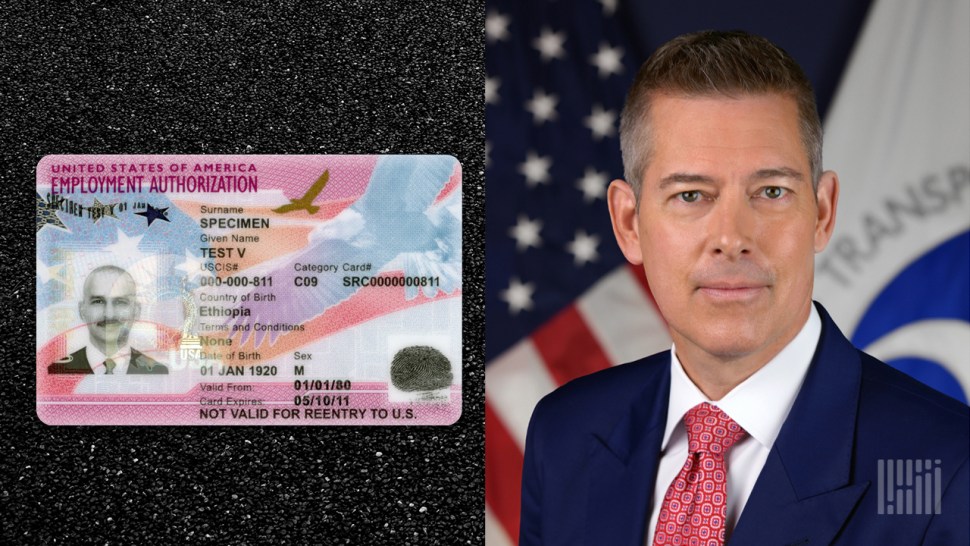
U.S. Transportation Secretary Sean Duffy confirmed Friday that federal investigators have expanded the scope of their inquiry into the Feb. 3 Indiana crash that killed four members of an Amish community, naming the employing carrier, the broader network, and the CDL training school now under investigation.
As I mentioned in earlier articles this week, AJ Partners was the carrier involved, but Secretary Duffy has confirmed this today. “The name of the carrier that employed the illegal is AJ Partners,” Duffy wrote in a post on X, the social media platform. “FMCSA is expanding the scope of the investigation to include a number of other companies, including Sam Express Inc.”
Duffy said investigators are “gathering evidence at each company RIGHT NOW” and described the interconnected carriers as having “all the markings of FRAUD,” using the term “CHAMELEON CARRIERS,” an industry designation for companies that swap names and DOT numbers to evade federal enforcement. The question is, is it too late? Preservation is always an issue.
He also identified the CDL training school that helped the at-fault driver obtain his commercial license: Aydana Inc., operating as U.S. CDL.
“Our team is also on the ground investigating the driver entry training school, Aydana Inc./ U.S. CDL, that helped this UNVETTED, UNQUALIFIED driver get behind the wheel in the first place,” Duffy wrote. “If this is in fact a sham school, any other licenses they supported will be called into question.”
It is believed to be the first time a sitting U.S. Secretary of Transportation has publicly used the term “chameleon carriers” on social media to describe an active federal investigation.
The Crash
The collision occurred just before 4 p.m. on State Road 67 near County Road 550 East in Jay County, Indiana, approximately three miles from the Ohio border.
According to the Indiana State Police, Bekzhan Beishekeev, 30, of Philadelphia, was driving a 2022 Freightliner semi-tractor-trailer eastbound when he failed to stop for a slowing semi-truck ahead. Rather than braking, Beishekeev swerved into the westbound lane and struck a 2011 Chevrolet van head-on.
The van was driven by Donald Stipp, 55, of Portland, Indiana, who remains hospitalized. Four passengers from the Amish community of Bryant, Indiana, were killed: Henry Eicher, 50; his sons Menno Eicher, 25, and Paul Eicher, 19; and family friend Simon Girod, 23. The Jay County Coroner confirmed all four died of multiple blunt force trauma injuries.
The Department of Homeland Security confirmed Beishekeev is a Kyrgyzstani national who entered the United States on Dec. 19, 2024, through the Nogales, Arizona, port of entry using the Biden administration’s CBP One mobile application and was released on parole. He obtained a non-domiciled commercial driver’s license in Pennsylvania in July 2025, approximately seven months before the fatal crash.
ICE issued an immigration detainer on Feb. 4 and took Beishekeev into custody at the Jay County Jail the following day. He remains in ICE Fort Wayne custody pending immigration proceedings.
The Network
Federal Motor Carrier Safety Administration records show that AJ Partners LLC (USDOT 3617842) has shared 139 vehicle identification numbers with Tutash Express Inc (USDOT 3487141) and 36 VINs with KG Line Group (USDOT 3487333). The same triangular mountain logo, associated with Sam Express Inc. (USDOT 3235924) of Mount Prospect, Illinois, has been observed on trucks operating under multiple DOT numbers across the network. FreightX community members have documented trucks from this network swapping company name decals and DOT numbers at truck stops in real time.
The network comprises more than 20 interconnected Illinois-based carriers that share equipment, drivers, registered officers, and physical addresses while maintaining the legal appearance of separate companies. Sam Express’s primary officer is listed as Saipidin Tutashov, the same surname as that of the Tutash Express entities. Corporate officer names across the network are uniformly Kyrgyz. The company’s website and Facebook page display a Kyrgyz telephone number (+996) alongside the American and Kyrgyz flags.
Across the documented network, federal safety data shows more than 2,993 inspections, 1,552 violations, 439 out-of-service orders, and 91 crashes. Most carriers in the network exceed both the national average vehicle out-of-service rate of 22.26 percent and the national average driver out-of-service rate of 6.67 percent. An inspection of a KG Line Group driver on I-80 in Illinois in November 2025 placed the driver out of service because he could not read or speak English sufficiently to converse with law enforcement or read highway signs while operating an 80,000-pound truck hauling freight.
The Lawsuit That Names the Possible Device
A federal civil complaint filed in the Northern District of Illinois describes the network as a “unified fraudulent enterprise” in which nominally separate carriers operate as a single operation under common control.
The complaint, brought by a former driver, alleges a predatory leasing scheme in which drivers were promised 88 percent of gross revenue but received falsified rate confirmations showing lower amounts. Drivers were charged more than $14,000 in fuel deductions that exceeded what was physically possible given the miles driven. A 12 percent dispatch fee was deducted for services never independently provided. Drivers paid $250 per pay period for insurance policies that were voidable because they were operating under a different authority than the one listed on the policy.
The complaint further alleges that when a driver operating under one authority within the network was involved in a safety incident, the driver would be transferred to a different authority, effectively resetting the safety record.
Critically, the court filings reference Hero ELD by name, the electronic logging device used across the network, and allege that the device had “backdoor” capabilities allowing remote manipulation of hours-of-service records and records of duty status. ELDs are federally mandated devices that record driver rest and drive times to prevent fatigue-related crashes. A backdoor would allow someone to alter legally required records from a remote location.
The Firm That Built It
Hero ELD is developed and published by AITIM Inc., a division of AITIM Holding Group, a Chicago-based consulting firm founded and led by Timur Tilenov.
The connection between AITIM and Sam Express is not inferential. It is published.
At the AITIM Awards gala on Dec. 15, 2023, a black-tie, invite-only event that drew 150 attendees from 15 states and five countries, Sam Express received the “Best Trucking Company of the Year” award. A branded feature published in New York Weekly described Sam Express as operating “an impressive fleet of 350 trucks” and stated that “Sam Express and AITIM will collaborate on the grand prize of $50,000 towards the transportation of goods.”
AITIM Group’s LinkedIn page describes the firm as offering “comprehensive business services, specializing in Trucking, Consulting, Media, Blogging” with “a network of 70,000 trucks.” Tilenov’s career arc runs directly through the Kyrgyz-American trucking ecosystem. According to professional directory records and a 2020 FreightWaves feature, he previously served as CEO of KGZ Transport Corp (USDOT 2839654) in University Park, Illinois, “KGZ” being the ISO country code for Kyrgyzstan, and worked with Manas Express Corp (USDOT 2508694), a 210-truck carrier in Aurora, Illinois, named for the Kyrgyz national epic hero. His LinkedIn profile indicates he maintains an office in Bishkek, Kyrgyzstan.
Other AITIM Awards recipients included PixelCo, a digital marketing firm described as “a leader in marketing in the trucking industry of the USA” offering “everything from brand formation and corporate identity to full-scale PR”; the Silk Road International School Chicago, with headquarters in Bishkek; and Codewise Academy, an IT training school.
The implication is direct: the entity that publicly celebrated Sam Express, that claims a network of 70,000 trucks, that offers trucking consulting services, and that maintains an office in the same country from which the network recruits drivers, also manufactured the electronic logging device that federal court filings allege was equipped with a backdoor to falsify safety records.
An inquiry to AITIM Group regarding the use of Hero ELD by Sam Express network carriers was not returned.
The Markham Terminal and Adjacent Operations
The physical infrastructure supporting this network extends beyond the carriers themselves.
Multiple carriers in the network share terminal facilities across the Chicago suburbs. In South Holland, at 16647 Vincennes Ave. In Joliet, Tutash Express, KG Line Group, and Borcha Inc (USDOT 4059241) share a facility at 10 Gougar Rd. KG Line Group claims to operate 310 trucks from a residential home at 312 English Oak Lane in Streamwood.
A particularly dense cluster exists at 2064 W 167th St in Markham, Illinois. Federal carrier records show Tutash Express Inc has operated from this address, which is also the location of Markham Truck Center, a commercial truck repair facility, and the headquarters of Dovgal Express Inc (USDOT 2192698), a 152-truck carrier operating as DVL Express.
Dovgal Express is not alleged to be part of the Sam Express chameleon network. Its founder, Oleksandr Dovgal, is Ukrainian, not Kyrgyz, and the company is an Inc. 5000 honoree and a top workplace. However, the company and its principals appear in the broader litigation orbit. A separate federal lawsuit, Tsybikov v. Dovgal (1:19-cv-03334, N.D. Ill.), names Dovgal, Alina Kim, DVL Express Inc., and Altex Logistics Inc. as defendants in a contract dispute brought by a former driver. A second case, Commercial Credit Group Inc v. Dovgal Express Inc et al (N.D. Ill. 2024), also names the company.
The relevance is geographic and infrastructural: the Markham terminal complex, where Tutash Express operates, is the same facility where DVL Express is headquartered, where its repair shop services trucks, and where a CDL training program has also been associated with the address. Whether this constitutes a landlord-tenant relationship, a shared-services arrangement, or something more complex remains an open question that federal investigators may now be positioned to answer.
The CDL School
Duffy’s identification of Aydana Inc., doing business as U.S. CDL, as the training school under investigation introduces a new entity with no discernible public web presence. “Aydana” is a Kyrgyz given name.
The Entry-Level Driver Training rule, which took effect in February 2022, requires all CDL applicants to complete training from an FMCSA-registered provider listed in the Training Provider Registry. If Aydana Inc./U.S. CDL is found to have issued training certificates without adequate instruction, what Secretary Duffy called a “sham school”, every CDL supported by that school’s certification could face review.
Aydana Inc. and What the Corporate Record Shows
Now that Secretary Duffy has publicly identified Aydana Inc., operating as U.S. CDL, as the training school under federal investigation, the corporate record warrants examination.
Pennsylvania Department of State records show that Aydana was filed as a domestic business corporation on August 24, 2022, with a registered address at 524 Continental Road, Hatboro, Pennsylvania, 19040, in Montgomery County. The sole officer listed is Aleksandr Piurveev, identified as both President and Governor of the entity. The corporation’s status is active, with an annual report due June 30, 2026.
The name “Aydana” is a Kazakh and Kyrgyz female given name, consistent with the Central Asian demographic pattern documented throughout the Sam Express network. The surname “Piurveev” is a Russian-language patronymic, consistent with Kalmyk or Buryat origin, ethnic groups in the Russian Federation with cultural and linguistic ties to Central Asia.
As of this publication, no public record has been identified connecting Aleksandr Piurveev directly to Saipidin Tutashov, Timur Tilenov, AITIM Group, or any of the named officers in the Sam Express chameleon carrier network. That absence of a documented connection does not preclude one. Corporate officer records, phone number cross-references, address overlaps, and social media connections are standard investigative tools FMCSA and law enforcement use to establish or rule out such a link. Secretary Duffy’s announcement that federal investigators are “on the ground” at Aydana suggests that the process is now underway.
What the public record does show is that Aydana, an entity that Secretary Duffy has identified as the training school that helped Beishekeev obtain his CDL, has no presence on the FMCSA Training Provider Registry, no presence on Pennsylvania’s licensed CDL training provider list maintained by the State Board of Private Licensed Schools, no website, no Google Business listing, no Yelp listing, and no discernible digital footprint of any kind for an entity that has been incorporated for more than three years.
The Pennsylvania Department of Education website explicitly states that providers on its licensed list are “the only training providers in Pennsylvania who may legally offer ELDT.” If Aydana is not on that list and is not on the FMCSA Training Provider Registry, the question is not whether the school is legitimate. The question is how a training certification from an unregistered, unlicensed entity was accepted by PennDOT as the basis for issuing a commercial driver’s license.
The English Language Proficiency Question
Aydana Inc. is not the only CDL training entity that raises questions about how drivers are being prepared, or whether they’re being prepared at all, for the English language proficiency requirements that apply to every commercial driver operating on American highways.
Federal regulation 49 CFR § 391.11(b)(2) has required since 1937 that commercial drivers “read and speak the English language sufficiently to converse with the general public, to understand highway traffic signs and signals in the English language, to respond to official inquiries, and to make entries on reports and records.” The regulation is not new. What is new is that it is finally being enforced.
On May 20, 2025, following President Trump’s executive order on trucking safety, FMCSA issued new enforcement guidance establishing a two-step roadside assessment: a conversational English interview followed by a highway traffic sign recognition test. Translation tools, interpreters, and smartphone apps are prohibited during the assessment. Drivers who fail are placed out of service immediately. The Commercial Vehicle Safety Alliance added English language proficiency non-compliance to its North American Standard Out-of-Service Criteria effective June 25, 2025. As of December 2025, Secretary Duffy reported that more than 11,500 drivers had been removed from service for failing to meet the standard.
That enforcement context makes the business model of certain CDL training schools worth examining.
Bulldog Driving School Inc., operating out of Elmwood Park and Palos Hills, Illinois, is a state-certified, FMCSA Training Provider Registry-listed CDL school owned by Mahmoud Masoud. It openly advertises instruction in five languages: Ukrainian, Russian, Arabic, Spanish, and Polish. Its website states that “language should never be a barrier to education” and that “our multilingual program ensures that you can learn in the language you are most comfortable with.” It claims a 98 percent pass rate and participates in the federal Workforce Innovation and Opportunity Act grant program, meaning some students receive free CDL training funded by taxpayers.
Bulldog is not alleged to be a sham school. It is registered, certified, and by outward appearances, legitimate. That is precisely why it illustrates a systemic problem rather than an individual one.
The question is straightforward: if a student completes CDL training conducted primarily in Russian or Arabic, graduates in four weeks, and passes the state skills test, how has the training provider or the employing carrier verified that the driver meets the federal English language proficiency standard? The ELDT rule does not require that training be conducted in English. The FMCSA Training Provider Registry is a self-certification system. The state skills test evaluates driving competency, not language competency. And until June 2025, roadside inspectors were explicitly instructed not to place drivers out of service for language deficiencies under Obama-era guidance that had been in effect since 2016.
The result was a decade-long gap in the pipeline: a driver could be trained in their native language, pass a driving test without demonstrating conversational English, be hired by a carrier that never assessed language proficiency because FMCSA guidance told inspectors not to enforce it, and operate an 80,000-pound vehicle on American highways without being able to read a dynamic message sign or explain to an officer why they were driving 14 hours past their limit.
In November 2025, a KG Line Group driver was placed out of service on I-80 in Illinois because he could not read or speak English sufficiently to communicate with the inspecting officer or read highway signs. KG Line Group is part of the Sam Express network. The driver was operating an 80,000-pound truck hauling freight. The inspection record does not indicate where the driver received his CDL training.
Duffy’s crackdown has closed or warned 7,500 CDL schools nationwide since December 2025, finding 44 percent of the 16,000 reviewed providers non-compliant. The question for investigators is not whether multilingual CDL training is inherently problematic—it is whether the training-to-licensure pipeline includes any point at which English language proficiency is independently verified before a driver is handed the keys to a commercial vehicle. Right now, the answer appears to be no.
Equipment Beyond State Lines
The network’s geographic reach extends beyond the Chicago suburbs.
Illinois-registered license plates associated with carriers in this network appear on trucks operating under the markings of carriers in other states, including Minnesota. Such plate-sharing across carrier identities is a recognized indicator of chameleon carrier operations and is the type of evidence that FMCSA inspection records, which capture license plate numbers, VINs, and carrier information at each roadside stop, are designed to detect.
The California expansion of the network has been documented through corporate filings. Ruslanbek Olzhebaev serves as the registered agent for Tutash Express Inc.’s California filing, as well as for EMIRKHAN LLC and AJ Trucking Partners LLC, three separate carrier entities that share a single registered agent.
The Political Dimension
The crash has become a flashpoint in the national debate over immigration enforcement and CDL issuance.
DHS Assistant Secretary Tricia McLaughlin said the crash was preventable: “Not only was Bekzhan Beishekeev released into our country by the Biden administration using the CBP One app, but he was also given a commercial driver’s license by Governor Shapiro’s Pennsylvania.”
Pennsylvania Gov. Josh Shapiro’s office disputed the characterization, noting that Beishekeev “had legal status” in the DHS-administered Systematic Alien Verification for Entitlements database when PennDOT issued the license in July 2025 and “still shows as eligible to receive a license as of today.”
In November 2025, the FMCSA found that Pennsylvania had violated federal safety regulations by issuing non-domiciled CDLs illegally, including to ineligible foreign nationals. The Department of Transportation threatened to withhold approximately $75 million in federal funding unless the state revoked improperly issued licenses.
DHS also noted a separate case: Akhror Bozorov, 31, an Uzbek national wanted in his country for alleged ties to a terrorist organization, was arrested in Kansas in November while driving commercially with a Pennsylvania-issued CDL.
The SAVE Check and the Question Nobody Is Asking
Governor Shapiro’s office has pushed back on DHS’s characterization of Beishekeev as an “illegal alien,” and the rebuttal is worth examining closely, not because it is wrong, but because of what it reveals about a system designed to check a box rather than answer a question.
A spokesperson for Shapiro told Fox News that “every person who applies for a non-domiciled commercial driver’s license issued by PennDOT must provide proof of identity and proof of their legal presence in the United States. That information is verified by the federal Systematic Alien Verification for Entitlements (SAVE) database, administered by Kristi Noem and the United States Department of Homeland Security.” The spokesperson added that Beishekeev “had legal status” when PennDOT issued the CDL in July 2025 and “still shows as eligible to receive a license as of today.”
Take the governor at his word. The SAVE check returned a positive result. PennDOT followed its process. The question is what that process actually verified.
Beishekeev entered the United States on December 19, 2024, through the Nogales, Arizona, port of entry using the CBP One mobile application and was released on parole under INA § 212(d)(5). Parole is not an immigration status. It is a discretionary mechanism that allows physical presence in the United States without formal admission. Parolees who entered via CBP One were typically granted parole for one to two years and were eligible to apply for an Employment Authorization Document under category C11, work authorization incident to parole.
Here is what the public record does not tell us, and what neither the governor’s office nor DHS has disclosed:
What category of work authorization does Beishekeev hold? Was it a C11 parole-based EAD? Was it based on a pending asylum application? Was it something else entirely? The category matters because it determines the legal basis for both the work authorization and the CDL issuance.
What is the expiration date of that work authorization? CBP One parolees were typically granted parole for one to two years. Beishekeev entered in December 2024. If his parole period was one year, it would have expired or be expiring around December 2025, before the February 2026 crash. If two years have passed, it would still be valid. The I-94 record would contain this information. Neither side has produced it.
Has his parole been terminated? Beginning in late April 2025, DHS began issuing email notifications of intent to revoke employment authorization to individuals paroled via CBP One appointments who had previously received parole termination notices. USCIS guidance confirms that if DHS terminates parole before the expiration date, the I-94 is updated to reflect the new termination date. A parolee whose parole has been terminated may still appear facially valid in the SAVE database if the system has not been updated or if the termination is being challenged. USCIS itself has acknowledged that “aliens whose parole has been terminated early may still possess an older printout of their electronic Form I-94 that appears facially valid but includes the original Admit Until Date that is no longer valid.”
The governor’s statement that Beishekeev “still shows as eligible” in the SAVE database may be technically accurate while simultaneously obscuring the underlying reality. SAVE verifies a status at a point in time. It does not evaluate whether that status is sufficient, appropriate, or durable for the purpose of operating a commercial motor vehicle on American highways. And it does not answer the question that should be asked before any non-domiciled CDL is issued: Is this person’s authorization to be in this country going to outlast the two-year CDL renewal cycle?
PennDOT issued a CDL in July 2025 to a Kyrgyzstani national who had been in the country for approximately seven months on discretionary parole, a status that the current administration has been actively terminating as a matter of policy. Whether the SAVE database returned a green light is not the relevant question. The relevant question is whether anyone in the licensing pipeline asked whether the green light would still be on six months later.
The ELD Integrity Crisis
Since October 2025, the FMCSA has removed 14 electronic logging devices from its registered list for non-compliance. Research conducted by Colorado State University and funded by the FMCSA found that ELD data manipulation is often undetected by roadside inspectors. The Cybersecurity and Infrastructure Security Agency has issued advisories about vulnerabilities in commercial ELD systems.
The broader ELD integrity crisis makes the specific allegations in this case more credible, not less. If the device manufacturer is the same entity that consulted on carrier formation and publicly celebrated the network’s growth at a gala dinner, the question of whether the device was designed with compliance in mind or with compliance avoidance in mind becomes unavoidable.
What’s Next
There’s a lot to unwrap with this web. I discover more and more every day. Secretary Duffy stated that “the Federal Motor Carrier Safety Administration is working AROUND THE CLOCK to hold anyone involved in this horrific crime accountable.”
The investigation now encompasses multiple carriers in the Sam Express network, the Aydana Inc./U.S. CDL training school, and the broader question of how a Kyrgyzstani national who entered the country via a mobile phone application 14 months ago obtained a commercial driver’s license to operate an 80,000-pound vehicle on American highways.
Federal carrier safety data, corporate filings, vehicle identification cross-references, court documents from the Northern District of Illinois, and a cabinet secretary’s public statements all point to the same conclusion: this was not a single driver making a single mistake. It was a system, a pipeline of recruitment, training, placement, and regulatory evasion built on consulting services, proprietary technology, and community infrastructure stretching from Bishkek to Chicago, that produced the conditions for a fatal crash on a rural Indiana road.
Four men from an Amish community that does not seek media attention, file lawsuits, or demand accountability are dead. The question now is whether the federal investigation will follow the network to its roots, past the driver, past the carrier, past the terminal, to the consulting firm that built it, the ELD that tracked it, and the gala that celebrated it.
Brokerage Compliance Symposium
The day before F3. Every compliance issue you face - fraud exposure, carrier liability, FMCSA rules, cargo theft, insurance gaps - navigated by attorneys and operators defining best practices in a changing industry.
F3 Awards Dinner
The night before F3. FreightTech100 companies honored. FreightTech 25 and Shipper of Choice winners revealed live. Cocktail reception into dinner and live music - 300 industry leaders in one purpose-built room.
F3: Future of Freight Festival
Industry-defining keynotes, rapid-fire technology demos, and industry leaders networking in experiences across Chattanooga - plus the inaugural F3 Awards Dinner featuring the FreightTech and Shipper of Choice reveals.
The day before F3. Every compliance issue you face - fraud exposure, carrier liability, FMCSA rules, cargo theft, insurance gaps - navigated by attorneys and operators defining best practices in a changing industry.
The Signal at Chattanooga Choo Choo • Chattanooga, TN Register NowThe night before F3. FreightTech100 companies honored. FreightTech 25 and Shipper of Choice winners revealed live. Cocktail reception into dinner and live music - 300 industry leaders in one purpose-built room.
The Signal at Chattanooga Choo Choo • Chattanooga, TN Register NowIndustry-defining keynotes, rapid-fire technology demos, and industry leaders networking in experiences across Chattanooga - plus the inaugural F3 Awards Dinner featuring the FreightTech and Shipper of Choice reveals.
The Signal at Chattanooga Choo Choo • Chattanooga, TN Register Now