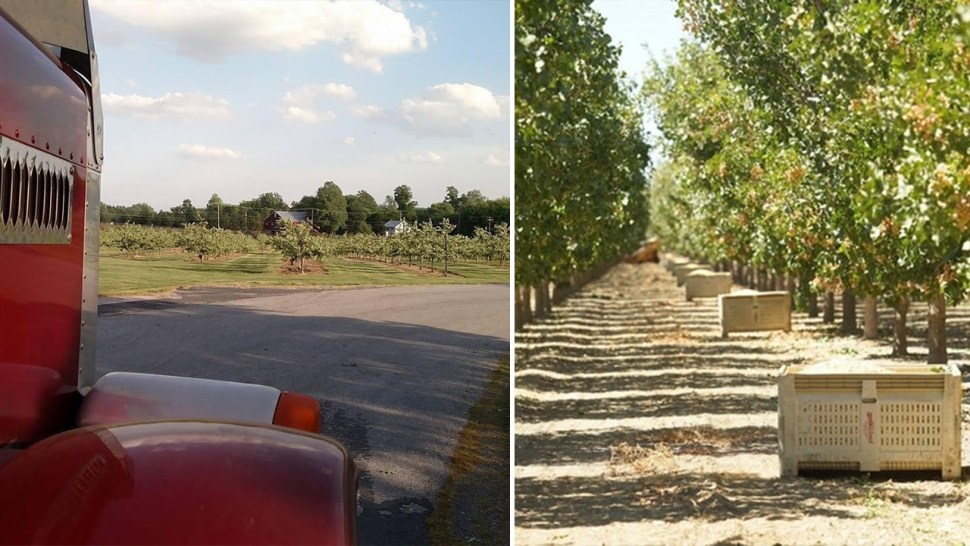
California just wrapped a monster pistachio crop, 1.5 billion pounds of premium product hitting the market, with expanded exports to Mexico and Brazil on deck. The American Pistachio Growers are celebrating quality yields and strong demand. The immediate thought among freight professionals is that cargo theft hit record highs in 2024, according to CargoNet, and nuts remain among the most targeted commodities in the game.
We’ve known about sophisticated nut theft operations since at least 2006. I was brokering freight after being a driver when almond theft started to rise. We’ve seen organized crews steal $10 million worth of California almonds and pistachios between 2013 and 2017 alone. We’ve documented the playbook, fake trucks, fraudulent bills of lading, identity theft, and phony carrier authorities. Armenian Power got linked to it. Federal investigators even traced almond theft proceeds to Pakistani terror funding.
Nearly two decades later, the problem hasn’t been solved. It’s gotten worse.
I’ve written about these systemic failures on my Substack. Danielle Chavin covers it. Others in the private sector constantly hammer away at freight fraud. The narrative is finally building to hold bad carriers and drivers accountable and to out the fraudsters operating behind legitimate-looking DOT numbers, but narrative pressure only matters if someone has the authority and the will to act on it.
That’s where the whole system falls apart.
Freight fraud is a form of theft often committed in interstate commerce. That’s federal territory. You’d think the FBI would jump on a case involving hundreds of thousands of dollars’ worth of stolen cargo crossing state lines. We recently had a client hit with freight fraud. We told them to file with the FBI. The FBI said it wasn’t their jurisdiction, call local police. Local police have already sent them to the FBI. Local police said interstate commerce falls under federal jurisdiction. Nobody touched it. The load was gone. The fraudsters moved on to the next victim.
This isn’t an isolated incident. It’s often standard operating procedure. Freight fraud frequently exists in an enforcement dead zone where federal agencies point to state jurisdiction, state and local cops point to federal authority, and nobody actually investigates unless the dollar amount is astronomical or someone gets hurt.
This is part of the reason why freight fraud has gone from a manageable problem to an epidemic.
The sophistication level is off the charts now. These aren’t tweakers boosting TVs from a dock. These operations involve sophisticated people and networks who understand trucking logistics, computer security, identity theft, and international shipping. In some cases, they’re hiring legitimate drivers through legitimate channels, paying them $180 for a pickup, and those drivers have no idea they’re part of a felony theft ring until they get arrested. After all, for under $2000, you can get a broker authority with a financed bond and have unlimited access to freight in less than 3 weeks from anywhere in the world.
Nuts check every box for organized theft operations. California produces 80% of the world’s almonds, is the second-largest producer of pistachios and walnuts globally, and the nut industry generates over $9 billion annually. Nuts have high market value worldwide, excellent shelf life, can’t be traced with serial numbers or electronics, and possession isn’t inherently illegal. It’s a non-violent crime with massive payoffs and minimal risk.
A single truckload can be worth $500,000. The methods are wildly elegant. Fake carrier authorities registered with FMCSA, fraudulent insurance certificates, financed broker bonds, stolen driver and carrier identities, forged bills of lading. The criminals scout legitimate freight boards, monitor shipping patterns, and strike when high-value loads are moving through California’s San Joaquin Valley. By the time the real carrier shows up for pickup, the load is gone, and by the time anyone figures out it was fraud, those pistachios are already on a container ship headed overseas or getting repackaged for resale in domestic markets.
The industry has tried to adapt. Shippers now fingerprint and photograph truckers. They verify vehicle information against FMCSA databases. Some use RFID tags to track shipments. Law enforcement conducts aerial and ground surveillance in high-theft areas. None of it has stopped the bleeding.
From four incidents worth $500,000 in 2012, reported nut theft jumped to 31 incidents valued at $4.5 million in 2015. By early 2016, more than $10 million in nuts had been stolen from central California in just a few months. That’s just what got reported in California, and that’s just nuts. Literally. Expand that to electronics, pharmaceuticals, retail goods, and building materials getting jacked from trucks nationwide, and you’re looking at a multi-billion-dollar crisis.
The chaos in trucking creates perfect cover for freight fraud. Post-pandemic capacity whiplash left the industry flooded with new entrants, many operating on thin margins with questionable safety records and compliance standards. FMCSA’s enforcement mechanisms are stretched thin. Carrier vetting often comes down to checking a SAFER score and verifying insurance, both of which are easily faked with forged documents.
When freight fraud happens, the victim, who is usually the shipper or broker, is left holding the bag financially while also being told to figure out the jurisdictional maze themselves. Most companies don’t have in-house investigators or legal teams equipped to navigate the boundaries between federal and state law enforcement. They file police reports that go nowhere, submit claims to insurance companies that fight payouts, and eventually write off the loss.
The fraudsters know this. They’re counting on it. Meanwhile, the drivers who actually get arrested are usually the low-level guys taking $180 gigs off sketchy load boards, using fake IDs and paperwork they were handed by someone they’ve never met. Law enforcement calls them “small fish” while acknowledging the masterminds remain at large. Even when arrests happen, like Alberto Montemayor getting busted in 2021 with 42,000 pounds of stolen pistachios in a parking lot, mid-repackaging operation, it barely makes a dent in the overall problem.
The core issue is, who actually has the authority to investigate and prosecute freight fraud, and why aren’t they doing it?
Interstate theft should trigger federal jurisdiction under 18 U.S.C. § 659, which criminalizes theft of property in interstate shipments. That’s FBI territory, but the FBI has limited resources and generally won’t touch cases under $500,000 unless there’s an organized crime or terrorism angle. Even then, as we’ve seen, they often decline to investigate.
The DOT Inspector General could potentially investigate fraud involving carriers with federal operating authority, especially when it involves forged documents and identity theft related to FMCSA registration. The DOT-OIG focuses primarily on grant fraud, safety violations, and internal department corruption, not individual cargo theft cases.
State and local law enforcement lack jurisdiction over interstate commerce crimes and typically don’t have the resources or expertise to investigate complex freight fraud schemes that span multiple states and potentially international borders.
The result? A massive enforcement gap that criminals exploit with near impunity.
First, we need clear jurisdictional authority to investigate and prosecute freight fraud. Whether that’s expanding FBI resources and lowering case thresholds, empowering DOT-OIG to pursue carrier fraud more aggressively, or creating a dedicated task force that coordinates federal and state efforts, something has to give. Right now, everyone assumes someone else is handling it, which means nobody is until someone is.
Second, FMCSA needs to tighten carrier authority registration and verification processes. Too many fraudulent authorities get registered with forged insurance and non-existent principals. Enhanced vetting, biometric verification for carrier officers, and real-time insurance validation could close some of these gaps, and we’re seeing real change in approved carrier applications with FMCSA’s new Idemia verification process. I actually failed the process when I attempted to open a new entity.
Third, the industry itself needs mandatory verification protocols. Shippers and brokers should be required to use carrier verification services, validate insurance directly with carriers, and implement callback procedures to confirm pickup authorizations. Make it standard practice, not optional best practice. My argument has always been about blockchain secure transactions.
Fourth, we need real consequences for freight fraud that go beyond catching the guy driving the truck. Follow the money. Prosecute the organizers. Seize assets. Make it a high-risk, low-reward crime instead of the current low-risk, high-reward setup.
Finally, transparency matters. CargoNet, Genlogs and other cargo theft tracking organizations provide valuable data, but most freight fraud goes unreported because companies don’t want the publicity or don’t think reporting will accomplish anything. We need industry-wide reporting requirements and data sharing that help identify patterns and bad actors before they hit their next victim.
California’s record pistachio harvest is excellent news for growers and shippers looking to expand into new markets. Still, without addressing the freight fraud and cargo theft crisis, every one of those 1.5 billion pounds represents a potential target for organized criminals who’ve been refining their playbook for nearly 20 years while law enforcement plays jurisdictional hot potato.
Nut thefts aren’t new. Freight fraud isn’t new. What’s new is the scale and sophistication, and the growing recognition that the current system isn’t just failing to stop it, it’s practically designed to enable it.
Until someone actually has the authority to investigate these crimes and the political will to prosecute them aggressively, we’ll keep seeing the same story of record harvests, record thefts, and zero accountability for the people running the show.
The industry deserves better. Legitimate carriers deserve better, and shippers hauling California pistachios to Mexico and Brazil deserve to know their product will actually arrive at its destination rather than disappear into the cargo theft black hole that law enforcement refuses to acknowledge, let alone address.
We’ve identified the problem. We’ve documented the methods. We’ve arrested the small fish. Now it’s time to figure out who’s actually going to catch the bigger ones, and give them the authority to do it.
Brokerage Compliance Symposium
The day before F3. Every compliance issue you face - fraud exposure, carrier liability, FMCSA rules, cargo theft, insurance gaps - navigated by attorneys and operators defining best practices in a changing industry.
F3 Awards Dinner
The night before F3. FreightTech100 companies honored. FreightTech 25 and Shipper of Choice winners revealed live. Cocktail reception into dinner and live music - 300 industry leaders in one purpose-built room.
F3: Future of Freight Festival
Industry-defining keynotes, rapid-fire technology demos, and industry leaders networking in experiences across Chattanooga - plus the inaugural F3 Awards Dinner featuring the FreightTech and Shipper of Choice reveals.
The day before F3. Every compliance issue you face - fraud exposure, carrier liability, FMCSA rules, cargo theft, insurance gaps - navigated by attorneys and operators defining best practices in a changing industry.
The Signal at Chattanooga Choo Choo • Chattanooga, TN Register NowThe night before F3. FreightTech100 companies honored. FreightTech 25 and Shipper of Choice winners revealed live. Cocktail reception into dinner and live music - 300 industry leaders in one purpose-built room.
The Signal at Chattanooga Choo Choo • Chattanooga, TN Register NowIndustry-defining keynotes, rapid-fire technology demos, and industry leaders networking in experiences across Chattanooga - plus the inaugural F3 Awards Dinner featuring the FreightTech and Shipper of Choice reveals.
The Signal at Chattanooga Choo Choo • Chattanooga, TN Register Now