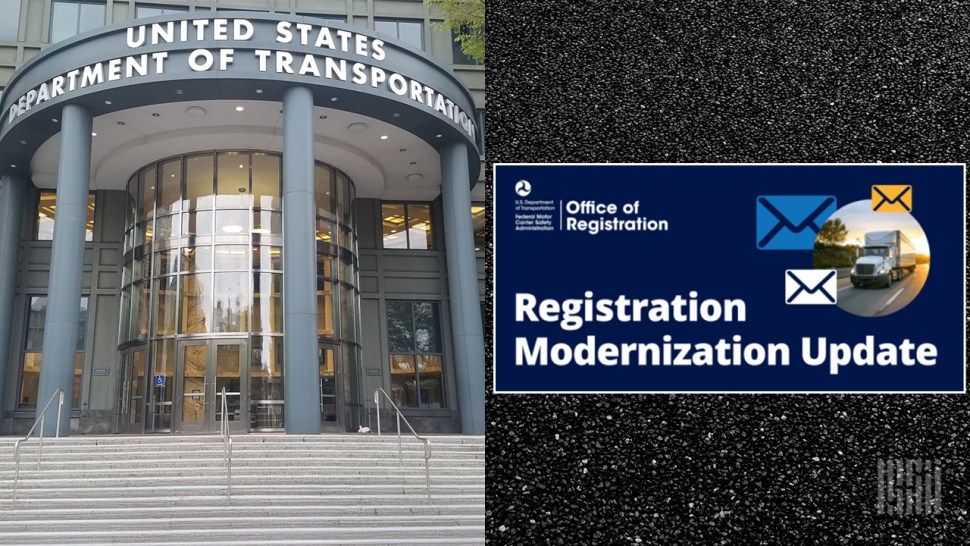
After three decades of failed attempts and a fraud epidemic, the agency rolls out what it should have built in 1996
If you got an email from FMCSA this week telling you to prepare for Motus, you might have rolled your eyes. Another government IT project. Another promise to modernize. We’ve heard this song before. This one actually matters.
FMCSA has been trying to build a unified online registration system since August 1996. That’s not a typo. The Federal Highway Administration, FMCSA’s predecessor, announced plans to develop a single online registration system when Bill Clinton was in the White House and most truckers had never heard of the internet. Nearly 30 years later, the agency is finally launching something that works.
Motus went live for supporting companies in December 2025 and will open to all motor carriers, brokers, and freight forwarders later this year. For most of you reading this, nothing changes immediately. But what’s coming represents the first real overhaul of FMCSA’s registration infrastructure since the Carter administration.
The current system is a disaster. Multiple disconnected platforms. Redundant forms. Paper processing can take weeks. The MCS-150, OP-1 series, and BOC-3 filings are all sitting in separate silos that don’t talk to each other. The agency estimated in 2013 that 16 percent of registrations were still submitted on paper. In 2013.
Ken Riddle from the FMCSA laid out the motivation at MATS in March 2024: fraud and freight theft are at all-time highs, and every corner of the industry is feeling the impact. Carriers, brokers, shippers, everyone’s getting hit. When the industry asked what FMCSA could do about it, modernizing registration was the obvious answer.
The fraud problem has teeth. A 2012 Government Accountability Office report found that carriers with chameleon attributes, companies that shut down and reopen under new identities to dodge enforcement, were three times more likely to be involved in severe crashes than legitimate new entrants. Eighteen percent of applicants with chameleon characteristics ended up in crashes causing fatalities or serious injuries, compared to 6 percent for clean applicants. Those numbers haven’t improved.
The GAO tracked chameleon carriers, which increased from 759 in 2005 to 1,136 in 2010. That was 15 years ago. With approximately 55,000 new USDOT numbers added in the first half of 2025 alone, the scale of the problem has exploded while FMCSA’s systems remained frozen in time.
Private industry filled the gap. DAT built a free Alias Search tool because carriers and brokers needed to check whether an address or phone number was previously used by a shut-down carrier. The fact that the private sector invested more resources in solving chameleon carrier detection than the federal government should tell you everything you need to know about how badly the old system failed.
Motus promises to consolidate all FMCSA forms into a single online system. Mobile-friendly. Real-time data validation. Auto-population tools so you don’t have to enter the same information six different ways. Enhanced user roles. Identity verification software to catch bad actors at the door instead of after they’ve already caused a crash.
FMCSA backed off on some controversial proposals after stakeholder feedback. Safety Registration won’t be included in the initial launch. They’re keeping MC, FF, and MX docket numbers instead of eliminating them. BOC-3 filing processes stay the same for now. Those potential changes will go through notice-and-comment rulemaking, with a proposed rule expected in March 2026.
The broker financial responsibility rule, the one that suspends authority if available financial security falls below $75,000, takes effect January 16, 2026. FMCSA delayed it a full year ,specifically because the old registration system couldn’t support it. That rule going live on schedule depends on Motus actually working.
For motor carriers and brokers, here’s the practical reality: keep using current systems until FMCSA tells you otherwise. Supporting companies, transportation service providers, BOC-3 filers, and insurance companies can access Motus now to create profiles. The rest of us wait until full rollout later this year.
When your turn comes, log in to your FMCSA Portal account and make sure it’s active. Verify that the Company Official listed is actually the person who should be managing your registration, not your service provider or an outside consultant. Submit a biennial update to get current information on file. The Login.gov email for your Company Official must match the one you’ll use to claim your USDOT number in Motus.
For the love of God. Don’t wait. When the FMCSA rolled out the Login.gov integration and multi-factor authentication mandate in January 2025, many carriers ignored the emails. Then they couldn’t log in anymore. Accounts get disabled after 90 days of inactivity. After 12 months, they get archived. Suddenly, carriers who needed to file updates, reinstate authority, or address compliance issues were locked out and scrambling to call the contact center at 1-800-832-5660, begging to have their accounts unlocked.
Don’t be that guy. If you haven’t logged into your FMCSA Portal in a while, do it this week. Confirm your Login.gov credentials work. Make sure the email address tied to your Company Official is current. When Motus goes live for all users, that Login.gov email is how you’ll claim your USDOT number in the new system. If it’s pointing to some old address nobody checks anymore, you’re going to have problems.
Expect a learning curve. Government IT projects always have growing pains. Budget extra time for registration tasks until everyone figures out the new interface. The phased rollout suggests FMCSA learned from past failures and let supporting companies beta test before opening to all users.
The agency wasted $3.5 million building a chameleon carrier detection system called ARCHI from 2012 to 2016, which screened 90,000 applicants and flagged 8,000 as potential bad actors. Whether that system actually worked or just collected dust is an open question. A leaked DOT memo from November 2025 proposed building essentially the same thing from scratch, without mentioning ARCHI.
Motus won’t fix everything. The foundation of FMCSA’s data has been crumbling for decades, approximately 55,000 new USDOTs in six months, 141 listing the primary contact as “NO NAME GIVEN,” duplicate addresses, carriers with two trucks, and 1,200 inspections. The house needs new infrastructure before we can expect the fraud detection tools to catch every chameleon, but know this: Secretary Sean Duffy, Administrator Derek Barrs, and their respective teams are on it.
Dragging registration into the 21st century is a prerequisite for everything else. You can’t build sophisticated vetting on a platform designed when rotary phones were still common.
The test comes when carriers actually use Motus for registration and updates. Does it genuinely streamline processes? Does fraud detection work without creating false positives that delay legitimate applicants? Does the mobile interface actually function, or is it just a desktop site crammed into a small screen?
We’ll find out soon enough. After 30 years of promises, FMCSA finally put something on the table. Now they have to deliver.
Brokerage Compliance Symposium
The day before F3. Every compliance issue you face - fraud exposure, carrier liability, FMCSA rules, cargo theft, insurance gaps - navigated by attorneys and operators defining best practices in a changing industry.
F3 Awards Dinner
The night before F3. FreightTech100 companies honored. FreightTech 25 and Shipper of Choice winners revealed live. Cocktail reception into dinner and live music - 300 industry leaders in one purpose-built room.
F3: Future of Freight Festival
Industry-defining keynotes, rapid-fire technology demos, and industry leaders networking in experiences across Chattanooga - plus the inaugural F3 Awards Dinner featuring the FreightTech and Shipper of Choice reveals.
The day before F3. Every compliance issue you face - fraud exposure, carrier liability, FMCSA rules, cargo theft, insurance gaps - navigated by attorneys and operators defining best practices in a changing industry.
The Signal at Chattanooga Choo Choo • Chattanooga, TN Register NowThe night before F3. FreightTech100 companies honored. FreightTech 25 and Shipper of Choice winners revealed live. Cocktail reception into dinner and live music - 300 industry leaders in one purpose-built room.
The Signal at Chattanooga Choo Choo • Chattanooga, TN Register NowIndustry-defining keynotes, rapid-fire technology demos, and industry leaders networking in experiences across Chattanooga - plus the inaugural F3 Awards Dinner featuring the FreightTech and Shipper of Choice reveals.
The Signal at Chattanooga Choo Choo • Chattanooga, TN Register Now