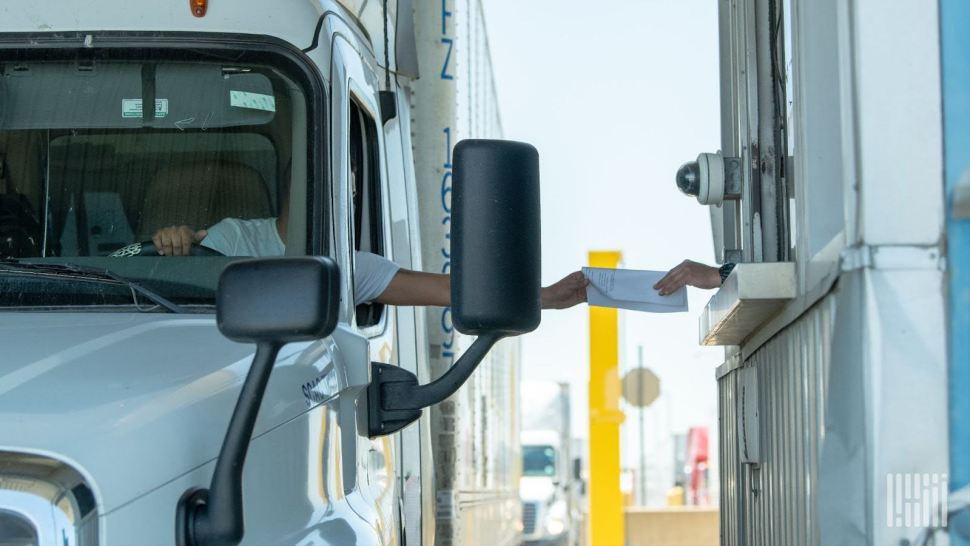
The photo is where this started. Today was the beginning of the end. Transportation Secretary Sean Duffy signed a final rule that closes the door on one of the most dangerous regulatory failures in modern trucking history. The rule eliminates the use of Employment Authorization Documents as proof of CDL eligibility, restricts non-domiciled licenses to a narrow set of visa categories that actually involve interagency vetting, and requires states to run every applicant through the SAVE verification system. It is the right move. It is also years too late.
How We Got Here
The American CDL system was designed with a basic premise. You show up, you prove who you are, the state checks your driving history against national databases, and if you’re clean, you get your license. That system works reasonably well for U.S. citizens and lawful permanent residents because the data exists. Your violations, DUIs, crash history, and suspensions are all stored in interconnected databases that every state DMV can query. For foreign nationals, the system had a massive blind spot. States were issuing what are called non-domiciled CDLs to people who presented Employment Authorization Documents. An EAD is a work permit. That is all it is. It tells you someone has authorization to be employed in the United States. It tells you absolutely nothing about whether that person has ever driven before, whether they have a history of reckless driving in their home country, whether they’ve been involved in fatal crashes overseas, or whether their foreign license was even legitimately obtained. More than 30 states were doing this. Not five. Not ten. More than 30 states were issuing commercial driver’s licenses to operate tractor-trailers, tankers, hazmat loads, and passenger buses, based on a document never designed for transportation safety screening. FMCSA knew about it. The states knew about it. The industry knew about it. Nobody did anything until the body count got high enough to make headlines. We covered the chameleon carrier networks that exploit these gaps. We covered the CDL mills churning out licenses to people who couldn’t pass a pre-trip inspection if their life depended on it. We covered government-funded workforce programs that were funneling individuals with no trucking experience into CDL programs with minimal oversight. We documented the Third-Party Examiner fraud pipeline in states such as California, New York, and Colorado. None of this is new information to anyone who has been paying attention. What is new is that we have an Administration in Washington that is acting on America First. On Trucking First. On American Drivers First.
What the Rule Actually Does
First, Employment Authorization Documents are a pathway to a CDL. Gone. Over. If you present an EAD at a state DMV with nothing else, you will not receive a commercial license. Period. The EAD was never meant to serve as a transportation safety document, and it should never have been treated as one. Second, non-domiciled CDL eligibility is now limited to three specific visa categories. H-2A agricultural workers, H-2B temporary non-agricultural workers, and E-2 treaty investors. These are visa classes that already undergo enhanced interagency vetting, meaning the federal government has reviewed these individuals before they arrived. That is the critical distinction. The problem was never that foreign nationals were driving trucks. The problem was that foreign nationals with unknown backgrounds were driving trucks because no one verified any information about them. Third, applicants must now present an unexpired foreign passport and Form I-94. Not a photocopy. Not an expired document. The real thing. Fourth, and this is the enforcement teeth, every state is now required to run applicants through the SAVE system. That is the Systematic Alien Verification for Entitlements database operated by USCIS. If SAVE cannot confirm your lawful immigration status, you do not get a CDL. There is no workaround. There is no state discretion. It is a hard stop. The rule goes into effect 30 days after publication in the Federal Register.
The Human Cost That Forced Action
Let me put some faces on the data, because numbers alone don’t convey the actual cost of this failure. February 2025. A tunnel on I-80 in Wyoming. A non-domiciled driver triggers a multi-vehicle pileup. Three dead. Twenty injured. Imagine being trapped in a tunnel with burning vehicles, knowing the driver who caused the incident was someone the system never checked. August 2025. The Florida Turnpike. A non-domiciled driver attempts an illegal U-turn on a limited-access highway. Three Americans were killed. An illegal U-turn. On the Turnpike. In a commercial vehicle. That is not a momentary lapse in judgment. That is someone who fundamentally did not understand the rules of the road in this country. October 2025. A California highway. A non-domiciled driver fails to stop for traffic. Eight vehicles. Three dead. December 2025. Ontario, California. A non-domiciled driver runs a marked railroad crossing and collides with a train, killing a crew member. Those are just the ones DOT highlighted today. There are more. Behind each of those crashes is a State Driver’s Licensing Agency that issued a CDL without verifying whether the person behind the wheel had ever caused a fatal crash in their home country. Think about that. We require more verification to rent a car from Enterprise than we do to issue a license to drive an 80,000-pound vehicle through a school zone.
What This Means for Capacity and the Freight Market
This rule will remove drivers from the available workforce. There is no way to sugarcoat that. The estimates vary, but we are talking about tens of thousands of non-domiciled CDL holders who were issued licenses under the old system and will not qualify under the new one. Some of those drivers have been operating safely for years. Some of them are excellent drivers. But the system that credentialed them was broken, and this is the correction. For carriers, especially the mid-size and smaller fleets that rely heavily on non-domiciled drivers, this creates a real and immediate hiring challenge. If you have drivers on your roster holding non-domiciled CDLs issued on EADs, you need to speak with your compliance team immediately. Not next month. Now. Understand the transition timeline. Understand which of your drivers fall under the new eligible visa categories and which do not. Start building your contingency plans because 30 days go fast. For the larger fleets and the publicly traded carriers, this is a capacity-tightening event. A smaller available driver pool means upward pressure on driver compensation, which in turn puts upward pressure on rates. If you are a shipper reading this, understand that this rule, while absolutely necessary for safety, is going to have cost implications. The drivers who remain in the system are going to be better vetted and more qualified, but there will be fewer of them and they are going to cost more. For owner operators and independent drivers who have been playing by the rules their entire careers, this is vindication. You sat through the CDL process. You passed your tests. Your driving history is on file and verifiable. You have been competing for loads against carriers staffed with drivers who were never subjected to the same scrutiny. That competitive imbalance is being corrected.
What This Means for Trucking Companies and Hiring
If you run a trucking company, here is your action list. Audit your driver roster immediately. Identify every non-domiciled CDL holder on your payroll. Determine their visa status. If they hold H-2A, H-2B, or E-2 visas, they are in the clear under the new rule, assuming their documentation is current. If they were credentialed under an EAD, their CDL eligibility will expire. Review your hiring pipeline. If your recruiting operation has been sourcing drivers from communities that relied on EAD-based CDLs, that pipeline is about to dry up. You need alternative sourcing strategies yesterday. Talk to your insurance company. This rule fundamentally changes your risk profile, and it should change it for the better. Carriers that can demonstrate a fully vetted, properly credentialed driver force should be pushing their underwriters for rate recognition. If your insurer doesn’t understand the significance of this rule, find one that does. For the love of everything, stop relying on the warm-body theory in driver recruitment. This industry’s obsession with filling seats regardless of qualifications is exactly what created the conditions for 30 states to hand out CDLs like candy. A qualified driver is more expensive than a warm body. A qualified driver is also less likely to kill someone on the Florida Turnpike.
What This Means for Drivers
If you are a non-domiciled CDL holder reading this and you are here legally on an H-2A, H-2B, or E-2 visa, take a breath. You are fine. Make sure your documentation is current. Make sure your passport is not expired. Make sure you have your I-94. When it’s time to renew your CDL, SAVE verification will be part of the process. If your status checks out, you keep driving. If you are a non-domiciled CDL holder who obtained your license using an EAD and you do not hold one of the three qualifying visa types, this rule directly affects you. I am not going to tell you what to do legally because I am not an immigration attorney. I will tell you that you need to speak with one. Quickly. Understand your options. Understand the timeline. Understand that driving on a CDL that is no longer valid is not an option. The enforcement on this is going to be aggressive and the penalties are going to be severe. If you are an American CDL holder or a lawful permanent resident who has been following this situation, this rule means the playing field has just leveled. Your credentials carry weight. Your clean driving record has value. Carriers that need qualified, vetted drivers will compete more aggressively for your services. Leverage that.
What This Means for Shippers
If you ship freight, safety costs money. It always has. The years of artificially cheap capacity that was partially built on an unvetted driver workforce were always going to have a correction, and this is it. In the short term, expect tightening in certain lanes and regions where non-domiciled drivers were heavily concentrated. Produce corridors. Agricultural hauling. Regional LTL in states like California, New York, and Texas. Drivers who leave the system are not distributed evenly geographically, so the impact will be felt more acutely in some markets than others. In the medium term, rates will reflect the true cost of a properly credentialed driver workforce. That is not a bad thing. You know what is more expensive than paying a legitimate per-mile rate? A nuclear verdict because your carrier put an unvetted driver behind the wheel and someone died. If you are a risk manager at a company that ships freight, you should be welcoming this rule with open arms. The carriers that survive this transition are going to be safer, better insured, and less likely to generate the kind of catastrophic liability that keeps general counsel up at night. Do your homework on your carrier partners. Ask questions. Verify credentials. The shippers who treated carrier selection like a commodity auction and just went with the cheapest rate are the ones most exposed right now.
Where Do We Go From Here
Secretary Duffy and Administrator Barrs deserve credit for getting this done. This administration has moved faster on CDL integrity than any administration in my memory, and I have been in this industry for over 25 years. The English language enforcement order. The nationwide state audits. The emergency action last summer. Now this final rule. That is a policy arc that demonstrates genuine commitment to fixing a broken system. This rule closes one loophole. There are others. The Third-Party Examiner system remains riddled with fraud. CDL mills are still operating in multiple states. The Training Provider Registry still has thousands of providers that have never been meaningfully audited. States like California continue to resist federal enforcement at every turn. The chameleon carrier networks we have been investigating are still operating, folding one DOT number and popping up under another the next day. This rule is a significant and necessary step. It is not the finish line. It is not even halftime. If DOT stops here and declares victory, the same systemic failures that created the non-domiciled CDL crisis will simply migrate to other parts of the system. They always do. Congress needs to codify this. Representative Rouzer’s Non-Domiciled CDL Integrity Act needs to pass so that this rule survives future administrations and future court challenges. Policy by executive action is policy on borrowed time. The industry needs to do its part too. Stop lobbying for lower standards because you can’t find enough drivers at the wages you want to pay. Stop pretending there is a driver shortage when what you really have is a retention and compensation problem. The non-domiciled CDL loophole existed in part because segments of this industry were perfectly happy with a pipeline of cheap labor that asked few questions. That era is over. Adjust accordingly. Thirty people are dead because the system failed. Today’s rule means the system is finally being repaired. The question is whether the industry and the government have the will to finish the job. I’m going to keep watching. I’m going to keep writing about it.
Brokerage Compliance Symposium
The day before F3. Every compliance issue you face - fraud exposure, carrier liability, FMCSA rules, cargo theft, insurance gaps - navigated by attorneys and operators defining best practices in a changing industry.
F3 Awards Dinner
The night before F3. FreightTech100 companies honored. FreightTech 25 and Shipper of Choice winners revealed live. Cocktail reception into dinner and live music - 300 industry leaders in one purpose-built room.
F3: Future of Freight Festival
Industry-defining keynotes, rapid-fire technology demos, and industry leaders networking in experiences across Chattanooga - plus the inaugural F3 Awards Dinner featuring the FreightTech and Shipper of Choice reveals.
The day before F3. Every compliance issue you face - fraud exposure, carrier liability, FMCSA rules, cargo theft, insurance gaps - navigated by attorneys and operators defining best practices in a changing industry.
The Signal at Chattanooga Choo Choo • Chattanooga, TN Register NowThe night before F3. FreightTech100 companies honored. FreightTech 25 and Shipper of Choice winners revealed live. Cocktail reception into dinner and live music - 300 industry leaders in one purpose-built room.
The Signal at Chattanooga Choo Choo • Chattanooga, TN Register NowIndustry-defining keynotes, rapid-fire technology demos, and industry leaders networking in experiences across Chattanooga - plus the inaugural F3 Awards Dinner featuring the FreightTech and Shipper of Choice reveals.
The Signal at Chattanooga Choo Choo • Chattanooga, TN Register Now