For most of the past year, two federal agencies have been doing more to reshape the trucking driver pool than anything else in the industry: the Department of Transportation with its non-domiciled CDL crackdown, and the Department of Homeland Security with its immigration enforcement raids. DOT and DHS have operated in close coordination — DOT tightening who can legally hold a CDL, DHS pulling drivers off interstates and out of their homes who could no longer pass that standard.
That two-agency enforcement operation has been one of the primary supply-side stories in trucking since mid-2025. It is part of why FMCSA removed over 7,000 CDL schools from its Training Provider Registry. It is why California revoked 17,000 CDLs in a single enforcement action. It is why the March 16 Final Rule on non-domiciled CDLs is projected to eliminate CDL eligibility for an estimated 97% of the roughly 200,000 non-domiciled holders who do not qualify under the new H-2A, H-2B, or E-2 visa standard. And it is why analysts at FTR Transportation Intelligence have projected that if the full scope of immigration enforcement and CDL restriction plays out, the trucking market could see capacity tightening not experienced since 2021.
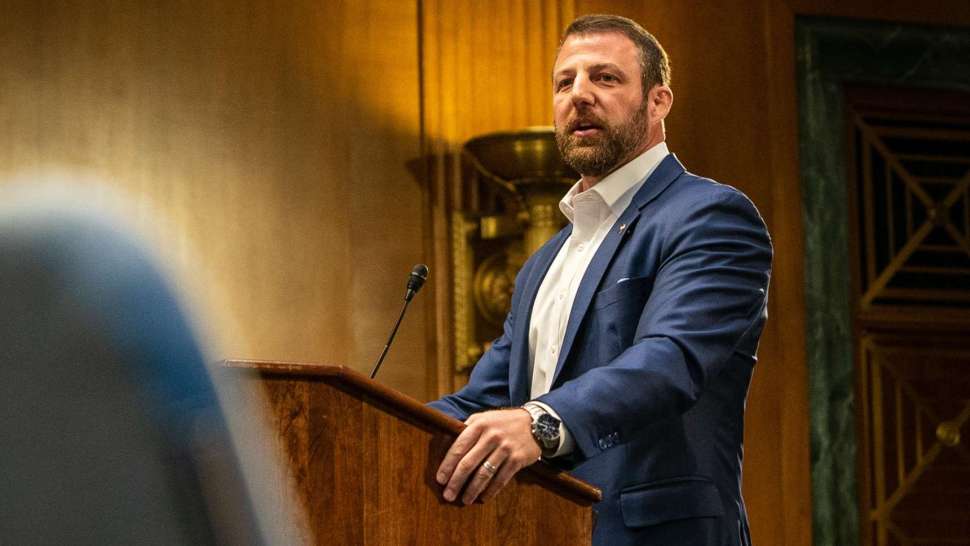
Now the person running DHS has changed. On March 5, President Trump announced he was removing Kristi Noem from the Secretary position and nominating Senator Markwayne Mullin of Oklahoma to replace her, with a target start date of March 31. Mullin’s confirmation hearing before the Senate Homeland Security Committee is scheduled for March 18.
Here is what you need to know about who is leaving, who is coming in, and what the change means for the enforcement that has been reshaping the driver pool your operation competes against.
Why Noem Left and Why It Matters
Kristi Noem did not leave voluntarily. She was pushed out — and the reasons behind her removal matter because they tell you whether the policy direction changed or just the face running it.
Noem became politically toxic inside the administration for reasons that had little to do with immigration enforcement itself. A fatal shooting incident in Minneapolis involving federal immigration enforcement agents killing two U.S. citizens — a tragedy that prompted immediate backlash from both parties — put her at the center of the administration’s most damaging news cycle. Separately, reporting on her use of taxpayer funds for private jet travel and a pricey DHS advertising campaign drew criticism from both Democratic opponents and Republican allies who expected tighter fiscal management. At a Senate Judiciary Committee hearing two days before her removal, Republican Senator Thom Tillis of North Carolina publicly called her leadership a “disaster” — a rare, direct rebuke from within her own party.
The bipartisan criticism gave Trump political cover to make a change. Importantly, the stated direction of DHS policy — aggressive immigration enforcement, removal of undocumented immigrants from the country, close coordination with DOT on CDL eligibility — was not among the criticisms. Noem was removed for management and political optics, not for being too aggressive on the enforcement mission. That distinction matters enormously when you are trying to project what comes next.
DHS stated on its website in January that nearly three million people had been deported or otherwise left the country due to the administration’s crackdown. That is the policy result the White House views as a success. No one in a position of authority is arguing that the enforcement was wrong — only that Noem was the wrong messenger for it.
Who Markwayne Mullin Is and Why He Is Relevant to Trucking
Mullin is a 48-year-old first-term Republican senator from Oklahoma, an enrolled member of the Cherokee Nation, a former MMA fighter who went 5-0 as a professional, and a former owner of Mullin Plumbing — a family business that ran a fleet of service vehicles. He came to Congress in 2012 and moved to the Senate in 2023. He has been among Trump’s closest allies in the Senate, functioning as what Majority Leader John Thune called a “Senate whisperer” — the person who explained the legislature’s positions to Trump and successfully brought both sides to agreement on key votes.
If you follow trucking at all, you may know Mullin from something other than legislation. In 2023, he challenged Teamsters president Sean O’Brien to a physical fight on the Senate floor after O’Brien posted something critical about him on social media. Mullin stood up from his committee seat, invited O’Brien to step outside, and said “we can be two consenting adults and finish it here.” The exchange went viral. The two have since reconciled and are reported to have a working relationship, but the moment illustrated something about Mullin’s temperament that is worth knowing: he does not back down from confrontation and he is not primarily motivated by optics management — which is arguably the central failure of the person he is replacing.
On the substance, Mullin’s immigration record is hard-line. He defended Trump’s birthright citizenship executive order publicly and framed the removal of undocumented immigrant families in terms of keeping parents and children together rather than separating them. He championed the administration’s border security provisions in the legislative package known as the “Big Beautiful Bill.” He has publicly defended ICE enforcement tactics and its agents.
But the trucking-specific relevance goes beyond his general immigration posture. Oklahoma under Mullin’s tenure as senator was one of the first and most aggressive states to partner with DHS and ICE on roadside immigration enforcement targeting commercial truck drivers. The I-40 raids in Oklahoma were among the first major joint state-federal operations that established the template for everything that followed — the Wyoming operations, the Texas blitzes, the Indiana interstate enforcement, the Alabama-ICE partnership. The state Mullin represented in the Senate was the proving ground for the exact enforcement model that has been pulling drivers off the road.
Oklahoma also passed legislation in 2025 imposing $3,000 fines on drivers who cannot demonstrate English language proficiency or verify their identity. A bill currently moving through the Oklahoma state house would outright ban non-domiciled CDL holders from operating within state lines entirely. Oklahoma has been at the leading edge of state-level CDL and immigration enforcement in trucking at every step, and Mullin is the senator who represented that state during all of it.
The DHS Shutdown Complication
There is a significant operational wrinkle that has nothing to do with Mullin personally but affects the agency he is about to lead.
DHS has been operating without formal appropriations funding since February 14, 2026. The government shutdown affecting DHS has stretched beyond three weeks as of this writing, with Senate Democrats blocking funding bills in response to concerns about how ICE has been conducting immigration enforcement — particularly following the Minneapolis shooting incident. The shutdown has forced TSA workers to show up without pay as airport security lines grow longer, and it has created operational uncertainty across DHS’s subagencies, including ICE.
The political calculus around the shutdown is complicated. Some Republican senators had been criticizing Noem’s leadership of DHS, which ironically made the shutdown negotiations more difficult — there was less incentive for Democrats to deal if the agency’s leadership was already under criticism from both sides. With Noem’s removal, multiple reports indicated that shutdown negotiations became “significantly more productive and smoother,” though no deal had been struck as of this writing.
Mullin’s arrival may create a temporary opening for a funding resolution that Noem’s presence was obstructing. If that happens, it would restore full DHS operational capacity — including ICE’s enforcement budget and staffing — which would likely mean more enforcement activity, not less. The shutdown has been a practical constraint on how much ICE can deploy and how frequently. A funded DHS is a more operationally active DHS.
What This Means for the Enforcement That Has Been Moving the Market
The central question for small carriers tracking the supply-side story in trucking is straightforward: does the Noem-to-Mullin transition change the trajectory of enforcement, and if so, in which direction?
The answer, based on everything the evidence supports, is that the enforcement trajectory does not change direction. What may change is the management quality and political stability of the agency executing it.
The policy architecture — the non-domiciled CDL Final Rule effective March 16, the FMCSA’s MOTUS registration system, the English proficiency out-of-service mandate, the state-level partnerships with ICE, the SAFER Transport Act moving through Congress — all of that was built by DOT under Secretary Sean Duffy and FMCSA Administrator Derek Barrs, not by DHS under Noem. DHS’s role has been immigration enforcement enforcement, not CDL policy. Mullin takes over the immigration enforcement side of that partnership. The CDL and safety regulation side at DOT continues under the same leadership that designed it.
On the immigration enforcement side, Mullin’s background and stated positions suggest he will maintain and potentially escalate the posture Noem established. He represents a state that pioneered this enforcement model. He is a Trump loyalist with no political incentive to moderate an immigration enforcement position that the administration views as a core success. He is personally combative and not predisposed to backing down from confrontations with states, cities, or courts that have been resisting federal immigration enforcement in trucking.
The practical concern raised by some analysts is that Stephen Miller, the White House Deputy Chief of Staff who has been driving immigration policy from inside the White House, will continue to be the dominant force on immigration enforcement regardless of who holds the DHS secretary title. If that analysis is correct, then the specific policy choices — which states to pressure, which enforcement operations to prioritize, how aggressively to pursue CDL fraud in the trucking sector specifically — will be driven more by Miller’s office than by Mullin’s priorities. Multiple Democratic senators made this argument publicly when Mullin’s nomination was announced, and some Republican senators offered Mullin as a potential counterweight to Miller’s influence. Which dynamic actually prevails in practice will become clear over the first 60 to 90 days of his tenure.
The Capacity Math That Small Carriers Should Be Watching
The supply-side market story that this enforcement wave has been building toward has not yet fully materialized in spot rates. Analysts who expected a significant rate bump from driver removals in late 2025 noted that the effect was more muted than projected — partly because demand remained soft, partly because enforcement implementation was slower than anticipated, and partly because some drivers who were placed out of service for English proficiency violations simply kept driving without correcting the violation.
But the structural direction has not changed. FMCSA has removed over 7,000 CDL schools from its Training Provider Registry since 2025, cutting off the pipeline that was creating fraudulent new CDL entrants. The March 16 Final Rule on non-domiciled CDLs has now taken legal effect, eliminating eligibility for the large majority of current holders who do not meet the new visa standard. California revoked 17,000 CDLs in a single enforcement action. New York faces DOT orders to revoke more than half of its 32,000 non-domiciled CDLs. The cumulative pipeline of capacity removal is building even if no single event has produced the dramatic overnight rate surge some predicted.
The J.B. Hunt study by Noël Perry of Transport Futures estimated that if the full scope of immigration enforcement and CDL restriction runs its course, as many as 614,000 drivers could exit the commercial driving market — a reduction of roughly 16% of the total driver pool. FTR’s Avery Vise has projected a potential “market that is like 2021” by year-end 2026 if enforcement matures and demand stabilizes. Both analysts note that a recession would dampen the rate impact, and both note that the timeline is not 90 days — it is a multi-year enforcement maturation.
What the Mullin transition does is remove the primary source of political instability at the agency executing the immigration enforcement half of that story. A more operationally stable DHS, potentially funded again if the shutdown resolves, with a secretary who has personal and political roots in the most aggressive state-level enforcement partnerships in the country, is more likely to maintain and build on the enforcement posture than to pull back.
For small carriers and owner-operators who are trying to read where the market is going, the DHS leadership change is not a pivot point — it is a continuity signal with an asterisk for the shutdown resolution wildcard.
The person at the top of DHS changes. The enforcement architecture underneath that person — the CDL rules, the state partnerships, the ICE operational posture, the coordination with DOT — does not change with the personnel. Mullin arrives as a hardline immigration enforcer from the state that wrote the trucking enforcement playbook, into an agency that is about to get its funding restored, running a mission that the White House considers one of its signature policy successes. For small carriers watching the supply-side capacity story, that combination points in one direction: the enforcement that has been slowly bleeding excess capacity out of the market is not ending. The question is whether it accelerates.
Brokerage Compliance Symposium
The day before F3. Every compliance issue you face - fraud exposure, carrier liability, FMCSA rules, cargo theft, insurance gaps - navigated by attorneys and operators defining best practices in a changing industry.
F3 Awards Dinner
The night before F3. FreightTech100 companies honored. FreightTech 25 and Shipper of Choice winners revealed live. Cocktail reception into dinner and live music - 300 industry leaders in one purpose-built room.
F3: Future of Freight Festival
Industry-defining keynotes, rapid-fire technology demos, and industry leaders networking in experiences across Chattanooga - plus the inaugural F3 Awards Dinner featuring the FreightTech and Shipper of Choice reveals.
The day before F3. Every compliance issue you face - fraud exposure, carrier liability, FMCSA rules, cargo theft, insurance gaps - navigated by attorneys and operators defining best practices in a changing industry.
The Signal at Chattanooga Choo Choo • Chattanooga, TN Register NowThe night before F3. FreightTech100 companies honored. FreightTech 25 and Shipper of Choice winners revealed live. Cocktail reception into dinner and live music - 300 industry leaders in one purpose-built room.
The Signal at Chattanooga Choo Choo • Chattanooga, TN Register NowIndustry-defining keynotes, rapid-fire technology demos, and industry leaders networking in experiences across Chattanooga - plus the inaugural F3 Awards Dinner featuring the FreightTech and Shipper of Choice reveals.
The Signal at Chattanooga Choo Choo • Chattanooga, TN Register Now