




FedEx Corp. has made clear that its future lies with premium B2B logistics services in key industrial verticals that require precision execution, such as automotive, healthcare, aerospace and data centers — not cheap last-mile delivery for online retailers. Add the defense sector to the list of industries the freight transportation giant is targeting for high-margin growth opportunities.
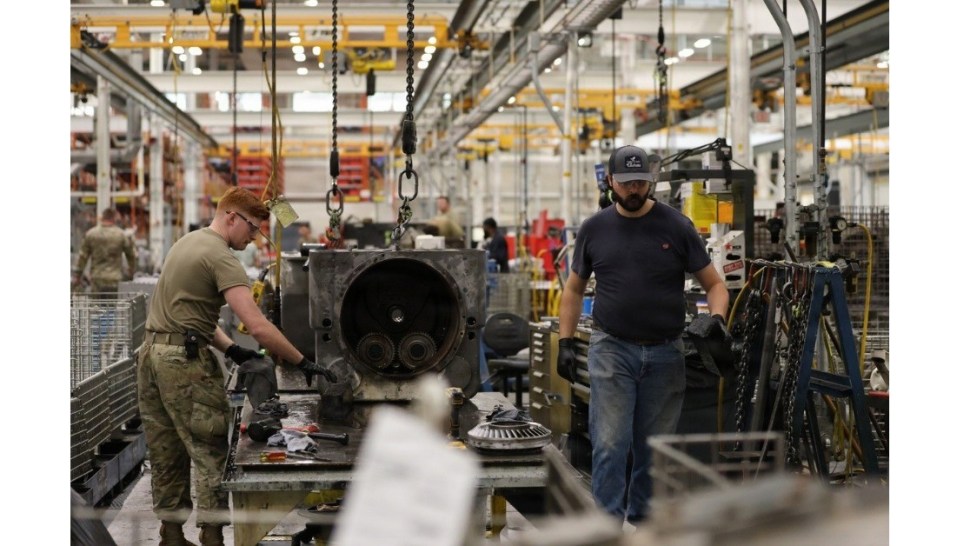
In August, FedEx Dataworks (NYSE: FDX) undertook a sweeping modernization of the U.S. Army’s domestic non-tactical logistics network, supply chain procedures and 23 government-owned and operated industrial facilities that make, repair, overhaul and store military equipment and munitions.
Dataworks is a division that uses analytics, artificial intelligence and digital technology to turn supply chain visibility into actionable intelligence. The real-time data platform harnesses huge amounts of operational signals gathered from millions of parcel and freight shipments to help businesses spot emerging risks early and coordinate responses before they can cause disruptions, optimize shipping routes, improve package tracking and provide supply chain insights. Its capabilities are designed to integrate with a customer’s existing tools and workflows. Dataworks recently began helping Stripe Capital explore how supply chain intelligence could open opportunities for small-and medium businesses to secure financing.
Management has repeatedly said it wants to leverage the company’s two petabytes of data and advanced AI capabilities to better support customers and drive new lines of revenue.
Last month, FedEx Dataworks announced on LinkedIn the hiring of retired Vice Admiral Dion English to be vice president and global lead – defense and government logistics solutions. During his Navy career he held leadership roles across global supply chain and logistics operations. Most recently, he led a multibillion-dollar global logistics enterprise spanning all combatant commands and more than 150 countries.
“This is just one example of our leadership role in logistics orchestration, which we view as a new market opportunity that complements our traditional shipping business. When it comes to physical AI, our network is already one of the most automated in the world,” CEO Raj Subramaniam said about the Army contract on Oct. 28 during the company’s quarterly earnings call.
FedEx has worked with the U.S. government for more than 30 years, including through its current work providing government-wide domestic and international small package delivery through the Next Generation Delivery Service contract. FedEx also provides cargo airlift to U.S. Transportation Command as a longstanding participant in the Civil Reserve Air Fleet.
To meet 21st century threats, the Army is overhauling its Cold War-era funding framework to partner directly with private capital markets and accelerate modernization through its new Strategic Capital Initiative. The project aims to match the Army’s most acute, strategic needs with investable, private sector commercial models to rapidly scale critical infrastructure upgrades — without waiting years for traditional procurement cycles to deliver critical capabilities to the frontline.
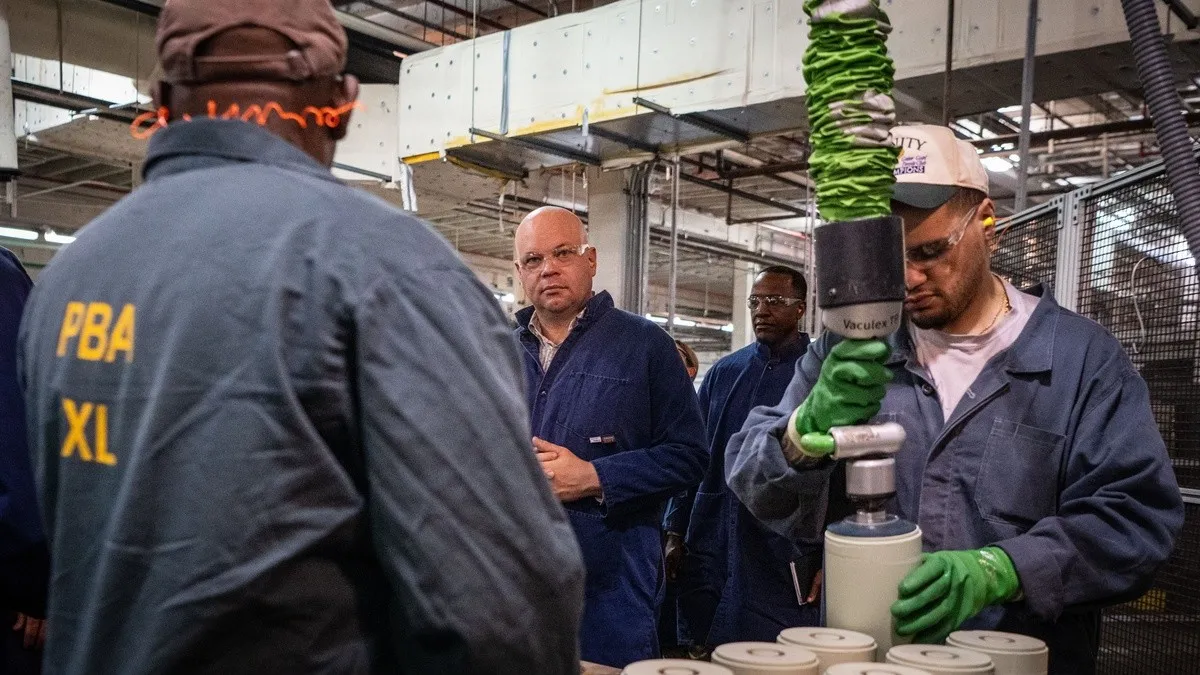
FedEx Dataworks logistics and technology experts are leading a team to integrate commercial predictive analytics and time-definite next-day delivery into Army depots with the goal of optimizing stock levels, demand forecasting and transportation routing to ensure soldiers receive parts, munitions and equipment ahead of operational demand, according to an article on the Army’s website.
“We are evaluating transportation routing and modes to cut delivery times across the Army, and transitioning from a dated supply system to a predictive, intelligent network to ensure the warfighter receives critical equipment at the time of need,” said Dave Fitzgerald, deputy undersecretary of the Army.
The Army and FedEx have formed working groups to analyze existing networks, processes and technologies, with a finalized implementation plan for U.S. based industrial sites expected this month.
Securing all the new logistics data is a top priority for the Army, which plans to host the new information system within Google’s highest level commercial cloud. The platform supports FedEx’s tools while integrating with the Army’s existing data systems, under identity management and encryption safeguards required for handling defense-related information.
Public private partnership
Marc Andersen, assistant secretary of the army for financial management and comptroller, also serves as chief investment officer for the Strategic Capital Initiative. He explained to investors and corporate executives in New York last Thursday that the service intends to revitalize industrial property by aligning venture capital and private equity with long-term government demand.
The immediate priority, he said, is for investments in digital computing infrastructure. Under the public-private model, private developers finance and build the facilities on Defense Department property at zero upfront taxpayer construction expense, operating a commercial side to generate steady revenue from these partnerships while providing the Army the potential to secure classified computing capability as in-kind value and surge support during national crises.
Under phase two of the Strategic Capital Initiative, commercial power developers are signing enhanced-use leases to build, own and operate microgrid-capable energy facilities on Army installations.
Andersen also highlighted new conditional lease awards designed to re-shore critical mineral supply chains, converting historical military depots into domestic processing hubs. Under the awards, the Army is establishing lithium processing at Red River Army Depot in Texas, synthetic and battery-grade graphite production at Anniston Army Depot in Alabama and Pine Bluff Arsenal in Arkansas, and processing for boron and heavy rare earth elements, including dysprosium and terbium, at Tooele Army Depot in Utah.
“The United States Army is open for business, and we’re moving out fast,” Andersen told investors.
Walmart supply chain meeting
Meanwhile, Acting Secretary of the Army Adam Telle met Monday with leaders at Walmart’s headquarters in Bentonville, Arkansas, and visited the company’s Global Security Operations Center to share best practices on managing complex global supply chains through natural disasters and other disruptive global events. The discussion centered on how large-scale, globally dispersed enterprises maintain real-time situational awareness under those conditions to proactively anticipate disruptions, adapt on the fly and surge critical resources to teams in the field.
Click here for more FreightWaves/American Shipper stories by Eric Kulisch.
RELATED STORIES:
Stripe taps FedEx data to expand small business access to financing
FedEx uses dedicated logistics teams to win aerospace, automotive business
FedEx cashes in on premium logistics services, fuel surcharges
