




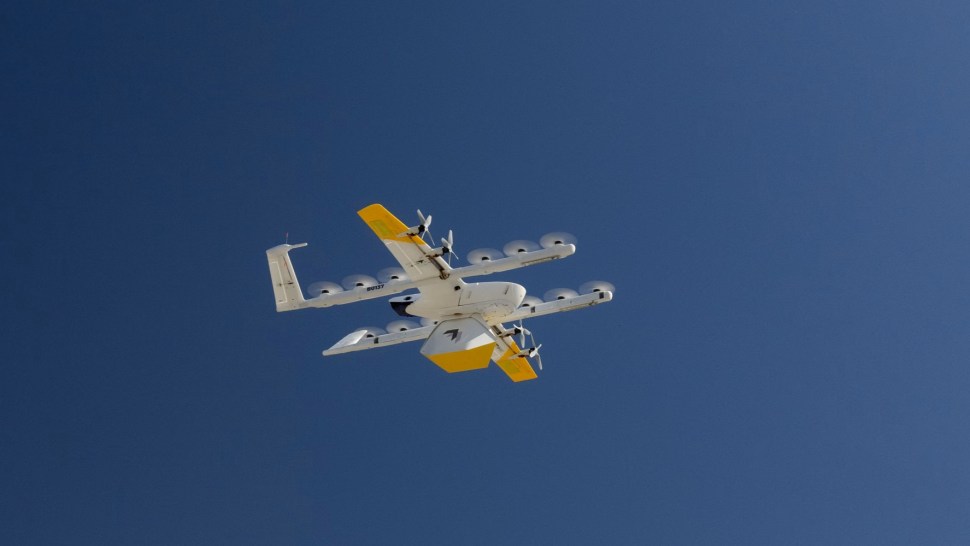
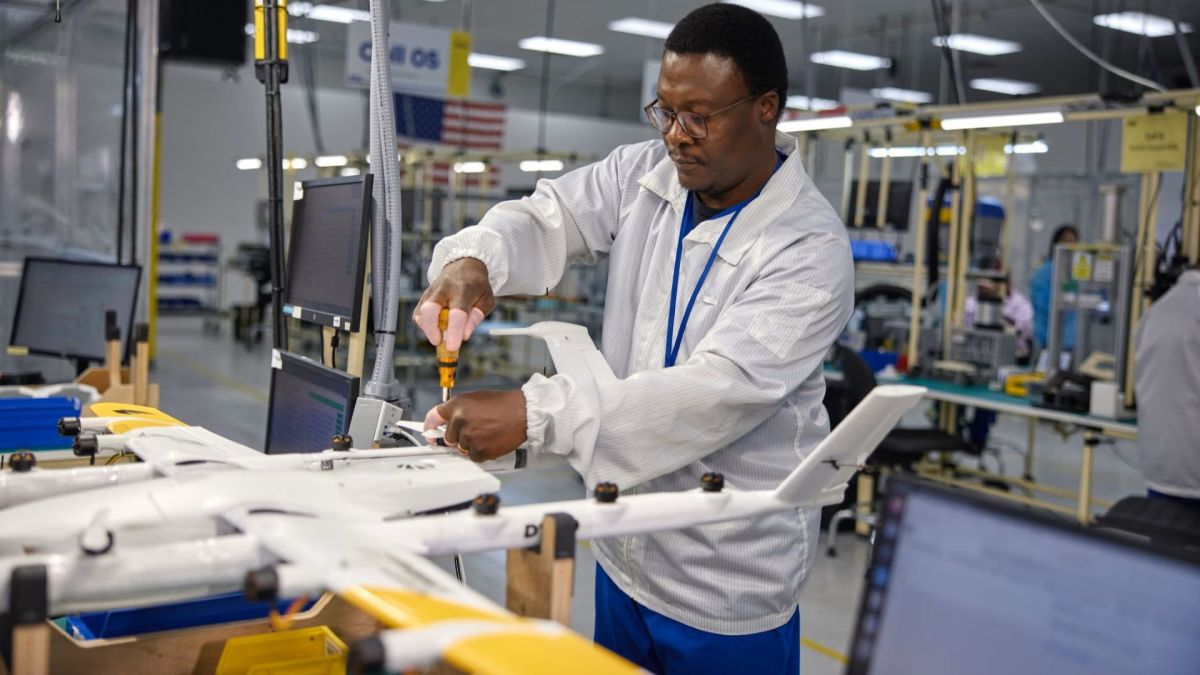
Wing, the drone delivery business of Alphabet (NASDAQ: GOOG), said it will invest $125 million to build a 15,000-square foot manufacturing facility in Fort Worth, Texas, over the next two years to meet growing interest from retailers in ultra-fast delivery.
The company also plans to launch drone delivery in Japan, in partnership with KDDI Corp.
New U.S. rules of the road, expected at any moment, will serve as a trigger for widespread expansion, Wing said.
The new Texas facility will be able to produce tens of thousands of unmanned aerial aircraft each year, supporting Wing’s aggressive plan to expand drone delivery service nationwide as consumers increasingly opt for the convenience of home delivery for last-minute needs, Wing announced Friday. Some of the investment will also support r&d in California.
The news release is the first time Wing has given projections for its fleet size.
Wing, which operates from more than 70 sites, is working to expand to nearly 20 U.S. markets next year, making drone delivery available to more than 40 million people through its partnership with Walmart. Wing currently operates limited service in five metropolitan areas, including Central Florida, Houston, Atlanta and Dallas-Fort Worth. The partners say the drone delivery network will stretch across more than 270 store locations across the nation, including Los Angeles, Cincinnati, San Diego, Miami and Philadelphia.
Cruising at speeds up to 60 mph, Wing’s aircraft can carry up to five pounds of goods. Wing says it has made more than 1 million residential deliveries so far, usually within 30 minutes.
In September, Wing began a pilot delivery program for Lowe’s, enabled by the DoorDash marketplace. Fast-casual restaurant Panera is testing Wing delivery in North Carolina.
Walmart is not relying on a single drone delivery provider. Last week, it announced plans to create a nationwide delivery network operated by Zipline from 300 store locations. Zipline said it raised $1.5 billion to ramp up manufacturing of its aircraft.
Why It Matters: Drones are the latest front in the quick commerce wars, offering retailers and marketplaces another mode for satisfying consumer expectations for convenience and speed when ordering online. Orders prepared at fulfillment centers are typically delivered in one to five days by courier companies, while store-to-door fulfillment takes advantage of app-based delivery platforms and crowd-sourced drivers to make deliveries in one to three hours.
Regulatory Opening
The Federal Aviation Administration’s highly anticipated rulemaking on beyond-visual-line-of-sight is expected to unleash the next-generation of commercial drone activity as operators will be able to scale drone delivery and other applications more broadly. Under the current process, operators are required to operate drones within visual line of sight unless holding an individual waiver.
The final rule, under review by the White House since July, was delayed from its February publication because administration officials wanted to make sure it could accommodate future technology developments and didn’t favor large companies. Industry officials have chaffed at the lengthy rulemaking process, saying the lack of certainty about rules of the road is inhibiting investment.
As proposed, the BVLOS rule would allow drone operations to occur at or below 400 feet above ground level from pre-designated, secure-access locations. All operators will need FAA approval for the area where they intend to fly and indicate the approximate number of daily operations, as well as takeoff, landing and loading areas.
Drone operators will have to utilize Automated Data Service Providers to support large-scale BVLOS activity and ensure drones are safely separated from each other and manned aircraft. A BVLOS operator could be its own data service provider or contract with another company. Drones also would have technologies that enable them to automatically detect and avoid crewed aircraft broadcasting their position with ADS-B surveillance technology.
Large fleets like those of Wing would require an FAA operating certificate, with the agency conducting more oversight of ongoing operations and requiring operators to develop a safety management system and training program.
On Monday, the FAA issued the first of its kind authorization for a drone to fly beyond the operator’s visual line of sight from the U.S. coastline over the Gulf of Mexico. The authorization allows Skyways to operate its autonomous V2 vertical takeoff and landing aircraft from Shell’s SPLC facility in Gibson, Louisiana, to a Shell platform in the Gulf to inspect a pipeline right-of-way and simulate delivery of equipment to the platform.
In a sign that the drone space is becoming more attractive from an investment standpoint, Axon Enterprise Inc., a public safety and defense technology company best known for making Taser electroshock weapons, last week announced a $1.2 billion investment in Skydio, increasing its ownership stake in the drone company to 37%. Skydio sells drones for physical security, mapping, asset inspection and national security applications.
Japan
Wing is partnering with KDDI Corp. to bring its drone delivery service to select areas in Japan by the end of 2027. Demand for new delivery options is expected to be strong because of a declining working-age population and a declining delivery driver workforce.
Initial deployment will focus on food delivery. The companies will work with local governments and other partners to expand service to daily necessities, over-the-counter medications, and small retail items, according to an Oct. 26 news release.
Wing will provide autonomous drones, flight systems and automated ground infrastructure while KDDI, a telecommunications company, will provide the communication infrastructure, regulatory compliance and market development.
Zipline noise breakthrough
Meanwhile, Zipline has reengineered how its drones fly to reduce noise, a common complaint heard in neighborhoods, the company said last month. While most drones must continuously run all their motors in order to stay in the air, Zipline drones feature a fixed wing that allows them to fly like planes and turn off all but one motor once they reach cruising speed and altitude.
With dynamic flying, Zipline drones now transition to on-wing flight more efficiently while producing less noise, using wind and gravity to accelerate and decelerate, similar to birds taking advantage of air currents.
Instead of static, pre-planned trajectories, Zipline’s dynamic flying optimizes for reduced sound by balancing wind, altitude, and speed. As a Zipline drone takes off, it uses its weather sensors to measure the real-time wind conditions. It then combines that data with a custom sound model to determine the quietest way to transition to on-wing flight, such as dipping its nose to gain speed like a bike going downhill, or popping upwards to quietly slow down at the end of a flight.
Now deployed fleetwide, sound-optimized dynamic flying reduces flight times too, Zipline said. Flight times are 53 seconds shorter on average because of faster transitions in and out of on-wing flight.
Click here for more FreightWaves/American Shipper stories by Eric Kulisch.
Write to Eric Kulisch at ekulisch@freightwaves.com.
RELATED STORIES:
Walmart to take drone delivery nationwide as Zipline raises $1.5B
DoorDash launches retail returns service, self-designed drones
Lowe’s test drives drone delivery
Amazon drone delivery expansion targets 500 cities by year’s end
