
Two days before the chief federal rail regulator was scheduled to hold a big meeting to talk about positive train control with the nation’s railroads, one of the biggest dropped a bombshell.
The Federal Railroad Administration on Friday, June 15 was scheduled to hold what it called its first-ever symposium on positive train control, an expensive safety system that is designed to slow and stop a train before it collides with another train or derails because of excessive speed. The symposium was held in Washington.
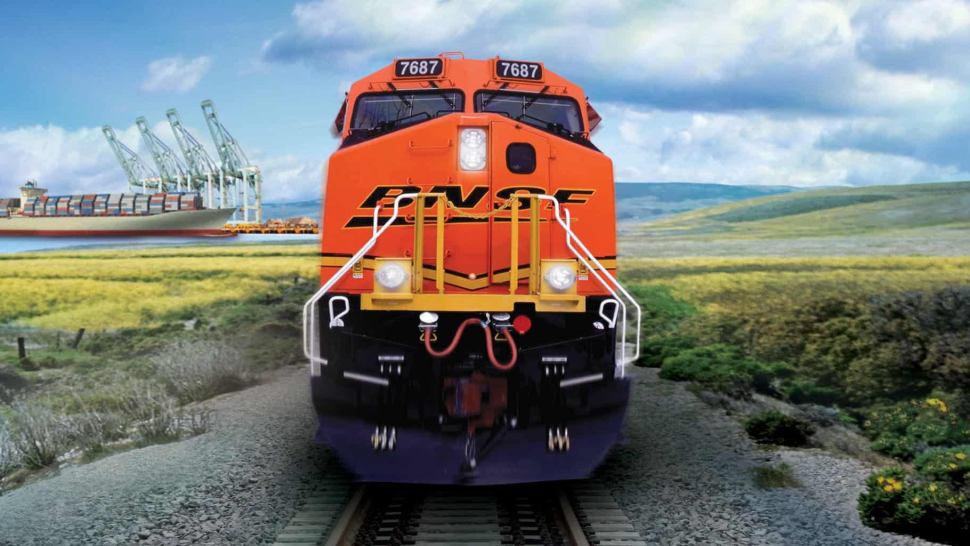
But two days earlier, one of the nation’s biggest railroads, BNSF, asked for a two-year delay in the end-2018 deadline for installation of PTC. Its reason? BNSF says it’s ready for the mandate, but others aren’t or won’t be. And that’s a problem.
The request for a delay is not unique. Union Pacific said in late April it was filing for a request, a statement made both in its quarterly earnings call with analysts and in its quarterly filing with the FRA on the status of its PTC compliance efforts.
But that request was for Union Pacific specifically, and the length of the delay it requested was not certain. It also was made public in only a limited way.
By contrast, BNSF released a statement on its plans, and sent a letter to its customers.
“We previously announced that BNSF had fully installed and was operating under PTC as of December 2017,” the railroad said in the letter, signed by Steve Bobb, executive vice president and chief marketing officer and Dave Freeman, executive vice president, operations. “Today, we announced that we nonetheless submitted a request to the Department of Transportation (DOT) for a two-year extension of the PTC deadline. The extension is required due to the Federal Railroad Administration’s (FRA) current interpretation of the law to mean that full implementation status cannot be achieved until all non-BNSF trains and/or equipment operating on our PTC-equipped lines are also PTC-compliant.”
According to the letter, meeting the FRA mandate requires not just the installation of PTC on its own system, but all railroads that would operate on BNSF’s lines. That includes other class 1 railroads, as well as commuter lines and other passenger service.
According to the letter to customers, BNSF “has successfully demonstrated interoperability with several railroads that operate on our network.” Unidentified commuter railroads and Amtrak were noted as falling into that category. “However, not all railroads that operate on BNSF will have completed their PTC installation by the end of 2018.”
Chris Matthew, BNSF assistance vice president for network control systems, gave similar statements in its news release. “BNSF has succeeded in the adoption of this key safety technology. Even with this request for a deadline extension, BNSF’s PTC network is installed and we are currently running, and will continue to run, more than a thousand trains daily with PTC as we continue to refine the system and resolve technological challenges,” Matthews said.
In the FRA’s announcement of its symposium, in a section that spelled out the steps it had taken to get the railroads toward the December finish line, the FRA said that 15 railroads had received letters from the agency in April. The 15 were “considered at risk of neither meeting the December 31, 2018, deadline nor meeting the statutory criteria required to qualify for an alternative schedule, specifically because self-reported data from 15 railroads indicated that each railroad had installed less than 80-percent of its PTC system hardware as of December 31, 2017.”
That number was down to 12 in a letter sent this month, the FRA said.
A quick glance at the quarterly reports to the FRA of other class 1 railroads did not reveal any companies suggesting a need for a delay, except for UP.
A spokeswoman for BNSF said the request was submitted because of interoperability issues with several railroads and short lines that use the BNSF system. She said she could not say whether interoperability issues were one of the reasons for the delay request.
A UP spokesman was not immediately available for comment.
In the first quarter earnings call in late April, Cameron Scott, UP’s COO, said that PT had been implemented on about 2/3 of the UP system. “We have a comprehensive plan for installation and implementation to complete PTC,” Scott said, before then noting the railroad would request a delay.
“The remaining implementation schedule will be phased in over the next couple years, so that additional problem solving and system testing can occur, while minimizing operational issues,” Scott said.
Implementation of PTC systems have been cited by railroads as one of the reasons for system delays that began last year and have persisted to one degree or another in various parts of North America.
The Association of American Railroads, a Washington-based trade group, said it had no comment on the BNSF request.
Brokerage Compliance Symposium
The day before F3. Every compliance issue you face - fraud exposure, carrier liability, FMCSA rules, cargo theft, insurance gaps - navigated by attorneys and operators defining best practices in a changing industry.
F3 Awards Dinner
The night before F3. FreightTech100 companies honored. FreightTech 25 and Shipper of Choice winners revealed live. Cocktail reception into dinner and live music - 300 industry leaders in one purpose-built room.
F3: Future of Freight Festival
Industry-defining keynotes, rapid-fire technology demos, and industry leaders networking in experiences across Chattanooga - plus the inaugural F3 Awards Dinner featuring the FreightTech and Shipper of Choice reveals.
The day before F3. Every compliance issue you face - fraud exposure, carrier liability, FMCSA rules, cargo theft, insurance gaps - navigated by attorneys and operators defining best practices in a changing industry.
The Signal at Chattanooga Choo Choo • Chattanooga, TN Register NowThe night before F3. FreightTech100 companies honored. FreightTech 25 and Shipper of Choice winners revealed live. Cocktail reception into dinner and live music - 300 industry leaders in one purpose-built room.
The Signal at Chattanooga Choo Choo • Chattanooga, TN Register NowIndustry-defining keynotes, rapid-fire technology demos, and industry leaders networking in experiences across Chattanooga - plus the inaugural F3 Awards Dinner featuring the FreightTech and Shipper of Choice reveals.
The Signal at Chattanooga Choo Choo • Chattanooga, TN Register Now