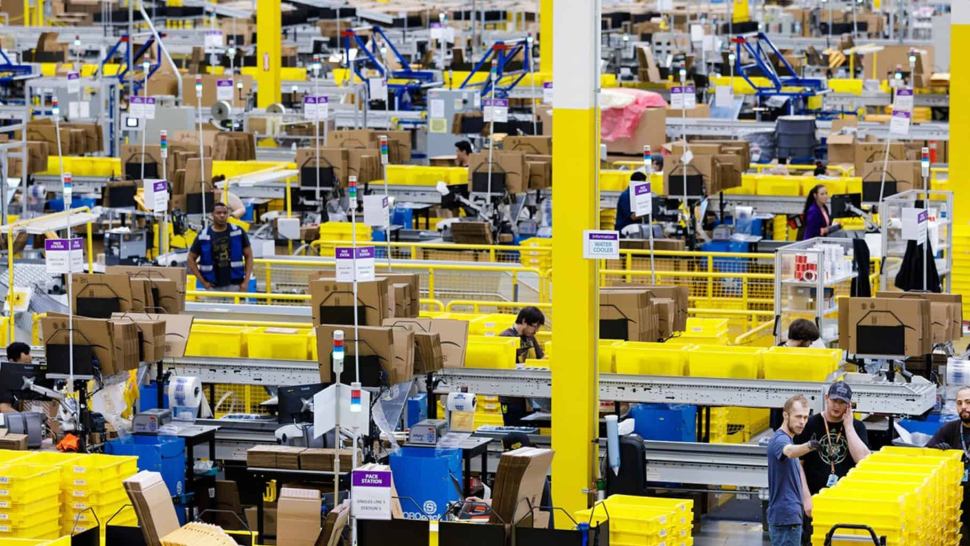
Owners of industrial real estate, which encompasses warehouses that support logistics and manufacturing, hold a more bullish outlook than do investors in other commercial property assets, although they are far more conservative on price appreciation than they’ve been in recent months, according to a survey released on June 4.
The survey, conducted by the research unit of media firm National Real Estate Investor and real estate brokerage firm Marcus & Millichap, found that 63 percent of 661 respondents expect gains in the industrial sector for 2019. About half of those who already own industrial properties said it’s a good time to acquire more, a higher percentage than in recent surveys. About one-third said they would hold their stakes at current levels, while 17 percent said it would be a good time to sell. In all, the results demonstrate a continued “strong appetite” on investors’ part to buy industrial assets, with “great momentum” across the entire sector, the survey found.
However, respondents expect just a 1.2 percent increase in industrial asset price appreciation during 2019, a notable slowing from the 5.4 percent increase forecasted for this year during a similar survey in the second half of 2018, the report said. Alan L. Pontius, senior vice president and national director of specialty divisions at Marcus & Millichap, said the slowing pace of gains reflects greater caution in light of the tremendous appreciation in recent years. Other forecasts have indicated a leveling off in U.S. price gains this year as more logistics real estate comes on the market and as risk aversion increases due to geopolitical concerns and slowing global economic growth.
Singapore-based logistics real estate giant GLP may have taken some risk off the table on Monday when it sold all but 8 million square feet of its 188 million square-foot U.S. logistics portfolio to Blackstone Real Estate for $18.7 billion, the largest-ever real estate transaction between private entities. GLP entered the U.S. market in 2015 on the heels of an $8.1 billion purchase the year before of U.S. real estate firm Indcor Properties by affiliates of Singapore’s sovereign wealth fund.
The industrial property sector, in particular the logistics sub-segment, has been in a powerful, near decade-long bull market, fueled by surging e-commerce growth that has increased the demand for fulfillment facilities. Rents have soared and vacancies have declined to low single-digit levels as demand has vastly exceeded what was a tight market for supply to begin with.
National vacancy rates are at or near all-time lows, with rates around 2 percent in space-constrained seaport markets like southern California.
Marcus & Millichap forecasts industrial rent growth of 4 percent or higher in 2019, compared with a 5.4 percent increase in 2018. Nationwide vacancy rates will decline to 4.5 percent, the firm said.
The survey was conducted during the last three weeks of February. Respondents included private investors, developers, advisors, lenders and real estate investment trusts (REIT). Private investors and developers accounted for half of the respondent universe.
Brokerage Compliance Symposium
The day before F3. Every compliance issue you face - fraud exposure, carrier liability, FMCSA rules, cargo theft, insurance gaps - navigated by attorneys and operators defining best practices in a changing industry.
F3 Awards Dinner
The night before F3. FreightTech100 companies honored. FreightTech 25 and Shipper of Choice winners revealed live. Cocktail reception into dinner and live music - 300 industry leaders in one purpose-built room.
F3: Future of Freight Festival
Industry-defining keynotes, rapid-fire technology demos, and industry leaders networking in experiences across Chattanooga - plus the inaugural F3 Awards Dinner featuring the FreightTech and Shipper of Choice reveals.
The day before F3. Every compliance issue you face - fraud exposure, carrier liability, FMCSA rules, cargo theft, insurance gaps - navigated by attorneys and operators defining best practices in a changing industry.
The Signal at Chattanooga Choo Choo • Chattanooga, TN Register NowThe night before F3. FreightTech100 companies honored. FreightTech 25 and Shipper of Choice winners revealed live. Cocktail reception into dinner and live music - 300 industry leaders in one purpose-built room.
The Signal at Chattanooga Choo Choo • Chattanooga, TN Register NowIndustry-defining keynotes, rapid-fire technology demos, and industry leaders networking in experiences across Chattanooga - plus the inaugural F3 Awards Dinner featuring the FreightTech and Shipper of Choice reveals.
The Signal at Chattanooga Choo Choo • Chattanooga, TN Register Now