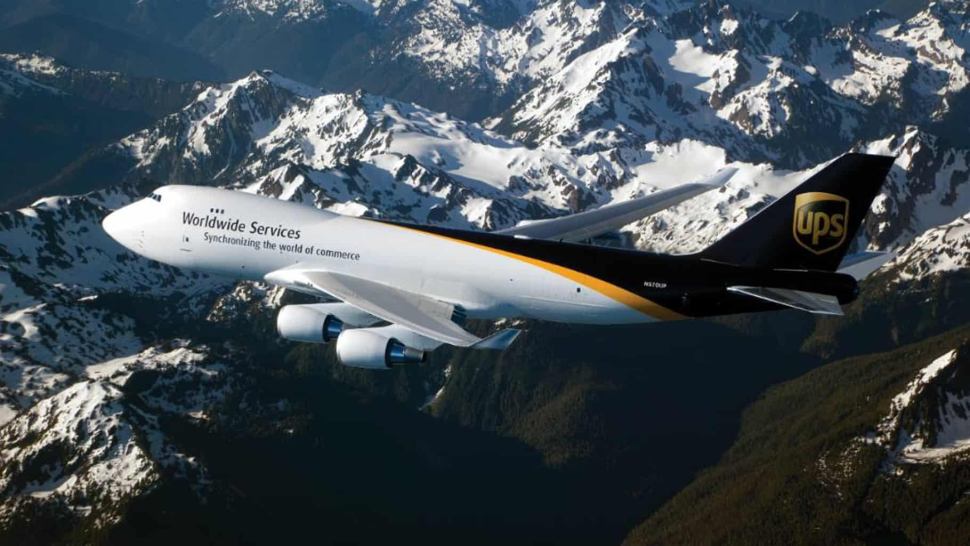
For most of the 21st century, next-day air deliveries in the U.S. have wallowed in the transport dustbin, considered an expensive relic of the past as businesses migrated to lower-cost, short- to intermediate-haul ground alternatives. Now in mid-2019, the skies have become – shall we say it – chic.
UPS Inc. (NYSE:UPS) reported on Wednesday, July 24 that next-day air volumes in its second quarter surged by 30 percent over the year-earlier period, a pace of year-on-year gains that no one can ever recall. The numbers were likely skewed by volumes from e-tailer Amazon.com, Inc. (NASDAQ:AMZN) which migrated to UPS after FedEx Corp. (NYSE:FDX) said in early June that it wouldn’t renew its U.S. air services contract with Amazon.
Still, coming on the heels of UPS reporting an 8 percent year-on-year increase in the first quarter, Wednesday’s results indicate that after 20 years in the desert, next-day air has found a trend – namely the push toward one-day delivery spearheaded by Amazon’s move to compress delivery commitments for users of its “Prime” service – it can sink its teeth into.
Fueled by the next-day air spike, UPS’ domestic segment revenue increased 7.7 percent to $11.1 billion, while adjusted operating profit rose 8 percent. This helped UPS post adjusted second quarter earnings per share of $1.96, three cents above analysts’ median estimates. It also propelled UPS’ shares to their best one-day gain since October 2008. Shares climbed by $9.12, an 8.66 percent gain, to close at $114.39.
UPS has gone all-in on airfreight. It plans to take delivery off 44 freighters by 2022, with 11 of them delivered in 2019 to go along with the original seven aircraft. With the deliveries, UPS will add 10 million pounds of air capacity, which it touts as more than any other carrier.
By contrast, FedEx, which built its empire around air express services, has de-emphasized its air operations in favor of lower-cost ground deliveries, a strategy it believes will meet the ever-increasing demands of e-commerce shippers and users at a lower cost. “Our sense is FedEx’s strategy to profitably grow with e-commerce customers involves embracing the long-term trend of more localized inventory, shorter lengths of haul for parcel carriers, and the ability of large e-commerce players to increasingly meet their customers’ overnight delivery expectations through ground operations without putting that freight on an airplane,” said Bascome Majors, transport analyst for investment firm Susquehanna Financial Group.
Majors added that the direction of the two companies is a “continuation of a longer-term trend in the U.S. parcel market: FedEx seeking to gain share in UPS’ historic stronghold of ground (parcel), and UPS encroaching on FedEx’s historic strength in express.”
For UPS investors, perhaps the most positive takeaway is that the company reported positive operating leverage in its U.S. operations in the quarter, the first time in four years it could make that claim. UPS has poured billions of dollars into a multi-year plan to reengineer its domestic network to meet e-commerce demands. At the core of the strategy is the development of multiple mega-hubs with dramatically accelerated package throughput capabilities. UPS delivers about 20 million pieces per day; the improved productivity has led to UPS’ cost per-piece handled to fall to levels not seen
for several years. As a result, company executives said Wednesday that they expect full-year, double-digit operating gains for its three units.
Besides the gains in the domestic air and ground business, the company’s supply chain and freight segments, which includes its less-than-truckload (LTL), logistics, brokerage and international freight forwarding, posted solid operating results as cost-containment measures and a focus on “revenue quality” offset flat revenue blamed on global macroeconomic pressures. The company’s international package segment was also hurt by global macro concerns as well as tough comparisons over 2018, when export volumes rose 9.5 percent.
Overall, revenue for the nation’s largest transportation company rose 3.4 percent to $18 billion. Adjusted operating profit grew 6.3 percent, while operating margins expanded by 170 basis points.
The company projected that 2019 earnings per share would range between $7.45 and $7.75 on an adjusted and diluted basis. Adjusted free cash flow will range between $3.5 and $4 billion with possible upside potential as the company moves through the re-engineering initiative
The second quarter results exclude a $21 million pre-tax charge for implementing the strategy. Second quarter 2018 results excluded a $263 million after-tax charge to fund the company’s voluntary retirement program, UPS said.
Brokerage Compliance Symposium
The day before F3. Every compliance issue you face - fraud exposure, carrier liability, FMCSA rules, cargo theft, insurance gaps - navigated by attorneys and operators defining best practices in a changing industry.
F3 Awards Dinner
The night before F3. FreightTech100 companies honored. FreightTech 25 and Shipper of Choice winners revealed live. Cocktail reception into dinner and live music - 300 industry leaders in one purpose-built room.
F3: Future of Freight Festival
Industry-defining keynotes, rapid-fire technology demos, and industry leaders networking in experiences across Chattanooga - plus the inaugural F3 Awards Dinner featuring the FreightTech and Shipper of Choice reveals.
The day before F3. Every compliance issue you face - fraud exposure, carrier liability, FMCSA rules, cargo theft, insurance gaps - navigated by attorneys and operators defining best practices in a changing industry.
The Signal at Chattanooga Choo Choo • Chattanooga, TN Register NowThe night before F3. FreightTech100 companies honored. FreightTech 25 and Shipper of Choice winners revealed live. Cocktail reception into dinner and live music - 300 industry leaders in one purpose-built room.
The Signal at Chattanooga Choo Choo • Chattanooga, TN Register NowIndustry-defining keynotes, rapid-fire technology demos, and industry leaders networking in experiences across Chattanooga - plus the inaugural F3 Awards Dinner featuring the FreightTech and Shipper of Choice reveals.
The Signal at Chattanooga Choo Choo • Chattanooga, TN Register Now