




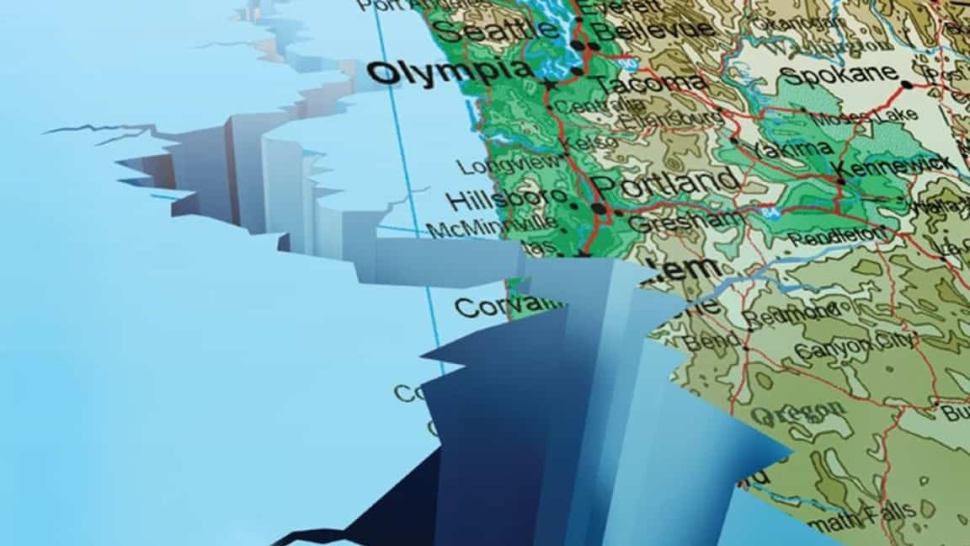
How do you prepare for a seismic event experts predict will unleash the worst natural disaster in the history of the United States?
Most — but not all — denizens of Seattle, Portland and other communities know the Pacific NW is overdue for a massive subduction zone quake that will clock in at magnitude 9.0 or greater. Research shows the so-called Cascadia subduction quakes occur in the region approximately every 350 years.
The last time a subduction quake hit the Northwest was 1700.
Numerous studies show Oregon and Washington are grossly underprepared. In the face of two-three minutes of shaking, bridges will collapse, soil will liquefy and a tsunami will inundate coastal communities. Oregon alone is expected to sustain thousands of casualties and $32 billion in economic losses.
Experts say seismic infrastructure investments in the NW are inadequate in large part because geologists only recently — in the 1980s — discovered the extent of the megaquake hazard.
“Planning is robust; we are on a good path,” said Dan Pippenger, director of planning and development at the Port of Portland. “But we are way behind because of the misunderstood threat for many years.”
Port officials in Portland and Seattle-Tacoma have been working to prioritize earthquake safety investments, aiming to find the best bang for the buck. Here are a few of the challenges ahead, as well as progress toward mitigation.
The phenomenon known as liquefaction — when sandy soil behaves like a liquid during shaking — poses the most dire risk to Port of Portland structures. Most of the port buildings are in areas at high risk of liquefaction, including places along the Willamette River where the city stores fuel.
Only one of the marine terminals has been seismically retrofitted. That terminal, T6, sits on the Columbia River and was selected in part because it can handle both container and breakbulk equipment, Pippenger said. In the aftermath of a quake, demand for building materials, generators, and steel beams will be at a premium. The terminal could also serve as a berth for fuel delivery.
The Portland airport is in a relatively strong position thanks to a $1.1 billion capital improvement project paid for by airlines. That bucket helped fund deeper pilings and a seismically sound structure for a new, six-gate terminal extension.
The runway is a more troubling story. A working strip is critical to enable relief aid and a return to commercial service. The Port has partnered with the Oregon State University engineering department on scientific studies for deep soil liquefaction to inform how the airport will address the runway. So far there is no funding mechanism in place for what is expected to be a very expensive solution.
Tacoma and Seattle port officials are also bundling modernization projects with seismic upgrades. “It doesn’t make sense to do a seismic retrofit of an old facility to current standards,” said the Port of Seattle’s assistant engineering director Bob Maruska. “There isn’t a retrofit strategy that will give you enhanced performance.”
From a business continuity perspective, bringing containers back on line is the biggest priority, he said.
Last year, the Seaport Alliance revamped the Husky Terminal in Tacoma to be able to dock two post Panamax ships simultaneously. As part of that effort, the Port inserted stone columns, a new technology that has been shown to mitigate the impact of liquefaction, said spokesperson Katie Whittier. “We were strategically saying: ‘The Husky is the largest terminal and attracts the largest ships, so we’re going to make it earthquake-worthy.’”
An innovative seismic design is also proceeding with the redevelopment of Seattle’s T-5 Terminal, Maruska said.
The Port isn’t an island, Maruska noted. “Our facilities are part of the transportation network. You may have a container terminal that can operate, but you may not be able to get there because the bridges are gone.”
During a massive earthquake preparedness drill a couple of years ago, the Washington State Department of Transportation assumed 72 collapsed bridges and 47 more that were unstable or otherwise closed.
The I-5 Interstate Bridge, which carries around 130,000 cars and trucks daily over the Columbia River, is not expected to withstand the quake.
Whittier emphasized the importance of emergency management planning and noted Tacoma had recently updated its Natural Hazard Mitigation Plan. “You can’t plan to be 100% there in a 9.0,” she said. “The question is how prepared are we to respond in the moment when something happens.”
For its part, the Port of Portland sunk $6 million into seismic strengthening for a new five-story office building that will house the rental car center and serve as a base for emergency operations. The center will provide fuel and water for three days after an event, Pippenger said.
Pippenger evoked the aftermath of Hurricane Katrina, when a lack of disaster preparedness led to a mass exodus of private sector employers.
“Even if people survive the quake — if they can’t travel and can’t do business, they won’t stay here.”
As a citizen and a resident, Pippenger said he feels the right conversations are happening. “But getting to prioritized investments is crucial for our region. It’s going to take a lot of money to make the investments happen.”
Brokerage Compliance Symposium
The day before F3. Every compliance issue you face - fraud exposure, carrier liability, FMCSA rules, cargo theft, insurance gaps - navigated by attorneys and operators defining best practices in a changing industry.
F3 Awards Dinner
The night before F3. FreightTech100 companies honored. FreightTech 25 and Shipper of Choice winners revealed live. Cocktail reception into dinner and live music - 300 industry leaders in one purpose-built room.
F3: Future of Freight Festival
Industry-defining keynotes, rapid-fire technology demos, and industry leaders networking in experiences across Chattanooga - plus the inaugural F3 Awards Dinner featuring the FreightTech and Shipper of Choice reveals.
The day before F3. Every compliance issue you face - fraud exposure, carrier liability, FMCSA rules, cargo theft, insurance gaps - navigated by attorneys and operators defining best practices in a changing industry.
The Signal at Chattanooga Choo Choo • Chattanooga, TN Register NowThe night before F3. FreightTech100 companies honored. FreightTech 25 and Shipper of Choice winners revealed live. Cocktail reception into dinner and live music - 300 industry leaders in one purpose-built room.
The Signal at Chattanooga Choo Choo • Chattanooga, TN Register NowIndustry-defining keynotes, rapid-fire technology demos, and industry leaders networking in experiences across Chattanooga - plus the inaugural F3 Awards Dinner featuring the FreightTech and Shipper of Choice reveals.
The Signal at Chattanooga Choo Choo • Chattanooga, TN Register Now