




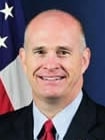
“I am concerned that those cargoes currently are not there, and are going down rapidly, which means that the U.S. flag fleet has to be able to have commercial cargo opportunities. In this particular market, where there is an overabundance of capacity, we have to structure or take action essentially as an administration, as a Congress, to put the correct policies, regulations and statutes in place to support the maritime industry, otherwise, it will potentially cease to exist.”
Rep. Elijah Cummings, (D-Md.) cited his concern that the U.S. flag ocean-going fleet shrank in size from 857 ships in 1975 to 89 in foreign trades and about 100 in Jones Act trades by 2007.
“What can we do to help our fleet to meet the challenge that the loss of cargo poses? It seems to me that we are sort of standing over somebody who we could save and we are saying, what the hell, let’s just wait and wait and wait and every second that passes they march closer to their death,” said Cummings.
“The potential risk is that we lose control of our supply chain,” Jaenichen said, noting that the nation’s ports are called by about 60,000 vessels each year and only about 2 percent of the cargo moves on U.S. vessels.
Subcommittee Chairman Duncan Hunter (R-Calif.) asked Jaenichen if there was some way to make programs like the Maritime Security Program, which provides a $3.1 million per ship subsidy to operators of U.S.-flag vessels to offset their higher costs, or the Food for Peace program “flexible” so that they could be adjusted to account to varying amounts of cargo.
Jaenichen noted that companies operating the 60 ships in the MSP program rely on the $3.1 million stipend for each ship and access to government-impelled cargo — primarily defense department cargo that can fluctuate significantly — to help offset the higher cost of operating a U.S.-flag vessel, as well as regular commercial cargo.
“If you have a decrease in one of those particular areas … we need to take a look at adjusting one of the other two area — either we increase the opportunity for commercial cargo or potentially you increase the stipend rate….”
“I have been consulted by a couple of companies who have told us right now that it is not working in terms of being able to make it feasible financially and that is going to create problems, so I think we are going to have to take a look at what we can do going forward with regard to that program,” he said.
Maersk Line Ltd., the largest participant in the Maritime Security Program, said in a statement, “As a U.S. flag carrier and MSP participant, we appreciate that Mr. Jaenichen raised MSP budgeting with members of the House.”
Hunter said restructuring of the Food for Peace program to allow local sourcing of food aid “will eliminate a vital program for our farmers, put U.S. mariners out of work, and undermine our national security by reducing the domestic sealift capacity on which our military depends.”
Jaenichen said that allowing up to 25 percent of food aid to be done by “local purchase” is likely to affect four to six ships and the jobs of 200-275 mariner jobs.
 Garamendi
He said growth in natural gas production in the U.S. presented an opportunity to boost the maritime industry if exports are carried on U.S.-built, U.S.-flagged and U.S.-crewed vessels, saying that approved export terminals would require 100 LNG tankers.
“The American shipyards could build these tankers over the next decade and beyond, creating thousands of jobs and maintaining a vital industrial base for America and our national security, specifically the Navy,” he said.
Brokerage Compliance Symposium
The day before F3. Every compliance issue you face - fraud exposure, carrier liability, FMCSA rules, cargo theft, insurance gaps - navigated by attorneys and operators defining best practices in a changing industry.
F3 Awards Dinner
The night before F3. FreightTech100 companies honored. FreightTech 25 and Shipper of Choice winners revealed live. Cocktail reception into dinner and live music - 300 industry leaders in one purpose-built room.
F3: Future of Freight Festival
Industry-defining keynotes, rapid-fire technology demos, and industry leaders networking in experiences across Chattanooga - plus the inaugural F3 Awards Dinner featuring the FreightTech and Shipper of Choice reveals.
The day before F3. Every compliance issue you face - fraud exposure, carrier liability, FMCSA rules, cargo theft, insurance gaps - navigated by attorneys and operators defining best practices in a changing industry.
The Signal at Chattanooga Choo Choo • Chattanooga, TN Register NowThe night before F3. FreightTech100 companies honored. FreightTech 25 and Shipper of Choice winners revealed live. Cocktail reception into dinner and live music - 300 industry leaders in one purpose-built room.
The Signal at Chattanooga Choo Choo • Chattanooga, TN Register NowIndustry-defining keynotes, rapid-fire technology demos, and industry leaders networking in experiences across Chattanooga - plus the inaugural F3 Awards Dinner featuring the FreightTech and Shipper of Choice reveals.
The Signal at Chattanooga Choo Choo • Chattanooga, TN Register Now