




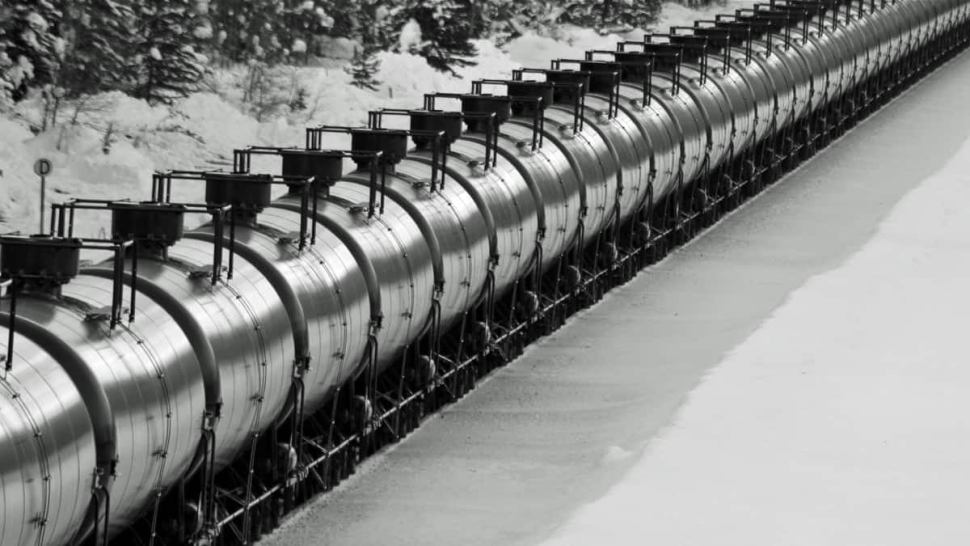
Ten states are lending their support to North Dakota and Montana and have asked the U.S. Department of Transportation (DOT) to stop Washington state’s crude-by-rail law.
The attorneys general for Arkansas, Indiana, Louisiana, Nebraska, Ohio, South Dakota, Utah and West Virginia signed a letter dated September 23 that they support North Dakota and Montana’s argument that federal law preempts Washington state’s crude-by-rail law.
The letter was part of a proceeding in which the Pipeline and Hazardous Materials Safety Administration (PHMSA), which is part of the DOT, was seeking comments on whether federal hazardous material transportation law preempts Washington state’s law. PHMSA has received over 4,000 comments from groups and individuals about the issue.
Washington state’s crude-by-rail law calls for crude oil that will be unloaded in the state to meet a Reid Vapor Pressure limit of 9.0 pounds per square inch (psi).
The law, which Washington Gov. Jay Inslee signed on May 9 and became effective on July 28 of this year, doesn’t ban crude-by-rail in the state, proponents have said. But North Dakota lobbied DOT to intervene because the law “effectively” blocks Bakken crude oil from North Dakota to traveling through Washington state due to the vapor pressure limits, according to North Dakota officials.
“We offer our support for the petition because we are concerned about the precedent Washington’s law could set. States that have access to port cities are uniquely situated to harm landlocked states. As North Dakota and Montana explain, Washington’s law targets oil produced in states within the Bakken Shale Formation for disfavor. Processing facilities exist near major commerce hubs like those in Washington, where suppliers ship their finished product,” the states said in the letter, which was penned by Oklahoma Attorney General Mike Hunter and signed by nine other state attorneys general.
“Regulating what goods those facilities can accept is functionally the same as regulating the transportation of goods because states that cannot use the refineries there also cannot ship oil and gas products from there. To conclude that states can invent and impose special burdens on new classifications of oil and gas from their facilities would allow states with port cities to leverage their location to the disadvantage of energy-producing states,” the letter said.
The letter also alluded to five other states that have pressed DOT and PHMSA to adopt limits on the vapor of pressure for transported crude oil. In 2015, then New York Attorney General Eric Schneiderman had petitioned PHMSA to adopt a Reid vapor pressure limit of 9.0 psi, but no action has been taken on that petition since PHMSA opened a rulemaking docket for it in 2017, according to a September 23 filing from Washington state. Other states that have sought PHMSA to adopt vapor pressure limits include California, Illinois, Maine, Maryland and Washington state.
“If Washington can enact those requested regulations in state law, the other states with the same request will likely enact similar laws,” Oklahoma Attorney General Hunter said in the September 23 letter.
If PHMSA takes action, it would likely occur after the comment period closes. The agency was taking comments until September 23, and rebuttal comments are due by October 23.
Other groups that have responded to PHMSA’s request for comments include joint comments from the Association of American Railroads, American Short Line and Regional Railroad Association and BNSF; joint comments from Earthjustice, Washington Environmental Council, Columbia Riverkeeper and other environmental groups; and comments from Marathon Petroleum and BP Petroleum.
Brokerage Compliance Symposium
The day before F3. Every compliance issue you face - fraud exposure, carrier liability, FMCSA rules, cargo theft, insurance gaps - navigated by attorneys and operators defining best practices in a changing industry.
F3 Awards Dinner
The night before F3. FreightTech100 companies honored. FreightTech 25 and Shipper of Choice winners revealed live. Cocktail reception into dinner and live music - 300 industry leaders in one purpose-built room.
F3: Future of Freight Festival
Industry-defining keynotes, rapid-fire technology demos, and industry leaders networking in experiences across Chattanooga - plus the inaugural F3 Awards Dinner featuring the FreightTech and Shipper of Choice reveals.
The day before F3. Every compliance issue you face - fraud exposure, carrier liability, FMCSA rules, cargo theft, insurance gaps - navigated by attorneys and operators defining best practices in a changing industry.
The Signal at Chattanooga Choo Choo • Chattanooga, TN Register NowThe night before F3. FreightTech100 companies honored. FreightTech 25 and Shipper of Choice winners revealed live. Cocktail reception into dinner and live music - 300 industry leaders in one purpose-built room.
The Signal at Chattanooga Choo Choo • Chattanooga, TN Register NowIndustry-defining keynotes, rapid-fire technology demos, and industry leaders networking in experiences across Chattanooga - plus the inaugural F3 Awards Dinner featuring the FreightTech and Shipper of Choice reveals.
The Signal at Chattanooga Choo Choo • Chattanooga, TN Register Now