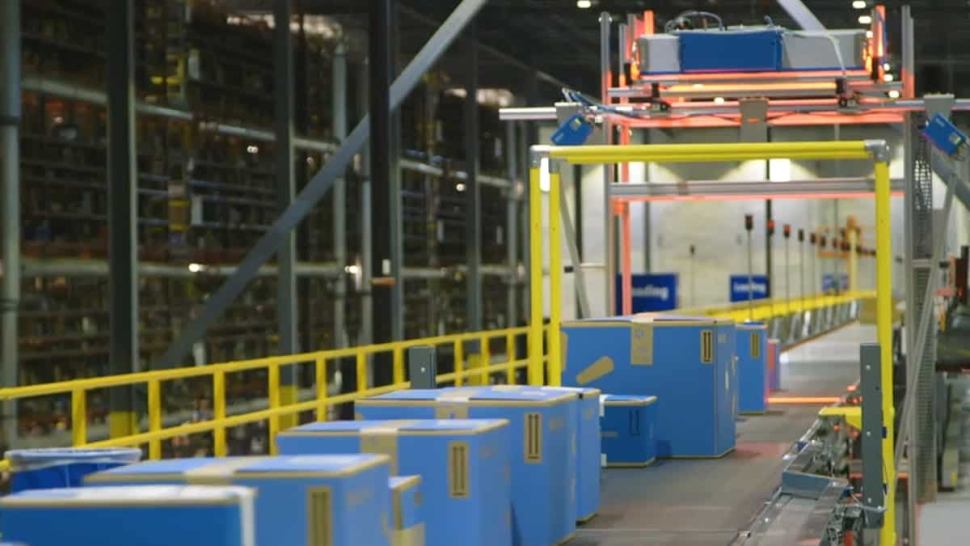
U.S. retailers will sacrifice near-term profits on e-commerce so they can invest increasing revenue streams into the logistics capabilities needed to handle the continued surge in online ordering, according to a report released Dec. 26 by IT consultancy ABI Research.
ABI said e-commerce revenue will reach $3.52 trillion in 2020, a 19% year-on-year growth rate and a figure equal to about 15% of U.S. GDP, estimated at $21.5 trillion. Retailers will need to invest in logistics tools that will cost-effectively manage customers’ elevated expectations amid the demand deluge, ABI said.
Everything will be on the table next year, except for autonomous vehicles, where progress towards implementing such operations will be virtually non-existent, the firm said.
Investments will focus on addressing the growing roles next year of one-day and seven-days-a-week deliveries, ABI said. Budgets will need to be redirected to manage the increasing convergence of online and in-store operations, according to the consultancy. For example, brick-and-mortar locations are increasingly being positioned as hubs closer to the customer, while e-commerce sites are more frequently directing package delivery to retail outlets, the firm said. Investments will be channeled to support “Buy Online Pick-up in Store” (BOPIS) options, according to ABI.
ABI did not quantify its projections of an increase in logistics spending. Few doubt, however, that logistics will take on added visibility within retail as e-commerce takes a larger share of the sales pie and goods once bought in-person are shipped to the recipient. The phrase “The Delivery Economy” has been coined to describe the current environment, and the prevailing belief is that a retailer’s success or failure will hinge upon its ability to manage the fulfillment and distribution of products, not necessarily whether one product is superior to another.
If the just-concluded holiday buying season is any indication, e-commerce’s share of the total retail market will continue to grow at a remarkable clip. Domestic e-commerce sales grew 18.8% this holiday compared to 2018, when growth year-on-year clocked in at 18.4% over 2017 levels, said global payment processing giant MasterCard, Inc. (NYSE:MA) in a Dec. 26 survey. Holiday e-commerce sales made up 14.6% of total U.S. retail sales, according to the survey. In all, U.S. holiday retail sales, excluding autos, rose 3.4% from 2018 levels.
It will be a free-for-all as retailers strive to improve, or in many cases change, their traditional transportation and logistics methods without breaking the bank. “Amazon.com (NASDAQ:AMZN) already felt the financial pressure in 2019 with North American margin compression as it grew investments in its next-day Prime delivery,” said Susan Beardslee, freight transportation and logistics principal analyst at ABI. Retailers from behemoths Walmart Stores (NYSE:WMT) and Target Corp. (NYSE:TGT) to mom-and-pop type firms have been pushed into offering expanded shipping options and reverse logistics services in order to compete, Beardslee said.
Amazon said Dec. 26 that it quadrupled from last year’s holiday period the number of items delivered under its same-day and one-day shipping windows. Earlier this year, Amazon made tens of millions of products ordered under its popular Prime service available for free one-day shipping.
Brokerage Compliance Symposium
The day before F3. Every compliance issue you face - fraud exposure, carrier liability, FMCSA rules, cargo theft, insurance gaps - navigated by attorneys and operators defining best practices in a changing industry.
F3 Awards Dinner
The night before F3. FreightTech100 companies honored. FreightTech 25 and Shipper of Choice winners revealed live. Cocktail reception into dinner and live music - 300 industry leaders in one purpose-built room.
F3: Future of Freight Festival
Industry-defining keynotes, rapid-fire technology demos, and industry leaders networking in experiences across Chattanooga - plus the inaugural F3 Awards Dinner featuring the FreightTech and Shipper of Choice reveals.
The day before F3. Every compliance issue you face - fraud exposure, carrier liability, FMCSA rules, cargo theft, insurance gaps - navigated by attorneys and operators defining best practices in a changing industry.
The Signal at Chattanooga Choo Choo • Chattanooga, TN Register NowThe night before F3. FreightTech100 companies honored. FreightTech 25 and Shipper of Choice winners revealed live. Cocktail reception into dinner and live music - 300 industry leaders in one purpose-built room.
The Signal at Chattanooga Choo Choo • Chattanooga, TN Register NowIndustry-defining keynotes, rapid-fire technology demos, and industry leaders networking in experiences across Chattanooga - plus the inaugural F3 Awards Dinner featuring the FreightTech and Shipper of Choice reveals.
The Signal at Chattanooga Choo Choo • Chattanooga, TN Register Now