




Fleet size directly correlates with whether a carrier has a disaster plan in place to deal with emergencies such as a long-term pandemic, according to a new trucking industry study.
The study, released Tuesday by the American Transportation Research Institute (ATRI) and the Owner-Operator Independent Drivers Association Foundation (an affiliate of the Owner-Operator Independent Drivers Association), found that most owner-operators and trucking firms do not have a formal disaster plan, and of those that do, less than one-third address pandemics.
But on a size basis, “fleet size dictates the development of disaster plans,” the study notes, pointing out that this is likely related to availability of resources.
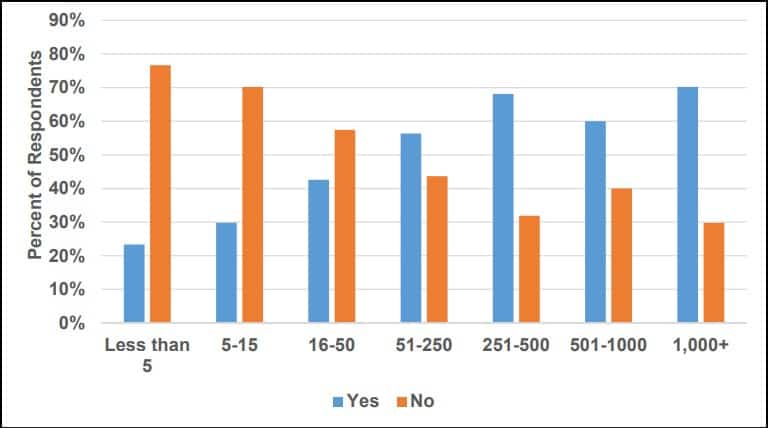
“Nearly 80% of owner-operators and small fleets do not have any type of disaster plan in place, whereas 70% of large fleets do. Given the large percentage of small fleet registrations in the U.S., industry associations and government agencies should facilitate and/or expand the role of disaster planning among this sector of trucking.”
The study looked at a range of issues affected by COVID-19 and was based on 5,100 survey responses returned as of April 8. The majority of respondents, 77.1%, were truck drivers. Approximately 70% of respondents operated fleets with 50 or fewer trucks.
Regarding detention times, while most truck drivers responded that detention, loading and unloading times were about the same during the pandemic, one-third found that they were worse, according to the study. The smallest and largest fleets encountered the longest delays at both shipping and receiving facilities.
“This is problematic as previous research by both OOIDA Foundation and ATRI indicates that detention times were extremely excessive and growing worse prior to COVID-19,” the study points out.
Respondents with larger fleets (251-1,000 power units) had the most difficulty finding parking, with a smaller percentage of owner-operators and small fleets having the same problem. According to the study, the lower figure could be a result of smaller companies “having more creative parking options” than larger fleets that have private truck stop contracts.
Asked to identify national disaster strategies that government agencies should consider, nearly 20% of respondents said the top priority of state governments should be expanding truck parking availability and ensuring safe parking. Approximately 12% responded that financial assistance should be a top priority from either the state or federal government. Respondents also suggested reducing or eliminating fuel taxes, regulating broker fees, and locking in freight rates.
In addition, more than 35% of respondents believe COVID-19 impacts will be temporary in terms of industry operations, with 18% indicating they are considering permanent business model changes.
Other findings in the study:
- Long-haul trips were down considerably as container imports at ports dried up. At the same time, local trips under 100 miles increased by more than 100%.
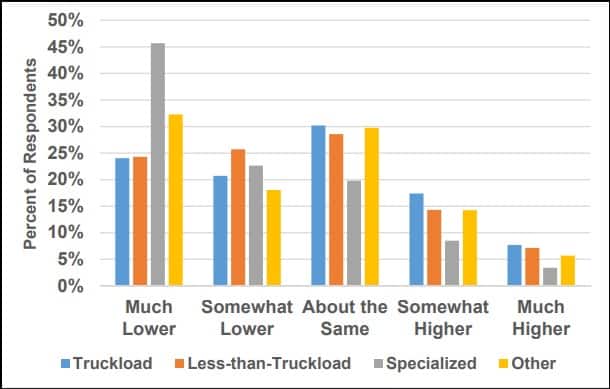
- Certain segments of the industry, such as medical devices, perishable foods and paper products, saw solid increases in truck traffic. However, nearly 50% of respondents described freight levels as “somewhat” to “much” lower due to the pandemic.
- Nearly 70% of specialized and tank truck operations were negatively impacted. In nearly every instance, smaller fleets reported greater negative impacts than larger fleets.
- The trucking industry’s perceptions about the country’s economic situation over the next several months lean slightly pessimistic, both in terms of freight movement and consumer spending.
Brokerage Compliance Symposium
The day before F3. Every compliance issue you face - fraud exposure, carrier liability, FMCSA rules, cargo theft, insurance gaps - navigated by attorneys and operators defining best practices in a changing industry.
F3 Awards Dinner
The night before F3. FreightTech100 companies honored. FreightTech 25 and Shipper of Choice winners revealed live. Cocktail reception into dinner and live music - 300 industry leaders in one purpose-built room.
F3: Future of Freight Festival
Industry-defining keynotes, rapid-fire technology demos, and industry leaders networking in experiences across Chattanooga - plus the inaugural F3 Awards Dinner featuring the FreightTech and Shipper of Choice reveals.
The day before F3. Every compliance issue you face - fraud exposure, carrier liability, FMCSA rules, cargo theft, insurance gaps - navigated by attorneys and operators defining best practices in a changing industry.
The Signal at Chattanooga Choo Choo • Chattanooga, TN Register NowThe night before F3. FreightTech100 companies honored. FreightTech 25 and Shipper of Choice winners revealed live. Cocktail reception into dinner and live music - 300 industry leaders in one purpose-built room.
The Signal at Chattanooga Choo Choo • Chattanooga, TN Register NowIndustry-defining keynotes, rapid-fire technology demos, and industry leaders networking in experiences across Chattanooga - plus the inaugural F3 Awards Dinner featuring the FreightTech and Shipper of Choice reveals.
The Signal at Chattanooga Choo Choo • Chattanooga, TN Register Now