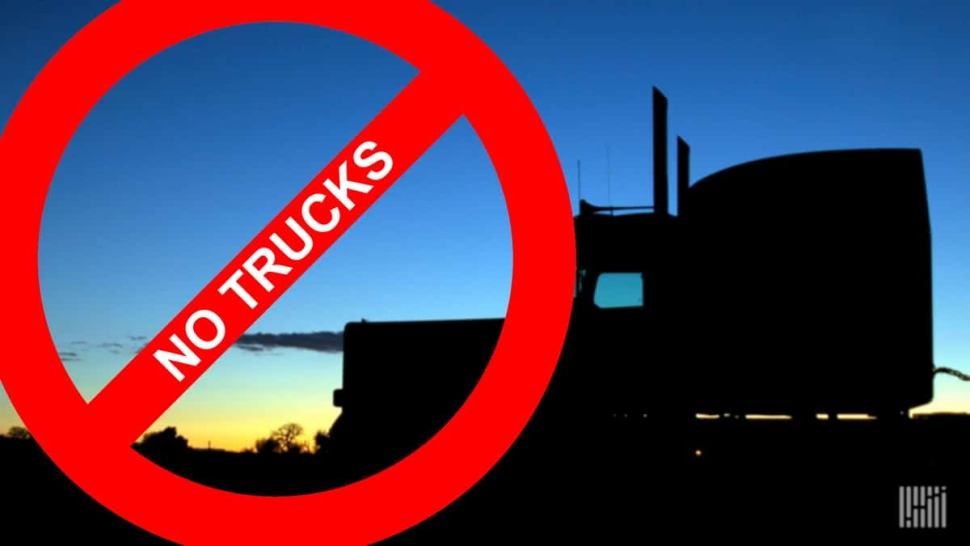
A move to severely restrict overnight truck parking on the streets of Minneapolis has slowed, with the legislation that would have reduced availability kicked back to a City Council committee for further consideration.
One of the factors driving the slowdown is the presence in the city of a substantial number of truck drivers in Minneapolis’ large East African community, particularly those of Somali descent.
“A lot of East African drivers had gotten into the industry and that is a big constituency,” John Hausladen, president and CEO of the Minnesota Trucking Association, told FreightWaves about the parking limitation initiative. The number of Minneapolis residents of East African descent who also are truck drivers, and who were parking in the city, was a “surprise” to a lot of council members, he added.
The proposed ordinance that was pushed back to the council’s Transportation and Public Works committee last week is sweeping. Parking by heavy trucks is already banned in residential areas, except for deliveries. The ordinance would extend that ban to all commercial areas and increase fines for violations.
Steve Fletcher, a member of the City Council, said there is a legitimate issue with truck parking that the legislation was trying to address. “It’s creating safety problems, it’s creating noise and nuisance, and we do need to solve that,” he said.
“But we can’t just say, ‘Don’t park here’ and not have a thought about where the trucks are going to park, because we want the goods delivered,” he added.
While the law would apply to commercial areas, Fletcher noted that the issue of the impact on people of color didn’t just hit independent owner-operators with a Somali background; many people of color live in the primarily commercial areas that would have been impacted by the law and are also affected by the negative consequences of living near a lot of truck traffic.
Hausladen said the push needed to take a breather and see if there are other avenues to be pursued before a full ban is implemented. That task is now in the hands of city staffers rather than elected council members.
“We want to see if rather than just doing an outright ban, we can have additional strategies to see if off-street parking can be developed without committing any city funds,” Hausladen said. The staff will be asked to “more aggressively connect with property owners to determine if there is an interest in providing capacity.”
A second part would be for the Minnesota Trucking Association to increase its own lobbying efforts with the state of Minnesota and Hennepin County, where Minneapolis is located.
Putting the issue back in the hands of a committee was considered a victory by Hausladen. He said the sweeping ban was “on a much faster track” before the recent action.
Hausladen said there was little doubt that making the issue more human and bringing in the possible hit on the East African community was clearly a factor in the slowdown. The trucking association gave testimony to the council in which it drove home the point that many of the trucks lining the streets are owned by independent contractors who call Minneapolis home.
“These small businesses, many of whom are owned by people of color, would have no viable alternative for overnight parking,” the association said in its testimony. “This ban could effectively force many of these hard-working residents to choose between their livelihood and the place they call home. With an existing truck driver shortage, we simply cannot afford to have qualified drivers leave the industry.”
Hausladen did not deny that there are problems in the interaction between parking and commercial activities. But he noted that there are existing laws regarding such things as blocking driveways, often with no enforcement. “If you add a whole other level of enforcement and you don’t have the bandwidth to enforce it, it will just continue anyways,” he said. “Have you solved anything?”
Fletcher agreed with Hausladen that a regional solution is required. The delay gives the council “a little bit of an on-ramp to advocate for better solutions,” he said.
More articles by John Kingston
Parking spot availability from two states integrated into Drivewyze system
Small Fleet Summit: OOIDA discusses various shortages
Mississippi eyes opening weigh stations to overnight truck parking
Brokerage Compliance Symposium
The day before F3. Every compliance issue you face - fraud exposure, carrier liability, FMCSA rules, cargo theft, insurance gaps - navigated by attorneys and operators defining best practices in a changing industry.
F3 Awards Dinner
The night before F3. FreightTech100 companies honored. FreightTech 25 and Shipper of Choice winners revealed live. Cocktail reception into dinner and live music - 300 industry leaders in one purpose-built room.
F3: Future of Freight Festival
Industry-defining keynotes, rapid-fire technology demos, and industry leaders networking in experiences across Chattanooga - plus the inaugural F3 Awards Dinner featuring the FreightTech and Shipper of Choice reveals.
The day before F3. Every compliance issue you face - fraud exposure, carrier liability, FMCSA rules, cargo theft, insurance gaps - navigated by attorneys and operators defining best practices in a changing industry.
The Signal at Chattanooga Choo Choo • Chattanooga, TN Register NowThe night before F3. FreightTech100 companies honored. FreightTech 25 and Shipper of Choice winners revealed live. Cocktail reception into dinner and live music - 300 industry leaders in one purpose-built room.
The Signal at Chattanooga Choo Choo • Chattanooga, TN Register NowIndustry-defining keynotes, rapid-fire technology demos, and industry leaders networking in experiences across Chattanooga - plus the inaugural F3 Awards Dinner featuring the FreightTech and Shipper of Choice reveals.
The Signal at Chattanooga Choo Choo • Chattanooga, TN Register Now