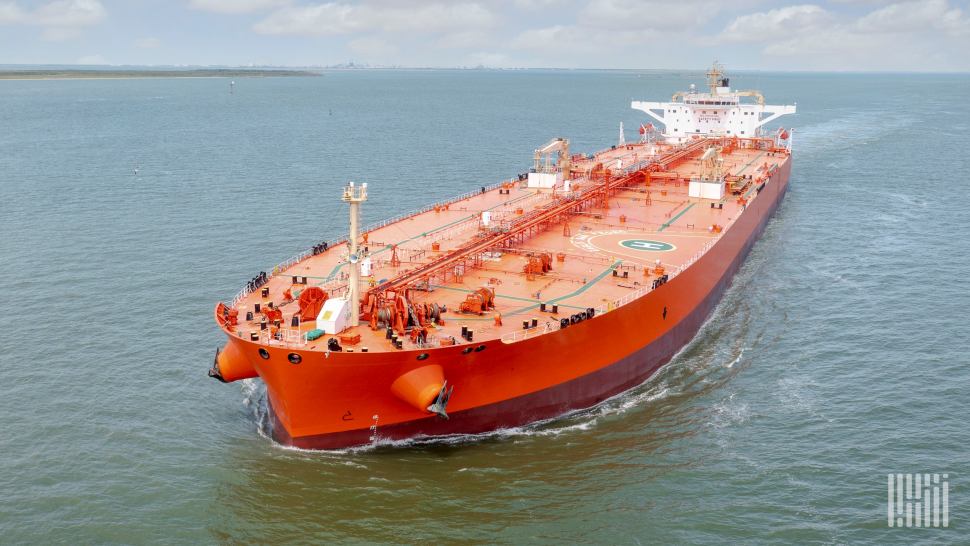
In its final days, the Biden administration is poised to impose a new round of sanctions on Russian oil exports, marking a significant escalation in efforts to curtail Moscow’s energy revenues.
These sanctions — targeting tankers, traders and insurance companies involved in the transport of Russian crude oil — are set to accelerate the reshaping of global oil supply chains, with possible headwinds for the shipping industry.
A long-awaited crackdown
The latest U.S. sanctions package is rumored to be expansive, encompassing two Russian oil companies and more than 100 tankers, as well as oil traders and Russian insurance firms. U.S. Treasury Secretary Janet Yellen has indicated that the sanctions net may widen even further, potentially including Chinese banks involved in facilitating Russian oil trades.
At their core, the sanctions would aim to enforce the $60-per-barrel price cap on Russian oil, a measure agreed upon by the G7 coalition, the European Union and Australia in 2022. This measure came as part of a broader strategy to limit Russia’s ability to fund its ongoing military operations in Ukraine, while still trying to minimize further disruptions to global energy markets.
Lars Barstad, CEO of Frontline Management, one of the world’s largest publicly listed oil tanker operators, has raised alarm over the growing “dark fleet” of unregulated vessels used to circumvent these sanctions.
“All these vessels are trading outside the [U.N.’s] framework,” Barstad stated, highlighting the risks associated with these operations. “They have been sleeping behind the wheel now for quite some time in respect of tankers.”
Russia’s “dark fleet” is a shadow network of aging ships, with intentionally obscure ownership, that operate outside international maritime regulations. These vessels, estimated to make up about 20% of the world’s oil tanker fleet, pose significant safety and environmental risks.
Barstad warns further, “I think it’s only a question of time until we get a big one” — in other words, a major maritime disaster.
In fact, Russia is currently contending with an ecological catastrophe in the Black Sea, following an oil spill that prompted a state-of-emergency declaration in Crimea.
The incident, which occurred in mid-December, involved two aged oil tankers that succumbed to a storm, releasing heavy M100-grade fuel oil into the sea — a type notorious for sinking rather than floating, complicating clean-up efforts. Authorities have cleared over 86,000 metric tons of contaminated sand and soil thus far, employing more than 10,000 responders in a large-scale effort to mitigate environmental damage.
The fallout has already proved severe, with notable losses of marine life such as dolphins and seabirds.
Shifting sands
The threat of additional sanctions, coupled with Europe’s growing interest in enforcing those already in effect, marks another decisive moment in the long-standing relationship between Russia and European energy markets.
The recent cessation of Russian gas transit through Ukraine, effective Jan. 1, 2025, symbolizes the end of an era and underscores the shifting dynamics of global energy trade, as the U.S. has rallied to grow its share of the European market.
The implications of these sanctions on global supply chains are far-reaching: Oil prices, a weighty factor in freight costs, are likely to face increased volatility. While the current market shows signs of oversupply, with crude prices averaging around $74 per barrel in 2024, the sanctions could lead to short-term price spikes and longer-term realignments in global oil trade patterns.
The pragmatic aim of the G7 sanctions was originally not to eliminate Russian energy exports altogether, but rather to give would-be buyers of Russian oil leverage in negotiating cheaper prices.
But China and India, which have continued to purchase Russian oil at discounted rates, may face increased scrutiny under the coming Trump administration as well as possible secondary sanctions. This could force a recalibration of their energy procurement strategies, potentially opening opportunities for alternative suppliers such as the U.S. and/or Middle Eastern producers.
Shippers pressed to improve compliance
The shipping industry finds itself at the tip of the spear for enforcing the sanctions already in place as well as those to come.
Calls for enhanced regulatory measures and more rigorous inspections of vessels navigating important maritime pathways are growing louder. Critics argue that European governments have historically been reluctant to fully enforce existing regulations, often citing the potential for increased energy costs as a deterrent to implementing stricter enforcement.
This perceived lack of resolve has led to accusations of allowing economic considerations to overshadow critical safety, geopolitical and environmental concerns.
As the industry seeks to answer these critics with action, the long-term impacts on global energy strategies are becoming clearer. Europe’s aggressive pursuit of alternative energy sources, including American gas and supplies from Norway and Algeria, suggests a fundamental shift away from Russian energy dependence.
This painful transition, while challenging for already-fragile economies in the short term, should lead to a more diversified and resilient global energy market.
Brokerage Compliance Symposium
The day before F3. Every compliance issue you face - fraud exposure, carrier liability, FMCSA rules, cargo theft, insurance gaps - navigated by attorneys and operators defining best practices in a changing industry.
F3 Awards Dinner
The night before F3. FreightTech100 companies honored. FreightTech 25 and Shipper of Choice winners revealed live. Cocktail reception into dinner and live music - 300 industry leaders in one purpose-built room.
F3: Future of Freight Festival
Industry-defining keynotes, rapid-fire technology demos, and industry leaders networking in experiences across Chattanooga - plus the inaugural F3 Awards Dinner featuring the FreightTech and Shipper of Choice reveals.
The day before F3. Every compliance issue you face - fraud exposure, carrier liability, FMCSA rules, cargo theft, insurance gaps - navigated by attorneys and operators defining best practices in a changing industry.
The Signal at Chattanooga Choo Choo • Chattanooga, TN Register NowThe night before F3. FreightTech100 companies honored. FreightTech 25 and Shipper of Choice winners revealed live. Cocktail reception into dinner and live music - 300 industry leaders in one purpose-built room.
The Signal at Chattanooga Choo Choo • Chattanooga, TN Register NowIndustry-defining keynotes, rapid-fire technology demos, and industry leaders networking in experiences across Chattanooga - plus the inaugural F3 Awards Dinner featuring the FreightTech and Shipper of Choice reveals.
The Signal at Chattanooga Choo Choo • Chattanooga, TN Register Now