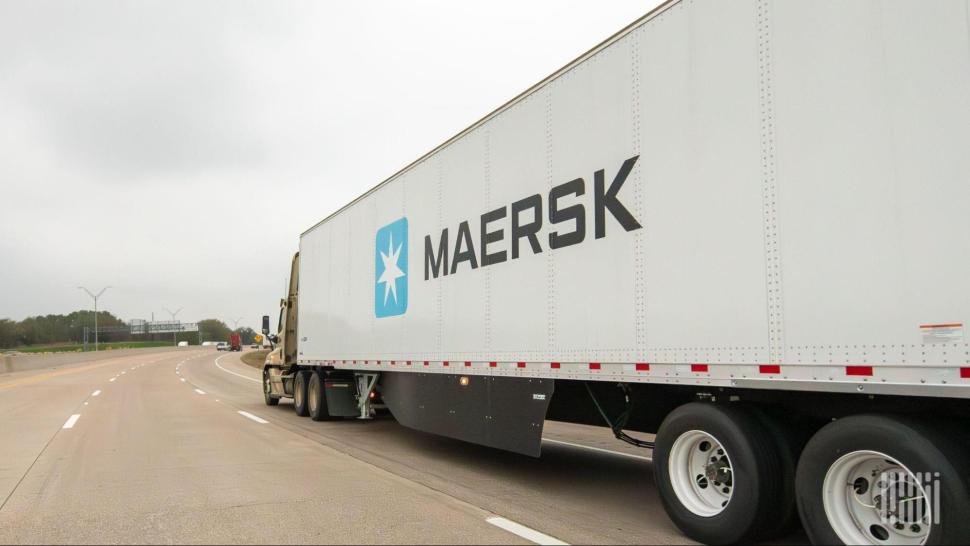
Last-mile delivery is where every upstream mistake finally comes due. It is the last stop before the customer, the last chance to get an order right. It is also the first place where blame lands when something goes wrong. Maersk is betting that connecting every link in that chain, from the port to the doorstep, is key to reducing friction and improving visibility across the customer journey.
“When we talk about optimization on last mile, I think last mile gives and creates the data points that amplify the upstream issues,” said Prashant Shah, Head of E-commerce for North America at Maersk. “To me, last mile isn’t just a cost center anymore. The last mile, when we are looking at it, is data intelligence we can use to help the upstreams out.”
That reframing sits at the center of how Maersk is building out its North American ground and e-commerce operations, according to Shah and Joe Johnson, Head of Pricing for Maersk Ground Freight (MGF) in North America.
The Last Mile as a Data Intelligence Engine
Shah said most companies treat last-mile delivery as an isolated function, missing the upstream problems it actually reveals: inventory allocation, product development, or how quickly a customer got a response after placing an order.
Without connectivity across the supply chain, visibility can break down at every handoff, making it harder to identify where problems originate and how to address them before they reach the customer. Last-mile delivery sits at the end of the supply chain and functions as a domino effect. That is, any upstream failure surfaces there first, with nothing left to catch it once the package reaches the customer’s door.
Johnson framed the stakes in terms of what the customer actually sees. “The final mile is the part that’s visible to the end customer,” Johnson said. “They don’t see the Maersk vessel coming across with their freight. They don’t see the pickup in China. They see that last-mile delivery. So we need to better understand: Is it actually a last mile problem, or what can we do to improve that overall customer experience?”
Vertical Integration in the Supply Chain Pays Off
Maersk’s pitch to shippers goes beyond ground freight. Shah described a customer relationship that starts in Vietnam and handles its shipment with Maersk.
By bringing those functions together Maersk aims to reduce the information gaps that often emerge between transportation providers, warehouses and delivery networks. Rather than managing multiple vendors independently, customers gain a more connected view of inventory, shipments and final delivery performance, enabling faster issue resolution and more proactive communication when disruptions occur.
Johnson said that end-to-end connection is becoming a market differentiator as consumers increasingly buy from overseas sellers and expect to track the full journey. “As we connect our systems from end to end in the supply chain, now there becomes that global visibility,” he said. “The customer’s anxiety is reduced the more visibility we give them.”
For many retailers and brands, the challenge is no longer simply moving products quickly. It is providing a consistent and predictable experience for end customers while managing growing complexity across sourcing, transportation, fulfillment and delivery. As expectations for visibility continue to rise, supply chain leaders are increasingly evaluating how connected their logistics networks are from origin to final delivery.
Shah tied that visibility directly to supply chain management. “The more elements of a customer’s supply chain that we can manage, the more proactive we can be in communicating to both our customer and the end consumer.” Johnson added that consistency is the goal regardless of geography: “We want to provide the same delivery experience in Seattle, Washington, that we do in Richmond, Virginia, and we can only do that by connecting every portion of that chain.”
MEC and MGF: Combined Arms Under One Brand
Maersk splits its North American operation into two units that Shah said function as one. Maersk E-Commerce (MEC), which Shah leads, handles last-mile delivery. MGF, under Johnson, covers LTL (less than truckload) and FTL (full truckload) ground freight.
“We just have different acronyms, but from the customer point of view, it doesn’t matter,” Shah said. “A lot happens behind the scenes, but the customer experiences one integrated solution.”
Johnson said the branding is deliberate. “It is definitely a competitive advantage, and that’s why when you see our branded vehicles or branded ships, they’re all different modes of transit, but it’s all Maersk,” he said. “I handle the heavier, bulky shipments, and Prashant’s group has the smaller parcel, and those groups work behind the scenes to say, ‘These are the best avenues of transit.’”
From 3PL to 4PL: Managing the Last Mile at Scale
Rather than build its own last-mile delivery fleet, Maersk manages a pool of carriers on customers’ behalf.
“We have multiple carriers that work with us,” Shah said. “So our customer can have a single point of contact with us, but we are using a multi-carrier model for them, managing it with single API integration, one communication and one customer experience for all of their end customers. If service issues arise in a region, we can adjust carriers behind the scenes so the customer experience remains consistent.”
“At the end of the day, customers don’t care how many handoffs happen behind the scenes,” Shah said. “They care that their product arrives when promised and that they know what’s happening every step of the way. Our job is to make that experience as simple and predictable as possible.”
Brokerage Compliance Symposium
The day before F3. Every compliance issue you face - fraud exposure, carrier liability, FMCSA rules, cargo theft, insurance gaps - navigated by attorneys and operators defining best practices in a changing industry.
F3 Awards Dinner
The night before F3. FreightTech100 companies honored. FreightTech 25 and Shipper of Choice winners revealed live. Cocktail reception into dinner and live music - 300 industry leaders in one purpose-built room.
F3: Future of Freight Festival
Industry-defining keynotes, rapid-fire technology demos, and industry leaders networking in experiences across Chattanooga - plus the inaugural F3 Awards Dinner featuring the FreightTech and Shipper of Choice reveals.
The day before F3. Every compliance issue you face - fraud exposure, carrier liability, FMCSA rules, cargo theft, insurance gaps - navigated by attorneys and operators defining best practices in a changing industry.
The Signal at Chattanooga Choo Choo • Chattanooga, TN Register NowThe night before F3. FreightTech100 companies honored. FreightTech 25 and Shipper of Choice winners revealed live. Cocktail reception into dinner and live music - 300 industry leaders in one purpose-built room.
The Signal at Chattanooga Choo Choo • Chattanooga, TN Register NowIndustry-defining keynotes, rapid-fire technology demos, and industry leaders networking in experiences across Chattanooga - plus the inaugural F3 Awards Dinner featuring the FreightTech and Shipper of Choice reveals.
The Signal at Chattanooga Choo Choo • Chattanooga, TN Register Now