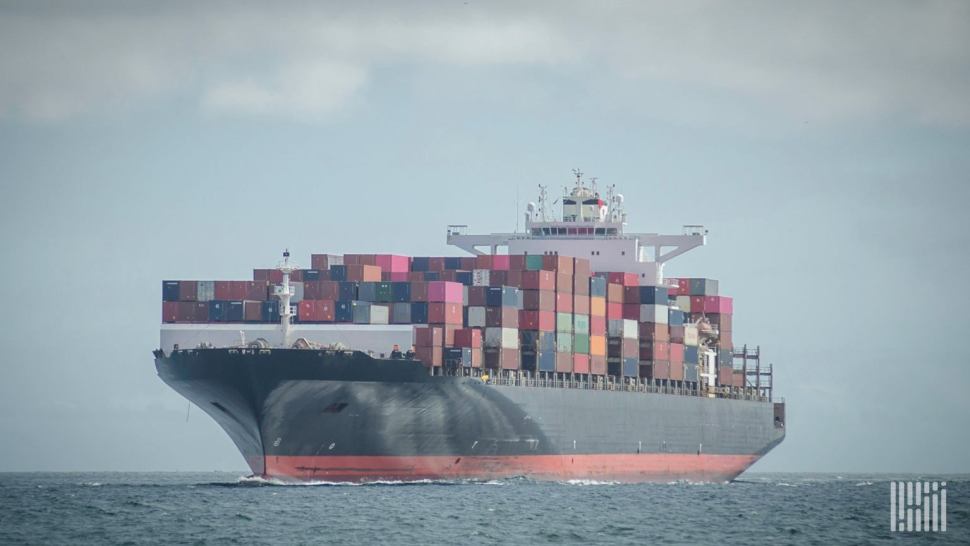
Port Houston handled 369,899 twenty-foot equivalent units in July, a 6% decline from the same month last year, as container growth at the Gulf Coast gateway moderated after stronger activity earlier in 2026.
The port’s July container volume compared with 392,829 TEUs during the same month in 2025.
Despite the monthly decline, container activity remained slightly ahead of last year’s pace through the first seven months of 2026. Port Houston handled nearly 2.6 million TEUs from January through July, up 1% from 2.56 million TEUs during the same period in 2025.
Port officials said overall container growth has moderated following stronger activity associated with frontloading earlier in the year.
Loaded imports totaled 181,808 TEUs in July, down 3% year over year from 187,367 TEUs. Loaded exports declined 6% to 124,814 TEUs from 133,137 TEUs.
For the year to date, however, loaded imports remained a source of growth, rising 5% to 1.21 million TEUs. Loaded exports totaled 925,781 TEUs through July, down 1% from the same period last year.
East Asia continued to drive import growth at Port Houston, with loaded container imports from the region increasing 10% year to date and representing 57% of total import volume.
Port officials said apparel, resins and plastics, machinery and electronics helped drive the increase, according to a news release.
Total revenue tonnage at Port Houston’s public facilities reached 4.57 million tons in July, down 12% from 5.19 million tons a year earlier. Through July, the port handled 32.81 million tons, essentially flat compared with 32.65 million tons during the first seven months of 2025.
General cargo was one of the strongest areas during the month. Port Houston handled 104,048 tons of general cargo in July, a 42% increase from 73,290 tons a year earlier. Year-to-date general cargo reached 796,982 tons, up 35% from 590,555 tons in 2025.
Steel continued to move in the opposite direction. Steel tonnage fell 37% year over year in July to 357,625 tons, while steel imports declined 36% to 331,271 tons. Through July, total steel tonnage was down 18% to 2.34 million tons.
Other bulk categories showed stronger year-to-date results. Dry bulk tonnage totaled 3.56 million tons through July, up 1%, while liquid bulk increased 13% to 1.89 million tons. Total container tonnage rose 1% to 24.22 million tons.
Vessel activity also increased. Port Houston recorded 710 vessel calls in July, up 4% from 684 during July 2025. Through the first seven months of the year, vessel calls totaled 5,054, a 7% increase from 4,723 a year earlier.
Across the broader Houston Ship Channel, deep-draft transits increased 3% year over year in July to 1,523, while barge transits jumped 11% to 19,552. Through July, deep-draft traffic was up 7% and barge traffic increased 6%.
“Our region remains resilient through evolving global trade conditions. Vessel activity in the nation’s busiest waterway is up, and we continue to see steady cargo movement that helps power industries like energy, manufacturing and retail, crucial to our national economy,” Port Houston CEO Charlie Jenkins said in a statement.
The latest cargo figures come as a new economic impact study underscores the Houston Ship Channel’s role in the national economy.
Marine cargo activity through the public and private facilities along the Houston Ship Channel supported $986.9 billion in annual U.S. economic value and nearly 3.53 million jobs in 2025, according to a study by Martin Associates released Tuesday.
In Texas, activity supported $537.7 billion in annual economic value, equivalent to 18.5% of the state’s gross domestic product, along with approximately 1.89 million jobs and $15.6 billion in state and local tax revenue.
The study found the economic value supported by Houston-area maritime activity increased $98.4 billion between 2022 and 2025. Nationwide economic value increased 9% over that period, while the number of jobs supported nationally increased 5%.
The broader Houston Ship Channel region has also recorded strong trade tonnage this year. Through June, total trade tonnage increased 16% year over year to 135.05 million tons, driven by a 22% increase in exports to 109.5 million tons. Imports declined 4% to 25.55 million tons.
Why it matters: Port Houston’s July slowdown shows the effects of earlier import frontloading beginning to fade, but rising year-to-date container imports, vessel activity and general cargo volumes indicate freight demand through the nation’s largest port for waterborne tonnage remains resilient.
Brokerage Compliance Symposium
The day before F3. Every compliance issue you face - fraud exposure, carrier liability, FMCSA rules, cargo theft, insurance gaps - navigated by attorneys and operators defining best practices in a changing industry.
F3 Awards Dinner
The night before F3. FreightTech100 companies honored. FreightTech 25 and Shipper of Choice winners revealed live. Cocktail reception into dinner and live music - 300 industry leaders in one purpose-built room.
F3: Future of Freight Festival
Industry-defining keynotes, rapid-fire technology demos, and industry leaders networking in experiences across Chattanooga - plus the inaugural F3 Awards Dinner featuring the FreightTech and Shipper of Choice reveals.
The day before F3. Every compliance issue you face - fraud exposure, carrier liability, FMCSA rules, cargo theft, insurance gaps - navigated by attorneys and operators defining best practices in a changing industry.
The Signal at Chattanooga Choo Choo • Chattanooga, TN Register NowThe night before F3. FreightTech100 companies honored. FreightTech 25 and Shipper of Choice winners revealed live. Cocktail reception into dinner and live music - 300 industry leaders in one purpose-built room.
The Signal at Chattanooga Choo Choo • Chattanooga, TN Register NowIndustry-defining keynotes, rapid-fire technology demos, and industry leaders networking in experiences across Chattanooga - plus the inaugural F3 Awards Dinner featuring the FreightTech and Shipper of Choice reveals.
The Signal at Chattanooga Choo Choo • Chattanooga, TN Register Now