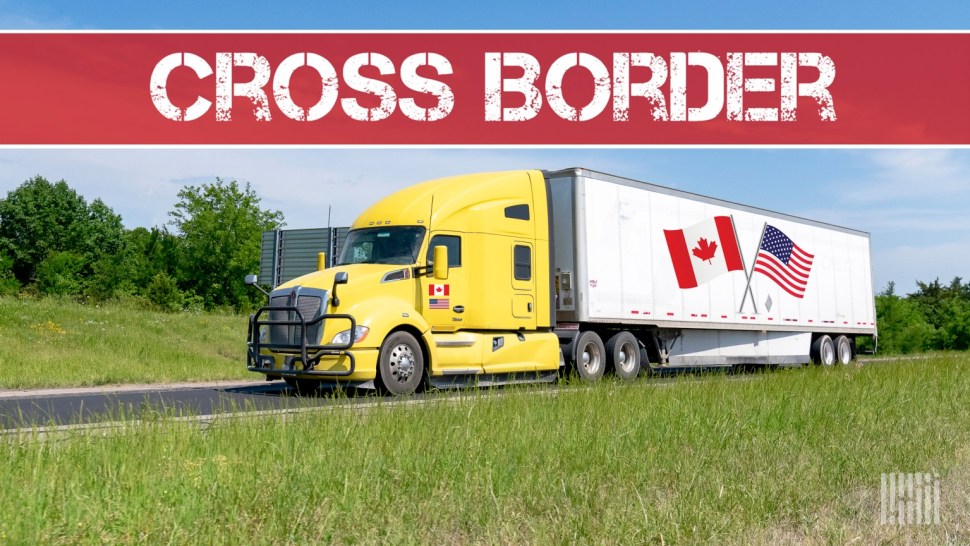
Canada imposed retaliatory tariffs of up to 50% on nearly $20 billion worth of U.S. goods Tuesday, escalating a trade dispute that experts say is raising costs and uncertainty across deeply integrated North American supply chains.
The tariffs took effect just after midnight Tuesday and cover roughly C$27.6 billion ($20 billion) in U.S. imports. Rates range from 15% to 50% and broadly match tariffs President Donald Trump imposed on Canadian products after trade negotiations between Washington and Ottawa collapsed in August, according to the CBC.
The latest Canadian duties target hundreds of American products, including steel, aluminum, clothing, furniture, dairy products, household appliances and industrial equipment.
American milk, golf clubs, steel, aluminum, jackets and T-shirts face tariffs of 50%, while cheese, toilet paper and some air conditioners face 25% duties. Forklifts and industrial molds are among products subject to a 15% tariff, BBC reported.
The countermeasures add another layer of costs for manufacturers, retailers and transportation providers moving freight across one of the world’s largest bilateral trading relationships. U.S.-Canada trade totaled nearly $900 billion in 2025.
Canada’s new tariffs cover about 8% of its imports from the U.S., with steel, aluminum and furniture manufacturing expected to experience some of the largest effects. Printing, paper, pulp, clothing and textiles also face significant exposure.
The tariffs come after Trump imposed 50% duties on approximately $20 billion in Canadian imports following the breakdown of negotiations between the countries.
Canadian Prime Minister Mark Carney has described Canada’s response as “dollar-for-dollar,” with his government attempting to pressure Washington while limiting damage to Canadian companies and consumers.
That balancing act has already forced Canada to make adjustments. Fresh fish and lobster initially appeared among the products targeted but were later removed after objections from the country’s seafood industry, reflecting the tightly interconnected supply chains between the countries.
Businesses brace for higher costs
Canadian business groups have warned that retaliation could further raise costs for companies already dealing with U.S. tariffs.
The Canadian Federation of Independent Business said about 40% of its small-business members that export goods are selling products now subject to 50% U.S. tariffs. The organization expects Canada’s retaliation to affect an even larger share of its membership.
The CFIB said the widening trade fight is likely to increase economic uncertainty and prices and called on Ottawa to expand assistance for affected small businesses.
Economists have similarly warned that Canadian tariffs could increase prices for businesses and consumers because the duties are collected on U.S. products entering Canada.
Ontario and Quebec could be particularly exposed because of their concentration of manufacturing industries and dependence on U.S. trade.
The Canadian Chamber of Commerce has urged Ottawa to be targeted in its retaliation.
“Businesses understand retaliation but don’t want to see endless escalation,” Candace Laing, the chamber’s president and CEO, said in a statement cited by the BBC, adding that companies are preparing for the dispute to continue.
Washington weighs another response
U.S. Trade Representative Jamieson Greer said Tuesday that Washington could consider additional retaliatory tariffs against Canadian goods. Greer and Canadian Trade Minister Dominic LeBlanc were expected to speak Tuesday about the U.S. response and potential next steps, according to Radio-Canada.
Trump has also threatened to block Canadian aircraft manufacturer Bombardier from selling planes in the United States unless the company moves manufacturing south of the border, according to the Associated Press.
Bombardier pushed back by highlighting the extent of its U.S. supply chain. The Montreal-based manufacturer said it works with about 2,800 U.S. companies across 47 states, including suppliers producing business-jet wings in Texas and flight-control components near Los Angeles.
The company said its U.S. operations and supply chain support tens of thousands of jobs.
Why it matters: New duties on goods moving north could reshape sourcing and freight flows while adding costs for manufacturers and importers on both sides of the border.
Brokerage Compliance Symposium
The day before F3. Every compliance issue you face - fraud exposure, carrier liability, FMCSA rules, cargo theft, insurance gaps - navigated by attorneys and operators defining best practices in a changing industry.
F3 Awards Dinner
The night before F3. FreightTech100 companies honored. FreightTech 25 and Shipper of Choice winners revealed live. Cocktail reception into dinner and live music - 300 industry leaders in one purpose-built room.
F3: Future of Freight Festival
Industry-defining keynotes, rapid-fire technology demos, and industry leaders networking in experiences across Chattanooga - plus the inaugural F3 Awards Dinner featuring the FreightTech and Shipper of Choice reveals.
The day before F3. Every compliance issue you face - fraud exposure, carrier liability, FMCSA rules, cargo theft, insurance gaps - navigated by attorneys and operators defining best practices in a changing industry.
The Signal at Chattanooga Choo Choo • Chattanooga, TN Register NowThe night before F3. FreightTech100 companies honored. FreightTech 25 and Shipper of Choice winners revealed live. Cocktail reception into dinner and live music - 300 industry leaders in one purpose-built room.
The Signal at Chattanooga Choo Choo • Chattanooga, TN Register NowIndustry-defining keynotes, rapid-fire technology demos, and industry leaders networking in experiences across Chattanooga - plus the inaugural F3 Awards Dinner featuring the FreightTech and Shipper of Choice reveals.
The Signal at Chattanooga Choo Choo • Chattanooga, TN Register Now