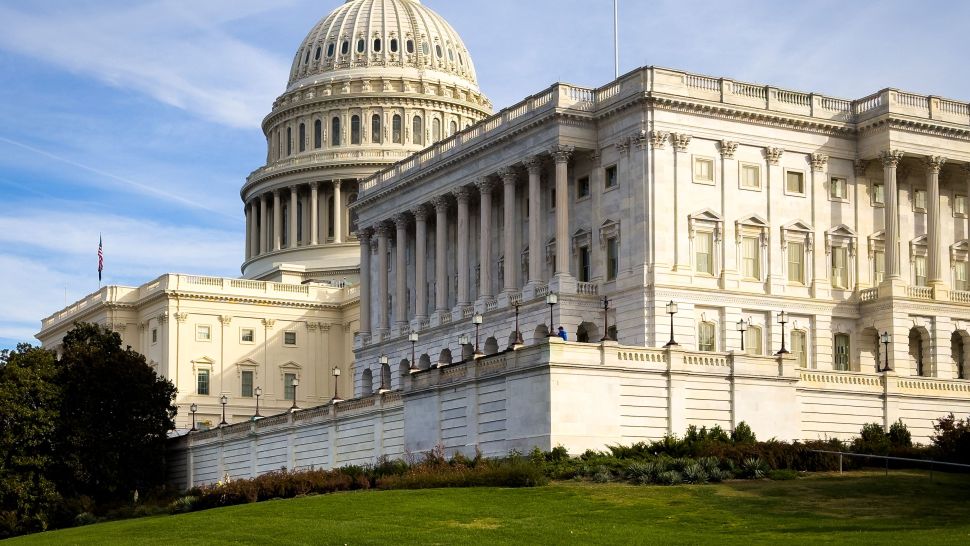
Every bill in Congress has an expiration date. For the 119th Congress, it’s noon on Jan. 3, 2027. Anything that hasn’t passed both chambers and reached the president by then dies, and the next Congress starts over with new bill numbers, new committee chairs and new math.
After Tuesday, that math changed. Democrats won control of both the House and the Senate. Rep. Rick Larsen of Washington, the ranking Democrat on the House Transportation and Infrastructure Committee, is expected to take the gavel from retiring Chairman Sam Graves. Sen. Maria Cantwell of Washington is in line to replace Ted Cruz as chair of Senate Commerce, the committee that oversees FMCSA on the Senate side. Rep. David Rouzer of North Carolina, who chairs the Highways and Transit Subcommittee and wrote Dalilah’s Law, was in a race that was still uncalled as of Nov. 4. Even if he wins, he loses the subcommittee gavel.
In September, I counted 79 trucking bills introduced across the last two Congresses. Three became law. Of the rest, 69 never left committee. The biggest enforcement change Congress made in that window, ordering DOT to treat a failed English proficiency check as an out-of-service violation, didn’t come from any of the 79. It came from a paragraph in the spending law that ended the shutdown in February.
That’s the lesson for the next 60 days. Stand-alone trucking bills don’t move. Bills that have to pass do.
What’s still on the table
The government and the federal highway program are both funded through Dec. 11 under the continuing resolution signed Sept. 2. That deadline is the only vehicle left in this Congress. Truckload Carriers Association President Jim Mullen told FreightWaves for a Nov. 4 story that he expects lawmakers to pass a fairly clean highway extension running into June and leave the real highway bill to the new Congress. I think he’s right, and that’s the problem.
The BUILD America 250 Act, H.R. 8870, cleared the House Transportation and Infrastructure Committee 62-2 on May 22 and never reached the floor. It carries $750 million over five years for truck parking, directs DOT to write a rule prohibiting predatory lease-purchase programs, requires a disclosure form showing how many drivers actually end up owning their trucks, targets chameleon carriers and creates a rulemaking committee on minimum knowledge requirements for new carriers. It dies Jan. 3. Mullen expects the parking money to carry into the next version, and I’d expect Democrats to keep the lease-purchase language and push harder on it. An effort to raise the $750,000 minimum insurance requirement was stripped from this year’s bill, and Mullen told FreightWaves he expects it back. Under a Democratic chairman, so do I.
Dalilah’s Law, H.R. 5688, cleared the same committee 35-26 on a party-line vote March 18 and has waited for a House vote ever since. Its Senate companion, S. 3917, never got a hearing. It dies Jan. 3 and won’t come back in its current form. Larsen called the English proficiency section redundant in March, and Democrats objected that the non-domiciled limits could bar DACA recipients from ever driving. Mullen told FreightWaves he expects the next highway bill to handle non-domiciled drivers differently, possibly letting DACA recipients keep their credentials.
Outside the trucking-specific bills, the Combating Organized Retail Crime Act, H.R. 2853, is the one freight-related bill with a real shot. It passed the House 348-60 on May 12 and has sat in the Senate Judiciary Committee since. It creates a federal coordination center to combat organized cargo theft. It doesn’t mandate equipment or touch CDL eligibility, and it has support in both parties. If the Senate wants one win for freight before January, this is it.
The rest of the list is done. The Motor Carrier Safety Selection Standard Act, H.R. 5337, a national standard for vetting a carrier before handing it freight, dies in committee for the second straight Congress, even after the Supreme Court’s 9-0 decision in Montgomery v. Caribe Transport II sent negligent selection claims to juries. The Truck Parking Safety Improvement Act dies, though its money lives on in the highway bill. So do the chameleon carrier bills, the under-21 bills, the predatory leasing bill and every CDL fraud bill that never got a markup.
How the 40 bills sort out for next year
I’m tracking 40 trucking-specific federal bills this session. Only two, Dalilah’s Law and the BUILD America 250 Act, have been voted out of committee. Every one dies Jan. 3 unless it rides the December bill. Here’s how I’d sort them for the next Congress.
The CDL eligibility bills mostly lose their path. That group includes the versions of Dalilah’s Law, Connor’s Law (whose English proficiency language was folded into Dalilah’s Law), the SAFE Driving Laws Act, the No CDLs for Illegals Act, the Secure Commercial Driver Licensing Act and several others. Under a Democratic House, the immigration pieces of these bills won’t come back as written.
The fraud and identity bills are the ones worth refiling, and they’re the strongest candidates for bipartisan support. Barron’s Law, H.R. 10620, belongs here for its non-immigration sections: a $25,000 fine for knowingly using an ineligible driver, a ban on registering any carrier revoked in the past three years, and a $25,000 fine for hiding a relationship or using a successor company to dodge a sanction. That’s the chameleon carrier fix in plain language. The group also includes the House and Senate SAFE Act bills on carrier registration screening, the GHOSTRUCK Act and Sen. Ashley Moody’s Staged Accident Fraud Prevention Act, which would make intentionally causing a crash with a commercial truck a federal crime. Those are the bills to strip of anything partisan and refile in January.
The driver pay and workforce bills get a better shot under Democrats. The Guaranteeing Overtime for Truckers Act already has sponsors from both parties. Rep. Julia Brownley’s Predatory Truck Leasing Prevention Act lines up with the lease-purchase language already in the highway bill. Expect both to come back with more cosponsors. The under-21 bills go back to the same fight between ATA and OOIDA they’ve been stuck in for years.
The equipment and liability bills get harder. The emissions rollback bills face a Congress less interested in loosening those rules. The Uniform Vehicle Safety Standards Act and the carrier selection standard bill would both limit lawsuits against the industry, and neither moves under a Democratic majority.
Why memos don’t cut it
Here’s what most people miss. Almost everything that changed on the road in the last 18 months is executive action, not law, and executive action lasts only until the next court ruling or the next administration.
Take English proficiency. The requirement has been in 49 CFR 391.11(b)(2) for decades. In 2016, an FMCSA policy memo told inspectors not to put drivers out of service for it. An April 2025 executive order and a new memo reversed that, effective June 25, 2025. By August, DOT said inspectors had issued more than 26,000 out-of-service orders for it. One memo turned enforcement off. Another turned it back on. The February spending law ordered DOT to put the out-of-service consequence into regulation. FMCSA proposed that rule Aug. 10, and comments closed Oct. 10. Until the rule is final, the biggest roadside enforcement change in a decade still rests on guidance.
The non-domiciled CDL rule is further along and more exposed. FMCSA’s final rule took effect March 16 and is expected to make about 200,000 drivers ineligible as their licenses expire. A divided D.C. Circuit panel refused to stay it in May, but the same court heard the merits Sept. 15, and as of early November it hadn’t ruled. When it stayed the earlier interim version last November, the court noted that non-domiciled drivers were about 5% of CDL holders and about 0.2% of fatal crashes in the data FMCSA cited. A rule survives or falls on whether the agency followed the Administrative Procedure Act and showed its work. A statute survives or falls on whether Congress had the power to pass it. That’s why the industry wanted Dalilah’s Law, and that’s the protection the policy loses on Jan. 3.
Fraud enforcement has the same weakness. In May 2025, President Trump signed Executive Order 14294, which discourages criminal enforcement of regulatory offenses and tells agencies to weigh factors like the harm caused before referring a violation to the Justice Department. For a trucker who missed a paperwork deadline, that’s fair. But CDL mills, falsified logs, shut-down carriers reopening under new names and USDOT numbers sold online aren’t paperwork mistakes. FMCSA warned in March that it would revoke registrations for anyone buying, selling or leasing a USDOT number outside a legitimate transaction. A revocation isn’t a prison sentence. If Congress wants fraud networks treated as crimes, it has to say so in statute, with the intent standard written in, so no executive order can soften it.
Emissions shows the same weakness from the other direction. On Jan. 21, the Justice Department said it would use its enforcement discretion to stop bringing criminal charges under the Clean Air Act for tampering with onboard diagnostic devices. CBS News reported that Deputy Attorney General Todd Blanche’s memo also ordered prosecutors to drop pending defeat device cases. I’ve written for years about trucks derated to 5 mph on the shoulder because a $300 sensor failed, and I think DOJ made the right call. But it was discretion. The Clean Air Act’s tampering ban and its criminal penalties are still in the statute. The general federal statute of limitations is five years, so a delete done in 2026 is chargeable until 2031, and a future Justice Department can rescind the Blanche memo on its first day.
Memos let an agency move fast. Rules make the change stick. Statutes keep the change in place after the people who wrote it are gone. Right now, trucking safety is running mostly on the first two.
Bucket one: before Jan. 3
The short list has to ride the Dec. 11 bill or pass by unanimous consent in a lame-duck Senate. Here’s what I’d push, in order of what can actually get done.
Pass CORCA in the Senate. It cleared the House 348-60. Cargo theft is one of the few freight problems both parties agree on, and the bill would give carriers and brokers a federal partner against the networks hitting them hardest.
Fund the people who do the inspections. Whatever the December bill looks like, it has to keep Motor Carrier Safety Assistance Program grants to the states whole. Another short stopgap that leaves state enforcement budgets guessing is the opposite of a safety policy.
Put the bipartisan pieces of Dalilah’s Law in the extension. Not the immigration provisions. The pieces nobody voted against on the merits: banning foreign-based brokers and offshore dispatch services that feed double brokering and load theft, and fixing self-certification on the Training Provider Registry so a CDL mill can’t certify itself. Both are fraud fixes, not immigration policy, and both were in the committee’s bill.
Be honest about the odds. Mullen expects a clean extension with no riders, and a lame-duck Congress that just lost both chambers has little reason to give the incoming majority a win or take a hard vote. If none of this happens, it isn’t the end of the world. It’s the start of a harder year.
Bucket two: 2027
The highway bill gets rewritten under Larsen and Cantwell. That isn’t automatically bad for safety. Larsen co-wrote the bill that cleared committee 62-2, and the American Trucking Associations said in a statement to FreightWaves that the highway bill is a chance to show divided government doesn’t have to mean dysfunctional government. What changes is the balance. Expect more on lease-purchase, insurance minimums and driver protections, less on English proficiency and a different approach to non-domiciled licensing.
The industry should go into that fight with one priority above the rest: identity. Who owns the carrier, who’s actually driving, whose truck is under the load and whether the broker checked. Chameleon carrier screening at registration, a real carrier selection standard now that Montgomery made selection a jury question, and verified training providers aren’t partisan issues. They’re the provisions most likely to survive a Democratic rewrite, and they’d do the most to take bad operators off the road.
The hearings are coming
A Democratic House means oversight hearings, and Transportation Secretary Sean Duffy and FMCSA Administrator Derek Barrs should expect to be called on non-domiciled licensing, English proficiency enforcement and the funding fights with the states. DOT moved to withhold about $160 million from California and $73.5 million from New York over non-domiciled licenses, and both states sued. Members will ask how many of the roughly 200,000 affected drivers were actually unsafe, how many of the more than 26,000 English proficiency out-of-service orders led to a crash or a conviction, and why the agency told the D.C. Circuit it lacked data to compare safety outcomes.
The time to build those answers is now, before the gavel changes hands. If the policy is right, prove it with crash data and roadside outcomes, not press releases. If parts of it aren’t, fix them before a committee does it for you. An agency that walks into a hearing with numbers keeps its program. An agency that walks in with talking points loses it in the next appropriations bill.
What FMCSA and the states should do in the next 60 days
For FMCSA, the job is to turn guidance into rules. Finalize the English proficiency out-of-service rule. Finalize the chameleon carrier and registration work the agency announced in February. A final rule can still be challenged in court, but a new memo can’t undo it. With the White House unchanged, a Democratic Congress would need the president’s signature to overturn it under the Congressional Review Act. That makes the next two years the window to put the program on solid legal footing.
For the states, the job is consistency and data. English proficiency enforcement has to look the same in Virginia as it does in Texas, or it won’t survive the first hearing that compares them. States should document every English proficiency out-of-service order and what happened next, audit their own non-domiciled licensing before a federal audit does it for them, and put inspections where the crashes are. My home state shows why. In fiscal 2025, Virginia ran about one truck crash for every five inspections, the worst ratio in the country, at $424 per inspection, according to [SOURCE]. California ran 45 inspections per crash. A bill in Washington won’t fix coverage like Virginia’s. A state fixes it by deciding to put inspectors on the road.
The big picture
The next 60 days will probably produce an extension and not much else. That’s fine if the industry uses the time. The safety gains of the last 18 months are real, and English proficiency enforcement and CDL integrity work have removed drivers who shouldn’t have been on the road. But those gains were built fast, mostly through executive action, and they’re about to face a Congress that didn’t write them and a court that hasn’t ruled on them.
Trucking has spent two years asking Washington to act. Washington mostly answered with memos. Starting in January, the industry has to make its case again to a different Congress, with data it should have been collecting all along.
This article was contributed by Rob Carpenter. The views expressed are the author’s own and do not necessarily reflect those of FreightWaves.