




Winter will be here before we know it, and seasonal outlooks have been floating around as far as expectations of temperatures and precipitation across the United States. The main influence on how the season shapes up will be the development of an El Niño.
El Niño, and its counterpart, La Niña, are opposite phases of a very prominent climate pattern called the El Niño Southern Oscillation, or ENSO for short. These are naturally occurring climate patterns related to changes in Pacific Ocean temperatures along the equator, between the International Dateline and the west coast of South America. These patterns are large enough to affect weather across the world.
The typical life cycle of El Niño/La Niña is nine to 12 months, and, on average, they occur every three to five years. They often develop in mid- to late-summer or during the fall. In the U.S. we see the most significant impacts from winter into the spring.
It’s important to keep in mind that these impacts are not the same from one El Niño/La Niña to the next. They vary in geographical scope as well as intensity, and intensity isn’t always easy to forecast. However, with surface temperatures increasing in the Pacific Ocean, meteorologists agree that an El Niño of some degree is coming this time around.
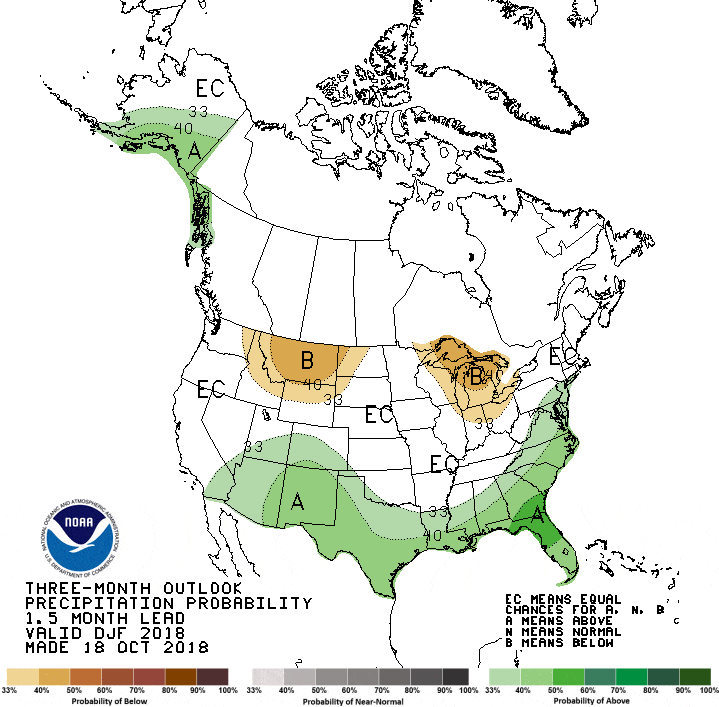
If this El Niño pans out the way meteorologists think, the Pacific jet stream will dip significantly farther southward than normal. This means people in portions of the West, Southwest, and Mountain Prairie trucking freight regions would get desperately needed rain, particularly in the Four Corners where Arizona, Colorado, New Mexico, and Utah meet.
Struggling rural farmers and ranchers in this part of the country don’t have the luxury of large reservoirs. According to reports from the U.S. Drought Monitor, this area has been in an “Exceptional” drought, the worst category possible, since May. An August report from NewsDeeply.com said some farmers and ranchers considered liquidation, finding other jobs, or selling out and scraping together enough cash to retire. Hopefully, the situation will turn around and more agriculture will be shipped out of this area next year.
The downside is that some of the rain storms could produce flooding, as well as mudslides in higher elevations. El Niño could also produce prolonged heavy snowfalls in some of the tallest peaks of the West, Southwest, and Mountain Prairie regions, making it harder for truckers to make it over mountain passes.
El Niño typically has the opposite effect in the Northwest region, as well as parts of the Mountain Prairie and Midwest regions. Unusually dry weather could have a detrimental effect on crops planted this fall, decreasing freight volume out of these areas during the spring harvest. The El Niño could also keep these areas warmer than normal.
This is where at least one outlook differs compared to NOAA’s. Remember, because there’s uncertainty in predicting the strength of El Niño, there’s going to be some uncertainty in the winter predictions. It’s not necessarily a contest, it’s just that groups use different methodologies.

Meteorologists at DTN, an independent provider of forecasts, tell FreightWaves they believe the El Niño will be weaker than NOAA believes it will be.
“When it comes to El Nino, the strength of the phase is the key,” says Jeff Johnson, a Certified Consulting Meteorologist at DTN. “If there is a moderate or strong El Niño, the chances increase markedly for warmer than normal temperatures in the Upper Midwest. We don’t think that will happen given the slow start to the development of this El Niño. A weak El Niño increases the risk for cold intrusions (the appearance of the “Polar Vortex”) during the winter, especially later in the winter.”

Another reason why Johnson believes the El Niño will be weak is because it’s based in only a portion the Pacific Ocean, rather than across the entire basin. This could mean more snow for parts of the Midwest and Mountain Prairie regions, and truckers would have to spend a lot more time chaining up and down. The same would go for interior portions of the Northeast region where frequent, intense lake effect snowfalls might occur.
DTN meteorologists also think parts of the Southeast region could see ice storms that would keep drivers off the roads. They agree with NOAA that the Gulf Coast and mid-Atlantic regions could be much wetter than normal.
When planning ahead for the winter, keep in mind that this outlook attempts to tell the big picture. Just because one region is pegged to be colder and snowier than normal doesn’t mean there won’t be some mild, dry days. By the same token, there could be occasional cold days in a region that is predicted to be warmer than normal, and so on and so forth. This is an outlook for how the weather in each region will turn out, compared to normal (30-year average), for the season as a whole (December through February).

Brokerage Compliance Symposium
The day before F3. Every compliance issue you face - fraud exposure, carrier liability, FMCSA rules, cargo theft, insurance gaps - navigated by attorneys and operators defining best practices in a changing industry.
F3 Awards Dinner
The night before F3. FreightTech100 companies honored. FreightTech 25 and Shipper of Choice winners revealed live. Cocktail reception into dinner and live music - 300 industry leaders in one purpose-built room.
F3: Future of Freight Festival
Industry-defining keynotes, rapid-fire technology demos, and industry leaders networking in experiences across Chattanooga - plus the inaugural F3 Awards Dinner featuring the FreightTech and Shipper of Choice reveals.
The day before F3. Every compliance issue you face - fraud exposure, carrier liability, FMCSA rules, cargo theft, insurance gaps - navigated by attorneys and operators defining best practices in a changing industry.
The Signal at Chattanooga Choo Choo • Chattanooga, TN Register NowThe night before F3. FreightTech100 companies honored. FreightTech 25 and Shipper of Choice winners revealed live. Cocktail reception into dinner and live music - 300 industry leaders in one purpose-built room.
The Signal at Chattanooga Choo Choo • Chattanooga, TN Register NowIndustry-defining keynotes, rapid-fire technology demos, and industry leaders networking in experiences across Chattanooga - plus the inaugural F3 Awards Dinner featuring the FreightTech and Shipper of Choice reveals.
The Signal at Chattanooga Choo Choo • Chattanooga, TN Register Now