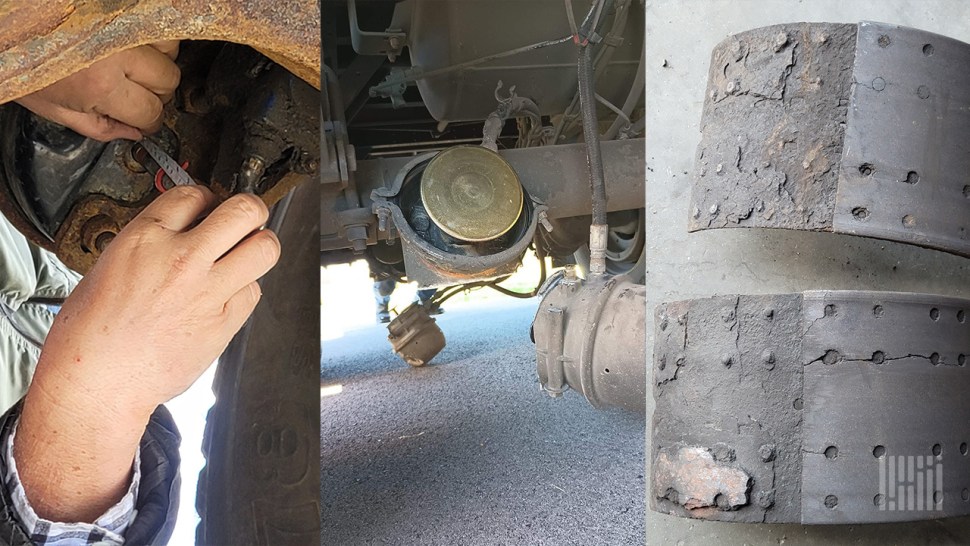
Every year thousands of trucks are pulled off the road during the Commercial Vehicle Safety Alliance’s Brake Safety Week by inspectors across the U.S., Canada and Mexico, who in 2023 conducted 18,875 inspections. Of those, 2,375 trucks or 12.6%, were placed out of service for brake-related violations. This year’s spotlight is sharper than ever, especially if you have rotors cracking under heat stress, pigtails dragging across your catwalk or drums coated in grime. For 2025, inspectors are narrowing their focus, zeroing in on the visible signs of neglect and homing in on disc brake components, drums and rotor condition. If you’re hauling heavy, you’re in the crosshairs.
Let’s be clear: This isn’t about passing inspection by luck or charm. It’s about understanding what CVSA looks for and what you can control.
Disc Brakes and Rotor Realities
The rise of disc brakes across Class 8 and vocational trucks has brought new advantages and vulnerabilities. Disc setups run hotter, and with heat comes trouble. Rotor cracks are a growing reason for out-of-service violations. These cracks often show up on heavier trucks – think trash haulers, log trucks or any rig doing short-haul, stop-start runs where brakes never really get a chance to cool.
If you’re using disc brakes, consider investing in cryogenic-treated rotors. These rotors are heat-tempered to reduce internal stress fractures, buying you longevity and lowering your risk of an expensive (and embarrassing) roadside failure. More importantly, keep your brakes clean and regularly inspected. Heat check discoloration, spider-webbing cracks and glazing should never be surprises.
It’s Not Always About What’s Broken. It’s About What’s Obvious
Talk to enough seasoned inspectors and they’ll tell you: They’re not in the business of pulling in a spotless 2025 Peterbilt with stainless steel fenders and a high-polish rig. Unless it’s to say, “Nice truck.” They’re looking for low-hanging fruit: visibly neglected equipment that screams, “I don’t care.”
Dragging pigtails, bald tires, mismatched lights and hoses zipped together with duct tape are the visual cues that trigger deeper inspections. When they go deep, they start with the brakes.
That’s why your first line of defense is soap, water and a walkaround.
Know What They’re Checking: Brake Component Quick Breakdown
Here’s what they’ll be looking for and what you should be double-checking right now:
- Brake hoses: Not kinked, cut, swollen or leaking.
- Fittings: Secure and leak-free.
- Brake chamber: Properly mounted with no dents, rust or air leaks.
- Slack adjuster: Pins secured; adjusters straight, not broken.
- Push rod: No more than 1 inch of movement with brakes applied.
- Brake drum: No cracks, holes or contamination.
- Brake linings: At least a quarter-inch thickness, no chips and dry.
- Rotors/discs: Free of deep heat checks or cracks; smooth and uniform.
- Air system: Pressure builds to 120-plus PSI, holds steady under application.
- Air loss test: No more than 4 PSI loss in one minute under applied pressure.
- Buzzer and pop test: Alarms at 60 PSI, valves pop at 20-40 PSI as required.
You can and should perform a full pre-trip brake check daily. Before CVSA Brake Safety Week, go even deeper. Use a creeper. Get under there. If you’re unsure, take photos and send them to your maintenance lead. Better yet, visit a shop for a midyear brake tuneup. Remember, electronic driver vehicle inspection report (DVIR) systems can allow you to take time-stamped photos of violations and defects to assist in challenging them later in the Data Q system.
‘Avoiding’ vs. ‘Surviving’ an Inspection
Too many drivers think the goal is to avoid inspection altogether. That’s flawed thinking. The better goal is to pass one confidently and let word get around. A clean inspection can earn you praise and incentive bonuses, and even improve your carrier’s Inspection Selection System score with the Federal Motor Carrier Safety Administration.
Keep your paperwork ready and clean. Maintain logs, ELD data and DVIRs and ensure everything from med cards to International Fuel Tax Agreement stickers is in order. Sloppy paperwork invites deeper inspections, while organized drivers move faster.
Enforcement Priorities: Who They’re Targeting
Enforcement resources are limited. Inspectors know that pulling a clean, well-maintained fleet truck is rarely fruitful. So their energy is focused where it counts:
- Trash trucks: Urban routes, disc brakes, heavy wear, poor cooling.
- Log trucks: Off-road use, exposed rotors, weather stress.
- Vocational and municipal fleets: Older equipment, frequent starts/stops.
- Dirty or visibly poorly maintained vehicles: Your rig will not get a pass if it looks like it was recovered from a swamp.
If your truck looks like it hasn’t been washed in six months, your odds of getting waved in for a Level 1 go up fast.
Other CVSA Enforcement Dates for 2025
While Brake Safety Week is the headline, here are other CVSA initiatives for the year:
- Operation Safe Driver Week: July 7-13 – Focus on driver behavior.
- Hazmat Road Blitz: Sept. 9-13 – Targeting placards, shipping papers and packaging.
- Roadcheck 2025 recap (already passed): May’s Roadcheck targeted tractor protection systems, ABS and coupling devices.
Expect similar intensity for Brake Safety Week, especially since brake issues were among the top reasons for out-of-service orders during Roadcheck.
Keep Your Truck Right and Your Paperwork Tighter
You can’t control every outcome, but you can control how your truck looks and its brakes’ function. Use this Brake Safety Week not as a nuisance, but as a reminder: Your brakes are all that stand between you and disaster. Maintain them like your life depends on it, because it does.If you need help checking these systems, download a pre-trip checklist, implement electronic DVIR programs like Motive or Fleetio and talk to your mechanic or contact fleet consultants like Trucksafe that can help guide you or your team.
Brokerage Compliance Symposium
The day before F3. Every compliance issue you face - fraud exposure, carrier liability, FMCSA rules, cargo theft, insurance gaps - navigated by attorneys and operators defining best practices in a changing industry.
F3 Awards Dinner
The night before F3. FreightTech100 companies honored. FreightTech 25 and Shipper of Choice winners revealed live. Cocktail reception into dinner and live music - 300 industry leaders in one purpose-built room.
F3: Future of Freight Festival
Industry-defining keynotes, rapid-fire technology demos, and industry leaders networking in experiences across Chattanooga - plus the inaugural F3 Awards Dinner featuring the FreightTech and Shipper of Choice reveals.
The day before F3. Every compliance issue you face - fraud exposure, carrier liability, FMCSA rules, cargo theft, insurance gaps - navigated by attorneys and operators defining best practices in a changing industry.
The Signal at Chattanooga Choo Choo • Chattanooga, TN Register NowThe night before F3. FreightTech100 companies honored. FreightTech 25 and Shipper of Choice winners revealed live. Cocktail reception into dinner and live music - 300 industry leaders in one purpose-built room.
The Signal at Chattanooga Choo Choo • Chattanooga, TN Register NowIndustry-defining keynotes, rapid-fire technology demos, and industry leaders networking in experiences across Chattanooga - plus the inaugural F3 Awards Dinner featuring the FreightTech and Shipper of Choice reveals.
The Signal at Chattanooga Choo Choo • Chattanooga, TN Register Now