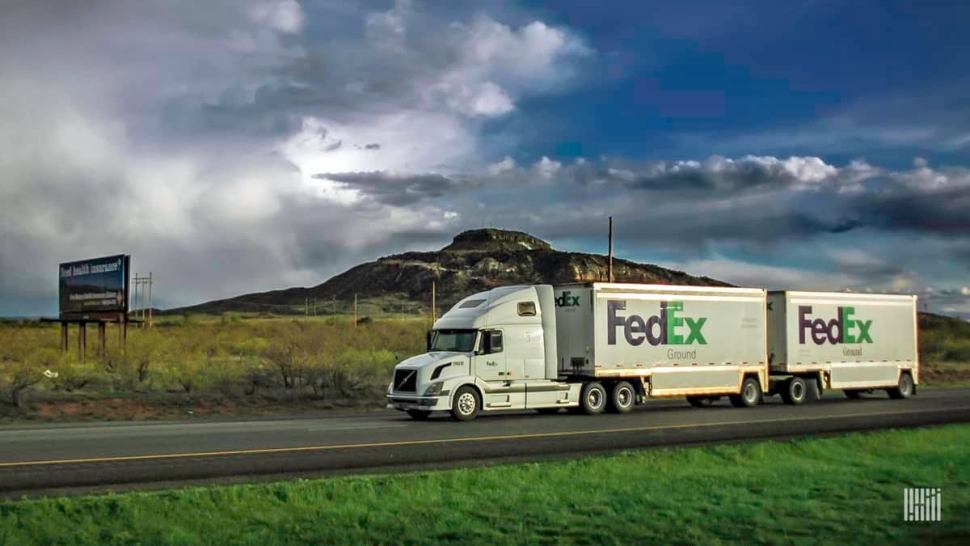
Amazon.com. Inc. (NASDAQ:AMZN) has lifted its near one-month ban on third-party sellers’ use of FedEx Corp. (NYSE:FDX) as their ground delivery partner, saying FedEx’s delivery performance had improved to levels such that it could be reinstated as a provider for merchants who use privileges on Amazon’s site to sell their wares.
The ban, imposed Dec. 16 and lifted at 5 p.m. EST Tuesday, specifically affected businesses enrolled in Amazon’s Seller-Fulfilled Prime (SFP) program. Under the program, merchants can use any fulfillment provider and still keep their status to sell under Amazon’s coveted Prime designation. However, the provider must meet delivery performance standards set by Amazon.
Should the provider fall below specific performance measures, the merchant will eventually switch to another provider or else lose its Prime designation, which can mean thousands if not millions of dollars in revenue. Various studies have shown that Prime members, of whom there are more than 100 million worldwide, buy far more than do non-Prime members.
In an email to sellers, Amazon said FedEx Ground and FedEx Home Delivery, the parent’s ground delivery operations, are now “consistently meeting” their on-time delivery requirements. As a result, Amazon said it was required to reinstate FedEx.
For the 2019 peak season, which ran from Thanksgiving to New Year’s Eve, FedEx posted a 95% on-time delivery record across all its shipping lines, compared to 97.6% during the 2018 peak, according to data from consultancy ShipMatrix. Express services showed higher on-time levels than did ground, but express traffic was dwarfed by ground volumes, ShipMatrix said.
Amazon had “temporarily restricted” sellers’ use of FedEx toward the end of peak season because it wasn’t hitting the acceptable targets for pickup and delivery, the e-tailer said. Amazon does not comment on its criteria for maintaining carrier relationships.
Amazon Logistics, Amazon’s in-house delivery unit, does not subject sellers to the same requirements. Critics have said that such steps are part of a long-term plan to bring more merchants that sell on Amazon under its fulfillment umbrella by effectively leaving the merchants with few, if any, alternatives.
For FedEx, which has ended all other ground and air freight services with Amazon in the U.S., the lost SFP business was a drop in the bucket, according to Matthew White, strategist for iDrive Logistics, a consultancy that has worked with many Amazon third-party sellers on fulfillment and delivery needs. White characterized the SFP business as a “smaller key account” for FedEx. The carrier, he said, “gains and loses a handful of these a month. It’s nothing to sweat over.”
Merchants will derive the most benefit because they can now return to FedEx if they choose. The timing of Amazon’s initial among merchants that used FedEx stirred angst among merchants as they were forced, almost overnight, to find other providers at a critical time in the cycle.
According to White, Amazon was skating along patchy antitrust ice by forcing businesses to use other providers just by virtue of selling their goods on Amazon’s site. “Amazon is not merely ending a contract with a carrier. It is specifically stopping merchants from using their respective FedEx accounts solely because they are listing through Amazon.” Whether FedEx was less expensive or better for the shipper and the end user was irrelevant in Amazon’s thinking, White said.
He said he had doubts about whether FedEx was underperforming during peak, and that Amazon could not continue to make the same claims now that peak has subsided.
Brokerage Compliance Symposium
The day before F3. Every compliance issue you face - fraud exposure, carrier liability, FMCSA rules, cargo theft, insurance gaps - navigated by attorneys and operators defining best practices in a changing industry.
F3 Awards Dinner
The night before F3. FreightTech100 companies honored. FreightTech 25 and Shipper of Choice winners revealed live. Cocktail reception into dinner and live music - 300 industry leaders in one purpose-built room.
F3: Future of Freight Festival
Industry-defining keynotes, rapid-fire technology demos, and industry leaders networking in experiences across Chattanooga - plus the inaugural F3 Awards Dinner featuring the FreightTech and Shipper of Choice reveals.
The day before F3. Every compliance issue you face - fraud exposure, carrier liability, FMCSA rules, cargo theft, insurance gaps - navigated by attorneys and operators defining best practices in a changing industry.
The Signal at Chattanooga Choo Choo • Chattanooga, TN Register NowThe night before F3. FreightTech100 companies honored. FreightTech 25 and Shipper of Choice winners revealed live. Cocktail reception into dinner and live music - 300 industry leaders in one purpose-built room.
The Signal at Chattanooga Choo Choo • Chattanooga, TN Register NowIndustry-defining keynotes, rapid-fire technology demos, and industry leaders networking in experiences across Chattanooga - plus the inaugural F3 Awards Dinner featuring the FreightTech and Shipper of Choice reveals.
The Signal at Chattanooga Choo Choo • Chattanooga, TN Register Now