





California Supreme Court settles pay rate for missed meal, rest and recovery periods
The California Supreme Court recently addressed what the proper rate for paying missed meal, rest, and recovery periods is under California state law. And for employees, it’s a financial win.

Appellate court overturns multi-million-dollar decision in driver poaching case
A court decision on driver hiring did not remove restrictive covenants, but it does highlight the need for trucking companies to review any covenants they have related to advances on driver training costs.

Appellate court gives police officer second chance at ADA case
An appeals court has reinstated a disability lawsuit claim involving a police officer, but the decision serves as a cautionary tale for many industries, including trucking.

Appellate court affirms harassment and retaliation ruling against trucking company
A trucking company mishandled an employee’s harassment complaint, leading to a termination and ultimately a large jury award against the company.

8th Circuit Court: Employer’s actions do not violate ADA, FMLA
The Court of Appeals for the 8th Circuit recently ruled in favor of an employer that denied additional time off as an accommodation under ADA and FMLA rules.

Court enforces ADA’s pre-suit exhaustion rules
Employers have been given a procedural ally in fights against EEOC charges – namely that the employee must adhere to a ADA exhaustion rules. However, employers still need to deal with and act appropriately when faced with accommodation requests under the ADA.

Employer allowed to use prior salary as a factor in setting an employee’s salary
The United States District Court for the Eastern District of Virginia recently determined that an employer could use an employee’s prior salary as a factor in setting the employee’s starting salary and that doing so may be used as a defense to an Equal Pay Act (“EPA”) claim. Background The Employer used new hires’ prior […]
Department of Labor’s paid leave clarification limits those eligible to use it
The Department of Labor has issued new guidance on the Families First Coronavirus Response Act that may not require companies to offer paid leave in certain situations.
Q&A: What companies need to know about the Families First Coronavirus Response Act
Attorney R. Eddie Wayland answers many of the questions that have arisen from the passage of the Families First Coronavirus Response Act, including whether all companies need to comply.
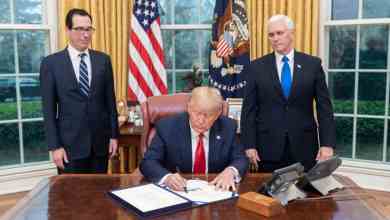
Trump signs bill to require many employers to provide paid leave
President Trump has signed the Families First Coronavirus Response Act into law, which requires many employers to provide paid leave and expands FMLA for many employees.