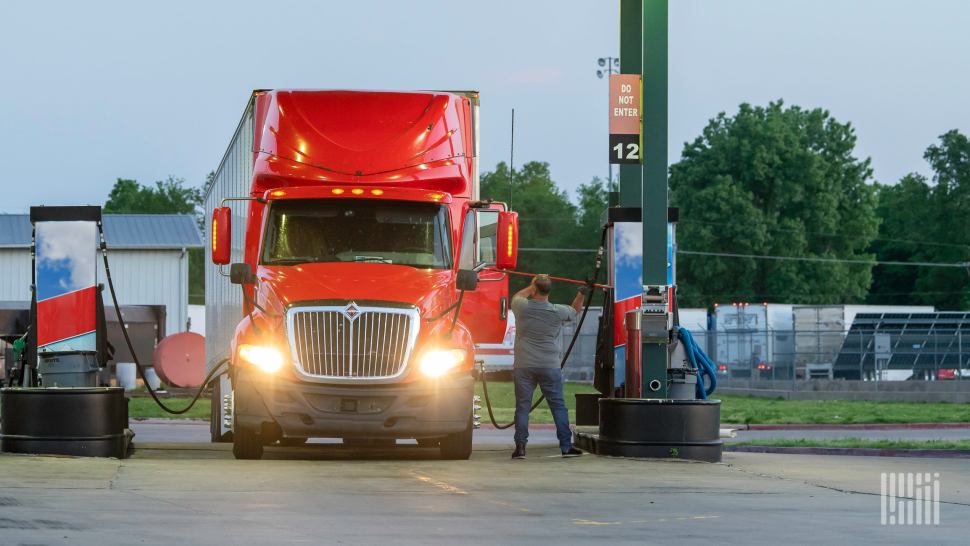
This is not a drill, and this is not a market correction. What is happening to oil prices right now is a full-scale geopolitical energy shock, and if you operate a small trucking company – a fleet of one to twenty trucks, an owner-operator running solo, a box truck or hotshot operator trying to hold your margins together – you need to understand exactly what is driving this spike, how fast it is moving, and what it is about to do to your operation if you are not already making adjustments.
One month ago, crude oil was trading at $63 a barrel. As of today, March 8, 2026, West Texas Intermediate futures opened above $100 and have been reported trading as high as $111. That is a 75-plus percent increase in crude prices in 30 days. Diesel, which was already climbing off winter lows, has surged 22 cents more than gasoline over just the past week alone, sitting at $4.60 per gallon nationally as of Sunday’s readings – and GasBuddy’s Patrick De Haan is now putting an 85 percent probability on diesel hitting $5 a gallon within the next month.
You have never seen prices move this fast in your operating lifetime unless you were in business in 2022 when Russia invaded Ukraine. What you are looking at right now is potentially worse.
What Is Actually Happening – The Short Answer
On February 28, 2026, Iranian Supreme Leader Ayatollah Ali Khamenei died. Days later, U.S. and Israeli forces launched a coordinated wave of airstrikes targeting Iran’s nuclear facilities and military command structure, killing Khamenei and other senior officials in the Islamic Republic. The military operation, referred to in some reporting as “Operation Epic Fury,” fundamentally destabilized the most critical maritime chokepoint on the planet.
Iran’s Revolutionary Guard responded by declaring the Strait of Hormuz closed and threatening to set on fire any vessel that attempted to pass. The Strait of Hormuz is not just a body of water on a map. It is the single most important energy corridor in the world. In 2025, more than 14 million barrels of crude per day moved through that strait on average – representing roughly a third of the world’s total seaborne crude exports. The conflict has already led to the suspension of approximately a fifth of global crude oil and natural gas supply. Saudi Aramco’s Ras Tanura refinery and crude export terminal, one of the largest in the world, has closed due to attacks with damage still being assessed. Iran also launched missile strikes targeting broader regional energy infrastructure, including attacks linked to vessels in the Gulf.
Goldman Sachs raised its Q2 2026 Brent forecast by $10 a barrel almost immediately after the conflict began. Barclays warned clients that $100 Brent was not only possible but that prices above $120 were conceivable if disruptions deepened. UBS flagged that attacks on regional infrastructure like Qatar’s LNG facilities could push Brent well past $90. The market didn’t wait for analyst notes to catch up – it moved on its own.
JP Morgan framed the shift clearly: the market had moved from pricing in a theoretical geopolitical risk premium to dealing with tangible, operational supply disruptions – refinery shutdowns, export constraints, and shipping routes in active conflict zones.
Why Diesel Is the Real Story for Trucking
Here is what shippers and the general public don’t fully understand, and what every carrier in this industry needs to internalize right now. Diesel is not just rising because crude is rising. It is rising faster than crude, and faster than gasoline, because of a structural supply problem that existed before a single missile was fired.
The brutal winter of early 2026 created massive demand for heating oil across the Northeast. Home heating oil and diesel are essentially the same product – they come from the same refining stream. The heavy draw on heating oil stocks heading into this conflict meant diesel inventories were already thinner than normal when the price shock hit. You do not absorb a supply disruption of this magnitude from a healthy inventory position. You absorb it from a depleted one, and that is exactly what is happening.
Since the Iran conflict began, gasoline at the pump is up 47 cents nationally. Diesel is up 84 cents over the same period. That is nearly double the rate of increase. Diesel at $4.60 today, with $5 now the base case projection within the month, means carriers are staring down a fuel environment they have not seen since the 2022 Ukraine war shock – and that one also did not come with a strait closure threatening a third of global seaborne oil supply.
The diesel versus WTI crack spread – meaning the premium refiners can charge for finished diesel fuel over the cost of the crude they use to make it – has risen to approximately $70 per barrel. That is not a normal refinery margin. That is a distressed market screaming that supply of refined product is critically tight relative to demand.
What This Does to a Small Carrier – Truck by Truck
Large carriers have systematic fuel surcharge schedules that automatically adjust with EIA published diesel prices every Monday. They built those schedules after 2008, after 2022, and they know exactly how to pass fuel cost increases through to shippers – often within days. UPS has already increased its weekly fuel surcharge and is expected to do so again. Mega-carriers have fuel hedges, bulk purchasing agreements, and the contract muscle to force surcharge adjustments quickly.
Small carriers – especially the one to five truck operations, the owner-operators, the guys running regional flatbed or dry van off the spot market – do not have those protections in place. They absorb the increase in real time, at the pump, before they figure out how to recover it from their loads. And in a market that has already been soft on spot rates for much of 2025 and early 2026, trying to raise rates suddenly on a shipper relationship you’ve worked months to build is a conversation nobody wants to have.
Let’s talk math because this is where the damage lives. A standard Class 8 truck gets roughly 6.5 miles per gallon loaded. At $4.60 diesel, you are spending $0.79 per mile in fuel. If diesel reaches $5.00, that number goes to $0.85 per mile. That is a six-cent increase per mile on every load you run. On a 1,000-mile load, you just lost $60 more in fuel cost than you planned for when you accepted that rate. On a 2,500-mile round trip – say, Southeast to Northeast and back – that is $150 in unplanned fuel expense per truck per cycle. Multiply that across three trucks, five trucks, ten trucks, and you are talking real money disappearing from operating cash before the month closes.
For box truck operators and hotshot runners, the math is different but the problem is the same. Box trucks running 8 to 12 miles per gallon diesel are somewhat more insulated per mile, but those operators typically run on thinner margins to begin with and are often serving final-mile or partial lanes where rate increases are harder to negotiate quickly. And hotshot operators in the oil and gas sector face a strange paradox right now – crude prices rising could eventually mean more oilfield activity and freight, but in the short run, the shock is moving faster than the work.
The breakeven impact deserves honest attention. If you have not calculated your cost per mile recently, this week is the week to do it. Fuel alone is not your only exposure here. Tire prices, lubricants, and certain parts are petroleum-derived products. When crude spikes, those costs follow with a lag. The first-order impact hits your fuel card. The second-order impact hits your maintenance budget 60 to 90 days later. You need to be planning for both.
Fuel Surcharges – What Small Carriers Need to Do Right Now
If you are operating without a fuel surcharge clause in your contracts or rate agreements, that oversight is costing you money every time fuel moves. A fuel surcharge is not a favor you ask a shipper for during a crisis. It is a standard industry mechanism that exists specifically because fuel is a volatile input cost that neither carrier nor shipper can control. The EIA publishes national average diesel prices every Monday. That number is your reference point.
The standard industry approach is to build a baseline fuel price into your cost-per-mile calculation – typically whatever diesel was when you set your rates – and then add one cent per mile for every six cent increase in the EIA national average above that baseline. If you built your rates when diesel was $3.80 and it is now $4.60, that is an 80-cent gap, which works out to roughly 13 cents per mile in surcharge owed on every loaded mile.
The conversation with shippers and brokers needs to happen now, not after diesel hits five dollars. Once you are in a rate environment where everyone is having that conversation at the same time, you are competing for surcharge recovery against every other carrier in the market simultaneously. Get ahead of it. Send written notice to your regular shippers and brokers this week. Be factual. Cite the EIA numbers. Cite the geopolitical situation. Be professional, not desperate. Frame it as a shared cost reality, not a personal financial crisis.
If you are running exclusively off load boards with no direct shipper relationships, this is the moment the load board can work against you. Brokers will be under pressure from shippers to keep rates contained even as fuel climbs. Some will hold. Others won’t. You need to know your floor – the rate below which you are physically losing money on the load after fuel – and you need to hold it. A load that doesn’t cover your costs is not a revenue event. It is a debt event.
The Freight Rate Response – What to Watch
There is a version of this story where spot rates rise to meet the fuel increase, particularly as diesel surcharges flow through to shipper costs and shippers begin negotiating for more reliable coverage from carriers who are still willing to move. That dynamic does eventually happen in sustained fuel shocks. It happened in 2022 after the Ukraine invasion.
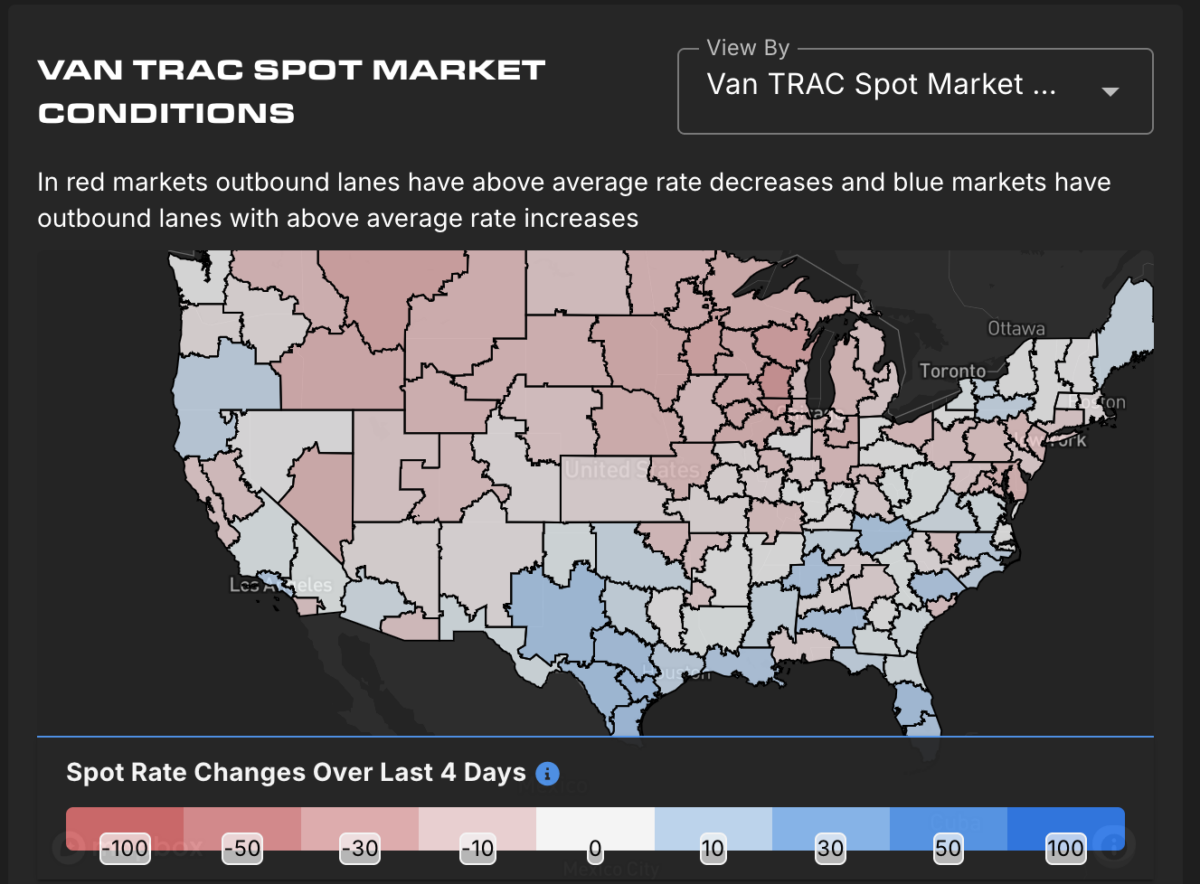
But it does not happen immediately, and it does not happen uniformly. In the first weeks of a fuel spike, brokers absorb pressure from both sides. Carriers need higher rates. Shippers need cost containment. Spot rates lag. The carriers who survive the gap period are the ones who manage their cash closely, don’t take loads below their breakeven, and have enough financial cushion to keep the trucks rolling while the market catches up.
The geopolitical situation adds an additional variable that makes this shock different from a domestic demand surge. If the Strait of Hormuz remains functionally disrupted even partially, and if the Iran conflict extends rather than de-escalates quickly, this is not a two-week spike that normalizes. It is a multi-month structural shift in energy costs. Some early reporting suggests de-escalation signals are beginning to emerge in diplomatic back-channels, and crude retreated toward $72-$75 on some of those reports earlier this week before surging again. That kind of volatility – $63 to $111 and then to $75 and back above $100 in the span of days – is itself a warning about how unstable the situation remains.
Plan for persistence, not a quick recovery.
Brokerage Compliance Symposium
The day before F3. Every compliance issue you face - fraud exposure, carrier liability, FMCSA rules, cargo theft, insurance gaps - navigated by attorneys and operators defining best practices in a changing industry.
F3 Awards Dinner
The night before F3. FreightTech100 companies honored. FreightTech 25 and Shipper of Choice winners revealed live. Cocktail reception into dinner and live music - 300 industry leaders in one purpose-built room.
F3: Future of Freight Festival
Industry-defining keynotes, rapid-fire technology demos, and industry leaders networking in experiences across Chattanooga - plus the inaugural F3 Awards Dinner featuring the FreightTech and Shipper of Choice reveals.
The day before F3. Every compliance issue you face - fraud exposure, carrier liability, FMCSA rules, cargo theft, insurance gaps - navigated by attorneys and operators defining best practices in a changing industry.
The Signal at Chattanooga Choo Choo • Chattanooga, TN Register NowThe night before F3. FreightTech100 companies honored. FreightTech 25 and Shipper of Choice winners revealed live. Cocktail reception into dinner and live music - 300 industry leaders in one purpose-built room.
The Signal at Chattanooga Choo Choo • Chattanooga, TN Register NowIndustry-defining keynotes, rapid-fire technology demos, and industry leaders networking in experiences across Chattanooga - plus the inaugural F3 Awards Dinner featuring the FreightTech and Shipper of Choice reveals.
The Signal at Chattanooga Choo Choo • Chattanooga, TN Register Now