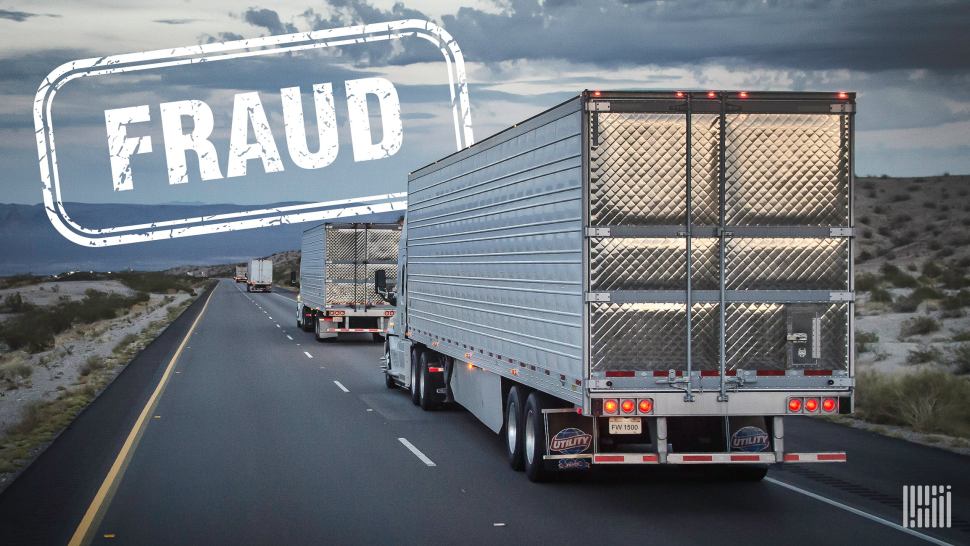
The U.S. Department of Justice is increasingly turning to the False Claims Act to pursue companies accused of evading customs duties, a trend legal experts say is likely to accelerate as tariffs remain elevated and whistleblowers become more active.
Alexander M. Owens, a partner at Pietragallo Gordon Alfano Bosick & Raspanti LLP in Philadelphia who represents whistleblowers and businesses in False Claims Act cases, said customs fraud enforcement has evolved from a niche area of government oversight into a rapidly growing enforcement priority.
“We think this is really an area that’s getting pretty hot in terms of the False Claims Act world,” Owens told FreightWaves. “The government learns how to investigate these cases better, the word gets out for participants in the industry, and there becomes this pipeline of cases for decades.”
The trend comes as federal authorities pursue a growing number of customs fraud and tariff evasion cases. Recent actions include the government’s $549.5 million settlement involving aluminum extrusion imports, a customs fraud claim against bankrupt auto-parts supplier First Brands Group, and enforcement actions targeting alleged country-of-origin fraud and duty evasion schemes.
According to research compiled by Owens, customs fraud recoveries under the False Claims Act totaled more than $570 million during the first five months of 2026, surpassing all prior annual totals and exceeding the combined recoveries from many previous years.
The report states that more than $918 million has been recovered through customs fraud cases brought under the False Claims Act.
Related: Tariff fraud enforcement targets importers over alleged duty evasion
Common customs fraud schemes
Owens said most customs fraud cases fall into three primary categories: misclassification of goods, misrepresentation of country of origin, and undervaluation of imports.
Misclassification schemes involve importers assigning products to tariff codes with lower duty rates. Undervaluation cases often involve false invoices or other efforts to understate the value of imported goods. Country-of-origin fraud can include transshipping products through third countries to disguise where they were manufactured.
“Part of the prosecutorial appeal of customs fraud cases is that these matters tend to involve a handful of common typologies,” Owens wrote in an analysis of recent enforcement trends.
Owens said fraud schemes are becoming more sophisticated as enforcement intensifies.
“What we’re seeing now is more elaborate efforts to create the appearance of legitimate transactions,” Owens said.
Recent cases
| Company/Case | Alleged Scheme | Status |
|---|
| Perfectus Aluminum | Misclassification of aluminum extrusions | $549.5M settlement |
| First Brands Group | Customs duty evasion allegations | Government claim in bankruptcy |
| Farjess Inc./Royal Canadian Steel | Tariff evasion and customs fraud allegations | Pending litigation |
| Mauro Esteban Garza Torres | Fraudulent customs paperwork | Guilty plea |
| EAPA Case 818 | Country-of-origin evasion findings | CBP determination |
China-linked imports remain a major focus
Industries subject to high antidumping, countervailing and Section 301 duties continue to generate significant enforcement activity, Owens said.
Aluminum, steel, furniture, textiles and apparel are among the sectors most frequently associated with customs fraud investigations because high duty rates create strong incentives for evasion.
China remains at the center of many enforcement actions. Owens’ research found that 37 of 46 reported False Claims Act customs fraud recoveries involved imports from China.
“The higher the tariffs, the greater the risk of fraud as importers grow more incentivized to evade higher levies,” according to Owens.
Whistleblowers play growing role
A key driver behind the increase in cases is the False Claims Act’s whistleblower provision, which allows private individuals to file lawsuits on behalf of the federal government and receive a share of any recovery.
Unlike many other fraud investigations, customs cases are increasingly being initiated not only by current and former employees but also by competitors, customs brokers and others working throughout the supply chain, Owens said.
Recent whistleblower awards have drawn attention across the industry. According to Owens’ analysis, the whistleblower in the aluminum extrusion settlement is expected to receive approximately $96 million, while another customs fraud whistleblower received more than $9.7 million in a tungsten carbide case.
“Large awards are the best form of advertisement for whistleblower laws,” Owens wrote. “Expect more customs fraud cases to show up in the FCA pipeline soon enough.”
More enforcement ahead
Owens said he expects customs fraud investigations to continue growing over the next several years, regardless of how tariff policies evolve.
He pointed to improving enforcement capabilities at Customs and Border Protection, growing awareness of whistleblower rewards and continued pressure to prevent tariff evasion.
The DOJ is also expected to scrutinize emerging risks, including alleged abuse of Delivered Duty Paid (DDP) transactions and potential fraud involving tariff refund programs. Owens warned that large-scale refund efforts can create opportunities for bad actors, much like pandemic-era fraud involving the Paycheck Protection Program.
“I think we’re going to see more fraud, but I also think we’re going to see more of these actions,” Owens said. “CBP’s own surveillance apparatus is getting much better, and I think we’re going to see more whistleblower cases as well.”
Brokerage Compliance Symposium
The day before F3. Every compliance issue you face - fraud exposure, carrier liability, FMCSA rules, cargo theft, insurance gaps - navigated by attorneys and operators defining best practices in a changing industry.
F3 Awards Dinner
The night before F3. FreightTech100 companies honored. FreightTech 25 and Shipper of Choice winners revealed live. Cocktail reception into dinner and live music - 300 industry leaders in one purpose-built room.
F3: Future of Freight Festival
Industry-defining keynotes, rapid-fire technology demos, and industry leaders networking in experiences across Chattanooga - plus the inaugural F3 Awards Dinner featuring the FreightTech and Shipper of Choice reveals.
The day before F3. Every compliance issue you face - fraud exposure, carrier liability, FMCSA rules, cargo theft, insurance gaps - navigated by attorneys and operators defining best practices in a changing industry.
The Signal at Chattanooga Choo Choo • Chattanooga, TN Register NowThe night before F3. FreightTech100 companies honored. FreightTech 25 and Shipper of Choice winners revealed live. Cocktail reception into dinner and live music - 300 industry leaders in one purpose-built room.
The Signal at Chattanooga Choo Choo • Chattanooga, TN Register NowIndustry-defining keynotes, rapid-fire technology demos, and industry leaders networking in experiences across Chattanooga - plus the inaugural F3 Awards Dinner featuring the FreightTech and Shipper of Choice reveals.
The Signal at Chattanooga Choo Choo • Chattanooga, TN Register Now