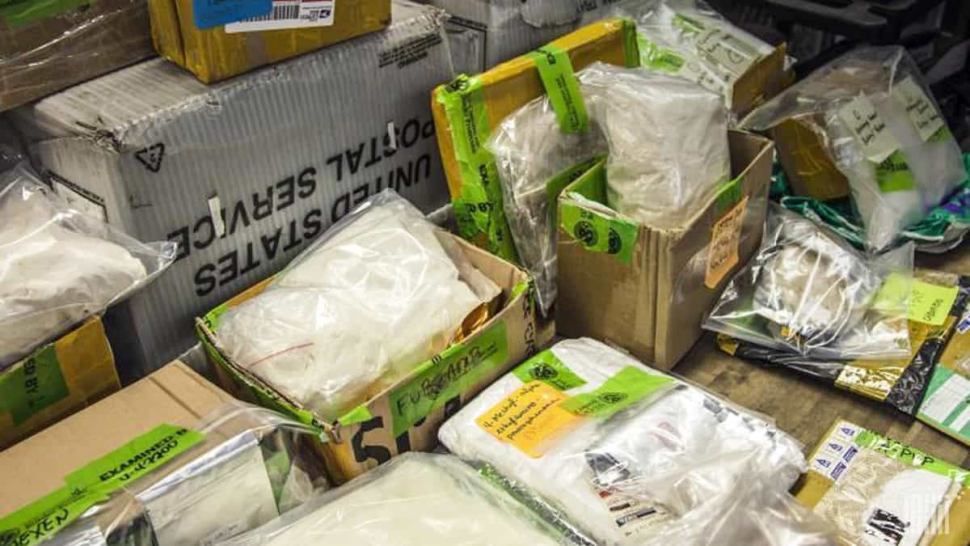
It took nearly 18 months, but U.S. Customs and Border Protection (CBP) has issued final rules guiding the U.S. Postal Service in how to handle international inbound parcel shipments that failed to comply with U.S. law requiring electronic data to be transmitted ahead of the shipment’s arrival to ensure the parcel doesn’t contain opioids or other contraband.
The interim rule, which has the effect of a final rule with a comment period attached, is used when a federal law requires the agency to meet a specific deadline, which in the CBP’s case was Monday. Submitted comments are designed to shape future rulemakings or help with possible rules revisions.
The CBP action on Monday finalizes steps that the Postal Service had already begun to take in an effort to stem the flow of opioid traffic from foreign mailing points. Under the Synthetic Trafficking and Overdose Protection (STOP) Act enacted in October 2018, the Postal Service was required to refuse all international shipments whose accompanied documentation had not been transmitted electronically by foreign postal authorities in advance so the Postal Service could forward the information to CBP.
The Postal Service, which is responsible for accepting international inbound parcels and delivering them to U.S. destinations, has notified foreign posts that, effective March 15, it would decline all inbound shipments if electronic documentation had not been transmitted in advance.
The STOP Act initially required CBP to issue clarifying guidance to the Postal Service by October 2019. That deadline was extended to Jan. 1, 2021. However, when it became clear by early December that CBP would not meet the year-end deadline, Congress in the COVID-19 relief bill signed by President Donald Trump at the end of December authorized an extension until March 15. Congress also made clear at the time that there would be no more extensions.
In a statement, the Postal Service declined to comment on the progress being made by international postal systems to comply with the congressional mandate, citing the potential compromise of sensitive law enforcement and commercial information. “However, we would note that many postal operators are making rapid advancements in their ability to furnish AED in support of their mail shipments containing goods,” the agency said. CBP officials did not respond to a request for comment.
Kate Muth, executive director of the International Mailers Advisory Group, which represents mostly shippers and mailers of U.S. outbound traffic, said she was aware that formerly lagging countries were making progress, but couldn’t comment on which ones they were.
China Post, which was targeted by lawmakers because it originates three-fourths of all U.S. inbound parcels and because China is considered by U.S. officials the main source of the opioid fentanyl trafficked through parcel consignments, is believed to be one of the most compliant with the directive, according to Muth. It may be impossible for any country to achieve 100% compliance, she said.
CBP’s interim final rule gives the Postal Service some enforcement latitude for the next 12 months as long as the Postal Service is implementing the regulations in good faith, Muth said.
Brokerage Compliance Symposium
The day before F3. Every compliance issue you face - fraud exposure, carrier liability, FMCSA rules, cargo theft, insurance gaps - navigated by attorneys and operators defining best practices in a changing industry.
F3 Awards Dinner
The night before F3. FreightTech100 companies honored. FreightTech 25 and Shipper of Choice winners revealed live. Cocktail reception into dinner and live music - 300 industry leaders in one purpose-built room.
F3: Future of Freight Festival
Industry-defining keynotes, rapid-fire technology demos, and industry leaders networking in experiences across Chattanooga - plus the inaugural F3 Awards Dinner featuring the FreightTech and Shipper of Choice reveals.
The day before F3. Every compliance issue you face - fraud exposure, carrier liability, FMCSA rules, cargo theft, insurance gaps - navigated by attorneys and operators defining best practices in a changing industry.
The Signal at Chattanooga Choo Choo • Chattanooga, TN Register NowThe night before F3. FreightTech100 companies honored. FreightTech 25 and Shipper of Choice winners revealed live. Cocktail reception into dinner and live music - 300 industry leaders in one purpose-built room.
The Signal at Chattanooga Choo Choo • Chattanooga, TN Register NowIndustry-defining keynotes, rapid-fire technology demos, and industry leaders networking in experiences across Chattanooga - plus the inaugural F3 Awards Dinner featuring the FreightTech and Shipper of Choice reveals.
The Signal at Chattanooga Choo Choo • Chattanooga, TN Register Now