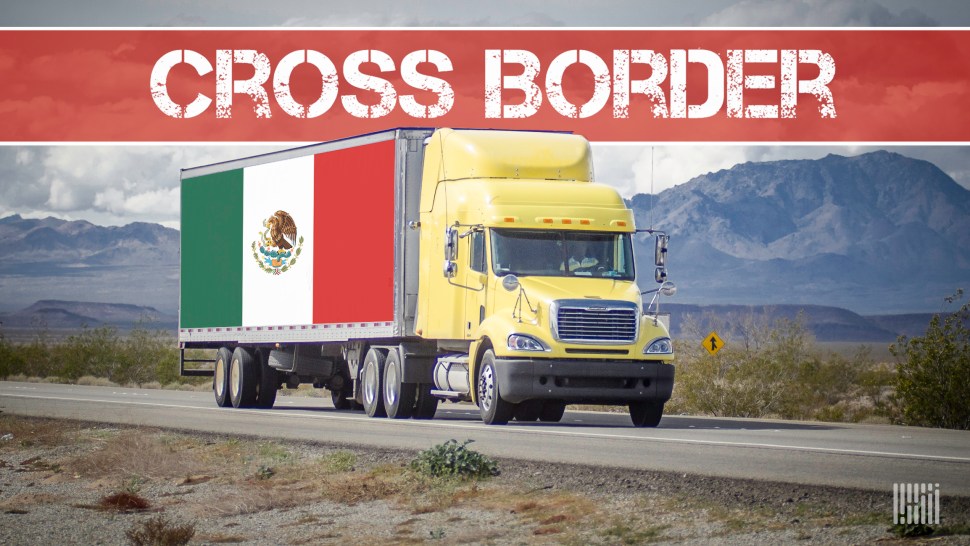
Borderlands Mexico is a weekly rundown of developments in the world of United States-Mexico cross-border trucking and trade. This week in Borderlands Mexico: Laredo summit debates driverless freight corridors, B-1 trucker alternatives; Cadogan Tate expands Southwest footprint with Phoenix acquisition; and Toyo plans $357M solar manufacturing expansion in Houston.
Laredo summit debates driverless freight corridors, B-1 truckers
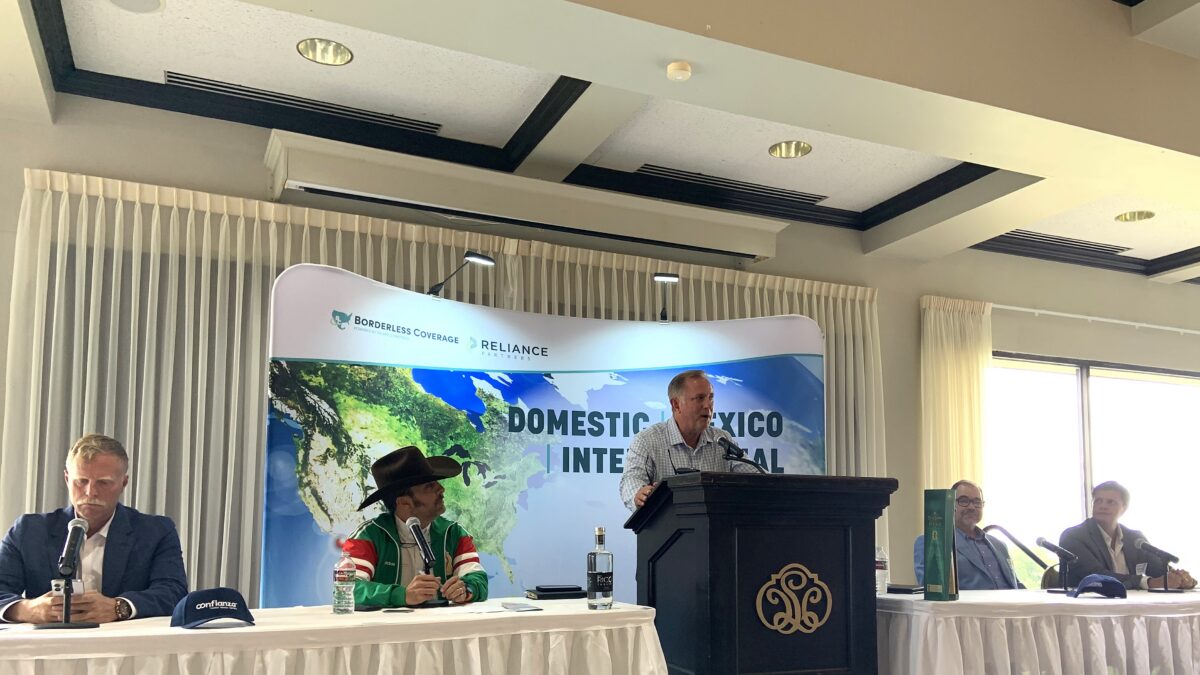
LAREDO, Texas — A proposed automated freight corridor connecting Laredo and Monterrey, Mexico, and using U.S. truckers to deliver freight into Mexico took center stage Tuesday during a panel discussion at the 9th Annual Modernization of Cross-Border Trade conference.
The event, hosted by Reliance Partners and Borderless Coverage, brought together more than 500 of the industry’s leading voices as U.S.-Mexico freight continues to face unprecedented regulatory and operational challenges.
The “Green Corridors” panel, moderated by Troy Ryley, president of Mexico operations for Echo Global Logistics, brought together Marco Antonio González Valdez, secretary of agriculture and regional development for the Mexican state of Nuevo León; Jesus Ojeda, executive vice president of cross-border operations at Redwood Logistics; and José Minarro, managing director of Sunset Transportation’s Laredo operations.
The discussion focused on how the U.S. and Mexico can prepare for continued trade growth while addressing congestion, compliance challenges and driver shortages.
A new solution to the B-1 visa truck driver issue?
A major topic was the growing impact of enforcement actions involving Mexican B-1 visa truck drivers at the border.
González Valdez said more than 300 B-1 visas had been revoked for drivers using Laredo’s Colombia-Solidarity International Bridge crossing this year, creating operational challenges for carriers that rely on cross-border drivers.
The Laredo–Colombia Solidarity International Bridge is a key vehicular border crossing on the Rio Grande that connects Laredo, Texas, with Colombia, Nuevo León, Mexico. The bridge handles around 3,500 freight truck crossings per day.
Rather than pursuing changes in Washington, Nuevo León is testing a different solution: allowing U.S. truck drivers to cross into Mexico, deliver freight and return northbound with loads.
“We started with a pilot program three weeks ago,” González Valdez said. “Have your U.S. truck drivers cross over to Mexican territory. This is the first time it’s happening at the border.”
Under the concept, U.S. drivers would be able to deliver freight into locations in Nuevo León, potentially eliminating some transfer operations while reducing reliance on B-1 visa drivers.
“We’re offering another option — U.S. companies can leave their cargo, cross the bridge, leave their cargo in Colombia, pick up cargo and go north. We will eliminate the B-1 problem,” González Valdez said.
González Valdez noted officials eventually hope to expand the program deeper into Monterrey and other parts of the state.
“We will also give a new operating scheme of eliminating transfers for those customers that want to eliminate transfers,” he said. “Also, we are planning in less than two years …. We start having U.S. truck drivers driving into Monterrey, Mexico, from a year’s time. You’re going to have U.S. truck drivers crossing through Colombia … leaving their cargo in [Mexican cities of] Salina, Victoria, and coming back north.”
The Green Corridors vision: A driverless freight network
One of the most ambitious projects discussed during the panel was Green Corridors, a privately funded initiative proposing a 165-mile elevated guideway linking Laredo and Monterrey through a network of autonomous freight shuttles.
Lorne Alcock, chief of staff for the Green Corridors project, said the system would feature secure terminals in both cities connected by a closed-loop automated corridor designed to bypass traditional border bottlenecks.
Freight trailers would be loaded onto autonomous, AI-enabled shuttles capable of moving cargo continuously between the two markets without stopping at the international boundary.
Alcock said the corridor could ultimately handle as many as 10,000 trailers per day in each direction and would include customs facilities integrated into terminal operations. The project is expected to cost between $6 billion and $10 billion and is targeting a 2030 launch.
“We’re going to eliminate those problems,” Alcock said of border wait times and congestion.
Alcock added that the system is designed to provide complete shipment visibility and predictable transit schedules.
Can Colombia become the next cross-border logistics powerhouse?
Panelists agreed that infrastructure alone will not solve future trade challenges.
González Valdez said Nuevo León’s long-term vision is to transform the Colombia-Solidarity crossing into a logistics and manufacturing hub capable of supporting future growth in North American trade.
“Laredo is the most important port of entry to the U.S.,” González Valdez said. “But it’s a crossing. We need to have more high-value production and manufacturing occurring on the border.”
He described Colombia as a future “logistics city” where manufacturing, warehousing and transportation operations can be located closer to the border, reducing transit times and strengthening supply chains.
González Valdez also highlighted investments in security and infrastructure, including the highway connecting Monterrey to Colombia and the deployment of hundreds of state security personnel along the route.
Why compliance is becoming a competitive advantage
Compliance and customs modernization also emerged as recurring themes throughout the discussion.
Minarro said customs brokers and logistics providers have faced increasing complexity from tariff changes, evolving customs regulations and heightened enforcement on both sides of the border.
Minarro noted that customs compliance is becoming a larger investment area for logistics providers as authorities focus more closely on importers, valuation practices and duty collection.
“We are investing a lot of money in resources that we didn’t use to have — auditors, quality control, technology, artificial intelligence,” Minarro said.
Border delays are increasingly a data problem
Ojeda said many of today’s border delays stem not from physical infrastructure constraints but from documentation, data quality and synchronization issues among carriers, customs brokers and shippers.
Redwood’s recent investment in customs brokerage capabilities is intended to help create a more integrated cross-border process by connecting transportation, customs clearance and freight visibility into a single platform.
“Seventy to 80% of the time the delays are for documentation, customs,” Ojeda said. “As soon as we can connect shippers and put it in a strong system and synchronization with carriers, brokers and the rest of the players in the supply chain, we are confident that we can speed up the process.”
Cadogan Tate expands Southwest footprint with Phoenix acquisition
Luxury logistics provider Cadogan Tate has acquired Phoenix-based Fully Loaded Deliveries (FLD), expanding its presence in one of the fastest-growing residential and interior design markets in the U.S., according to a news release.
Financial terms of the transaction were not disclosed.
Cadogan Tate, which specializes in high-value storage, art handling and logistics services for museums, galleries, interior designers and high-net-worth clients, said the acquisition strengthens its U.S. network and enhances its capabilities in the Southwest.
FLD specializes in luxury moving, storage, design installation and museum-grade fine art handling.
The acquisition is Cadogan Tate’s eighth since being acquired by private equity firm TSG Consumer and will allow FLD to continue operating under its existing brand and management team as part of the Cadogan Tate Group.
TOYO plans $357M solar manufacturing expansion in Houston
Solar manufacturer TOYO Co. announced plans to invest approximately $357 million to build a 1.5-gigawatt heterojunction (HJT) solar cell manufacturing facility in the Houston area.
The company is expanding its U.S. production footprint and creating about 400 manufacturing jobs, according to a news release. The company expects the expansion to reduce logistics costs and shorten production timelines by bringing solar cell and module manufacturing together at one location.
The new facility will be co-located with Toyo’s existing solar module manufacturing operation in Humble, about 19 miles north of downtown Houston. It will create an integrated production hub designed to streamline operations and strengthen the domestic solar supply chain.
TOYO Co. Ltd. (Nasdaq: TOYO) is a Tokyo-based global solar energy company established in 2022 that designs, manufactures and sells solar cells and photovoltaic modules.
Brokerage Compliance Symposium
The day before F3. Every compliance issue you face - fraud exposure, carrier liability, FMCSA rules, cargo theft, insurance gaps - navigated by attorneys and operators defining best practices in a changing industry.
F3 Awards Dinner
The night before F3. FreightTech100 companies honored. FreightTech 25 and Shipper of Choice winners revealed live. Cocktail reception into dinner and live music - 300 industry leaders in one purpose-built room.
F3: Future of Freight Festival
Industry-defining keynotes, rapid-fire technology demos, and industry leaders networking in experiences across Chattanooga - plus the inaugural F3 Awards Dinner featuring the FreightTech and Shipper of Choice reveals.
The day before F3. Every compliance issue you face - fraud exposure, carrier liability, FMCSA rules, cargo theft, insurance gaps - navigated by attorneys and operators defining best practices in a changing industry.
The Signal at Chattanooga Choo Choo • Chattanooga, TN Register NowThe night before F3. FreightTech100 companies honored. FreightTech 25 and Shipper of Choice winners revealed live. Cocktail reception into dinner and live music - 300 industry leaders in one purpose-built room.
The Signal at Chattanooga Choo Choo • Chattanooga, TN Register NowIndustry-defining keynotes, rapid-fire technology demos, and industry leaders networking in experiences across Chattanooga - plus the inaugural F3 Awards Dinner featuring the FreightTech and Shipper of Choice reveals.
The Signal at Chattanooga Choo Choo • Chattanooga, TN Register Now