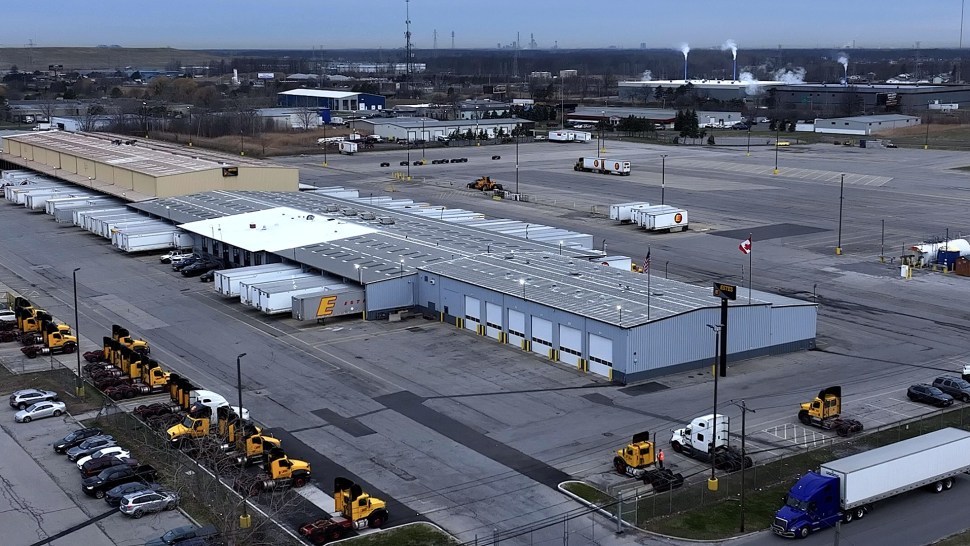
Estes Express Lines is investing nearly $56 million to expand its cross-border and offshore freight network, including terminals, equipment and capacity serving Canada, Mexico, Alaska, Hawaii and Puerto Rico.
Alex Peebles, senior director of offshore and international at Estes, said the privately held, family-owned carrier is taking a longer view of the freight market rather than allowing current conditions to dictate its investment strategy.
“We’re really looking at all of these investments from a long-term horizon and viewpoint perspective and one that’s going to help accommodate growth and capacity into all the offshore international markets that we service,” Peebles told FreightWaves.
Estes, which is celebrating its 95th anniversary this year, is North America’s largest privately held less-than-truckload (LTL) freight transportation provider. The company operates a network of over 300 terminals and service centers across the U.S., Puerto Rico, Alaska, Hawaii with coverage extending to Canada, Mexico and the Caribbean
Peebles said the company’s ownership structure gives it flexibility to move quickly when real estate and equipment opportunities arise.
“We’re not looking past current market conditions, given how fluid everything is right now,” Peebles said. “But we’re also kind of maintaining course and looking at this from that longer-term lens.”
Estes doubling capacity at Laredo border gateway
Mexico represents one of the company’s growth opportunities.
Estes currently has coverage through 52 service centers across Mexico, along with local sales personnel based in Mexico and Laredo. Peebles said the carrier is experiencing growth in its Mexico business this year, with Laredo serving as its primary gateway for freight moving across the southern border.
Part of the $56 million investment includes a larger Laredo facility that Estes purchased from another carrier and is now retrofitting.
The facility will roughly double Estes’ Laredo door count from about 40 to approximately 85 or 86 doors, according to Peebles. The property also includes warehouse space and a significantly larger yard.
The warehouse component could give Estes additional opportunities beyond traditional cross-dock operations at the border.
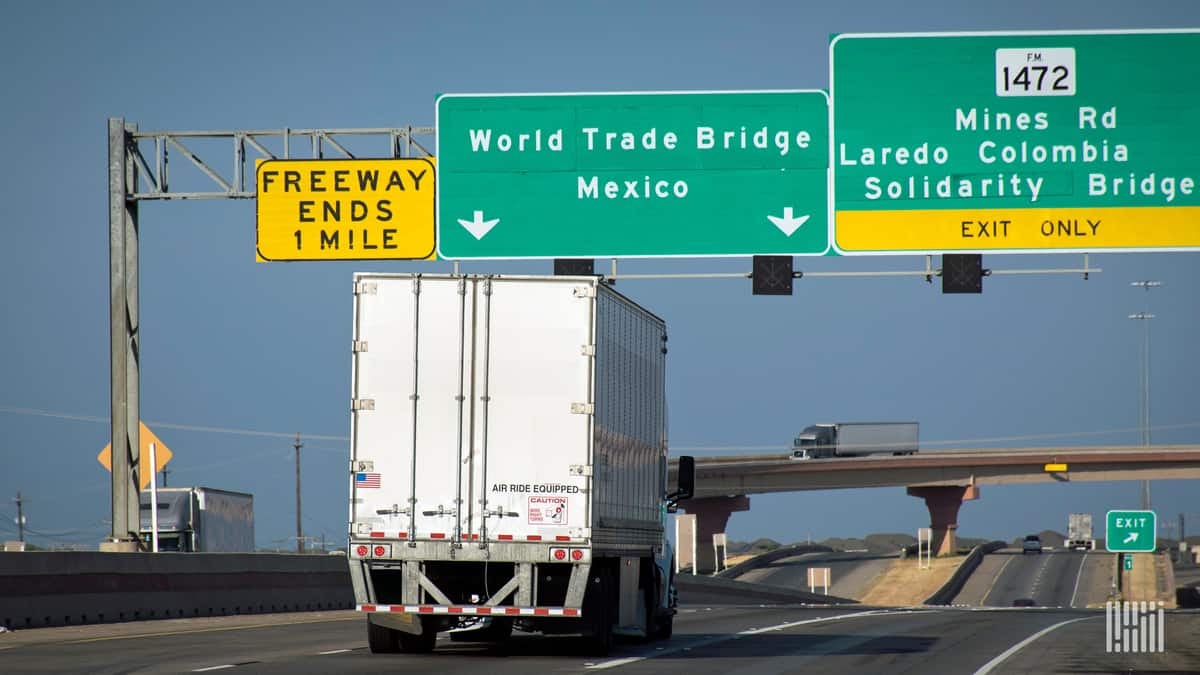
“That’ll be a larger facility that we purchased from another carrier that we’ll be moving in sometime in the near future,” Peebles said. “That will also double our door count.”
Estes is also working to make the Otay Mesa, California, and El Paso-Juarez border crossings bigger parts of its Mexico network.
Peebles said Estes already handles some freight through the gateways but sees opportunities to reduce mileage and improve network efficiency. The carrier has service centers in San Diego and El Paso and is targeting the end of 2026 to implement new routings through the gateways.
“We really think there’s a lot of network efficiencies and opportunities for mileage reduction by getting them more in play,” Peebles said.
Canada LTL freight grows despite tariff uncertainty
North of the border, Estes has been expanding capacity at three gateways serving Canada.
The carrier officially opened its relocated Buffalo, New York, service center in June. The 171-door facility quadrupled Estes’ previous door count in Buffalo and serves as an important gateway into Ontario.
Estes has also nearly doubled its Detroit terminal to 139 doors from about 70 and doubled capacity at its Fargo, North Dakota, location.
The investments come amid an increasingly uncertain trade environment between the U.S. and Canada.
Estes’ Canada cross-border volumes began 2026 about 1% to 2% below the previous year before reversing course around the end of February, Peebles said. The carrier has since recorded significant year-over-year LTL growth, although he characterized overall customer demand as cautious.
Peebles said tariffs and retaliatory measures are affecting commodities regularly carried across the border, including steel, paper, automotive products and electronics. Estes is closely watching the impact but hasn’t yet seen a major change in volumes.
One trend Estes is seeing, however, could benefit the LTL sector.
Rather than radically restructuring supply chains because of trade-policy uncertainty, some manufacturers are purchasing smaller quantities of cross-border goods, Peebles said. That can shift shipments that previously moved as full truckloads into the LTL market.
“Manufacturers still need products,” Peebles said. “And if it is a cross-border supplier that they need, they’re just trying to order that in smaller quantities if they can, which naturally pivots to our world of LTL.”
Estes has also recorded growth in its volume truckload, or VTL, service between the U.S. and Canada, which generally handles shipments weighing between 7,000 and 10,000 pounds.
Cross-border tonnage is growing faster than shipment counts, Peebles said, while the average weight of a Canada shipment has increased about 5% to 6% year over year.
Some of that growth to shippers moving freight away from full truckload and into smaller shipment, Peebles said.
Estes approaches 14,000 terminal doors
The cross-border investments are part of a much larger expansion of Estes’ LTL network.
The Richmond, Virginia-based carrier currently operates 13,857 terminal doors across roughly 300 locations, Peebles said. The company expects to surpass 14,000 doors by the end of October, assuming construction remains on schedule.
Estes isn’t finished investing.
Peebles said capital spending over roughly the next year is expected to focus more heavily on equipment, including additional ocean containers and a large order of heated trailers to support next-day Canada service.
Estes currently offers next-day service into Toronto from markets as far south as Virginia and as far west as the Chicago area. Peebles said service performance on those shipments is in the “high 90s.”
Offshore freight represents another area where the company plans to continue deploying capital.
Estes says it is the only pure-play U.S. LTL carrier operating its own ocean container fleet serving Alaska, Hawaii and Puerto Rico. Its 45-foot high-cube containers have primarily served Alaska and Hawaii, but the company expanded the fleet into Puerto Rico over the past year.
The carrier also opened a 29-door service center on Oahu in 2025. Estes says the combination of its terminals, trucks and ocean containers allows it to keep shipments within its network from mainland pickup through final delivery in Hawaii.
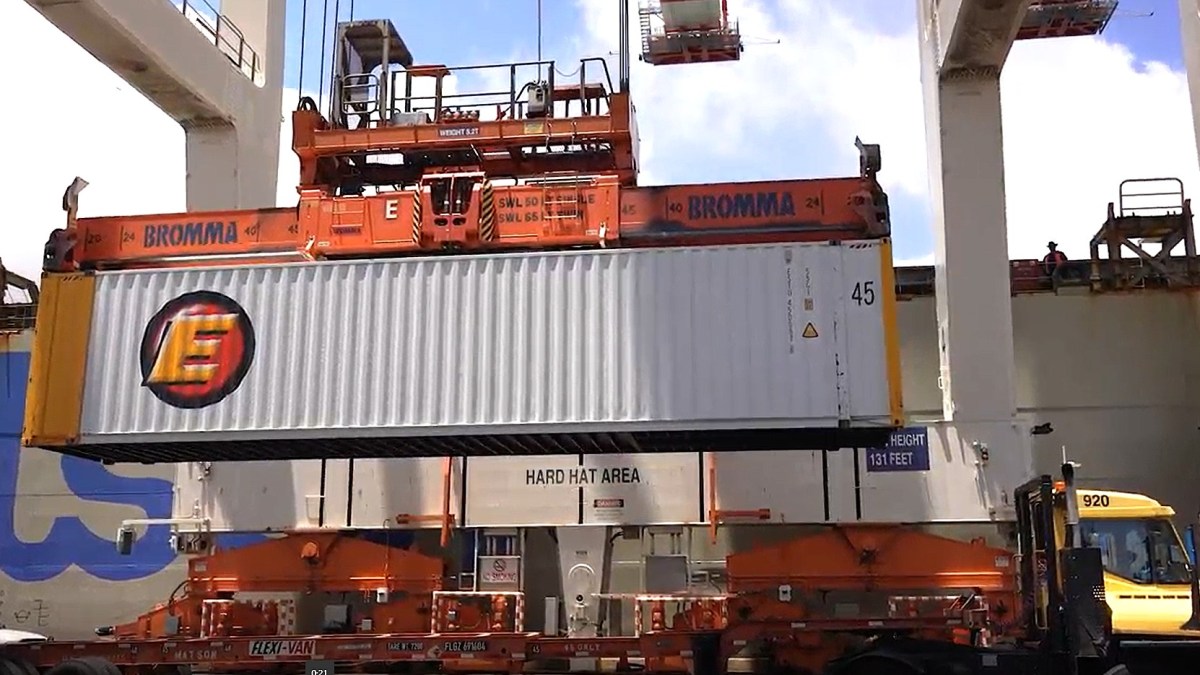
For example, a shipment originating in Richmond can move across the country through the Estes network, be consolidated in California into an Estes-owned ocean container and ultimately be delivered in Honolulu by an Estes driver and truck.
The company’s consolidation points include Rancho Cucamonga, California, for Hawaii; the Seattle-Tacoma region for Alaska; and Jacksonville, Florida, primarily for Puerto Rico.
Peebles said Estes intends to continue investing despite near-term freight and trade uncertainty, with the goal of having capacity available when market conditions improve.
“We’re just looking at it from a longer-term perspective,” Peebles said. “I think we’re trying to find ways to take advantage of that now and make sure that our network is in a really good spot to be able to provide capacity when things switch around a little bit.”
The company’s original investment information characterized the nearly $56 million in spending as a series of offshore, cross-border and international investments in fleet, infrastructure and capacity.
Why it matters: Estes’ expansion shows how a major LTL carrier is adding cross-border capacity despite tariff uncertainty, including a significantly larger facility at the nation’s busiest U.S.-Mexico freight gateway.
Brokerage Compliance Symposium
The day before F3. Every compliance issue you face - fraud exposure, carrier liability, FMCSA rules, cargo theft, insurance gaps - navigated by attorneys and operators defining best practices in a changing industry.
F3 Awards Dinner
The night before F3. FreightTech100 companies honored. FreightTech 25 and Shipper of Choice winners revealed live. Cocktail reception into dinner and live music - 300 industry leaders in one purpose-built room.
F3: Future of Freight Festival
Industry-defining keynotes, rapid-fire technology demos, and industry leaders networking in experiences across Chattanooga - plus the inaugural F3 Awards Dinner featuring the FreightTech and Shipper of Choice reveals.
The day before F3. Every compliance issue you face - fraud exposure, carrier liability, FMCSA rules, cargo theft, insurance gaps - navigated by attorneys and operators defining best practices in a changing industry.
The Signal at Chattanooga Choo Choo • Chattanooga, TN Register NowThe night before F3. FreightTech100 companies honored. FreightTech 25 and Shipper of Choice winners revealed live. Cocktail reception into dinner and live music - 300 industry leaders in one purpose-built room.
The Signal at Chattanooga Choo Choo • Chattanooga, TN Register NowIndustry-defining keynotes, rapid-fire technology demos, and industry leaders networking in experiences across Chattanooga - plus the inaugural F3 Awards Dinner featuring the FreightTech and Shipper of Choice reveals.
The Signal at Chattanooga Choo Choo • Chattanooga, TN Register Now