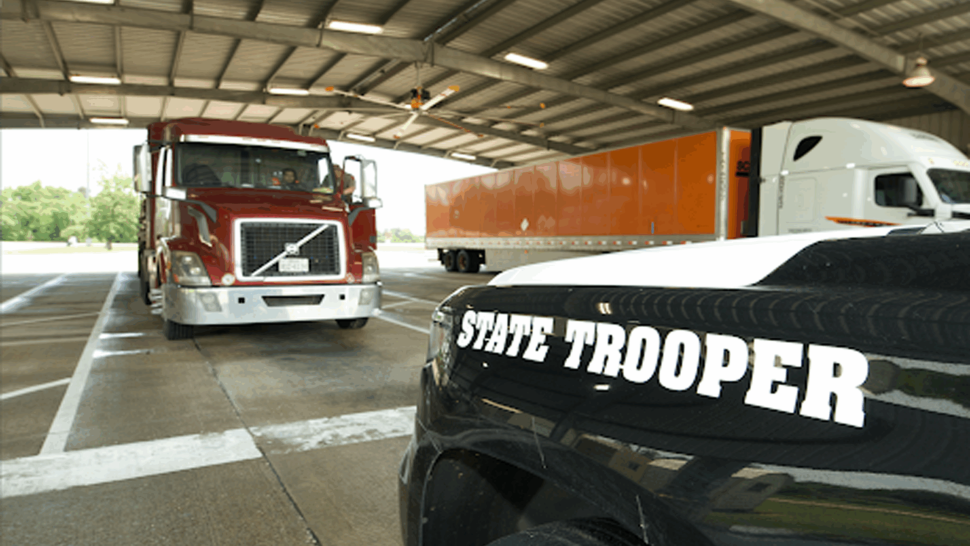
A crash on the Florida Turnpike last August killed three people. The driver was Harjinder Singh, a native of India who had entered the country without authorization in 2018 and was operating a commercial motor vehicle under an out-of-state CDL. On March 6, 2026, the Florida Senate passed a bill in direct response to that crash — and to several other fatal incidents involving undocumented commercial drivers in the state.
The vote was 29-5. The bill is now in the House.
If it passes and Governor DeSantis signs it, Florida Senate Bill 86 takes effect July 1, 2026. For motor carriers operating in Florida — or sending loads through Florida — the implications are immediate, specific, and expensive. This is not a bill that affects drivers alone. It is written explicitly to reach the carriers who put those drivers behind the wheel.
Every carrier with lanes touching Florida needs to understand what this bill does before July 1 arrives.
What the Crash Triggered
To understand what SB 86 is trying to accomplish, you need to understand what happened on the Turnpike and how Florida’s political leadership framed it.
Harjinder Singh had been issued a commercial driver’s license in Washington state in 2023. He subsequently obtained a non-domiciled CDL in California. His CDL appeared valid on its face. On a summer night in St. Lucie County, he attempted an illegal U-turn on the Florida Turnpike with a loaded 18-wheeler and put his truck directly in the path of a minivan. Three people in that minivan died. Singh now faces three counts of vehicular homicide. He remains in custody while criminal proceedings continue.
Senator Don Gaetz, a Republican from Crestview and the bill’s sponsor, was direct about where he placed the responsibility. His position was not limited to the driver. In committee, he stated plainly that the carriers who would put unqualified operators behind the wheel bear accountability for what happens when those operators are on the road. “I’m mad at the motor carriers who would hire him,” Gaetz said. “I’m mad at the people who would put their loads in carriers and not do the due diligence to know” the immigration status of the driver behind the wheel.
That framing — carrier accountability, not just driver accountability — is the foundation of how SB 86 is written. And it is the reason every motor carrier with Florida operations needs to read this bill carefully.
What the Bill Actually Requires
SB 86 amends Florida Statute 316.3026, which governs unlawful operation of motor carriers. It declares the operation of commercial motor vehicles by undocumented immigrants to be an imminent safety hazard — the same legal designation used for vehicles in unsafe mechanical condition or drivers with active alcohol violations. That classification is significant because it triggers the out-of-service framework rather than just a citation process.
Here is what the bill requires and authorizes, in specific terms:
Driver requirements. Commercial motor vehicle operators in Florida must be lawfully present in the United States, hold a valid driver’s license, understand the English language, be able to read and follow roadway signage and traffic laws, and be able to communicate effectively with law enforcement officers. These are not new federal standards — they are state-level requirements that now carry specific enforcement consequences under Florida law.
Law enforcement custody. A sworn law enforcement officer who has 287(g) authority — meaning a formal agreement with federal immigration agencies to enforce federal immigration law — and who determines that an undocumented immigrant is operating a commercial motor vehicle is required to take that person into custody. The bill does not say “may” take into custody. It says “shall.” The transfer to a federal immigration agency follows mandatory, not discretionary.
Immediate vehicle impoundment. The commercial motor vehicle must be impounded and removed to a secure wrecker operator’s storage facility or a law enforcement impound lot. The carrier or owner cannot retrieve the vehicle until specific conditions are met.
$50,000 civil penalty on the carrier. When an undocumented immigrant is taken into custody and a vehicle is impounded under the bill, the motor carrier is liable for a civil penalty of $50,000. This penalty is in addition to any other applicable penalties. The vehicle cannot be released until the $50,000 is paid in full — or a bond is posted — and all costs associated with the impoundment, including towing and storage, are also paid.
Out-of-service order. The Office of Commercial Vehicle Enforcement must issue an out-of-service order to the motor carrier. That order prohibits the carrier from operating any vehicles owned, leased, or otherwise operated by that carrier on Florida roadways until the violations are corrected and penalties are paid. The order requires approval from the director of the Division of the Florida Highway Patrol. It can only be removed after a corrective action plan is approved and all civil penalties are paid.
12-month lookback and cross-state enforcement. If a safety audit or investigation discovers that a motor carrier has allowed an undocumented immigrant to operate a CMV in the past 12 months — even if no roadside stop triggered it — the Office of Commercial Vehicle Enforcement may issue an out-of-service order and a $50,000 civil penalty. Additionally, a carrier operating in Florida is subject to penalties under the bill if it was issued an out-of-service order by any other state or by FMCSA for the same violation within the past 12 months, or if it has an unresolved out-of-service order related to allowing an undocumented immigrant to operate a CMV.
Notification and documentation chain. When a driver is taken into custody, the arresting officer must immediately notify the Florida Highway Patrol and provide a complete documentation package: the offense or incident report, video and audio recordings, photographs of the driver and vehicle, the carrier’s name, the USDOT number displayed on the vehicle, registration and VIN information, and insurance policy details.
Revenue from penalties. All penalties collected under the bill go to the Highway Safety Operating Trust Fund within the Department of Highway Safety and Motor Vehicles, specifically to fund training and technology necessary to enforce the bill. The enforcement apparatus is being funded by the fines it generates.
Why Carriers Cannot Treat This as a Driver Problem
The structure of this bill should end any conversation in a carrier’s office about whether this is a driver compliance issue or a carrier compliance issue. It is explicitly, structurally, and financially a carrier issue.
The $50,000 penalty does not fall on the driver. The out-of-service order does not target the driver. The operations ban does not ground the driver’s CDL — it grounds every vehicle the carrier owns, leases, or operates in the state of Florida. A single incident involving a single driver can shut down a carrier’s entire Florida operation until corrective action is approved and every dollar of the penalty is paid.
For a small fleet — one to five trucks — a $50,000 penalty plus impoundment costs plus the operational disruption of an out-of-service order is a company-threatening event. It does not have to involve negligence or bad faith. The bill does not require that a carrier knew the driver was unauthorized. It requires that the driver was unauthorized and that the carrier allowed them to operate the vehicle.
That distinction matters enormously for how carriers need to approach their driver verification process going forward.
The Non-Domiciled CDL Connection
This bill does not exist in isolation. It is arriving in a regulatory environment where the non-domiciled CDL system — the pathway by which foreign nationals obtain commercial driver’s licenses in the United States — has already been significantly tightened at the federal level.
The March 16, 2026 FMCSA Final Rule limits non-domiciled CDL eligibility to H-2A, H-2B, and E-2 visa holders only. FMCSA estimates that approximately 97 percent of the current 200,000 non-domiciled CDL holders will not qualify under the new rule. California cancelled approximately 13,000 CDLs in March 2026 under federal pressure. North Carolina faces a $50 million federal funding threat over non-domiciled CDL issuance practices.
SB 86 explicitly references Florida Statute 322.033, which governs license validity for undocumented immigrants, as the standard for determining whether a driver’s CDL is valid in Florida. That statute provides that licenses issued exclusively to undocumented immigrants — or licenses with markings establishing that the holder did not provide proof of lawful presence — are invalid in Florida regardless of which state issued them.
What that means in practice is that a driver holding a CDL issued in a state with more permissive licensing standards may be operating legally in that state and still be subject to detention, impoundment, and a $50,000 penalty against their carrier in Florida. The CDL that passed muster in another state does not protect the carrier in Florida if the driver’s underlying immigration status is unauthorized.
Carriers running multi-state operations — and particularly those with lanes that go through Florida or originate or terminate in Florida — need to understand that the standard they are being held to in Florida after July 1 is Florida’s standard, not the standard of the state that issued the CDL.
What Carriers Should Be Doing Right Now
The bill is in the House as of March 6. Given the 29-5 Senate vote and the political environment in Tallahassee, the path to the Governor’s desk is not guaranteed but it is realistic. July 1, 2026 is not far away. Carriers who wait until the Governor signs it to begin their compliance review are already behind.
The first action is a driver file audit focused specifically on lawful presence documentation and CDL validity. For each driver in your pool, you need to know: what CDL they hold, what state issued it, whether that state’s licensing standard meets Florida’s validity requirements under 322.033, and what underlying immigration documentation supports their lawful presence. Drivers holding non-domiciled CDLs need to be identified and reviewed against the March 16 Final Rule criteria immediately.
The second action is a lane check. If your operation includes lanes that run through Florida — even if your terminal is not in Florida — you have exposure under this bill. Know which drivers are assigned to those lanes. Ensure those drivers’ documentation can withstand a roadside stop in a state where the enforcement standard is being actively tightened.
The third action is a hiring and onboarding process review. The bill’s 12-month lookback provision means that a driver you hired six months ago under your current verification process could expose you to a $50,000 penalty today if their documentation does not meet the standard. Your verification process needs to capture lawful presence, not just CDL validity.
The fourth action is insurance and legal review. A $50,000 civil penalty plus impoundment costs plus an operational shutdown in Florida creates a liability scenario that your insurance carrier and legal counsel need to know is on the horizon. If your coverage does not address this type of regulatory penalty, that conversation needs to happen before July 1.
The Broader Picture
Florida is not the first state to move in this direction and will not be the last. Oklahoma has already demonstrated aggressive roadside enforcement targeting non-compliant CDL drivers. Texas, Arizona, and other states are implementing or actively considering enhanced enforcement frameworks. The FMCSA’s March 16 Final Rule creates a federal compliance floor that multiple states are building state-level enforcement structures on top of.
What Florida has done with SB 86 is place the financial and operational consequences squarely on the motor carrier rather than leaving them at the driver level. That is a deliberate policy choice, and it reflects the reality that carriers have access to the verification tools and the hiring processes that individual drivers do not control after the fact.
The public safety argument for the bill is real and it is grounded in documented fatal crashes. The regulatory accountability argument — that carriers who profit from putting drivers on the road bear responsibility for verifying those drivers’ qualifications — is also real and it is consistent with how FMCSA has approached motor carrier liability for decades.
What is new is the $50,000 number, the mandatory impoundment, the statewide operations ban, and the cross-state lookback that makes a carrier’s behavior in other states relevant to their exposure in Florida. That combination produces a compliance imperative that most small and mid-size carriers have not faced before.
July 1 is less than four months away. The verification process needs to start today.
Three people died on the Florida Turnpike last August. The bill that followed is now 29 days from a potential Governor’s signature and 111 days from taking effect. For motor carriers, the question is not whether SB 86 is the right policy response to the problem — the question is whether your driver verification process is ready for the standard it establishes. July 1 will not wait for a compliance review that starts in June.
Brokerage Compliance Symposium
The day before F3. Every compliance issue you face - fraud exposure, carrier liability, FMCSA rules, cargo theft, insurance gaps - navigated by attorneys and operators defining best practices in a changing industry.
F3 Awards Dinner
The night before F3. FreightTech100 companies honored. FreightTech 25 and Shipper of Choice winners revealed live. Cocktail reception into dinner and live music - 300 industry leaders in one purpose-built room.
F3: Future of Freight Festival
Industry-defining keynotes, rapid-fire technology demos, and industry leaders networking in experiences across Chattanooga - plus the inaugural F3 Awards Dinner featuring the FreightTech and Shipper of Choice reveals.
The day before F3. Every compliance issue you face - fraud exposure, carrier liability, FMCSA rules, cargo theft, insurance gaps - navigated by attorneys and operators defining best practices in a changing industry.
The Signal at Chattanooga Choo Choo • Chattanooga, TN Register NowThe night before F3. FreightTech100 companies honored. FreightTech 25 and Shipper of Choice winners revealed live. Cocktail reception into dinner and live music - 300 industry leaders in one purpose-built room.
The Signal at Chattanooga Choo Choo • Chattanooga, TN Register NowIndustry-defining keynotes, rapid-fire technology demos, and industry leaders networking in experiences across Chattanooga - plus the inaugural F3 Awards Dinner featuring the FreightTech and Shipper of Choice reveals.
The Signal at Chattanooga Choo Choo • Chattanooga, TN Register Now