




FedEx Corp. has taken a 37% share of InPost, one of the largest European parcel delivery networks, allowing it to make more money from B2C service by tapping strategic parcel locker infrastructure that is less costly than residential delivery while allowing its own network to prioritize higher margin B2B shipments.
On Friday, a consortium of three financial firms and FedEx (NYSE: FDX) announced they had completed the buyout of publicly traded InPost, taking it private in a deal valued at $9.2 billion. Advent, a private equity company and previous investor in InPost, also owns 37% of InPost.
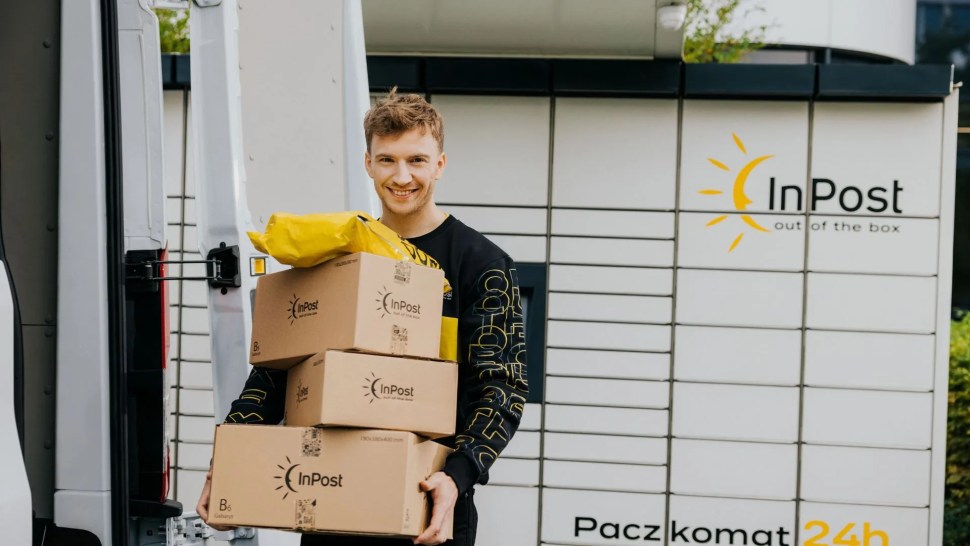
InPost is the largest parcel locker operator in Europe and a leader in the rapidly growing out-of-home delivery market that serves e-commerce retailers. It will continue to operate as an independent company under its existing brand.
“Connecting our global network of 3 million businesses and 225 million recipients with InPost’s last-mile capabilities gives both businesses a potential springboard for profitable growth. We see significant opportunity to expand our commercial arrangements across Europe and look forward to building on it as members of the Consortium,” FedEx CEO Raj Subramaniam said in a news release.
InPost, founded in Poland in 1999 by current CEO Rafal Brzoska, has expanded through a series of acquisitions across nine Europe countries where it offers parcel delivery through a network of more than 70,000 parcel machines and 30,000 pick-up and drop-off points, as well as fulfillment services for online merchants and marketplaces. Brzoska retains 16% of InPost through his investment company A&R.
FedEx and its partners said they will accelerate investment in InPost’s pan-European parcel locker network and technological innovations, including its mobile app, to make the delivery experience even more convenient for consumers, which is expected to translate into more orders for merchants.
InPost is well-positioned to benefit from positive market conditions, including increased e-commerce penetration across Europe, rising consumer demand for speed and convenience and the shift towards more sustainable delivery solutions, the consortium said. Using parcel vending machines and retail outlets as delivery and returns hubs requires fewer vehicles on the road and less driving, resulting in less contribution to traffic congestion and carbon emissions. The delivery model is also less expensive for operators because it requires fewer vehicles, drivers and fuel purchases.
Parcel volumes in Europe have quadrupled over five years as consumers increasingly make retail purchases online.
FedEx and InPost will support each other through arm’s length commercial agreements allowing FedEx merchants to connect with InPost’s last-mile capabilities and InPost customers to access FedEx’s vast global network.
“This partnership delivers the long-term capital, global reach and deep technology expertise we require to build on what we have already achieved together as a leading European e-commerce enabler,” said Brzoska. “We’re taking this step with partners who have known InPost for years and understand our business and ambitions.”
InPost last year acquired Yodel for $144 million, making it the third-largest independent parcel operator in the UK, and Spain-based courier Sending. Before that it took over Mondial Relay in France. The carrier’s parcel volumes in 2025 increased 25% to more than 1.4 billion.
InPost also operates in Italy, Portugal, and the Benelux region.
Quarterly results
In the second quarter, InPost revenue grew 18.2% year over year to $1.1 billion on a 16% gain in parcel volume. The carrier handled 381 million parcels in total.
Results were more mixed than in prior periods. The company kept expanding volumes across Poland, the Eurozone and the U.K., and it continued to gain share in locker-based delivery. At the same time, profits came under pressure from higher depreciation, foreign-exchange effects, financing costs and the cost of integrating and scaling its international operations.
Growth was strongest in the Eurozone (up 30%), with UK volume up 16% and Poland up 9.5%, driven by a partial reversal to more front-door delivery. Earnings before interest and taxes declined 18% to $79 million.
Executives said they plan to install about 19,000 additional automated parcel machines this year and expect $532 million in capital expenditure, with about 60% of it allocated to APM production and deployment.
The company cut its full-year outlook, saying it now expects adjusted EBITDA to decline by mid-single digits year over year vs. flat previously, with lower capex and net leverage higher than in 2025.
RELATED STORIES:
FedEx uses dedicated logistics teams to win aerospace, automotive business
FedEx group to buy InPost for European out-of-home parcel network
