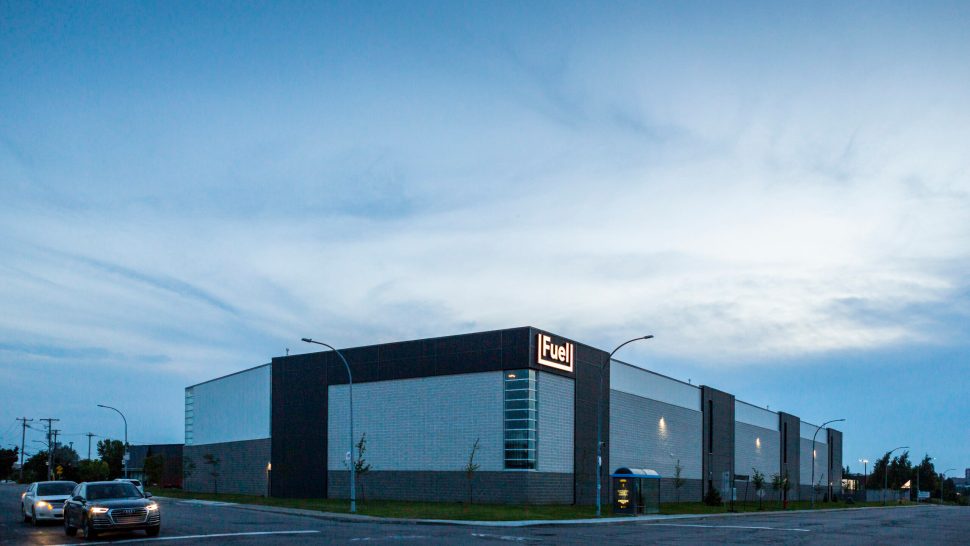
Fuel Transport is taking a long-term view on growth, expanding owned warehouse infrastructure at a time when many logistics providers remain cautious.
For Robert Piccioni, CEO of Montreal-based Fuel Transport, the strategy reflects years of disciplined investment and close collaboration with customers, not a reaction to short-term market swings. While Fuel operates primarily as a freight broker and 3PL, Piccioni said the company’s willingness to invest in physical assets has become a key differentiator.
“Our success has come from working with customers to find the right solutions,” Piccioni said. “Because we’ve stayed fiscally disciplined, we’ve been able to self-finance these investments and grow alongside them.”
That philosophy is now playing out most visibly through a major rebuild of Fuel’s Cordner facility in Montréal. The expansion, currently underway and scheduled for completion in 2026, will add 126,000 square feet of warehousing capacity in Quebec, delivering modern, high-performance space designed to support higher volumes, improved throughput, and flexible operating models.
While leasing warehouse space can offer short-term advantages, Piccioni said it often limits a provider’s ability to align infrastructure with customer needs. “Leasing doesn’t always suit what you’re trying to accomplish long term,” he said. “In this case, building allowed us to deliver exactly what customers needed.”
The Cordner project was shaped through conversations that began more than a year and a half ago. Rather than reacting to immediate demand, Fuel worked through timelines, costs, and operational requirements with customers, carrying the transition risk while partners committed to longer-term agreements.
“That’s how you create stickiness,” Piccioni said. “When customers see you willing to invest alongside them, trust follows.”
Fuel’s expansion strategy also includes its Brampton, Ontario warehouse, a key node for national and cross-border distribution. Expanded capacity at the facility is set to come online in early 2026, supported by a new long-term customer commitment and designed to deliver scalable warehousing for multiple industries.
Together, the Montréal and Brampton projects underscore Fuel’s view of warehousing as a partnership-driven business. Facilities are designed to support both dedicated and shared-use models, giving customers flexibility without sacrificing operational reliability.
As customer expectations around warehousing evolve, Fuel has taken a measured approach to technology investment. The company continues to enhance its warehouse management system and evaluate automation tools, but Piccioni said the focus remains on solutions that fit Fuel’s pallet-in, pallet-out operating environment and integrate cleanly with customer systems.
Fuel’s willingness to expand during a softer market is rooted in long-term planning. Much of the company’s industrial investment was made before the pandemic and funded through profitability rather than leverage, positioning Fuel to offer what Piccioni described as Grade A facilities as demand begins to stabilize.
“What we’re really selling is trust,” he said. “We’re a broker, a logistics provider, and an asset-backed partner that’s invested in our customers’ success.”
Looking ahead, Fuel plans to continue expanding its U.S. footprint, with Chicago as a key base, while also pursuing opportunities in LTL. For Piccioni, the strategy remains consistent: invest with intention, grow alongside customers, and build infrastructure designed to outlast the cycle.
Brokerage Compliance Symposium
The day before F3. Every compliance issue you face - fraud exposure, carrier liability, FMCSA rules, cargo theft, insurance gaps - navigated by attorneys and operators defining best practices in a changing industry.
F3 Awards Dinner
The night before F3. FreightTech100 companies honored. FreightTech 25 and Shipper of Choice winners revealed live. Cocktail reception into dinner and live music - 300 industry leaders in one purpose-built room.
F3: Future of Freight Festival
Industry-defining keynotes, rapid-fire technology demos, and industry leaders networking in experiences across Chattanooga - plus the inaugural F3 Awards Dinner featuring the FreightTech and Shipper of Choice reveals.
The day before F3. Every compliance issue you face - fraud exposure, carrier liability, FMCSA rules, cargo theft, insurance gaps - navigated by attorneys and operators defining best practices in a changing industry.
The Signal at Chattanooga Choo Choo • Chattanooga, TN Register NowThe night before F3. FreightTech100 companies honored. FreightTech 25 and Shipper of Choice winners revealed live. Cocktail reception into dinner and live music - 300 industry leaders in one purpose-built room.
The Signal at Chattanooga Choo Choo • Chattanooga, TN Register NowIndustry-defining keynotes, rapid-fire technology demos, and industry leaders networking in experiences across Chattanooga - plus the inaugural F3 Awards Dinner featuring the FreightTech and Shipper of Choice reveals.
The Signal at Chattanooga Choo Choo • Chattanooga, TN Register Now