




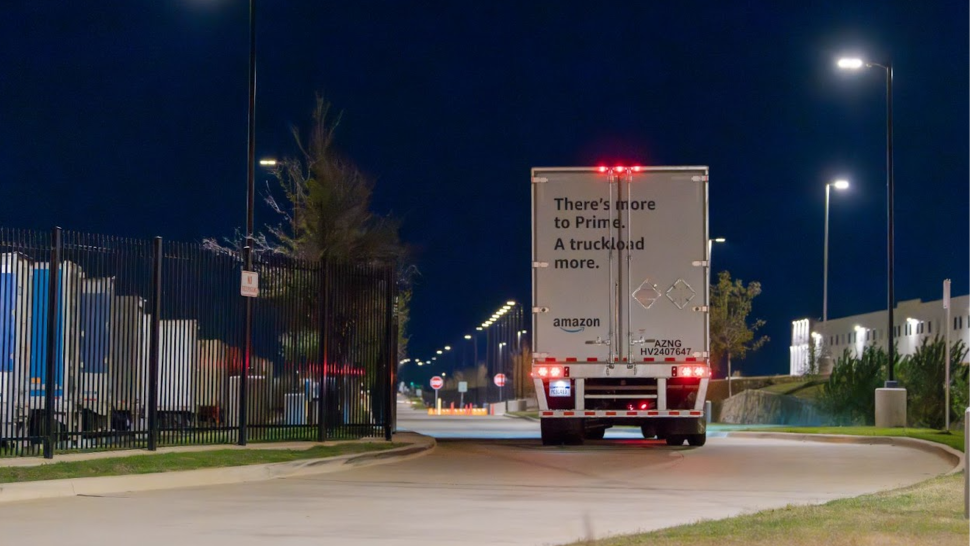
The room felt different. You could see it in the faces. These weren’t desperate carriers chasing survival — they were business owners plotting their next move. Amazon RelayCon 2025 wasn’t just another conference. It was a signal to the industry that small fleets aren’t giving up. In fact, many are gearing up.
I had the chance to attend RelayCon this year — both as a vendor and as a keen observer of what’s moving the needle for small carriers right now. And what I saw wasn’t a group stuck in market pessimism. It was the opposite.
From the moment the doors opened at the welcome reception — with people literally herding in together — the energy was undeniable. Carriers lined up to meet vendors, swap notes, and dig into what Amazon’s Relay program is really offering. And behind all the booths and breakout sessions was a simple message: if you’re operating smart, there’s room to grow.
The Rise of the Growth-Minded Small Fleet
Let’s get one thing straight: this wasn’t a room full of solo operators looking for a miracle. These were mostly 1–50 truck fleets, already moving decent volume — and looking for ways to do more. And the optimism wasn’t baseless.
Amazon revealed that freight volumes for Relay carriers are up 15%, even as the rest of the market struggles with rate compression and declining spot activity. That’s not a small number. That’s insulation. And insulation in this environment is currency.
What stood out most was the mindset shift. RelayCon wasn’t about complaints or freight recession talk. It was about tactical growth. The majority of attendees weren’t there to ask if they should scale — they came to find out how.
Education, Efficiency, and Deals That Make a Difference
Amazon didn’t hold back on the support. The event was structured to make sure every carrier left smarter than they came.
There were multiple breakout sessions including one on supplier development that encouraged carriers to explore certifications like MBE (Minority Business Enterprise) and Veteran-Owned business designations. For small fleets looking to go after contracts or deeper relationships, this was critical intel.
Then came the operations support. Amazon had a dedicated station for safety coaching, where carriers could get real-time insights into their safety scores, understand what’s hurting them, and develop a roadmap to improve. That kind of transparency is rare — and invaluable.
On top of that, Amazon showed how to leverage their “Deals and Discounts” portal — a perk most carriers underuse. From fuel and tires to insurance and services, vendors inside the Relay network offer deep discounts. For carriers managing narrow margins, that adds up fast.
Community Over Commodity
The tone of the event was also something worth highlighting. There was genuine appreciation for the carrier base — not just in words, but in action.
Amazon’s internal teams — from Relay operations to leadership — were extremely present and open. You could walk right up to them and get real answers. They wanted you to know that success within their system is possible — but it requires the right model, mindset, and execution.
A Model That Works — But Not for Everyone
Relay isn’t perfect. No network is. But for certain small fleets, especially those with a clean safety record, consistency in operations, and a commitment to growth, Relay offers something most brokered freight doesn’t: predictability.
Some carriers may benefit more from Amazon’s AFP program (Amazon Freight Partners) — a deeper, more embedded model with even more structure. But for most attendees at RelayCon, Relay itself was more than enough to build a strong business around.
A Standout Moment
As someone who runs multiple platforms dedicated to small carrier education, I’ve been to my share of industry events. But few moments felt as powerful as the welcome reception at RelayCon.
Seeing carriers line up at the door before the event even started, eager to connect with vendors and grab insights, was a reminder that hunger still exists in this industry — it just needs direction. That moment wasn’t about swag bags or free pens. It was about proximity to the right people and the right opportunities.
And the fact that some carriers showed up without ever having run a load for Amazon — just to learn more — says everything about the direction this market is headed.
What This Means for the Broader Market
This event didn’t change the market. But it highlighted a segment that’s thriving despite it.
Many folks think growth is off the table in 2025-26 RelayCon said otherwise.
Amazon is building a more supportive ecosystem than most brokerages even attempt. They’re educating, supporting, and creating pathways for carriers to stay compliant, stay profitable, and stay engaged.
And here’s the kicker: 8 out of 10 carriers present surveyed said they were focused on growth — not survival. That changes the narrative. Because while many in the freight world are sitting on the sidelines waiting for “the rebound,” these carriers are learning how to scale smart — right now.
Final Take
RelayCon 2025 proved something important — the right model, matched with the right carrier mindset, still wins.
This isn’t about Amazon being a silver bullet. It’s about recognizing the shift: small fleets are becoming sharper, more data-driven, and more growth-minded than ever before.
Events like this give them the blueprint. And from what I saw, they’re not just listening — they’re executing.
FAQs
Q: Is Amazon Relay a good fit for new authorities?
It can be, but Relay rewards stability and safety. If your authority is brand new, make sure your onboarding and compliance are tight. Otherwise, consider working with a more established partner until you’re ready.
Q: How do the Deals and Discounts program help?
Think fuel, maintenance, insurance, and tech — all offered at negotiated rates. If you’re not using this portal, you’re leaving money on the table.
Q: What’s the difference between Relay and the AFP program?
Relay is self-dispatched, flexible, and load-board driven. AFP is structured, full-time contract hauling. Both have pros and cons. Relay gives you independence; AFP gives you stability.
Q: Can I grow a multi-truck fleet inside the Relay program?
Yes — and many have. The key is safety, compliance, and consistency. Amazon offers opportunities for scaling partners, but the bar is high.
Closing Thought
If this market has you second-guessing your next move, study what RelayCon just revealed: there’s still a path forward — but it’s only for those willing to run smarter, not just harder.
Brokerage Compliance Symposium
The day before F3. Every compliance issue you face - fraud exposure, carrier liability, FMCSA rules, cargo theft, insurance gaps - navigated by attorneys and operators defining best practices in a changing industry.
F3 Awards Dinner
The night before F3. FreightTech100 companies honored. FreightTech 25 and Shipper of Choice winners revealed live. Cocktail reception into dinner and live music - 300 industry leaders in one purpose-built room.
F3: Future of Freight Festival
Industry-defining keynotes, rapid-fire technology demos, and industry leaders networking in experiences across Chattanooga - plus the inaugural F3 Awards Dinner featuring the FreightTech and Shipper of Choice reveals.
The day before F3. Every compliance issue you face - fraud exposure, carrier liability, FMCSA rules, cargo theft, insurance gaps - navigated by attorneys and operators defining best practices in a changing industry.
The Signal at Chattanooga Choo Choo • Chattanooga, TN Register NowThe night before F3. FreightTech100 companies honored. FreightTech 25 and Shipper of Choice winners revealed live. Cocktail reception into dinner and live music - 300 industry leaders in one purpose-built room.
The Signal at Chattanooga Choo Choo • Chattanooga, TN Register NowIndustry-defining keynotes, rapid-fire technology demos, and industry leaders networking in experiences across Chattanooga - plus the inaugural F3 Awards Dinner featuring the FreightTech and Shipper of Choice reveals.
The Signal at Chattanooga Choo Choo • Chattanooga, TN Register Now