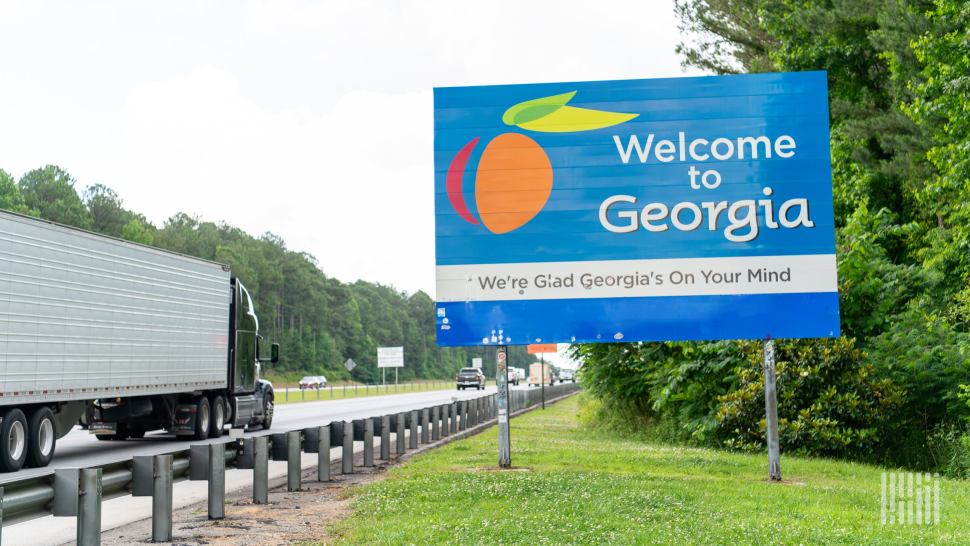
An immigration raid at Hyundai Motor Co.’s $7.6 billion electric vehicle campus in Georgia — a project credited with boosting freight volumes at the Port of Savannah — raises fresh concerns over labor practices and supply chain stability in the state.
Immigration authorities detained 475 people, mostly Korean nationals, during a raid Thursday at the Hyundai–LG Energy Solution battery plant construction site near Savannah.
Homeland Security Investigations (HSI) officials called it the largest single-site enforcement action in the agency’s history.
“While we were on the premises, we did encounter many hundreds of individuals … 475 were illegally present in the United States or in violation of their presence in the United States, working unlawfully,” HSI Special Agent in Charge Steven Schrank said Friday.
Schrank said that some of the immigrants had crossed the border illegally, while others had overstayed visas or were working without authorization under the visa waiver program.
The Hyundai–LG battery plant, slated to open in 2026, is part of Hyundai Motor Group Metaplant America electric vehicle campus in Ellabell, Georgia, the largest economic development project in Georgia’s history. The facility will supply Hyundai, Kia, and Genesis vehicles and has already generated over 1,500 jobs.
Ellabell is located about 20 miles from Savannah.
The project is also a key driver of growth at Georgia’s ports. Hyundai and its suppliers have been credited with boosting auto and container volumes at Savannah and Brunswick, according to Georgia Ports Authority officials.
Schrank said those detained were mostly working for a network of subcontractors at the site. The investigation is ongoing and no charges have been filed.
The South Korean government expressed “concern and regret” over the raid.
“The economic activities of our companies investing in the U.S. and the rights and interests of our nationals must not be unfairly violated,” said foreign ministry spokesperson Lee Jae-woong, according to Yonhap news agency. The ministry said it raised the issue with the U.S. Embassy in Seoul.
South Korea is the United States’ eighth-largest trading partner, with bilateral trade reaching an estimated $197.1 billion in 2024, according to the Office of the U.S. Trade Representative.
The incident comes against the backdrop of new trade tensions: in July, the Trump administration announced a deal imposing a 15% tariff on South Korean imports, while securing a $350 billion Korean investment in U.S. energy, shipbuilding, semiconductors, batteries, and biotech.
Brokerage Compliance Symposium
The day before F3. Every compliance issue you face - fraud exposure, carrier liability, FMCSA rules, cargo theft, insurance gaps - navigated by attorneys and operators defining best practices in a changing industry.
F3 Awards Dinner
The night before F3. FreightTech100 companies honored. FreightTech 25 and Shipper of Choice winners revealed live. Cocktail reception into dinner and live music - 300 industry leaders in one purpose-built room.
F3: Future of Freight Festival
Industry-defining keynotes, rapid-fire technology demos, and industry leaders networking in experiences across Chattanooga - plus the inaugural F3 Awards Dinner featuring the FreightTech and Shipper of Choice reveals.
The day before F3. Every compliance issue you face - fraud exposure, carrier liability, FMCSA rules, cargo theft, insurance gaps - navigated by attorneys and operators defining best practices in a changing industry.
The Signal at Chattanooga Choo Choo • Chattanooga, TN Register NowThe night before F3. FreightTech100 companies honored. FreightTech 25 and Shipper of Choice winners revealed live. Cocktail reception into dinner and live music - 300 industry leaders in one purpose-built room.
The Signal at Chattanooga Choo Choo • Chattanooga, TN Register NowIndustry-defining keynotes, rapid-fire technology demos, and industry leaders networking in experiences across Chattanooga - plus the inaugural F3 Awards Dinner featuring the FreightTech and Shipper of Choice reveals.
The Signal at Chattanooga Choo Choo • Chattanooga, TN Register Now