The good news for the multi-billion dollar material handling industry is that investment is expected to soar in 2019 after four relatively tame years. The not-so-good news is that the industry lacks the qualified people to manage all the sophisticated things coming into the market.
According to an annual survey of the industry, released today at the ProMat 2019 conference in Chicago, capital spending will rise by 95 percent this year after a four-year run of declining capital expenditures. About 22 percent of respondents plan to spend more than $10 million over the next two years, 34 percent plan to spend more than $5 million over that time, and 57 percent will spend more than $1 million, according to the survey, conducted by the Material Handling Institute (MHI) and consultancy Deloitte Consulting LLP.
At the same time, 65 percent of respondents said their primary challenge is to find skilled workers to operate the advanced systems and equipment that are becoming more prevalent. At the same time, the industry is being pressed to speed up response times, reduce its prices and make what for many is a profound transition from handling palletized shipments to processing individual items – known as “eaches” or “onesies” – that are the bread-and-butter of e-commerce.
The industry already struggles to attract and retain workers to handle relatively low-tech tasks. But with robotics, predictive analytics, artificial intelligence and the Internet of Things fast becoming tools of competitive advantage, bringing in tech-savvy people from the outside, or training those on the inside, is a dilemma of equal proportion to keeping labor to perform more traditional assignments.
An increasingly digitized supply chain will need workers who are skilled in analytics, strategic problem-solving, modeling and visualization, according to the survey. Without an ample supply of high-end labor, the projected high adoption rates for many technologies may not come to fruition, according to the survey. Currently, cloud computing and storage has the highest adoption rate at 56 percent of the respondents surveyed. That is not a surprise given the number of established vendors in the space.
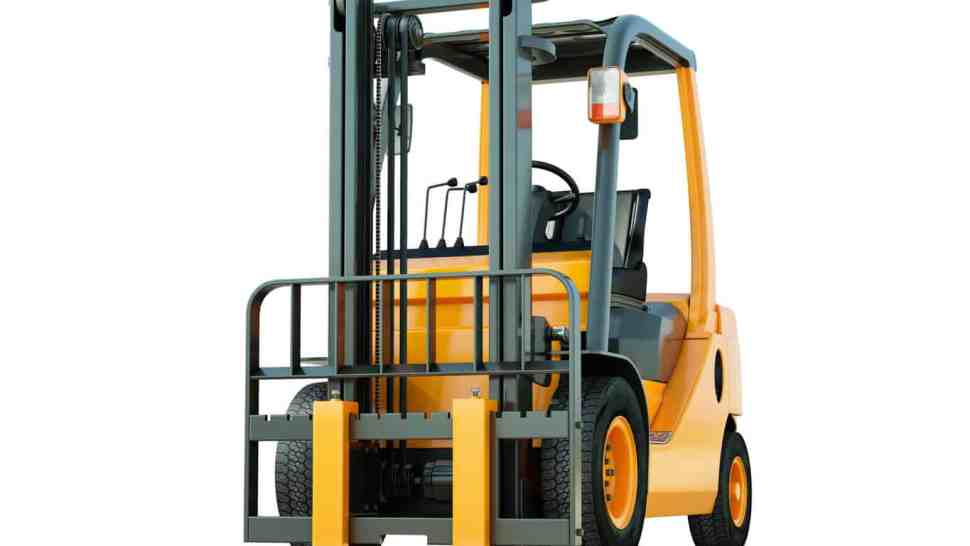
In the meantime, vendors are doing what they can to compensate for the lack of labor. At ProMat yesterday, forklift manufacturer Yale Materials Handling Co. unveiled the industry’s first “reach truck” – called that because of its 30-foot arm – that can be operated autonomously as well as by a human. The lift truck is designed to be robotically operated during normal cycles when the speed of activity is measured, while human labor would be utilized during more frenetic periods like the holiday peak season when faster speeds and dynamic maneuverability is required, according to the company.
The MHI-Deloitte survey was based on responses from more than 1,000 manufacturing and supply chain management executives across multiple industries. About 60 percent hold high-level positions as CEO, vice president, general manager and department head. Participating companies range in size from small to large, with 59 percent reporting more than $100 million in annual revenue, and 10 percent reporting more than $1 billion in annual revenue.
Brokerage Compliance Symposium
The day before F3. Every compliance issue you face - fraud exposure, carrier liability, FMCSA rules, cargo theft, insurance gaps - navigated by attorneys and operators defining best practices in a changing industry.
F3 Awards Dinner
The night before F3. FreightTech100 companies honored. FreightTech 25 and Shipper of Choice winners revealed live. Cocktail reception into dinner and live music - 300 industry leaders in one purpose-built room.
F3: Future of Freight Festival
Industry-defining keynotes, rapid-fire technology demos, and industry leaders networking in experiences across Chattanooga - plus the inaugural F3 Awards Dinner featuring the FreightTech and Shipper of Choice reveals.
The day before F3. Every compliance issue you face - fraud exposure, carrier liability, FMCSA rules, cargo theft, insurance gaps - navigated by attorneys and operators defining best practices in a changing industry.
The Signal at Chattanooga Choo Choo • Chattanooga, TN Register NowThe night before F3. FreightTech100 companies honored. FreightTech 25 and Shipper of Choice winners revealed live. Cocktail reception into dinner and live music - 300 industry leaders in one purpose-built room.
The Signal at Chattanooga Choo Choo • Chattanooga, TN Register NowIndustry-defining keynotes, rapid-fire technology demos, and industry leaders networking in experiences across Chattanooga - plus the inaugural F3 Awards Dinner featuring the FreightTech and Shipper of Choice reveals.
The Signal at Chattanooga Choo Choo • Chattanooga, TN Register Now