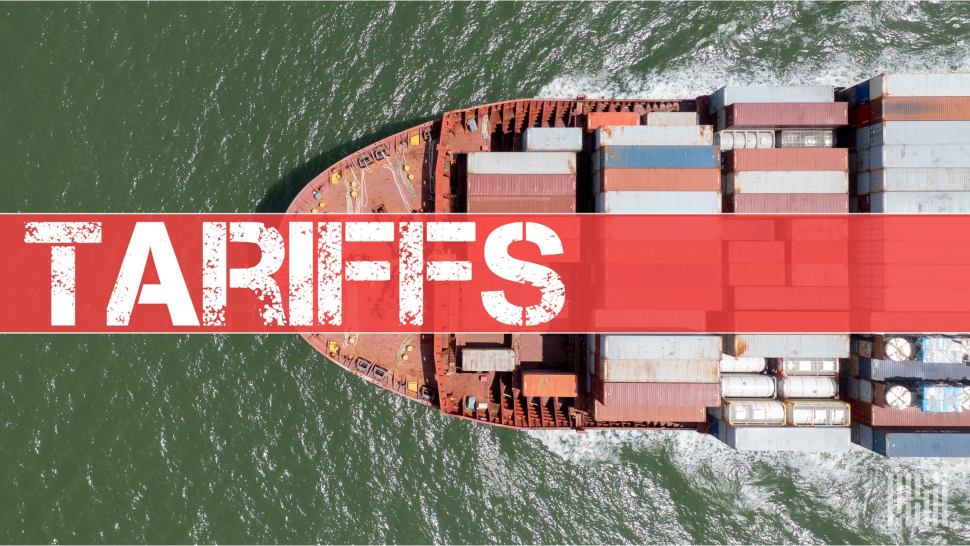
The Trump administration moved Friday to restore a near-universal tariff floor on U.S. imports, replacing its temporary 10% global tariff with a new Section 301 tariff regime covering 60 economies that account for 99.4% of U.S. imports.
The new duties, announced Thursday by the Office of the U.S. Trade Representative and took effect at 12:01 a.m. EDT Friday.
The new duties impose tariffs of 10% to 12.5% on imports from most major U.S. trading partners, including China, Mexico, Canada, the European Union, India and Vietnam, according to Reuters. The action comes immediately after the expiration of President Donald Trump’s temporary 10% tariff, which had been in place for 150 days.
The tariffs stem from Section 301 investigations launched March 12 into whether 60 economies adequately prohibit or enforce bans on imports produced with forced labor.
U.S. Trade Representative Jamieson Greer determined in June that each economy’s policies were unreasonable and burdened U.S. commerce, prompting the administration to impose new duties under the Trade Act of 1974 rather than the emergency powers that the U.S. Supreme Court struck down earlier this year.
“The United States has had a forced labor import ban for nearly a century, and rigorously enforces it. It’s well past time for our trading partners to do the same,” Greer said in a news release. “Today’s action will begin to correct what is both a human rights abuse and distortive trade practice to improve the welfare of workers everywhere.”
Tariffs cover nearly all U.S. imports
According to the White House, the new tariff structure applies to trading partners representing 99.4% of all U.S. imports.
Countries receiving a 10% tariff include:
- Mexico
- Canada
- India
- Indonesia
- Malaysia
- Pakistan
- Bangladesh
- Cambodia
- Guatemala
- El Salvador
- Honduras
- Jordan
- Sri Lanka
- Argentina
- Trinidad and Tobago
- United Kingdom
- Ecuador
The European Union and Taiwan will receive tariffs structured so that their combined Most-Favored Nation (MFN) tariff plus the new Section 301 duty totals 10%, while Japan, South Korea and Switzerland will face combined tariff levels capped at 12.5%.
The remaining 38 economies—including China, Australia, Brazil, Thailand, Vietnam, South Africa and others—will generally face a 12.5% tariff.
Hundreds of products exempt
The administration carved out hundreds of product exemptions designed to minimize disruption to U.S. manufacturers and consumers.
Exemptions include:
- Oil and natural gas
- Fertilizer
- Certain food products
- Raw materials unavailable from domestic suppliers
- Products that could create economy-wide disruptions
- Goods not produced in sufficient quantities in the United States
The White House also directed USTR to establish tariff-rate quotas for certain textile and apparel imports from Bangladesh, Cambodia, Indonesia and Malaysia later this year to encourage greater use of U.S. cotton and textile inputs.
Goods already in transit before the tariffs took effect are exempt until July 28, while products covered by other trade authorities—including many goods qualifying under the U.S.-Mexico-Canada Agreement (USMCA)—remain exempt from the new tariffs.
Trade partners push back
Several trading partners quickly challenged the administration’s justification for the tariffs, Reuters reported.
China criticized the move as another unilateral trade action, while Australia, Brazil and Norway argued the tariffs lacked a legal basis.
The European Union noted that the new duties remain consistent with tariff ceilings negotiated in its recent trade agreement with Washington, while Britain said its bilateral trade agreement leaves key exports such as whisky better positioned than before. Canada said it would continue discussions with U.S. officials.
Brokerage Compliance Symposium
The day before F3. Every compliance issue you face - fraud exposure, carrier liability, FMCSA rules, cargo theft, insurance gaps - navigated by attorneys and operators defining best practices in a changing industry.
F3 Awards Dinner
The night before F3. FreightTech100 companies honored. FreightTech 25 and Shipper of Choice winners revealed live. Cocktail reception into dinner and live music - 300 industry leaders in one purpose-built room.
F3: Future of Freight Festival
Industry-defining keynotes, rapid-fire technology demos, and industry leaders networking in experiences across Chattanooga - plus the inaugural F3 Awards Dinner featuring the FreightTech and Shipper of Choice reveals.
The day before F3. Every compliance issue you face - fraud exposure, carrier liability, FMCSA rules, cargo theft, insurance gaps - navigated by attorneys and operators defining best practices in a changing industry.
The Signal at Chattanooga Choo Choo • Chattanooga, TN Register NowThe night before F3. FreightTech100 companies honored. FreightTech 25 and Shipper of Choice winners revealed live. Cocktail reception into dinner and live music - 300 industry leaders in one purpose-built room.
The Signal at Chattanooga Choo Choo • Chattanooga, TN Register NowIndustry-defining keynotes, rapid-fire technology demos, and industry leaders networking in experiences across Chattanooga - plus the inaugural F3 Awards Dinner featuring the FreightTech and Shipper of Choice reveals.
The Signal at Chattanooga Choo Choo • Chattanooga, TN Register Now