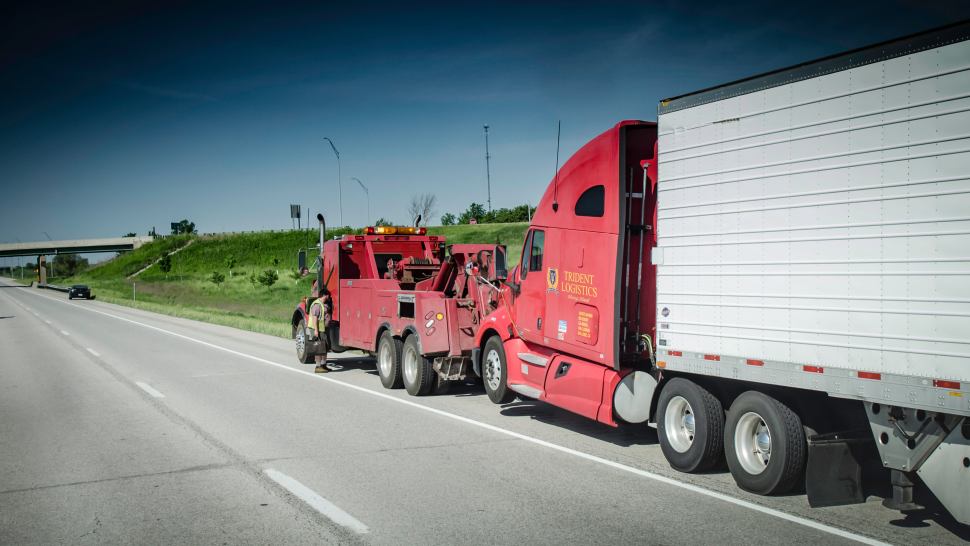
For years, drivers rolling through North Carolina have been dealing with a problem that never should’ve been part of their workday—a growing number of private parking-lot companies slapping boots on tractor-trailers and box trucks the second a driver stepped away from the vehicle. Some operators waited in the shadows for truckers to leave the cab. Some charged hundreds of dollars on the spot. Some didn’t care if the driver was on a federally required break or had nowhere else to legally park. But as of now, North Carolina has slammed the brakes on the whole scheme.
And for the first time in a long time, the law is actually on the side of the trucker.
This new law doesn’t just protect drivers from predatory parking practices. It changes the entire conversation about how states treat commercial vehicles, mandatory breaks, parking scarcity, and safety. The industry has been asking for fairness, and for once, the state listened.
Let’s break down what the law really says, why it passed so quickly, and what every trucker—local or passing through—should know.
Why This Law Exists in the First Place
The booting problem in North Carolina didn’t come out of nowhere. Over the past few years, private “parking enforcement” companies—some legitimate, many not—started patrolling commercial lots, hotel parking areas, and shopping centers. Their goal: catch a truck parked for even a moment where management didn’t want them, clamp a boot on the wheel, and force the driver to pay up before they could leave.
Drivers reported:
• getting booted while legally parked to grab food
• being booted while taking a federally required rest break
• paying hundreds, even thousands on the spot to have a boot removed
• finding no signage, unclear signage, or confusing rules
• dealing with booting companies that had no oversight
• being refused removal unless paying cash
• no appeal process, no due process, no protection
Drivers weren’t parking for convenience. Many were out of hours, fatigued, or simply trying to follow federal HOS law.
The booting companies?
They didn’t care about HOS. They didn’t care about safety. They cared about revenue.
Complaints piled up. Local law enforcement got caught in the middle. Drivers called their representatives. And eventually, lawmakers saw enough.
What the New North Carolina Law Says
North Carolina lawmakers passed the booting ban with overwhelming support, and the Governor signed it into law with the clear intent of ending predatory practices.
Here’s what the law does in plain English:
Commercial vehicles can no longer be booted anywhere in the state, period.
That includes:
• semi-trucks
• box trucks
• hotshots
• straight trucks
• sprinter vans
• any vehicle engaged in commercial transport
If you’re working, you’re protected.
Private companies are prohibited from attaching a boot, wheel clamp, or immobilization device to any commercial vehicle for any reason.
And if they do?
It’s illegal—and the driver is not required to pay a dime to have it removed.
Lawmakers specifically cited safety concerns, federal rest requirements, and the unique burden placed on truckers as justification for moving quickly.
This wasn’t politics. This was common sense.
Why Lawmakers Moved Fast
Predatory booting became a statewide story after drivers—and eventually business owners—started speaking out about how booters were waiting for tractor-trailers to park and then charging massive fees to unlock them.
In one case highlighted during hearings, a driver was booted while trying to rest after reaching his maximum hours. Another was booted simply for parking behind a store to make a delivery.
That’s when lawmakers saw the bigger issue:
Booting a commercial motor vehicle doesn’t just inconvenience the driver—it creates a dangerous situation.
A booted rig blocks emergency access, delays freight, disrupts supply chains, forces fatigued drivers to operate unsafely just to avoid being booted again, and in many cases, there was no alternative parking available.
North Carolina legislators realized quickly:
You can’t enforce federal safety rules like mandatory breaks and then let private companies punish the drivers for taking those breaks.
The ban passed with strong bipartisan support and minimal resistance.
What This Means for Truckers Traveling Through North Carolina
This law changes the landscape for any driver who runs freight through the state. From Charlotte to Greensboro, from Wilmington to Asheville, the message is straightforward:
If you’re a commercial operator, you can no longer be booted by a private company.
That does NOT mean you can park anywhere you want. But it does mean:
• You won’t be extorted for fees in the middle of your 10-hour break.
• You won’t be held hostage by a parking enforcer.
• You won’t be illegally immobilized while out of hours.
• You won’t be penalized for doing what federal law requires you to do.
Law enforcement can still tow a vehicle if it’s blocking emergency routes or creating a clear public safety issue. But towing requires a process. A boot requires none, which is exactly why the state banned it.
For the first time in a long time, the law actually acknowledges the reality of trucking instead of pretending every driver has a perfect, safe parking spot waiting for them.
Why This Matters for Safety
Most drivers don’t realize how much danger booting caused until you break it down:
A booted truck can’t move in an emergency.
A booted truck is trapped if a fire breaks out nearby.
A booted driver is forced to stay with the truck, even if exhausted.
Booting can create a chain reaction in tight lots where trailers need space to maneuver.
Federal HOS rules don’t bend because a booting company wants to make a dollar. But drivers were being forced into impossible situations where every decision carried risk.
This law protects:
• fatigued drivers
• time-sensitive freight
• emergency access
• public safety
• the motoring public
And it sets a precedent other states should be paying attention to.
What Drivers Still Need To Be Careful About
This law is a win, but it’s not a free pass.
Drivers must still:
• follow posted signage
• obey local parking ordinances
• avoid blocking entrances, drive lanes, and hydrants
• understand that tow-away zones still exist
You won’t get booted. But you can still be towed if the situation warrants. The difference is towing requires process and documentation. Booting required none.
A Good Day for Common Sense
Truckers rarely see laws written with their actual working conditions in mind. Parking continues to be one of the biggest safety threats in the industry, and too often, the driver gets punished for a problem they didn’t create.
But this time, North Carolina stepped in and said enough. Predatory booting is gone, the playing field is a little fairer, and other states may follow.
Not every win is huge.
But this one matters because it gives drivers something they rarely get on the road, basic fairness.
Brokerage Compliance Symposium
The day before F3. Every compliance issue you face - fraud exposure, carrier liability, FMCSA rules, cargo theft, insurance gaps - navigated by attorneys and operators defining best practices in a changing industry.
F3 Awards Dinner
The night before F3. FreightTech100 companies honored. FreightTech 25 and Shipper of Choice winners revealed live. Cocktail reception into dinner and live music - 300 industry leaders in one purpose-built room.
F3: Future of Freight Festival
Industry-defining keynotes, rapid-fire technology demos, and industry leaders networking in experiences across Chattanooga - plus the inaugural F3 Awards Dinner featuring the FreightTech and Shipper of Choice reveals.
The day before F3. Every compliance issue you face - fraud exposure, carrier liability, FMCSA rules, cargo theft, insurance gaps - navigated by attorneys and operators defining best practices in a changing industry.
The Signal at Chattanooga Choo Choo • Chattanooga, TN Register NowThe night before F3. FreightTech100 companies honored. FreightTech 25 and Shipper of Choice winners revealed live. Cocktail reception into dinner and live music - 300 industry leaders in one purpose-built room.
The Signal at Chattanooga Choo Choo • Chattanooga, TN Register NowIndustry-defining keynotes, rapid-fire technology demos, and industry leaders networking in experiences across Chattanooga - plus the inaugural F3 Awards Dinner featuring the FreightTech and Shipper of Choice reveals.
The Signal at Chattanooga Choo Choo • Chattanooga, TN Register Now