





Truckload rates were up big again in October with shipment counts extending a positive streak to three months, according to a Monday report from Cass Information Systems. The outsized rate gains are allowing one-way fleets to quickly repair margins, while fleets under dedicated arrangements have been slower to offset cost inflation.
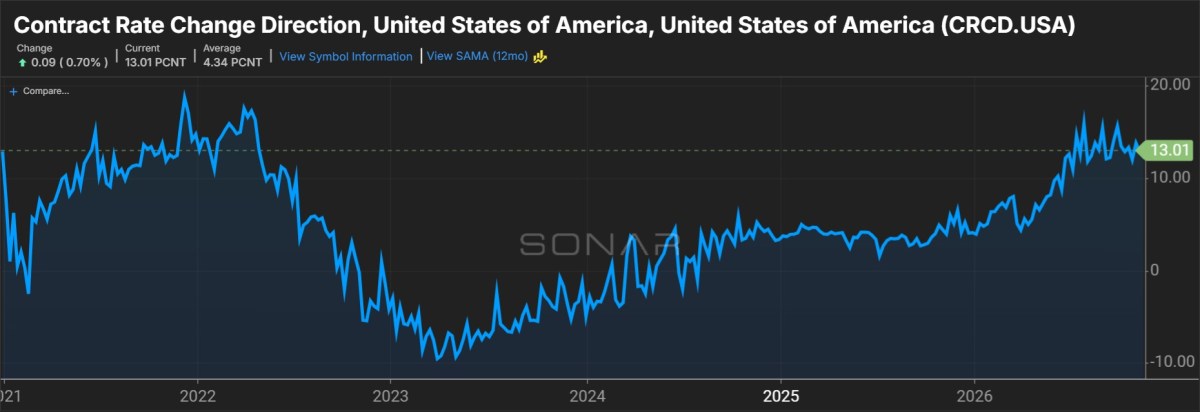
Cass’ TL linehaul index, which tracks rates excluding fuel and accessorial surcharges, increased 0.9% from September and 9.9% year over year. The linehaul index is historically heavily weighted to for-hire contract rates but also includes spot market rates.
October marked the 22nd straight y/y increase. The dataset was 13.2% higher on a two-year-stacked comparison, which mitigates the noise embedded in prior-year comps and shows the momentum of change.
| October 2026 | y/y | 2-year | m/m | m/m (SA) |
| Shipments | 5.9% | -2.3% | -0.6% | 1.7% |
| Expenditures | 26.5% | 26.3% | 1.0% | 2.9% |
| TL Linehaul Index | 9.9% | 13.2% | 0.9% | NM |
Cost pressures were evident in third-quarter TL carrier results, however, one-way fleets are logging large contractual rates gains after a multiyear downturn.
Knight-Swift Transportation (NYSE: KNX), which has 70% of its TL fleet operating under non-dedicated agreements, is now targeting “at least double-digit increases.” The company’s new bid season began earlier this month, and it continues to reap the benefits from its elevated spot market exposure. The carrier placed more units under non-contractual arrangements early in the year to more quickly take advantage of a crackdown on noncompliant capacity.
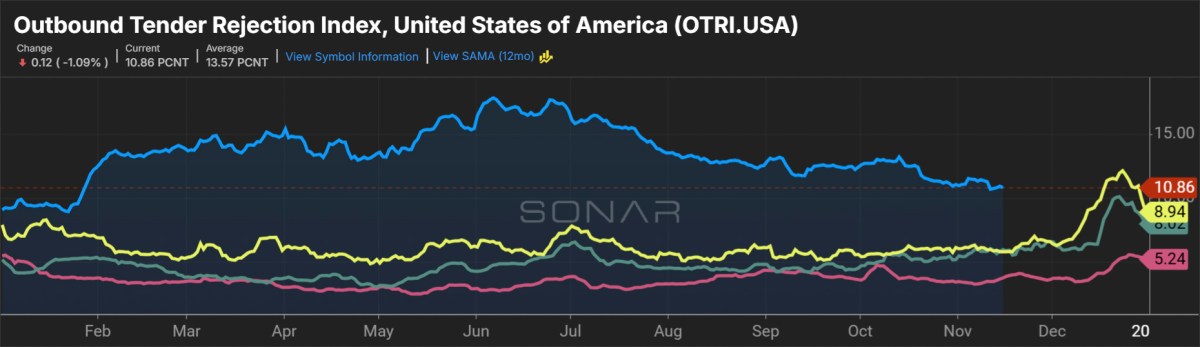
It said on its third-quarter call last month that internal tender rejections were running two to three times higher than the industry average, and that the rates it was receiving on transactional business were also above-market.
Freight shipments captured by Cass increased 5.9% y/y in October, a third straight y/y increase after 42 months of declines. Shipments slipped 0.6% from September but increased 1.7% when seasonally adjusted. October marked the smallest decline on a two-year-stacked comparison in three years.
All domestic transportation modes are included in the index, with TL and less-than-truckload shipments representing the bulk of the dataset.
The report said that modest growth in retail and the industrial economy, along with IEEPA tariff refunds, was supporting freight demand. However, it said, “demand will be limited by elevated inflation and rising interest rates squeezing consumers and businesses,” and noted that tariff refunds will only have a temporary impact.
Cass’ shipments index is forecast to increase 3% y/y in November if typical seasonal patterns hold.
Cass’ expenditures index, which measures total freight spend including fuel, jumped 26.5% y/y, up 2.9% seasonally adjusted from September. This was the highest growth rate for the index since July 2022, the tail end of the boom cycle.
Higher transportation rates and fuel surcharges, along with the increase in shipment counts, are driving the surge in freight spend. Retail diesel prices were 70% higher y/y in October. Cass’ expenditures index is forecast to increase by 24% y/y in November.
“We continue to see the freight demand cycle gaining steam, and with record container imports and intermodal volumes, and growing LTL tonnage, the improvement has broadened out some in recent months,” the report said.
Data used in the indexes comes from freight bills paid by Cass (NASDAQ: CASS). Cass processes $37 billion in freight payables annually on behalf of customers.
Why it matters? October data from Cass highlights a continued surge in TL contract rates alongside only modestly improved freight demand. The dataset confirms the impact strict regulatory enforcement is having on non-compliant capacity.
