Can a sub-70% operating ratio be far behind?
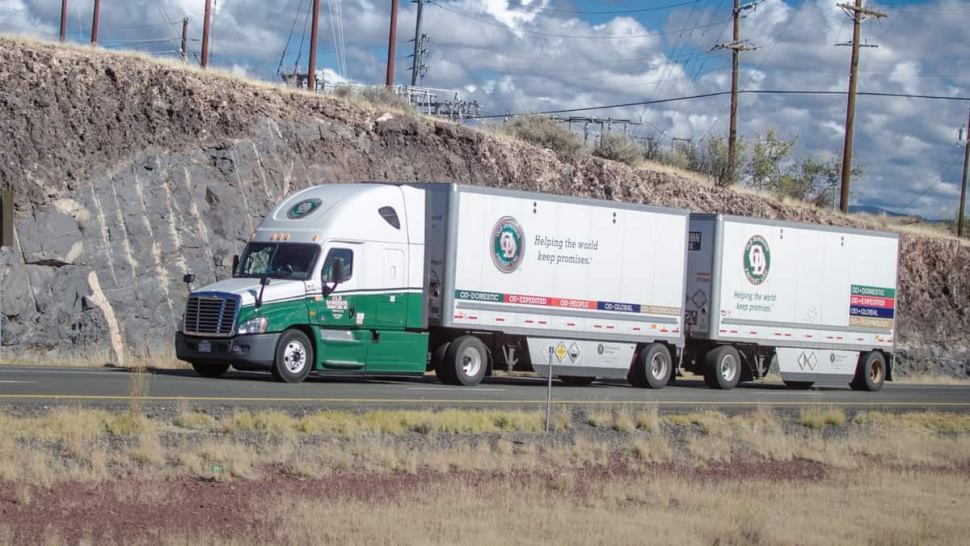
That’s a question being asked after Old Dominion Freight Line Inc. (NASDAQ:ODFL) posted Wednesday morning an operating ratio of 72.3% in its second quarter. The eye-popping number, which was a quarterly record for the company, meant that the Thomasville, North Carolina-based LTL carrier spent just 72.3 cents for every $1 in revenue.
Put another way, Old Dominion achieved an operating margin of 27.7% and did it while bringing on more labor to accommodate spikes in demand. Even if the higher labor expense was not part of the equation, the second-quarter figure is astounding for a business that works in a world of high fixed operating costs. According to Amit Mehrotra, senior transport analyst at Deutsche Bank, employee wages and compensation rose 9.9%, which appeared to be the largest year-on-year increase experienced by the company for any year-over-year period.
Satish Jindel, founder of SJ Consulting, said he’s never seen operating margins like this in his four decades working in the LTL arena.
The operating ratio was 550 basis points below the 77.8% figure reported in the second quarter of 2020, a period of great distress for LTL carriers as industrial activity, the industry’s bread and butter, collapsed as the U.S. economy locked down in the early stage of the COVID-19 pandemic. However, last year’s situation had no bearing on the 2021 results because the carrier was able to expand its year-over-year margins from 2019 to 2020, Mehotra noted.
In a Wednesday note, Mehortra said he had hoped for an operating ratio in the 60% range and earnings per diluted share of $2.51. Old Dominion reported diluted EPS of $2.31 per share, a quarterly record and 14 cents above the median estimate of analysts polled by Barchart. The company also broke its all-time revenue record at $1.32 billion, a 47.2% year-on-year increase.
Mehrotra also noted a sequential slowdown in the rate of growth for revenue per shipment excluding fuel to 5.9% from 7% in the first quarter. Still, Mehrotra called the results “clearly outstanding on an absolute basis.”
In an e-mail Wednesday morning, he summed up the sentiments of many when discussing Old Dominion. “They are just legendary,” he said.
Operating income, net income and diluted EPS all rose by more than 80% over second-quarter 2020 results, gains that were skewed by the extraordinary events of last spring. The same held true for volumes. LTL volumes rose 33.5%, tonnage increased by 28.1% and revenue for each 100 pounds hauled, known as revenue per hundredweight, climbed 14.9%.
LTL weight per shipments declined by 4%, the result of operational changes made earlier this year that reduced the quantity of heavy-weighted shipments, Old Dominion said. The company said its yield metrics benefited from the weight-per-shipment reduction as well as a 1.2% increase in its average length of haul.
Improvements in freight density and yield created the favorable operating leverage that led to the dramatic drop in its operating ratio, Old Dominion said.
Shares of Old Dominion were up fractionally in premarket trading Wednesday. They have increased nearly 40% over the past 12 months.
F3: Future of Freight Festival
Industry-defining keynotes, rapid-fire technology demos, and industry leaders networking in experiences across Chattanooga - plus the inaugural F3 Awards Dinner featuring the FreightTech and Shipper of Choice reveals.
Industry-defining keynotes, rapid-fire technology demos, and industry leaders networking in experiences across Chattanooga - plus the inaugural F3 Awards Dinner featuring the FreightTech and Shipper of Choice reveals.
The Signal at Chattanooga Choo Choo • Chattanooga, TN Register Now