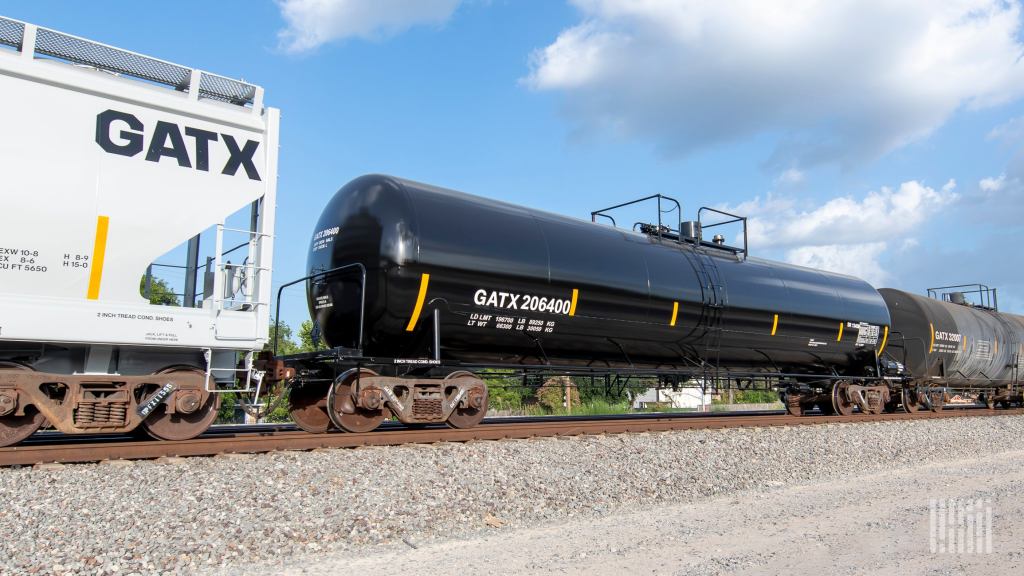
Macro uncertainties loom for rail equipment manufacturers 

How to maintain business amid uncertain macroeconomic conditions was one of the prevalent themes weaving through this week’s earnings calls of rail car manufacturers and lessors and rail equipment manufacturers. 

But while high inflation and uncertainty about consumer sentiment are big concerns domestically, companies said they saw the growth in their international footprints last quarter.

“We did think long and hard as we were giving our guidance around deliveries and revenue, acknowledging that there might be a little bit of swallowing hard on what’s going on,” Greenbrier President and CEO Lorie Tekorius said during Greenbrier’s earnings call Wednesday to discuss the company’s fiscal fourth-quarter results. “We and others in this space are being very disciplined about how we think about production — not just dialing up production so that we can put a big flash number out there and then see 12 or 18 months from now production needing to be dialed back.”

Greenbrier adjusts production lines to accommodate refurbishments

Greenbrier is well aware of the cyclical nature of rail car production and purchasing, and so the objective is determining what should be the right pace for producing cars, instead of “just trying to crank the dial up to juice out a bunch of deliveries for a particular period,” Tekorius said. This means that Greenbrier keeps assessing its footprint to ensure it is investing accordingly and in areas where the company can generate returns. 

That said, “our outlook remains positive. We expect North America and Europe to continue to see strong demand across rail car types underpinning both new bills and lease renewals,” Tekorius said in prepared remarks. “We have excellent near-term visibility for fiscal 2024 and are focused on maximizing our platform’s potential as we progress towards our multiyear targets. We’re confident in the long-term strategy we presented at the investor day because it’s focused on the things we can control and not reliant on an overly optimistic demand scenario.” 

One way that Greenbrier has sought to respond to customer needs amid current market conditions is to adapt its rail car production lines to accommodate large rail car refurbishment programs, Tekorius said, noting that while this business isn’t included in Greenbrier’s figure for new rail car deliveries, the service is actually accretive to earnings. The refurbishments and conversions also benefit the environment through the reuse or recycling of components such as wheels, axles and brakes. 

Greenbrier has also decided to convert line space previously dedicated to new rail car production toward its in-sourcing initiative to fabricate primary parts and sub-assemblies in-house. The first phase of that program was completed in the most recent quarter, according to Tekorius. Greenbrier expects to reach its cost savings targets of $50 million to $55 million in fiscal year 2025.

“Part of our DNA is solving our customers’ problems, and our customers don’t always need a new rail car,” Greenbrier CFO Adrian Downes said. “Sometimes they need a large number of cars refurbished, converted, and this is where we step in and we work with our long-term core customers and take care of it from that perspective versus just trying to jam new cars down their throat.”

A bright spot for Greenbrier has been its presence outside of the U.S. and Canada. International orders accounted for nearly 20% of rail car orders in Greenbrier’s fiscal fourth quarter. Greenbrier also launched a leasing and syndication business in Europe, according to Brian Comstock, Greenbrier’s chief commercial and leasing officer.

Comstock said Greenbrier secured new rail car orders of 15,300 units worth nearly $1.9 billion by the end of its fiscal fourth quarter, reflecting demand for most rail car types except intermodal. 

“The pipeline continues to be very strong despite some of the other rhetoric about recession. The recession really is around intermodal,” Comstock said. 

Greenbrier (NYSE: GBX) reported net income of $29.7 million, or 92 cents per diluted share, for its fiscal Q4, compared with $34 million, or $1.02 per diluted share, in the same period last year. Greenbrier’s fiscal fourth quarter ended on Aug. 31.

The rail car manufacturer and lessor saw a fleet utilization rate of 98% in the quarter for a 13,400-unit fleet, and it received new rail car orders for 15,300 units valued at $1.9 billion. Its rail car backlog was 30,900 units with an estimated value of $3.8 billion. 

GATX works on finding upsides amid the downsides

Meanwhile, macroeconomic and geopolitical uncertainties can be a constant worry for Bob Lyons, president and CEO of rail car lessor and manufacturer GATX.

“What keeps me awake at night is the bigger macro factors that are outside of GATX’s control. And we’ve seen a number of those in the last couple of years, whether it’s the pandemic, the war in Ukraine, kind of the unpredictable macro things are what keep me awake at night,” Lyons said. 

“But I guess what allows me to go back to sleep at night is we’ve been through those for 125 years, and we have the business in a really, really stable, strong foundation right now that we can respond and accordingly, whatever macro challenges are thrown our way,” Lyons continued. 

Despite macro concerns, GATX executives said during the company’s third-quarter 2023 earnings call earlier this week that the North American fleet utilization rate remains high — at 99.3% at the end of the third quarter. And even if customers decide to return their cars, GATX can find another place for that rail car, according to Tom Ellman, GATX CFO.

“A nonrenewal does not necessarily mean a non-utilized car. … The utilization remained very, very high, which means that any car that for whatever reason is not being renewed is being quickly put back to work,” Ellman said during GATX’s third-quarter earnings call on Tuesday. 

Lyons said there are times, “especially in this type of rate environment, where certain customers may say no. And given the diversity of our fleet and our commercial capabilities, we’re comfortable taking a car back and putting it on lease with the next customer. So that would obviously impact your renewal success rate. But in the end, any renewal success rate up in the ZIP code of where we’re at today is really, really strong.”

Furthermore, periods of high inflation aren’t necessarily a headwind either, according to Ellman. If a customer decides not to pursue purchasing a rail car at this time because of higher interest rates, that customer may still continue leasing instead. 

“On a new investment where you have the ability to decide to invest or not to invest, obviously, higher interest rates makes your threshold a little bit higher for total investment and a little bit more challenging to invest in that kind of environment,” Ellman said. “It’s important to note though that overall dynamic is helpful because if it makes that new car more expensive, it makes the alternative of renewing an existing car more attractive and that’s really the primary benefit that you get.”

Net income for GATX (NYSE: GATX) was $52.5 million, or $1.44 per diluted share, for the third quarter of 2023, compared with $29.1 million, or 81 cents per diluted share, for the third quarter of 2022.

GATX described the rail car leasing market in North America as “robust,” with fleet utilization for GATX’s Rail North America segment at 99.3% at the end of third quarter, compared with 99.3% at the end of the second quarter and 99.6% for the third quarter of 2022.

The segment reported profit of $66.1 million, compared with $64.3 million in the same period last year.

GATX’s Rail International segment saw a combined total of over 1,400 newly built rail cars to fleets in Europe and India, and the company said it is experiencing higher renewal lease rates compared with expiring rates for the majority of car types. 

GATX’s Rail International reported $28.2 million in third-quarter segment profit, compared with $14.5 million a year ago.

Wabtec focuses on business wins abroad

As Wabtec navigates through domestic market softness, the rail equipment manufacturer and technology provider is eyeing opportunities abroad, according to President and CEO Rafael Santana. 

“North America carloads continue to be down in the quarter, which resulted in locomotive parkings up slightly from last quarter’s levels,” Santana said in prepared remarks during Wabtec’s third-quarter 2023 earnings call on Wednesday. “Yet we continue to see significant opportunities across the globe in demand for new locomotives, modernizations and digital solutions as our customers invest in solutions that continue to drive reliability, productivity, safety and fuel efficiency.”

He later said, “Internationally, activity is strong across core markets, such as Latin America, Australia, South Africa and Kazakhstan, [where] significant investments to expand and upgrade infrastructure are supporting a substantial international order pipeline.”

In Wabtec’s domestic business, North American rail car builds industrywide still continue to “show growth,” with about 45,000 cars to be delivered in 2023, Santana said. 

In the third quarter, Wabtec’s (NYSE: WAB) sales rose 22.5% year over year (y/y) to $2.5 billion, “driven by strong performance” from Wabtec’s freight and transit segments, the company said. 

Third-quarter 2023 earnings per diluted share using generally accepted accounting principles was $1.33, up 51.1% y/y. Adjusted earnings per diluted share were $1.70, up 39.3%.

Subscribe to FreightWaves’ e-newsletters and get the latest insights on freight right in your inbox.

Click here for more FreightWaves articles by Joanna Marsh.
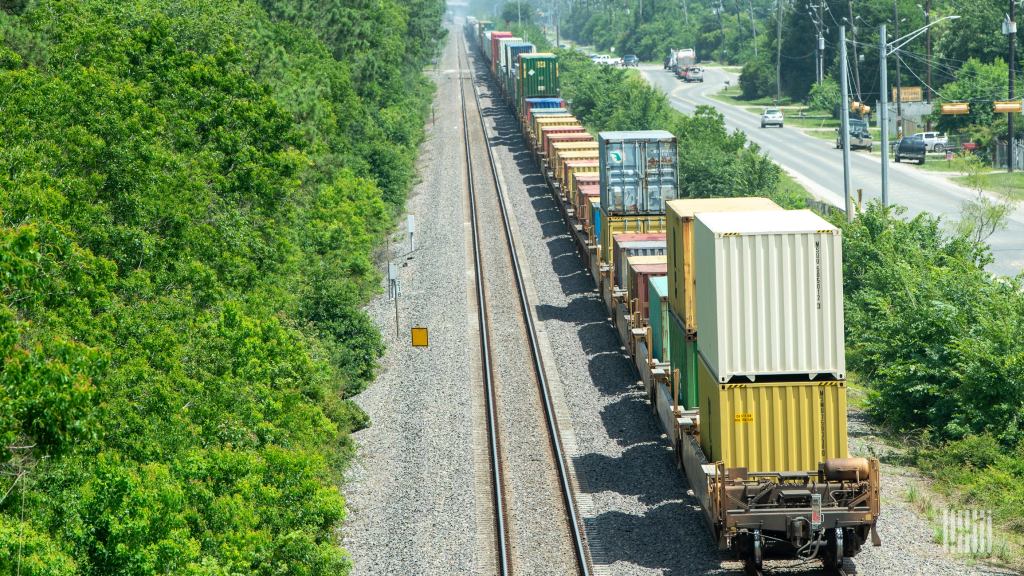
Norfolk Southern wants close look at proposed CPKC-CSX Southeast corridor

Norfolk Southern wants the Surface Transportation Board to compel Canadian Pacific Kansas City and CSX to provide more information on how their plans to create a Mexico-U.S. Southeast corridor will affect passenger and other freight rail traffic — including the Meridian Speedway that NS operates with CPKC.

NS (NYSE: NSC) is asking STB to get CPKC (NYSE: CP) and CSX (NASDAQ: CSX) to consolidate seven applications into one, as well as require CPKC and CSX to provide more analysis on how their proposed corridor will affect passenger and freight rail traffic.

NS also does not want STB to take any action that would move forward with CPKC’s and CSX’s applications until those two railways consolidate their applications and send in additional information.

Earlier this month, CPKC and CSX submitted plans asking STB to allow them to acquire portions of the Meridian & Bigbee Railroad (MNBR), a southern U.S. short line that is currently a subsidiary of short line operator Genesee & Wyoming. CPKC would acquire the western line of the MNBR, while CSX would acquire the eastern line. CSX previously operated the MNBR prior to G&W’s acquisition of the short line. 

The purpose of these acquisitions would be to create more efficient rail freight flows between Mexico, Texas and the southeastern U.S., the two railways said.

But attorneys representing NS told the board in a Wednesday filing that CPKC’s and CSX’s applications don’t take into account how their plans could affect passenger and freight rail traffic, including how traffic that might need to access NS and NS’ Meridian Speedway via the MNBR.

The Meridian Speedway, created as a joint venture between NS and Kansas City Southern, is a corridor that serves NS’ intermodal segment and goes between the Southeast and the central Texas market and the Southeast and Southwest markets in California and Arizona. The corridor starts in Meridian, Mississippi, and heads west. NS stressed the importance of the corridor to its business when STB was reviewing the merger between CP and KCS.

“The applications as filed fail to address certain key impacts on freight rail customers and passenger traffic that rely upon the same rail assets that the Applicants’ traffic will utilize,” NS said. “In particular, the applications as filed do not identify in any meaningful way how the traffic reaches the CPKC-CSXT Transcon Corridor, and therefore ignore any potential impacts to traffic that currently utilizes the Meridian Speedway and the Meridian Gateway.” 

Amtrak also operates about 17 trains per day through Meridian, a point on MNBR’s western line, and NS hosts two long-distance Amtrak trains through Meridian, according to NS.

Consolidating the various CPKC-CSX applications into one appreciation would provide “a full and clear picture of the potential impacts,” NS said. 

“Now is the appropriate time for consolidation. The Board has not acted to set a procedural schedule for any of the proceedings. The Board also has not yet determined whether the individual Western Line and Eastern Line applications should be treated as minor transactions or not. But it cannot do so without fully understanding the effects of the proposed consolidated transaction on the broader markets and operating segments alluded to throughout the Applicants’ pleadings,” attorneys representing NS said.

Subscribe to FreightWaves’ e-newsletters and get the latest insights on freight right in your inbox.

Click here for more FreightWaves articles by Joanna Marsh.

What’s behind rising insurance costs?

When carriers think of operational costs, what comes to mind is typically driver wages and benefits, fuel costs, repairs and lease payments. Trucking insurance costs, however, have crept higher over the better part of the last decade and are a growing, yet controllable, expense for carriers. 

According to the American Transportation Research Institute’s (ATRI) Operational Cost of Trucking report, truck insurance premiums have risen from 6.4 cents per mile in 2013 to 8.8 cents per mile in 2022. In the context of costs per hour, that is $2.57 in 2013 and $3.57 in 2022.

Andrew Haun, senior VP of sales and strategic accounts at Reliance Partners, a Tennessee-based trucking insurance agency, attributes this rise partly to rising costs of equipment and medical expenses and litigation abuse.

Small carriers are especially impacted by the rising costs. 

According to ATRI, per-mile truck insurance premiums for small carriers rose from 10.2 cents in 2021 to 13.6 cents in 2022. Meanwhile, for large carriers, premiums decreased from 8.2 cents in 2021 to 7.2 cents in 2022.

Carriers with riskier safety practices see a rise in insurance prices, Haun said. Because of the freight boom in recent years, many smaller carriers, especially those that were new entrants to the industry, fell into unsafe habits.

The Federal Motor Carrier Safety Administration’s Roadside Inspection Visualization tool can quantify the severity of the issue. For fleets with one to 20 power units, the number of violations grew by 338,311 from 2021 to 2022. Fleets with 21 to 100 or more power units, however, only saw an increase of 91,737 violations from 2021 to 2022.

“[Small fleets] were running over hours, they were hiring drivers with less experience. Insurance companies view that as a risk. … All you’re doing is transferring the risk [to the insurance company],” Haun explained.

Controlling insurance costs requires having solid safety practices, keeping Compliance, Safety, Accountability (CSA) scores in good standing and hiring experienced drivers. Haun recommends carriers take advantage of all the safety tools and data at their disposal, including electronic logging devices and dashcams.

“The data is there to show that [dashcams] help in litigation. … If you can prove that you weren’t negligent, your driver wasn’t negligent, for someone who hired an attorney off of a billboard and made those claims, that’s more power in your pocket,” Haun explained. “That will reduce your claims better than anything, and if you can reduce your claims, then your loss ratios are better. If your loss ratios are better, then insurance companies want to insure you.”

Carriers can also control costs by working with an insurance agent that shops for their insurance each year. As agents, Reliance Partners aims to educate trucking companies and help them find and procure better insurance coverage at a better price. Reliance Partners has access to a significant part of the insurance marketplace. It helps find the best insurance for their businesses and explains the reasons behind their premiums.

To learn more about Reliance Partners, click here.

Supply chain velocity coming to the rescue

By Bart De Muynck

The views expressed here are solely those of the author and do not necessarily represent the views of FreightWaves or its affiliates.

In the complex and ever-changing world of modern commerce, supply chains play a central role in ensuring the smooth flow of goods and services from producers to consumers. Amid the many complexities of this supply chain process, the concept of velocity emerges as a critical determinant of success. At the recent CSCMP Edge conference in Atlanta, velocity played center stage at the Business Innovation Awards.

Velocity, in the context of supply chains, refers to the speed at which goods move through the various stages of production, distribution and consumption and the ability to change direction on short notice. It is the heartbeat of an efficient and responsive supply chain. In supply chains, companies need to have both the ability to accelerate or decelerate when needed, but also be able to change direction very quickly. That is how we would describe supply chain velocity and freight plays a huge role in this chain.

At high velocity, a supply chain is characterized by reduced lead times, decreased cycle times, improved inventories and enhanced flexibility. This dynamic approach allows businesses to respond quickly and accurately to changes in demand (source and quantity of demand), seize emerging market opportunities and efficiently manage all supply chain resources.

Velocity is becoming more important for several reasons. In the age of instant gratification, consumers expect products to reach them almost before they order them. As fulfillment methods have become faster and more diversified, forecasting where the customer will need the product becomes more difficult. A high-velocity supply chain ensures that products are available when and where customers need them, leading to improved customer satisfaction and loyalty. 

Velocity is the solution to excessive inventory levels. By streamlining processes and reducing lead times, companies can maintain lean inventories without the risk of stockouts. This leads to a cost savings impact on the P&L, as well as a positive impact on the balance sheet.

The concept of velocity is paired with more efficient supply chain processes. When goods move quicker through the supply chain, there’s less room for inefficiencies, such as excess storage costs, obsolescence and overproduction. Rapidly changing market and customer dynamics require businesses to adapt swiftly. A high-velocity supply chain enables companies to adjust their production and distribution strategies in real time, ensuring that they stay competitive and capture emerging trends.

In times of digital transformation, technology serves as the accelerator of velocity in supply chains. But supply chains are hard to digitize and especially transportation remains a human-centric function. As witnessed by recent technology firms filing for bankruptcy or carriers facing cyberattacks, technology cannot solve this alone. Technology working hand in hand with operators can create substantial efficiencies.

Real-time visibility, both in transportation (inventory in motion) and in the warehouse (inventory at rest), creates the connectivity that provides the data on which velocity is constructed. The collected data from visibility enhances data-driven decision-making. With the help of advanced analytics and predictive modeling, companies can anticipate shifts in demand, optimize inventory levels and fine-tune their operations for maximum efficiency.

In the dynamic, disruptive and complex world of supply chain management, velocity emerges as a cornerstone of success. Its ability to drive customer satisfaction, optimize costs and enhance market responsiveness cannot be understated. Technology’s transformative power is propelling supply chain velocity to new heights. Through IoT, real-time visibility, advanced analytics, automation and digital platforms, businesses are poised to accelerate their operations, adapt to changing market dynamics and deliver value to consumers with unprecedented speed.

But let’s not underestimate the importance of the human in this process and the need for organizations to make the right mindset and process changes to allow for true transformation.

Look for more articles from me every Friday (TBD) on FreightWaves.com.

Bart

About the author

Bart De Muynck is an industry thought leader with over 30 years of supply chain and logistics experience. He has worked for major international companies, including EY, GE Capital, Penske Logistics and PepsiCo, as well as several tech companies. He also spent eight years as a vice president of research at Gartner and, most recently, served as chief industry officer at project44. He is a member of the Forbes Technology Council and CSCMP’s Executive Inner Circle.

ArcBest seeing trends improve post-Yellow

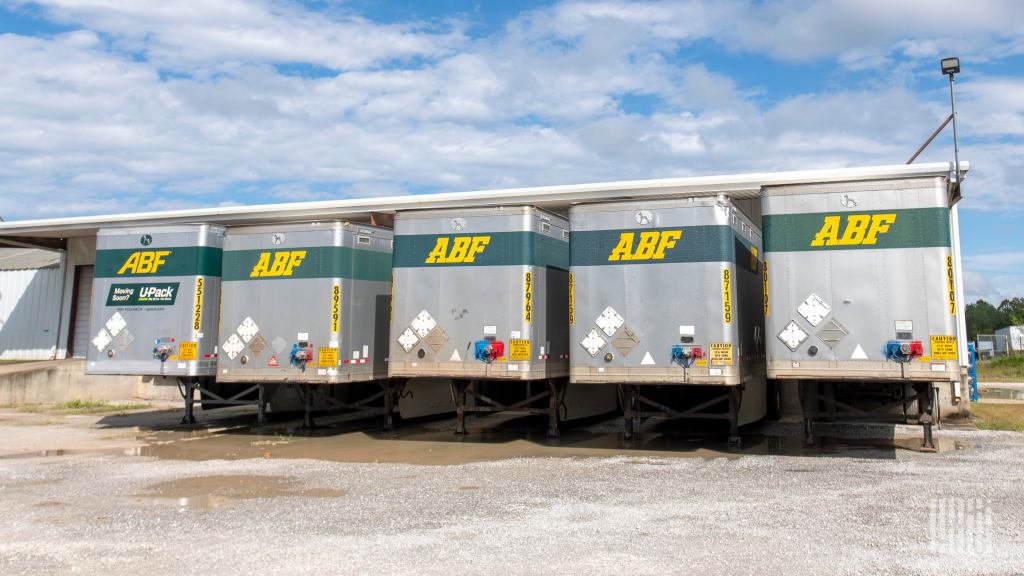
ABF pup trailers backed up to a terminal

ArcBest beat expectations for the third quarter as it benefited from a lift in volumes and yields as former competitor Yellow Corp. closed its doors.

The transportation and logistics provider reported third-quarter adjusted earnings per share of $2.31 Friday before the market opened. The result was well ahead of the $1.50 consensus estimate but 39% lower year over year (y/y). The number excluded several items, including costs from a freight handling pilot, acquisition-related items and noncash impairments on some leases.

ArcBest’s (NASDAQ: ARCB) asset-based unit, which includes less-than-truckload operations, saw shipments at its core accounts increase more than 20% from the second quarter. However, the new freight is lighter in weight than the transactional shipments it had been moving prior to Yellow’s demise.

The asset-based unit reported a 6% y/y decline in revenue to $741 million as tonnage per day was down 6% and revenue per hundredweight, or yield, increased 2%. The tonnage decline was the result of a 2% increase in daily shipments and an 8% decline in weight per shipment.

Link to full story – ArcBest prudent in approach to new freight opportunities

Yields on LTL shipments increased by a mid-single-digit percentage when excluding fuel surcharges. The company cited a “reduction in LTL industry carrier capacity” as the reason for the improvement. Increases on contract renewals and deferred pricing agreements averaged 4% in the quarter.

ArcBest implemented a 5.9% general rate increase on base rate tariffs on Oct. 2.

Revenue per day was down y/y by 11% in July but flat by September. So far in October, the segment’s revenue is up 5% y/y as tonnage is down 4% but yield is up 9%. The increase in the yield metric is largely due to an 8% decline in weight per shipment.

When compared to the second quarter, asset-based revenue was up 3% as tonnage was down 12% and yield improved 16%. 

The asset-based segment reported an 88.8% adjusted operating ratio, which was 350 basis points worse y/y. However, compared to the second quarter, the adjusted OR was 400 bps better. “Network cost savings actions” implemented during the third quarter likely provided some relief.

The company said its OR normally deteriorates 100 bps to 300 bps between the third and fourth quarters, however, modest improvement is expected this year.

ArcBest will host a call at 9 a.m. EDT Friday to discuss third-quarter results.

Link to full story – ArcBest prudent in approach to new freight opportunities

More FreightWaves articles by Todd Maiden

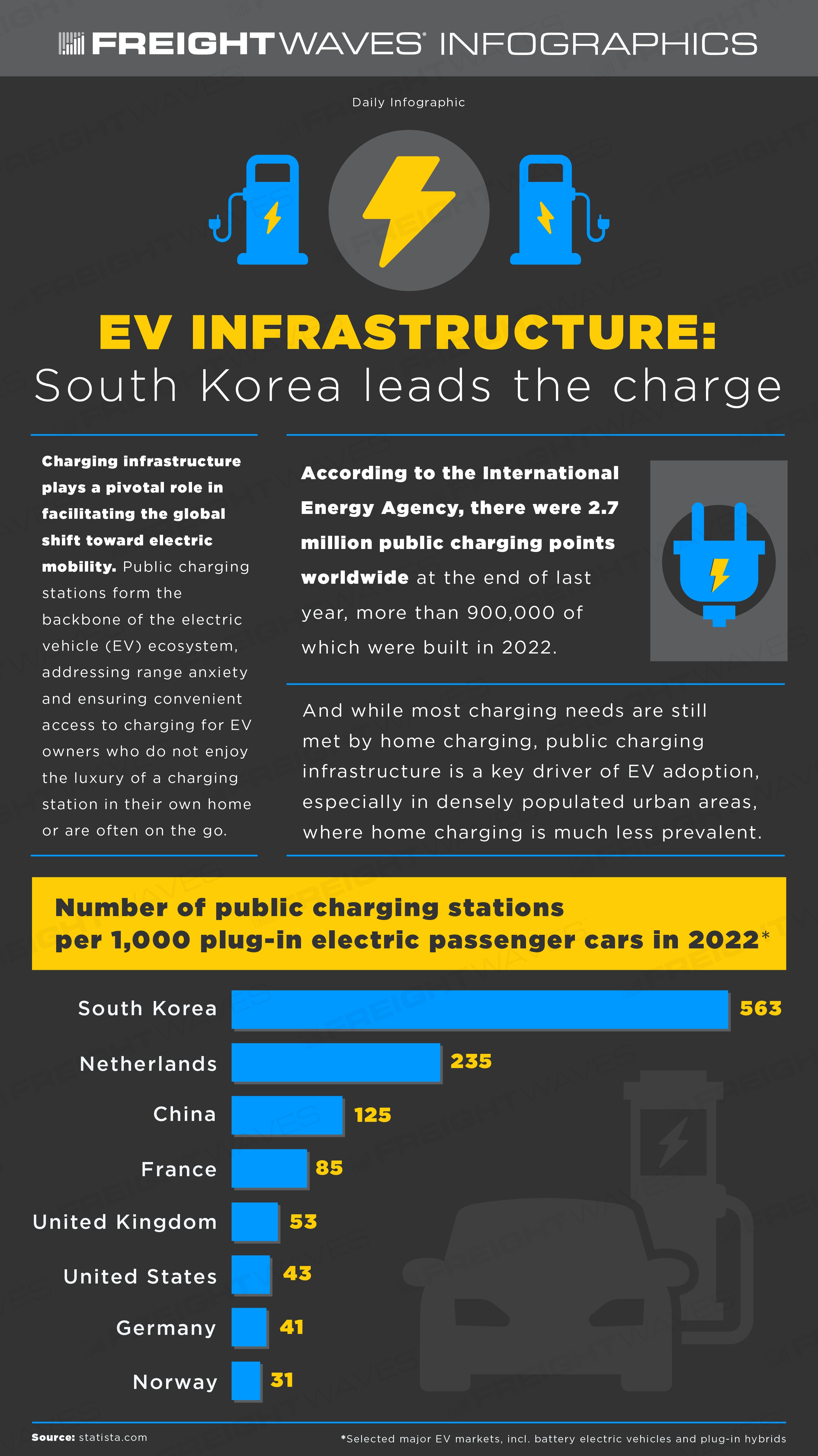
Daily Infographic: EV Infrastructure: South Korea leads the charge


To view more FreightWaves infographics, click here

The unsung FreightTech disrupters innovating supply chains

In the world of logistics, where precision reigns supreme, unsung innovators quietly transform supply chains. Driven by a common goal to enhance the supply chain experience for shippers, these providers represent the essence of FreightTech.

Here we review three of these providers. One empowers shippers with data-driven procurement and carrier analytics, streamlining the details of logistics. Another focuses on automating customer service support, benefiting both consumers and service reps. Lastly, a company simplifies the onboarding of transportation providers by enhancing the electronic data interchange (EDI) process, facilitating network expansion.

These innovators work diligently behind the scenes to reshape how goods leave your docks and end up on your customers’ doorsteps.

GoodShip

GoodShip, a cloud-based procurement platform, has revolutionized shippers’ supply chains with its data-driven approach. In May, the company announced the successful closure of a $5 million seed round, co-led by Ironspring Ventures and Chicago Ventures, along with participation from previous investors including Fuse VC, Cercano Management and project44’s Jett McCandless.

What sets GoodShip apart is its commitment to providing a comprehensive and neutral platform for shippers and carriers. Unlike some procurement platforms that facilitate transactions, GoodShip’s primary focus is on delivering data analytics and insights into shippers’ individual procurement ecosystems.

Ryan Soskin, the CEO and co-founder of GoodShip, emphasizes the company’s dedication to pure technology, stating that it does not engage in physical logistics but rather creates a collaborative environment where shippers and carriers can access modern analytics, essentially creating a single source of truth for benchmarking against the industry as a whole.

One of the standout features of GoodShip’s platform is its ability to offer real-time metrics and insights. Shippers and carriers can access critical information such as lane volume, total revenue, tender acceptance rates and on-time delivery percentages. Additionally, the platform provides market transparency by offering seasonality trends, volume analysis by day of the week and pricing analytics, integrating FreightWaves SONAR and Truckstop’s Rate Insights tool for even more comprehensive data.

What also makes GoodShip unique is its gamification of the procurement process. Shippers can easily identify areas that need attention and improvement by color-coding lanes. Green lanes signify competitive capacity purchasing, while red lanes indicate opportunities for rate negotiation and cost savings.

According to the company, after just six months of using GoodShip, customers have reported significant improvements, with late deliveries decreasing by 20% and freight costs dropping by 3% to 5%.

In a world where resilience and agility are paramount for supply chain success, GoodShip is transforming the way shippers and carriers collaborate, optimize their operations and navigate the complexities of the modern freight ecosystem. With continued investments from industry leaders and a clear commitment to delivering value, GoodShip is poised to remain an essential disrupter in the FreightTech space.

“All of our shipper customers have a single source of truth as we unify their data across their whole technology ecosystem,” said Soskin. “By bringing everything together in one place, shippers can contextualize what’s going on in their supply chain and be able to collaborate with their carriers, improving their performance over time.”

Kodif

Kodif’s customer support program’s success is backed by the experience and expertise of its founding team.

Norm Usenkanov, chief technology officer, worked at Uber for five years as an engineering manager, where he developed a similar tool. Founder Marat Gaipov, with his background as a lead front-end engineer at Amazon, brings a deep understanding of customer experience. 

CEO Chyngyz Dzhumanazarov, with a venture capital background, and founder Mike Zayonc, who established Plug and Play’s Supply Chain and Logistics innovation program in 2017, have a shared passion for eliminating industry hurdles associated with adopting emerging AI technologies.

Kodif offers two core products that leverage generative AI: the AI Agent Assistant and the Customer Facing Self-Service platform. Together, these solutions use conversational AI to efficiently respond to customer requests and queries, addressing up to 80% of common inquiries. Also, the AI Agent Assistant can provide valuable insights through analytics, helping businesses enhance customer satisfaction.

Contrary to the misconception that AI threatens human jobs, Kodif’s low-code approach and user-friendly interface enhance employee knowledge. By training agents in real time to respond in a brand’s unique voice, the AI Agent Assistant improves both agent and customer experiences.

Kodif has already made a significant impact in the e-commerce sector, partnering with brands like Reserve Bar, Nom Nom, Byte, Yummy and Good Eggs. By automating complex and repetitive tasks, such as refunds and credits, Kodif helped Good Eggs achieve a 40% improvement in average handle time and a 10% boost in customer satisfaction scores.

Beyond e-commerce, Kodif is exploring partnerships with transportation providers and other entities handling substantial volumes of customer service requests.

“Given our team’s entrepreneurial background and executive technical experience from Uber and Amazon, we are constantly evolving our product to meet customer requirements,” Zayonc told FreightWaves. “We are also constantly monitoring retail and logistics industry use cases to ensure our customers can benefit from the newest advances in automation and generative AI.”

Orderful

Founded in 2017 by CEO Erik Kiser, Orderful has quickly become a  player in the industry, facilitating seamless EDI integrations between supply chain actors. 

In November 2021, the company announced the successful closure of a $19 million Series B funding round led by GLP Capital Partners, with participation from Andreessen Horowitz and Initialized Capital. It has raised over $32 million to date.

While larger firms in the logistics industry are gradually adopting application programming interfaces (APIs) for data exchange, many players continue to rely on EDI for communication. Orderful recognized the need to provide a platform that caters to both traditional EDI users and those transitioning to APIs.

Unlike the lengthy and complex onboarding processes typically associated with EDI, Orderful streamlines the experience, allowing logistics providers and their customers to connect quickly and efficiently.

Often these connections involve weeks of manual coordination and data format adjustments. However, massive accounts like Koch Industries, Albertsons, Aldi, Walmart, Fanatics, Dollar General, and over 1,000 other shippers and logistics providers have reduced onboarding times from weeks or months to minutes.

“Koch Industries had to onboard 500 carriers onto a new TMS their team built in-house,” Kiser told FreightWaves of his customer’s experience. “The result was incredible. Together we were able to onboard more than 500 trading partners in 12 months, reduce their EDI costs by 80%, consolidate what was bespoke EDI into a single platform and reduce their ongoing maintenance of EDI down to one developer.”

The company plans to develop more products that facilitate carriers’ network expansions and help enterprises grow their carrier connections.


3 questions to consider before investing in AI

Shippers, regulators tap into technology to ferret out illicit imports

CargoX consortium leads development of Uganda’s trade facilitation platform

Hub Group’s Q3 revenue declines in ‘very soft freight environment’

Lower demand and oversupply of truckload capacity in the market led to revenue declines across Hub Group’s intermodal and logistics segments during the third quarter, company officials said.

Oak Brook, Illinois-based Hub Group (NASDAQ: HUBG), a provider of intermodal transportation and logistics management solutions, reported third-quarter earnings after the market closed Thursday.

“As we discussed in our last call, we felt as though the third quarter would be our most challenging and that did come to fruition,” President and CEO Phil Yeager said during an earnings call with analysts. “Peak season has been muted and we do not anticipate a sharp inflection in demand in the fourth quarter. Demand was soft for July and August, leading to volume declines in intermodal.” 

Hub Group reported third-quarter net income of $30 million, on earnings per share of 97 cents, a 63% year-over-year (y/y) decline compared to the same period in 2022. The company missed analysts’ estimate of $1.17 earnings per share for the quarter.

Revenue for the quarter came in at $1.02 billion versus the analysts’ estimate of $1.17 billion. Third-quarter revenue declined 24% y/y compared to 2022, when Hub Group reported revenue of $1.35 billion.

Hub Group’s full-year 2023 outlook is for adjusted earnings per share ranging from $5.30 to $5.40, with top-line revenue of $4.2 billion. Company officials also expect capital expenditures for containers, tractors, warehousing equipment and technology will range from $140 million to $150 million.

“Despite a very soft freight environment, we are seeing the benefits of our strategy to diversify and expand into less cyclical and non-asset-based services, with our logistics segment contributing nearly 70% of our operating income in the quarter,” Yeager said.

Hub Group saw a lot of “pricing” competition for customers from over-the-road truckload carriers, as well as other intermodal operators in the quarter.

“Pricing has been somewhat more aggressive than we would have anticipated,” Yeager said. “We didn’t necessarily move quickly enough on pricing in the first portion of bid season this time last year and wound up losing some [customers] to over-the-road. We now have an opportunity to garner some of that back, and given some of the spreads that we’re seeing, I think we have a significant opportunity to do so.”

Hub Group’s intermodal and transportation solutions’ third-quarter revenue was $595 million million, a 30% y/y decline. Intermodal volumes during the quarter declined 16% y/y compared to the same period in 2022.

Third-quarter logistics segment revenue was $460 million, as compared with $525 million in the prior year. The decline in revenue was driven by lower revenue per load in the company’s brokerage service line.

Yeager said the company anticipates some intermodal volume growth in 2024 due to higher diesel fuel costs and more truckload capacity exiting the market.

“As we look at the market, we’re seeing some form of peak season, which is great,” he said. “We’re starting to see capacity exits and a more balanced spot market. Inventories are coming more back in line. Fuel prices increasing is normally a good thing for conversion from over-the-road to intermodal. I think the only thing that remains unclear is the timing of recovery of demand.”

Hub GroupQ3/23Q3/22Y/Y % Change
Revenue$1.02B$1.35B(24%)
Intermodal and transportation solutions$595M$856M(30%)
Logistics$460M$525M(12%)
Adjusted earnings per share$0.97$2.61(62%)
Hub Group’s Q3 earnings.

Click for more FreightWaves articles by Noi Mahoney.

More articles by Noi Mahoney

Covenant Logistics sees Q3 revenue slip in weak freight market

Borderlands: Cargo theft trends changing as supply chains shift to border regions

Texas DPS ends truck safety inspections after $1.9B impact

Link Logistics reports ‘strong’ demand for last-mile locations

Several straight trucks loading at a facility

Last-mile real estate operator Link Logistics broadened its portfolio again in the third quarter and said demand for well-positioned locations remains favorable.

The company signed 766 leases representing 24.4 million square feet of space in the period. Its portfolio was 96.4% leased on a same-store comparison, which was 100 basis points lower year over year (y/y) but level with the second quarter.

Blended cash leasing spreads — a comparison of new rents to expiring rents — were 57% in the quarter. The result was approximately 500 bps better than the year-ago period and the second quarter of 2023.

“Link Logistics’ strong third quarter performance reflects continued demand for well-located last-mile logistics real estate and sustainable facilities that support our customers’ evolving needs,” CEO Luke Petherbridge said in a news release. “E-commerce and onshoring remain significant growth drivers for our business and industry.”

The company added 21 logistics facilities totaling 4 million square feet of space at a value of $754 million in the quarter. The acquisitions were accomplished “against the backdrop of capital markets and interest rate volatility,” said Nicholas Pell, president and chief investment officer.

Link Logistics made three dispositions totaling $95.2 million in proceeds and stabilized six developments.

The company holds the largest U.S.-only portfolio of last-mile logistics properties with 538 million square feet of space, including developments. It currently has 18.8 million square feet under construction.

More FreightWaves articles by Todd Maiden

Amazon posts strong third-quarter results

Amazon.com Inc. (NASDAQ: AMZN) reported strong third-quarter results late Thursday, with diluted earnings per share of 94 cents easily beating consensus estimates of 55 cents and revenue up 13% to $143.1 billion.

Operating income more than quadrupled to $11.2 billion, while net income more than tripled to $9.9 billion.

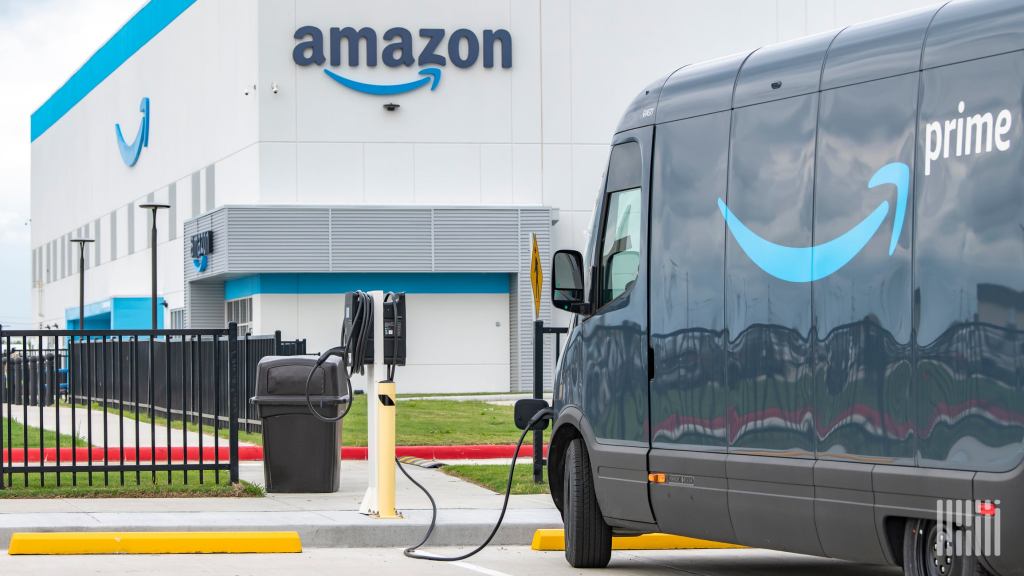
The net income figure included a $1.2 billion pretax gain from Amazon’s investment in electric vehicle manufacturer Rivian Automotive Inc.

Seattle-based Amazon touted the emerging benefits of migrating from a national hub-and-spoke delivery network to a fulfillment and delivery model based on eight regions. Finishing its second quarter in existence, the regionalization model has spawned direct links between fulfillment and delivery nodes, Amazon said. It has reduced the number of line-haul lanes and built density in existing ones, the company added. It also has lowered the cost to serve, while compressing the order-to-delivery cycle to same-day or next-day windows.

In comments to analysts, CEO Andy Jassy said the shift to regionalization was “such a significant  change in the network.” Its performance has exceeded even the company’s optimistic expectations, he said.