The Whac-A-Mole reality of autonomous trucking regulations

If you thought last year’s veto of a Teamsters-backed ban on heavy-duty autonomous trucking in California put the issue to rest, think again. While 23 states allow at least testing of driverless trucking, emerging challenges resemble the arcade game Whac-A-Mole.

Early-stage commercialized driverless trucking on Interstate 45 in Texas looks likely later this year. The state embraced the technology in 2017. Yet a move to stop driver-out operations percolated in the Texas Legislature last year.

“That was the opportunity for the Legislature to do it, and we’re thankful that the bill didn’t move,” Jeff Farrah, executive director of the Autonomous Vehicle Industry Association (AVIA), told me.

The Texas Legislature is in an interim session, occupied by elections this year.

“So, the threat of that bill is not out there,” Farrah said.

But New York could be an issue. The clock ran out on a proposed ban in Indiana. About 90% of California legislators voted in favor of a ban last year. But it did not try to override Gov. Gavin Newsom’s veto. Yet, there is talk of taking another swing at legislation this year.

“We’ve seen some of these come back,” Farrah said. “And it’s interesting because there were eight that were introduced last year and all eight failed.”

Teamsters drill states over safety and job losses

Colorful quotes enliven Teamsters’ press releases opposing autonomy in general and driverless trucking in particular. Various elected union leaders excoriate states where autonomy-allowing legislation passes.

Take South Dakota, for example.

“Parents deserve to have a say in whether or not 80,000-pound trucks can speed by their child’s school or playground without a driver in the cab,” James Heeren, Teamsters Local 120 business agent and a former police officer, said in a news release opposing House Bill 1120 (which it called H.B. 1095).

Or consider New York, where state Sen. Pete Harckham introduced legislation that would require a safety driver to be physically present in any autonomous vehicle weighing 10,000 pounds or more. Teamsters Local 456 hosted a Jan. 5 news conference for Harckham to make the announcement, where he played the jobs card.

In New York state, one of every 27 jobs — 270,000 total — is related to trucking, according to a Harckham statement.

“The truck industry is the backbone to middle-class social mobility, but unfortunately these good-paying jobs are under attack,” he said.

Louis A. Picani, president and principal officer of Teamsters Local 456, picked up the safety argument, calling unmanned trucks “lethal weapons.”

Indiana House Bill 1022 also would have banned autonomous trucks. It died last month. But Indiana Rep. Cindy Ledbetter expects to try again in 2025.

Responding to vitriol

Farrah’s job beyond state and federal advocacy of passenger vehicle and commercial trucking automation is calmly and rationally refuting vitriol.

“The Teamsters are not safety experts,” he said. “They have a perspective on autonomous trucks and they don’t want a situation where the actual experts at departments of transportation are the ones making decisions. And that’s really unfortunate. 

“The Teamsters have a misunderstanding about what the job impacts of autonomous trucks are going to be,” he said. “We’ve tried very hard to talk with them and explain our position.”

A spokesman for the Teamsters acknowledged but did not offer responses to an email with questions on the union’s positions.
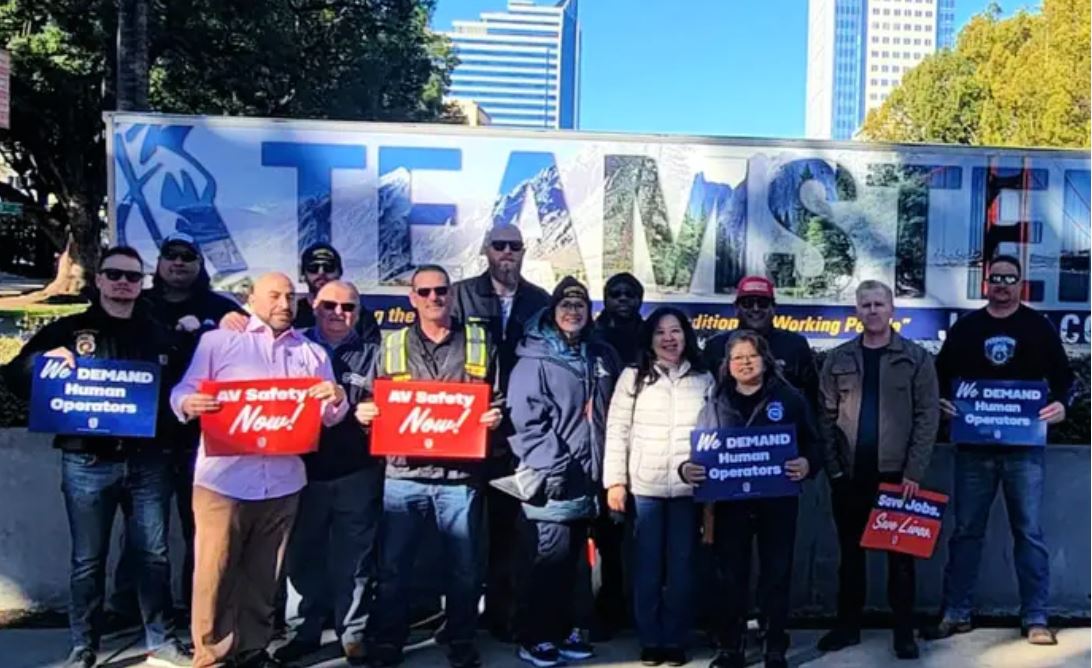
A Teamsters protest in California encouraging passage of a Senate bill to ban heavy-duty autonomous trucking. The bill passed but Gov. Gavin Newsom vetoed it. The Teamsters planned another anti-autonomy rally on Friday in Los Angeles. (Photo: International Brotherhood of Teamsters.)

Would federal guidelines make a difference?

A 50-state rule for autonomous trucking is in the early rulemaking stage. It, too, could become enmeshed in election-year politics. Driverless trucking is years or decades away from moving beyond the relatively flat and temperate Southwest.

“By implementing a national autonomous trucking policy framework, the federal government can prioritize safety, resolve confusion between states, and maintain the United States’ technological lead over foreign competitors,” Melissa Wade, AVIA chair and senior director of federal government relations for Aurora Innovation, said in an email.

Aurora plans to deploy 20 trucks without drivers in Texas later this year. Kodiak Robotics also plans a commercial launch in the state.

“Twenty-three states, including every state on the critical I-10 and I-20 corridors save California, have enacted legislation allowing for AV deployment,” said Dan Goff, Kodiak director of external affairs.

“That gives the autonomous trucking industry the regulatory framework we need to deploy across the Southern half of the U.S. That being said, trucking is necessarily an interstate business, and federal regulations would help provide regulatory certainty to the AV trucking industry and our fleet partners.”

Said Nils Jäger, president, Volvo Autonomous Solutions: “As with any transport mode, regulations are a key step in developing and maturing both the industry and the technology central to its development.”
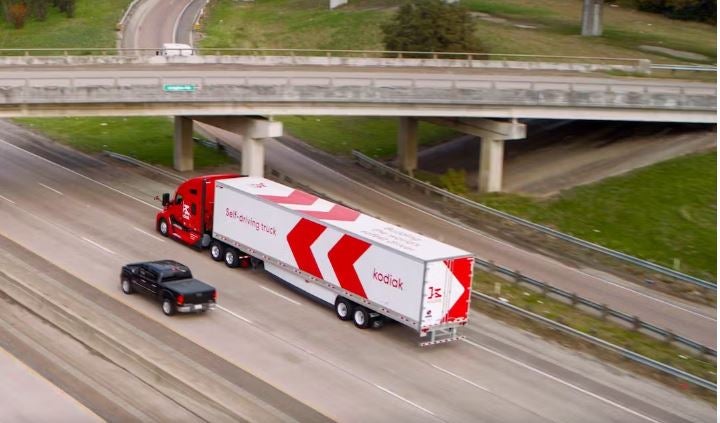
An autonomous Kodiak Robotics truck on the highway with a safety driver — for now.
(Photo: Kodiak Robotics)

Did competition smearing put lidar leader Hesai in a trick bag?

Ouster, a lidar maker for cars, trucks and factory robots, could not contain its glee at Chinese competitor Hesai Group being placed on a list of Chinese military companies the Defense Department cannot engage.

Long accused of smearing Hesai in Washington circles, Ouster was eager to talk about seeing its rival — arguably the leader in light-detecting radar for autonomous cars and trucks — being included.

Hesai fought back without naming Ouster. The company said its lidars are for civilian use only. 

“We believe this inclusion is unjust, capricious, and meritless,” Hesai said in a news release. We do not sell our products to any military in any country, nor do we have ties of any kind to any military in any country. Hesai is a publicly traded, privately owned company with an independent corporate governance structure.”

Ouster has its own issues. It conducted a 1:10 reverse stock split in April to fend off a delisting notice from the New York Stock Exchange because its shares had fallen below the required $1 a share for more than 30 days. Ouster said it expects fourth-quarter 2023 revenue to equal or exceed the midpoint of the $23 million to $25 million guidance provided in November.


TuSimple’s exit plot thickens over attempted chip shipment

For a company trying to leave the U.S. market, TuSimple keeps running into roadblocks.

The latest, according to a four-reporter effort in The Wall Street Journal, involves possible skulduggery in shipping two dozen Nvidia semiconductor chips to Australia as a way station to China. The Commerce Department halted the shipment before it could leave California.

The autonomous trucking developer denies it was trying to ship the high-power chips to China in violation of export controls. TuSimple signed a National Security Agreement with the Committee on Foreign Investment in the U.S. (CFIUS) in 2022. It agreed to keep its U.S. and China businesses separate. TuSimple is leaving the U.S. to focus on China and Japan.

TuSimple planned to use the high-performance computing and artificial intelligence A100 chips to improve its self-driving technology for semi-trucks. 

Separately, a federal judge in San Diego has restrained TuSimple from shutting down the U.S. operations, including sending any company secrets to China in violation of its CFIUS agreement.

The Journal reported that TuSimple suspended its China operations a few weeks ahead of the traditional Chinese New Year hiatus.

Separately, in a “You can’t fire me, I quit” moment, the Nasdaq on Jan. 24 warned TuSimple that it faced delisting because it was out of compliance for its sub-$1 stock price. TuSimple struck first, voluntarily giving up its seat on the exchange as part of going private.


Volvo completes purchase of Proterra battery business

Volvo Group has completed its $210 million purchase of battery-making assets from Proterra Powered, a unit of bankrupt Proterra Inc.

The Swedish truck maker acquired a development center for battery modules and packs in California and an assembly factory in Greer, South Carolina. The Proterra name will live on and it will continue to provide batteries to select customers, which Volvo did not identify.

Proterra’s customer list included Daimler Truck North America subsidiaries Freightliner Custom Chassis Corp. and Thomas Built Buses; and Nikola Corp.’s fuel cell trucks. Rewritten — read more expensive — contracts could be in the offing.

“These assets and the skills and competence of the Proterra team are a great complement to our current footprint and enables us to accelerate our battery-electric roadmap even further,” Lars Stenqvist, Volvo Group chief technology officer, said in a news release.
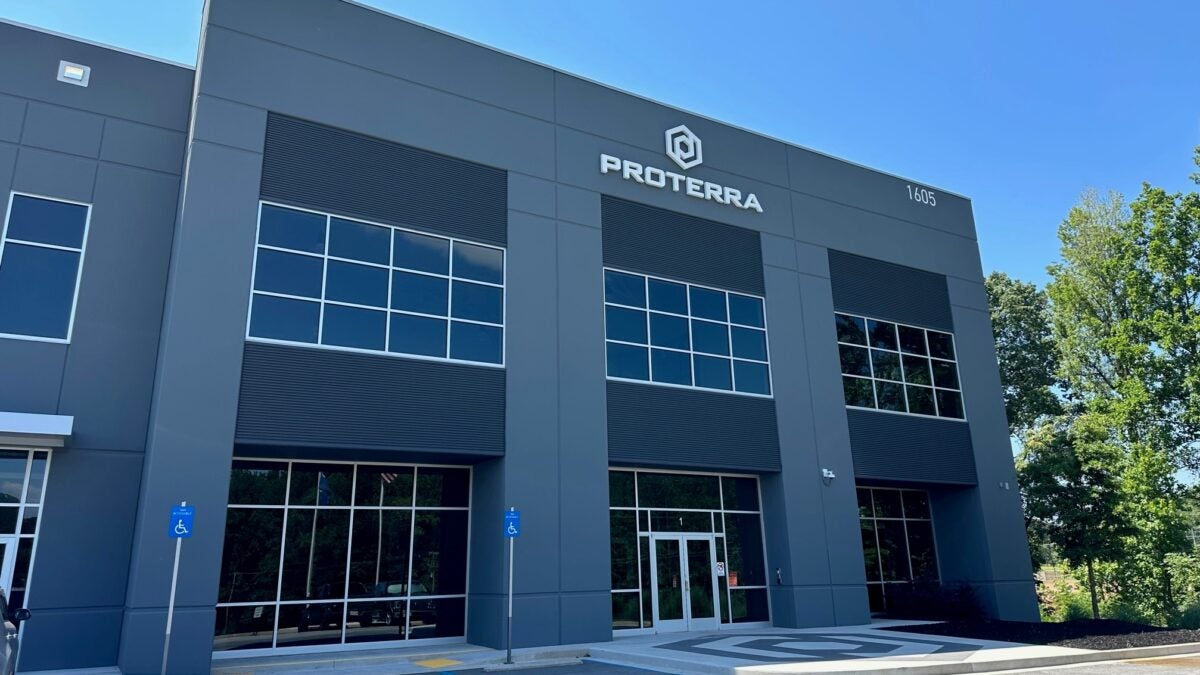
The Proterra name will live on in battery making though it is now owned by Volvo Group. (Photo: Alan Adler/FreightWaves)

Briefly noted… 

Daimler Truck North America delivered the first of two Freightliner eCascadias to one of its plants in Mexico for use in day-to-day plant operations. 

Xos has announced a next generation of its remote charging unit called The Xos Hub, with Xcel Energy signing on for two of the units.

Xos unveiled its new mobile charging system and has an order for two units from Xcel Energy. (Photo: Xos)
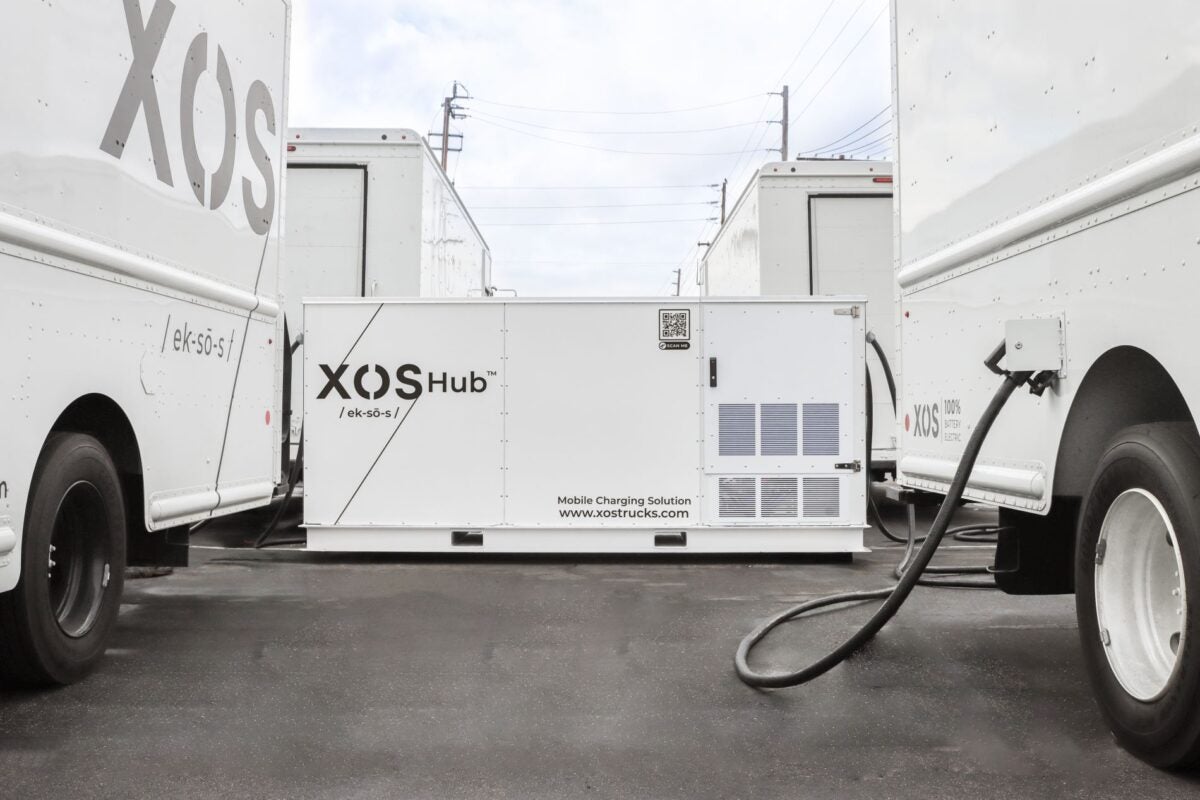
Xos unveiled its new mobile charging system and has an order for two units from Xcel Energy. (Photo: Xos)

Truck Tech No. 52: An outsider’s inside look at Nikola

Mary Chan is not steeped in the trucking industry. Yet Nikola’s first chief operating officer finds numerous intersections between her telecommunications past and her day-to-day oversight of the fuel cell truck maker.


That’s it for this week. Click here to get Truck Tech via email on Fridays. And catch the latest in major events and hear from the top players on “Truck Tech” at 3 p.m. Wednesdays on the FreightWaves YouTube channel. Your feedback and suggestions are always welcome. Write to aadler@www.freightwaves.com.

Oh, and it’s not too soon to be thinking about attending the Future of Supply Chain on June-4-5 in Atlanta. Special ticketing pricing here.


The new health care supply chain landscape

By Benjamin Gordon

The views expressed here are solely those of the author and do not necessarily represent the views of FreightWaves or its affiliates.

In 2020, hospitals around the world faced a shortage of N95 face masks and other medical essentials, adding to the chaos surrounding COVID-19. Two years later, the same hospitals confronted the opposite problem, as a surplus of supplies overwhelmed the system. 

These issues ignited the demand for health care supply chain solutions, triggering a wave of M&A.

In 2023, the global health care industry completed over 2,700 deals, representing $341 billion in value, an increase of 22% over the prior year. In the coming year, 70% of all health care leaders expect to see this consolidation continue. 

Understanding the implications for CEOs of supply chain companies in this sector is crucial for the investing community. 

On one side, industry leaders such as McKesson, Amerisource and Cardinal are consolidating the market. On the opposite side, venture-backed startups like Vamstar, Notisphere and Hystrix are securing substantial capital. 

Determining strategies for midsize companies to optimize value and prevent getting stuck in the middle is essential.

This industry dynamic is characterized by the pressure exerted on midsize companies, compelling them to respond swiftly and strategically. Optimal approaches include (1) investing in growth and differentiation to secure additional market share, (2) engaging in rapid, inorganic growth by acquiring smaller companies, or (3) considering a sale to a financially robust entity.

The market

The global health care supply chain management market is expected to grow close to $8 billion by 2030, representing a 15% compound annual growth rate, a figure consistent with the fast-paced growth throughout the rest of the industry. 

Domestic players in the supply chain are expecting growth as well. U.S. 3PLs that service health care expect their market to grow to $193 billion by 2032 with a 9% CAGR.

Midsize CEOs aiming to capitalize on this market growth must strategically position themselves as viable candidates for acquisition or to acquire other entities.

Recall that in just a few decades, the supply chain and logistics industry serving health care has evolved significantly. Systems that previously relied on pen and paper have undergone massive changes, with customers now expecting accurate, real-time data on inventory management, medical resources and other core logistical items. The continued trend of technological advancements within the space coupled with the consolidation throughout the health care sector will lead to exciting (or concerning) futures for health care supply chain companies, depending on how they respond to the changing dynamics.

Increasingly large and complex health care systems will soon scrutinize their providers’ abilities to meet their evolving needs. The winners in the industry will disproportionately be those who best adapt to the environment, especially by supplementing their organic growth with strategic acquisitions.

Before delving into the key drivers of the health care supply chain M&A trend, it’s helpful to highlight the various segments of the market.

Key market drivers

Increasing M&A activity in the health care industry results in fewer, yet more valuable, contracts available for the logistics and supply chain providers. The companies that win the mega contracts will be cash-rich and ultimately emerge as winners in the space. 

However, to fulfill the scope of these massive contracts, the providers will need to bolster their service offerings, achievable through the acquisition of their competitors. 

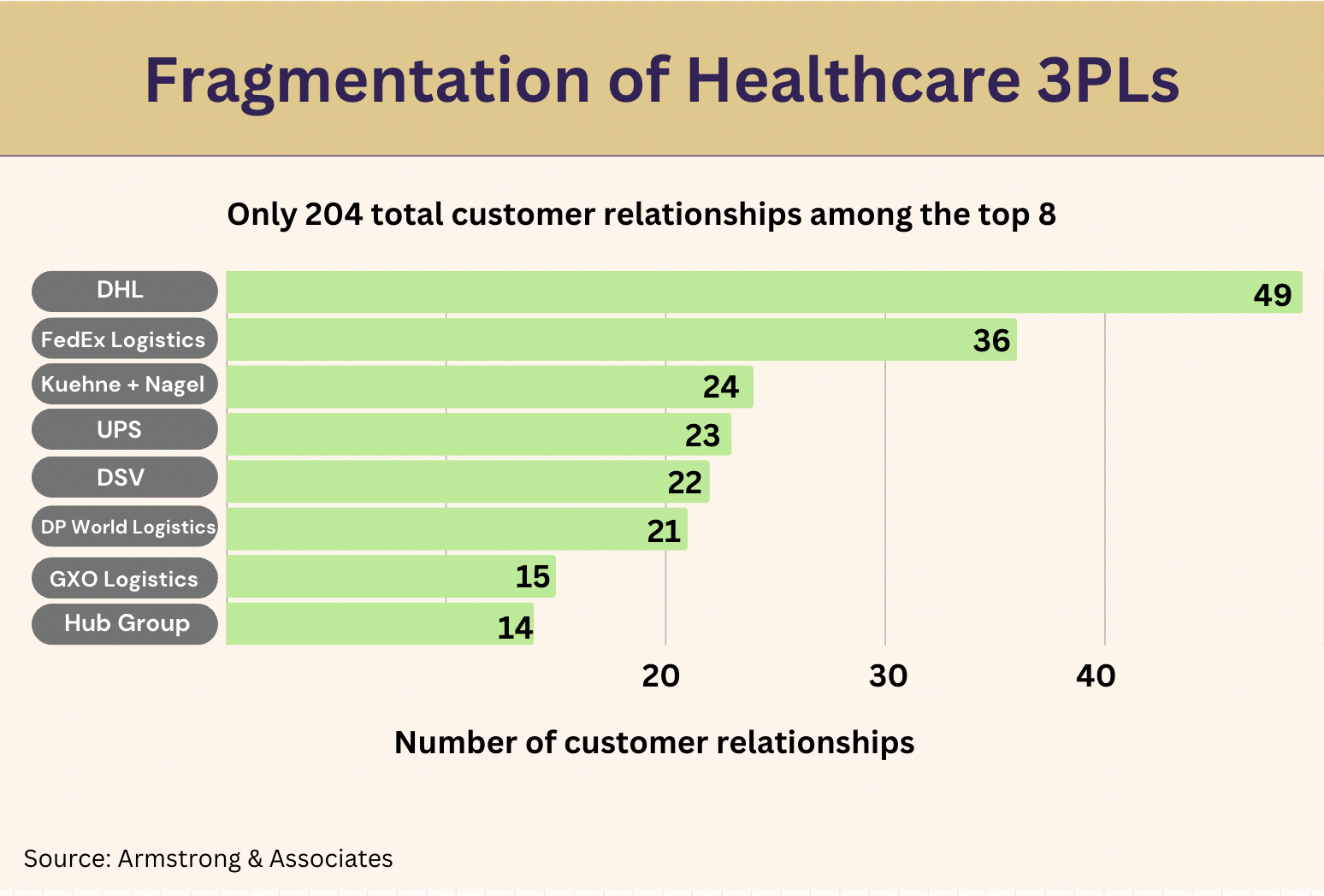
Currently, the eight most prominent health care 3PLs, comprising familiar names DHL, FedEx, Kuehne + Nagel, UPS, DSV, DP World Logistics, GXO Logistics and Hub Group, represent only 204 customer relationships. 

Despite the active consolidation of the health care industry, most of the available contracts belong to companies outside the top eight, providing evidence of the fragmented market for supply chain and logistics providers.

To adequately address the changing needs of their clients, the smaller firms will experience an upcoming trend toward consolidation.

Ultimately, the three main drivers of the consolidation of the health care supply chain are the rapid restructuring of the health care sector, the development of new technologies and the emergence of cash-rich companies seeking acquisitions.

Rapid restructuring

There’s been a tremendous increase in M&A activity across the health care sector, largely driven by rising supply chain expenses that push the entire industry to consolidate its internal resources to force a more robust supply chain.

As the industry’s resources become increasingly centralized, the winners of the supply chain landscape will be the companies that secure outsize contracts with the health care giants. Thankfully, the development of new technology and the birth of cash-rich acquirers will lead to a restructuring of the health care supply chain that can fulfill these behemoth contracts.

Development of new tech

During the past couple of years, there has been meteoric growth of both AI and other technologies that improve the capabilities of companies and entire industries. More specifically, in the health care supply chain, the growth of health care e-commerce and the desire to create a more robust supply chain after COVID-19 revealed shortcomings that resulted in the maturation of the supply chain and caused logistics companies to bet on blockchain technology, cloud-focused solutions and AI’s predictive capabilities.

London-based company Vamstar, for instance, is a B2B health care supply chain platform leveraging machine learning to improve sourcing and procurement processes for medical device and pharmaceutical companies. In just a few short years since its launch in 2019, it has secured an impressive $10 million in funding to date to bolster operations and acquire additional market share.

Another venture-backed challenger, Notisphere, provides a recall management platform for health care supply disruptions through its proprietary software. Founded in 2018, the California-based startup has already garnered over $8 million from investors to scale its adoption across the health care industry.

An increasing number of these well-funded ventures aim to disrupt midsize companies by elevating client expectations, who now seek providers that integrate these powerful technologies into their solutions. With neither the speed of the startups nor the cash reserves of the major players, the midsize companies are placed in a difficult position.

How can they fend off the rapidly strengthening challengers without losing their footing? 

Thankfully, there are a few wise options CEOs can take to escape the mounting pressure and use the market dynamics to their benefit.

Emergence of cash-rich companies

As companies seek to compete for the largest health care contracts, there have been impressive buyout multiples for health care supply chain and logistics deals. 

In just the past few years, logistics provider Lifestage Solutions sold to Galencia Group for over 5x revenue. Similarly, health care procurement company Aknamed sold to PharmEasy for $144 million, despite only $3 million in revenue.

This trend will continue at an accelerated pace as newly acquired health care companies begin consolidating their contracts with the associated supply chain and logistics companies. As the contracts grow in size and scope, the need for rapid acquisition will become increasingly clear.

Private equity’s aggressive investments in health care supply chain companies help fuel this opportunity. Notably, 40% of the past decade’s investments have happened after 2021.

The emergence of these cash-rich acquirers and the formation of a more concentrated health care sector create a ripe environment for midsize companies to embrace consolidation of the health care supply chain industry.

CEO options

To be well suited for continued success, health care supply chain and logistics companies will need to adapt to the changing conditions.

For large companies such as Global Healthcare Exchange (GHX), the path is fairly straightforward: Use the advantage of their deep pockets to buy health care logistics providers. In early 2022, GHX bought the AI-enhanced inventory control company Syft for an undisclosed amount, its third acquisition in recent years. 

Moreover, in mid-2022, GHX announced a collaboration with the Healthcare Industry Resiliency Collaborative to form an increasingly resilient and transparent supply chain for the industry, hinting at additional acquisitions. 

For small companies, such as Vamstar and Notisphere, the path to survival is to use their recent injections of investor cash to scale and challenge midlevel competitors. Successful implementation of this strategy requires the speed, vision and investment already commonplace among the growing number of health care supply chain startups.

For midsize companies, on the other hand, which lack the dynamism of a startup and the establishment of a large company, there are three main options: (1) invest heavily into organic growth and substantial differentiation, (2) buy even smaller companies for rapid, inorganic growth, or (3) find a larger company with cash reserves that could facilitate a sale, merger or strategic partnership.

One such company, the Mexico-based firm Medistik, embraced the third option and enjoyed a $77 million sale to Grupo Traxión in 2022 to help integrate their pharma vertical to 4PL and last-mile logistics services.

On a larger scale, the Italian firm Bomi Group, specializing in logistics for health care product distribution, sold to UPS for $884 million in mid-2022. Both firms noticed the evolving market conditions and adapted to the trends by finding larger companies with deeper pockets that could acquire them to enhance their services and meet the health care sector’s needs.

Alternatively, a company could reject all three options and stay the course. However, for a dynamic industry experiencing rapid restructuring and massive technological progress, this choice doesn’t suggest a recipe for success.

Rather than taking their survival for granted, the winners will be those who cooperate with and respond effectively to the evolutionary forces at play, using the three key options as guidelines for growth.

BG Strategic Advisors’ David Fleming contributed to this report.

About the author

Benjamin Gordon, managing partner at Cambridge Capital, is a leading investor in the supply chain and technology sector. His investments include companies like Bringg, XPO and ReverseLogix. Before Cambridge Capital, he founded BG Strategic Advisors, a top investment bank in transportation and logistics, and 3PLex, an internet solution for logistics companies. Gordon is a published author, recognized expert and active civic leader, contributing to numerous nonprofit organizations. He holds an MBA from Harvard Business School and a BA from Yale College.

Leading people: From the fleet to the mayor’s office – Taking the Hire Road

Shawn Brown, vice president of safety with Cargo Transporters and mayor of Claremont, North Carolina, joined Jeremy Reymer on a recent episode of Taking the Hire Road. Brown and Reymer dived into the notion that there are “no secrets in safety,” as well as the parallels between being the mayor of a city and leading a department of a trucking company.

By and large, Brown has stuck close to his roots. His grandfather, Jack Brown, co-founded a garage and truck rental business in the mid-1960s. That business became modern-day Cargo Transporters. 

“I have literally grown up around this company, and all the iterations of it, all my life,” Brown said. “I can remember coming to work with my dad and granddad back in the 1980s. I have been working here since I was 12.”

Throughout the course of his time at Cargo Transporters, Brown has gone from cleaning toilets to working in operations to leading the safety department. During that same time, his passion for people — and for his community — grew.

Caring about people is a core tenet of Brown’s work as vice president of safety. His concern has inspired him to work with other industry leaders, including his competitors, to create an environment of safety and well-being for all drivers. 

“I truly believe there are no secrets in safety. We all share everything,” Brown said. “Safety is like the Switzerland of the trucking industry.”

While companies often work to gain advantages over one another, this is not the case in safety. Trucking is still a people business, and that means that working hard to keep people alive and well is everyone’s responsibility.

“At the end of the day, we all want the same thing. We all want our drivers to come home safely. We want everyone to be able to go home and live a prosperous life,” Reymer said.

The same values that guided Brown to the safety department drove him to get involved in local politics. After several years of volunteering in his hometown of Claremont, he ran for City Council in 2007, losing by only eight votes.

Brown tried his luck again in 2009 and handily secured a seat on the council. He decided to run for mayor in 2013, and he has held the position ever since. Brown said much of his work in the safety department translates to his work as mayor — and vice versa.

“It’s about people. You can apply [people skills] to any industry, any job, any situation,” he said. 

Other highlights from this episode of Taking the Hire Road

Reading recommendations: News and current events, within and outside the trucking industry

Sponsors: DriverReach, The National Transportation Institute, Infinit-I Workforce Solutions, WorkHound and Idelic

New regulations will drive further automation in and beyond the warehouse yard

By Bart De Muynck

The views expressed here are solely those of the author and do not necessarily represent the views of FreightWaves or its affiliates.

The busy U.S. warehouse yards, where trucks dance a metallic ballet loading and unloading vital goods, are poised for a major shift in 2024. A wave of new regulations — from environmental mandates to labor reform — is set to reshape yard operations and demands strategic adaptation and innovative solutions. These regulatory forces are driving change in an area of the supply chain that has remained unchanged for most of the past three decades.

Let’s start by looking into some of the regulations that are driving these changes. First, we notice environmental regulations such as the Clean Air Act Amendment. 

Potential stricter emission standards for trucks and equipment operating in and around yards and warehouses could increase compliance costs and require upgrades. One of those is the South Coast Air Quality Management District’s Warehouse Indirect Source Rule, which serves to reduce harmful air pollutants like nitrogen oxides and particulate matter from warehouse operations.

The rule also addresses related mobile sources of pollution, such as trucks that deliver goods to and from the facilities, yard trucks, and transport refrigeration units. Warehouse operators with more than 100,000 square feet in the greater Los Angeles area will have to begin tracking and offsetting emissions impacts from Class 2b-8 truck trips that occur at the warehouse.

Next, there are greenhouse gas reduction initiatives. Policies targeting emissions may lead to regulations on energy efficiency within warehouses, potentially requiring retrofits or a switch to renewable energy sources. 

Then also, there are waste management regulations. Increased restrictions on waste disposal or requirements for recycling and composting could impact operations and costs for certain types of yards and warehouses.

Labor regulations

In addition to environmental directives, there are labor regulations such as California’s independent contractor law, Assembly Bill 5. If extended nationwide, this law could reclassify some warehouse workers as employees instead of independent contractors, impacting labor costs and scheduling practices.

Rising minimum wage requirements in various states might increase labor costs for warehouse operators. And, potential increases in unionization attempts within the logistics industry could lead to changes in labor contracts and working conditions.

Safety first

The industry is also faced with safety laws.

The Federal Motor Carrier Safety Administration implemented new hours-of-service rules for truck drivers, impacting scheduling and potentially increasing operational costs. New or revised safety standards for warehouse operations could require additional safety measures and equipment investments. Evolving regulations on drone usage in warehousing and logistics could present both opportunities and challenges depending on specific applications.

Evolving tech

Technological advancements play a crucial role in reshaping yard operations. They not only provide a way to comply with regulations but also increasingly create value in yard operations. Automation — particularly in the form of automated vehicle access in the yard, improved dock scheduling, self-driving yard trucks and robotic equipment — offers the potential for increased efficiency and reduced labor costs. 

However, with all this growth in automation, a key focus remains on people. As I wrote in my article two weeks ago, people are not simply cogs in the big supply chain and logistics machine. People are the key to organizational success.

Final thoughts 

Here are the three main takeaways you should consider: 

  • Invest in yard technology. As many yards continue to run in manual mode, a huge upside opportunity arises through technology like yard visibility, yard vision, dynamic appointment scheduling, yard automation and yard management.
  • Leverage automation and data analytics to optimize operations, enhance safety and improve compliance.
  • Prioritize sustainability. Adopt green practices like yard route optimization, refining workflows to reduce idling time in the yard, using cleaner fuels or renewable energy sources, and incorporating waste reduction strategies to mitigate environmental impact and comply with regulations. 
  • And finally, but most important, focus on worker well-being. Invest in training, safety measures and competitive compensation packages to attract and retain skilled workers in a changing labor landscape. Use data insights to understand and optimize the human experience.

Look for more articles from me every week on FreightWaves.com.

Bart

About the author

Bart De Muynck is an industry thought leader with over 30 years of supply chain and logistics experience. He has worked for major international companies, including EY, GE Capital, Penske Logistics and PepsiCo, as well as several tech companies. He also spent eight years as a vice president of research at Gartner and, most recently, served as chief industry officer at project44. He is a member of the Forbes Technology Council and CSCMP’s Executive Inner Circle.

Daily Infographic: Winter safety: Navigating chain laws for truckers


To view more FreightWaves infographics, click here

New Jersey hikes truck insurance minimum to $1.5M, higher than most states

A recent change in New Jersey law requires a significant increase in the amount of coverage a large commercial vehicle must carry, raising the requirement to $1.5 million. 

While some state legislators have been pursuing the change for several years, the final bill was approved last month and signed by New Jersey Gov. Phil Murphy.

Backers of the law declined to answer several questions emailed by FreightWaves regarding the specifics of the law. Various websites tied to insurance companies have differing numbers on what was required previously under New Jersey law, with some hazardous material trucks said to need $5 million in coverage. But most of the reviews of the existing law put the requirements at well under the new mandate of $1.5 million.

The requirement will kick in for vehicles with a weight in excess of 26,000 pounds six months after its “enactment date.” A spokesman for the New Jersey Senate majority–which is the Democratic party–said Gov. Murphy signed the legislation January 16.

“There is no indication in the legislation that it is intended to apply only to intrastate New Jersey operations,” the trucking-focused law firm of Scopelitis said in a blast email. “There appears to be indirect evidence that the intent is that the new higher minimum limits under this legislation will apply to all commercial vehicles within its scope, whether in interstate or intrastate operations.”

Greg Feary, a partner at Scopelitis, told FreightWaves that “from the four corners of the bill, I can’t see how they’re going to enforce it.”

Intrastate or interstate or something in between?

The actual wording of the legislation could be read as applying only to trucking companies that are based in New Jersey. It says the law applies to vehicles “registered or principally garaged in this State.”

Feary said complicating the matter is the International Registration Plan (IRP). That program, operated as a compact among the 50 states and the District of Columbia, permits vehicles that travel in two or more states to register with one state and then extend permission to operate into other jurisdictions, after a registration fee is paid and the funds allocated to the other states.

Feary said the IRP registration can be submitted for all the states a vehicle operates in. He gave the example of a truck registered in Indiana but that through the IRP also has that registration fee allocated to Ohio, Pennsylvania and New Jersey. When that occurs, he said, “technically, my truck is registered in all four states.”

“What does it mean when they say this law applies to trucks registered in our state?” he said. A “strict reading of the law,” he added, could be interpreted to mean that the Indiana-based truck, with part of its registration fee given to New Jersey under the IRP program, could be seen as registered in New Jersey and coming under the new insurance requirement. 

Feary added that such an enforcement effort by New Jersey could come into conflict with rules on interstate compacts. “So it can get really technical,” Feary said, adding, “None of this has been fleshed out.”

Kevin Abramson, president of Cover Whale, which insures commercial vehicles, said in an email to FreightWaves that the New Jersey law “hints at a potentially significant shift in our industry.”

“The heightened proof of financial responsibility requirements up to $1.5 million demonstrates a substantial increase from the previous norms,” Abramson said. “It’s essential to prudently consider the implications. They could lead to changes in pricing and risk evaluation due to the potential for increased claim payouts.”

Abramson raised the question of whether the New Jersey rule could “spur comparable changes federally or in other states.”

The cost of additional insurance

Joe Schreiner, the executive vice president of sales at Reliance Partners, which focuses solely on truck insurance, said a “general rule of thumb” for a truck insured at $1 million is that to purchase another million dollars in coverage would increase the premium by 40% to 60% in premiums. 

Schreiner raised the prospect of trucking companies that could move operations to neighboring states to avoid the higher insurance requirements. “They’re going to say, ‘You know what, that increase could easily run the company out of business,’” Schreiner said. “So now they’re probably going to pick up and set up operations elsewhere.”

J.J. Burns, an attorney with the law firm of Dollar, Burns, Becker & Hershewe, which normally would find itself suing trucking companies rather than defending them, said most commercial auto policies (a term that includes trucking) will have a provision to deal indirectly with the issue of liability mandates in other states than the vehicle’s home domicile.

“Your policy will say, ‘Hey, by the way, policyholder, if you are in a different state that has a different requirement, this policy will be read to meet those requirements whatever they are,’” Burns said. That provision will be part of the decision-making an insurer will go through in determining risk and the resulting premium, so that the costs of that coverage are baked into what the vehicle owner pays.”

Referring to the federal minimum, Burns said policies with coverage of $750,000 “are becoming the minority.” But he said the New Jersey law with its $1.5 million minimum would still be a significant change.

Burns noted a separate consideration: trucks avoiding the Garden State whenever they could. “I’d be curious to see whether there becomes an incentive to find freight routes that try to bypass New Jersey entirely,” he said. 

Ironically, the StreetsblogUSA blog, published by OpenPlans, a 501(c)(3) nonprofit organization that focuses on motor vehicle safety, posted an article earlier this week about federal insurance minimums for trucks, which now require coverage of $750,000.

The blog post said that Rep. Chuy Garcia, D-Ill., and Hank Johnson, D-Ga., had recently introduced a bill that would require that minimum to rise to $5 million. It said the $750,000 minimum goes back to the 1980 deregulation of trucking, and that the minimum would be $5 million if it had been forced to rise with the rate of inflation. The blog post made no reference to the New Jersey bill.

More articles by John Kingston

Norfolk Southern’s weak Q4, deteriorating OR draw Wall Street criticism

Love’s: Restraint in new travel centers/truck parking in ’24 but larger growth plans

C.H. Robinson’s Q4 sees little improvement; shift at top of brokerage unit

Hub Group sees Q4 revenue fall 23% year-over-year to $985M

Difficult market conditions led by shippers with high inventory levels, along with excess market capacity, created declining revenue in Hub Group’s fourth-quarter intermodal and logistics segments.

“This led to challenging fundamentals in our more transactional service lines,” President and CEO Phil Yeager said during an earnings call with analysts after the market closed Thursday. “We have a solid pipeline of new onboarding that will support growth in 2024. Despite a challenging industry backdrop, we executed on our strategy and are positioned for continued long-term success.”

Oak Brook, Illinois-based Hub Group (Nasdaq: HUBG) is a provider of intermodal transportation and logistics management solutions.

The company reported fourth-quarter net income of $29 million on earnings per share of 46 cents, a 63% year-over-year (y/y) decline compared to the same period in 2022. The company missed analysts’ estimate of earnings per share of 52 cents for the quarter.

Revenue for the quarter came in at $985 million versus analysts’ estimate of $994 million. Fourth-quarter revenue declined 23% y/y compared to 2022, when Hub Group reported revenue of $1.28 billion.

Hub Group’s full-year 2023 revenue was $4.2 billion, down 21% compared to 2022. Company officials attributed the decline to changes in its customers’ rates and lower volumes in its intermodal and logistics segments led by slower imports into West Coast ports.

Hub Group’s 2024 outlook calls for adjusted earnings per share ranging from $2 to $2.50 and revenue of $4.6 billion to $5 billion. The projected effective tax rate for 2024 will be 24%. Capital expenditures for containers, tractors, warehousing equipment and technology will range from $55 million to $75 million.

Yeager said they expect the market to reach an “inflection” point before the end of 2024, led by increasing demand for capacity.

“I think many of our customers are thinking about how they want to [secure] capacity right now as well, and we think that there likely will be a [market] inflection at some point this year,” Yeager said. “I don’t think anybody’s calling for a change in the market, and that’s not really built into our guidance, but we’re certainly hopeful that we’re seeing the positive trends that will lead to that.”

Yeager said company officials have had positive conversations with shippers about where the market is going over the course of 2024.

“Our customers are looking for service, they’re looking for consistency, they’re obviously looking for cost savings, and they’re looking to ensure that they have available capacity when the market does come back,” Yeager said.

Fourth-quarter revenue for the company’s intermodal and transportation solutions (ITS) segment was $576 million, a 28% y/y decrease compared to the same year-ago period. Full-year 2023 ITS revenue came in at $2.5 billion, a 24% y/y decrease compared to 2022.

“ITS revenue declines were driven by softer intermodal volumes that declined 11.6%,” COO Brian Alexander said during the call. “Transcontinental intermodal volume was close to flat y/y, local East volume declined to 8% y/y and local West volume declined 17% y/y.”

The company’s logistics segment generated fourth-quarter revenue of $438 million, a 16% y/y decrease. Full-year 2023 revenue for the segment was $1.8 billion, a 14% y/y decline.

Company officials said they see increased opportunities for Hub Group’s final-mile business heading into 2024 through the acquisition of Forward Air Final Mile. Hub Group acquired the business from Forward Air for $262 million in December.

Alexander said the acquisition gives Hub Group 75 final-mile service locations across the country, spanning a total of 11 million square feet of warehouse space.

“We are now positioned as one of the top final-mile providers, with a diverse offering that now includes appliance deliveries and a larger network of locations,” Alexander said.

Hub Group recently announced a 2-for-1 stock split of its Class A common stock in the form of a one-time special stock dividend that was distributed to shareholders on Monday. The stock split was part of Hub Group’s previously announced growth-focused capital allocation plan, including $26 million of shares purchased during the fourth quarter.

Hub GroupQ4/23Q4/22Y/Y % Change
Revenue$985M$1.3B(24%)
Intermodal and transportation solutions$576M$804M(28%)
Logistics$438M$507M(14%)
Adjusted earnings per share$0.46$1.21(62%)
Hub Group’s Q3 earnings.

More articles by Noi Mahoney

FBI alleges Mexican cartel, Canadian truckers part of drug ring

4 things to know about the ‘Take Our Border Back’ convoy

Penske Logistics slashes over 200 truck driver and warehouse jobs

A major logistics company filed paperwork this week stating that it plans to cut more than 200 truck driver and warehouse jobs at its facilities in Washington and Oregon by March 31.

Penske Logistics, headquartered in Reading, Pennsylvania, filed Worker Adjustment and Retraining Notification Act (WARN) notices in Washington and Oregon Tuesday, according to Alen Beljin, senior public relations manager for Penske.

WARN notices are required under federal law for companies to provide employees with 60 days’ notice of a possible plant closure or mass layoff. 

The layoffs, which are expected to be permanent, are in response to a decision by Penske Logistics customer Republic National Distribution Co. (RNDC) to insource the work Penske provides at the facilities in the two states, Beljin said in a statement to FreightWaves.

RNDC, headquartered in Grand Prairie, Texas, is one of the nation’s leading wholesale beverage alcohol distributors. RNDC, a privately-owned company, was founded in 1898.

Penske Logistics has nearly 8,800 drivers and around 7,300 power units, according to the Federal Motor Carrier Safety Administration’s SAFER website. Worldwide, Penske has around 21,000 employees.

Beljin said the upcoming transition “was communicated to employees well in advance of the state notification filing(s).” 

“Penske Logistics workers on this account will have the opportunity to apply for positions working with RNDC directly,” Beljin said. “We’re working with RNDC to help facilitate this process so workers will have the opportunity for continued employment with RNDC.”

While Washington doesn’t disclose WARN Act letters to the media or provide a breakdown of the positions affected by company layoffs, Oregon does.

Of the 78 positions impacted by the Penske layoffs in Oregon, 67 are in Portland, with the remaining workers in Bend, Eugene and Medford.

According to the WARN notice, obtained by FreightWaves, 36 of the Oregon employees are truck drivers and 22 are warehouse workers.

Do you have a news tip to share? Send me an email or message me @cage_writer on X, formerly known as Twitter. Your name will not be used without your permission.

Feds charge Massachusetts state troopers in alleged CDL bribery scheme

Ex-Slync CEO Chris Kirchner guilty of wire fraud, money laundering

Tech battle: Samsara sues Motive Technologies for patent infringement, false advertising

Click for more articles by Clarissa Hawes. 

Auto strike dents Pam Transportation’s Q4

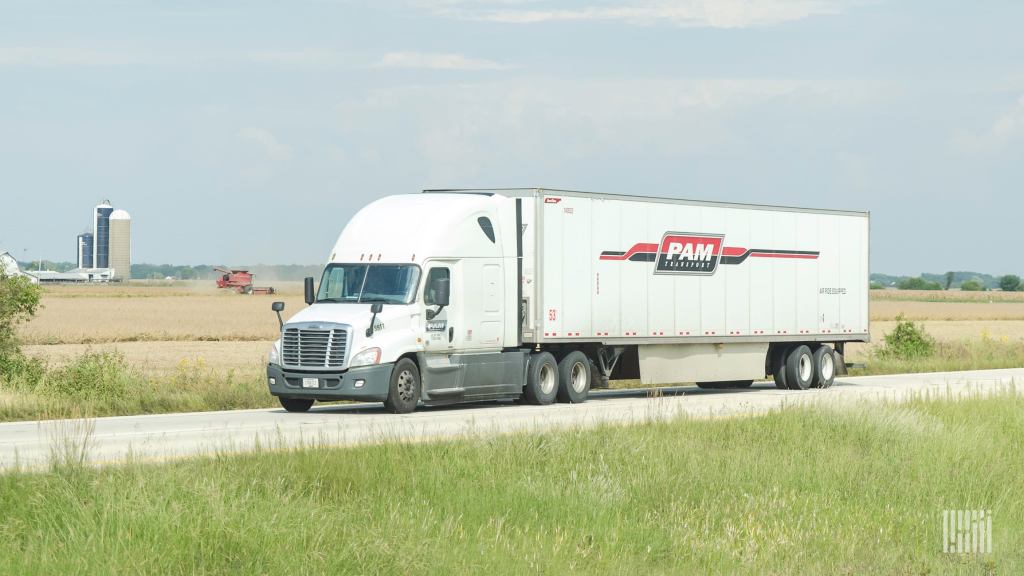
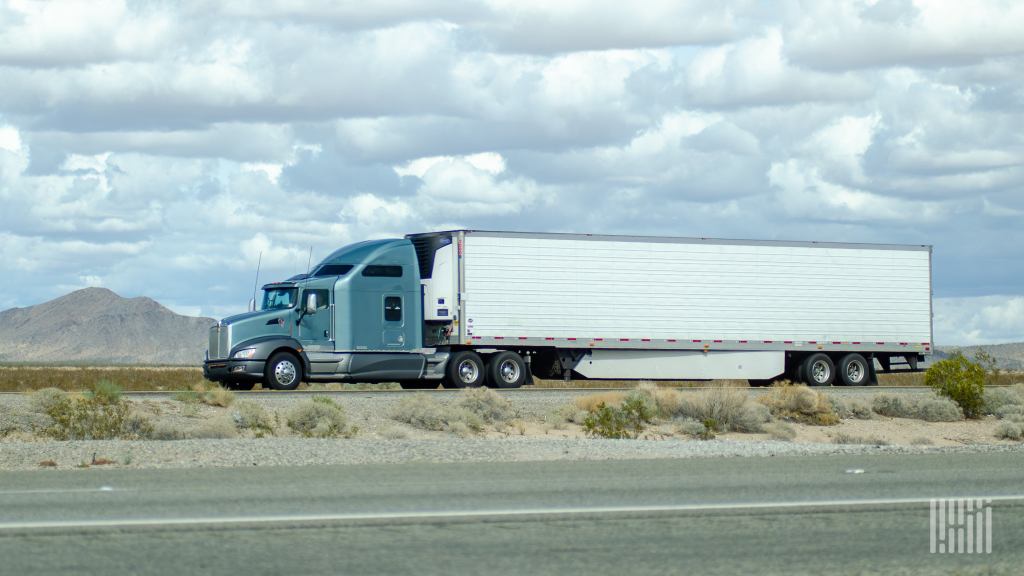
A white Pam tractor pulling a white Pam trailer on a highway

Pam Transportation Services said an auto strike during the fall was to blame for its net loss in the last quarter of the year.

Pam (NASDAQ: PTSI) reported a net loss of $2.2 million, or 10 cents per share, for the 2023 fourth quarter. The result was below a lone 20-cent estimate from an analyst and well below earnings per share of 81 cents in the year-ago quarter.  

The company recorded a $132,000 loss from the disposal of equipment compared to a gain of $587,000 in the 2022 fourth quarter. Gains generated from equity holdings were $2.3 million lower year over year (y/y).

“Unlike previous UAW strikes, the approach taken in the 2023 strike was impactful to the majority of our auto customer base including both auto manufacturers and suppliers,” said Joe Vitiritto, president at Pam.

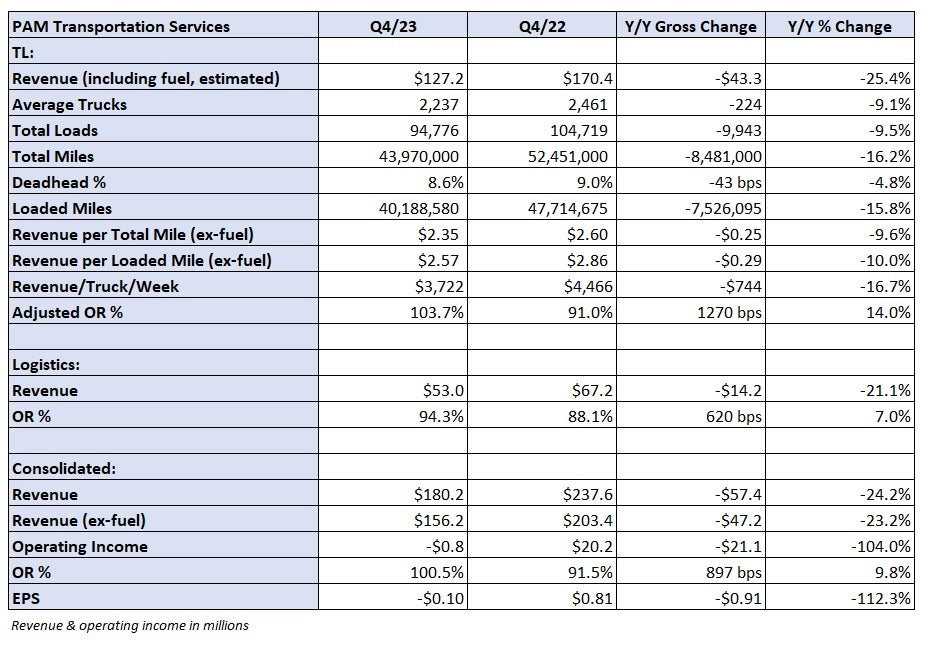
Truckload revenue fell 25% y/y to $127 million as revenue per truck per week fell 17% and average trucks in service were down 9%. Loaded miles fell 16% and revenue per loaded mile excluding fuel surcharges was down 10% to $2.57.

Compared to the third quarter, loads in the TL division were off 10%.

The TL segment recorded an operating ratio of 103.7% excluding the impacts of fuel surcharges, 1,270 basis points worse y/y and 790 bps worse than the third quarter.

“While the strike ended by mid-November, the negative impact carried on through the typical holiday shutdowns with no post-strike surge in automotive business that we have sometimes experienced after past UAW strikes,” Vitiritto continued.

The logistics segment reported a 21% y/y decline in revenue to $53 million. Pam doesn’t provide gross profit margins for the unit or operating metrics like load counts and revenue per load. The logistics OR was 94.3%, which was 620 bps worse y/y and 100 bps worse than the third quarter.

Vitiritto pointed to some recovery in the business, saying he is “seeing sustainable progress in areas that will put us in a position to get back to profitable growth.”

Chart: Pam’s key performance indicators

More FreightWaves articles by Todd Maiden

FMCSA takes on fraud concerns in new CDL testing rule

Truck on the highway

WASHINGTON — Trucking regulators have attempted to address the potential for fraud as part of a slate of proposed new CDL testing revisions that safety advocates claim could make the roads less safe.

Some of the revisions included in the notice of proposed rulemaking (NPRM), expected to be published Friday by the Federal Motor Carrier Safety Administration, stem from temporary waivers that FMCSA provided in response to the pandemic. They are also based partly on a petition submitted by the American Trucking Associations in July 2020.

The rulemaking proposes easing current CDL testing regulations by:

  • Allowing commercial learner’s permit (CLP) holders who have passed the CDL skills test to operate a truck without having a CDL holder in the passenger seat.
  • Expanding a CDL applicants’ ability to take a skills test in a state other than the state in which they live.
  • Eliminating the requirement that an applicant wait at least 14 days after being issued a CLP to take the CDL skills test.

FMCSA is also proposing to require third-party knowledge examiners be subject to the same training and certification that currently applies to state knowledge examiners. In addition, third-party knowledge testers would be subject to the auditing requirements that currently apply to third-party skills testers.

The changes related to third-party knowledge examiners and skills testers include anti-fraud protections that FMCSA told lawmakers last year it would need to put in place before issuing the rulemaking.

“The NPRM would add a new requirement that third-party knowledge testing be administered electronically and securely to minimize the opportunity for negligence or fraud that may exist when knowledge tests are administered on paper,” the rulemaking states.

Federal regulations would be changed to require that third-party skills and knowledge testers “initiate and maintain a bond in an amount determined by the state to be sufficient to pay for re-testing drivers in the event that the third-party or one or more of its examiners is involved in fraudulent activities related to conducting skills testing of applicants for a CDL,” according to the proposal.

To administer knowledge tests, third-party knowledge examiners would be required to take a 20-hour training course every three years, FMCSA noted, adding that there is “not a specific skill set required to be a knowledge test examiner, and many different occupations could proctor knowledge test exams.”

Carriers stand to gain?

Current law allows CLP holders to operate a truck only while undergoing behind-the-wheel training and as long as a CDL holder is in the front seat of the vehicle directly supervising the driver trainee.

One of the proposed revisions, however, would allow CLP holders who have passed the CDL skills test to operate a commercial motor vehicle for any reason, and a CDL holder would only need to be present somewhere in the truck without having to supervise the trainee.

“The proposal would result in cost savings for motor carriers and drivers because, after the CLP holder passes the skills test, the CDL holder would be allowed to rest in the sleeper berth, thereby saving on-duty time under the [hours-of-service] rules that would otherwise be lost riding in the passenger seat, overseeing the CLP holder,” FMCSA states.

“The proposed change would therefore allow the CLP holder, with proof of a passing CDL skills test, to operate the vehicle in a wage-earning capacity.”

FMCSA supported this proposed revision by citing regulatory exemptions it has issued and reissued to trucking companies C.R. England and CRST The Transportation Solution Inc., determining that safety was not undermined by the exemptions.

Safety advocates fire back

But exemptions handed out by FMCSA to current regulations that the agency is now looking to make permanent through its rulemaking have been vigorously opposed by truck safety groups.

Referring specifically to CRST’s most recent exemption, the Truck Safety Coalition, an accident victim advocacy group, pointed out that the trucking company provided a “paucity of data” — three months — “with zero comparison data” over the seven years it operated under the exemption and “with zero proof it did not adversely affect safety and plenty of data points that suggest [safety] may have been compromised,” the group told FreightWaves when asked to comment on the NPRM.

“FMCSA’s decision to grant the ATA’s petition for “CDL flexibility” is a stain on the agency responsible for ensuring motor carrier safety,” said TSC Executive Director Zach Cahalan.

“No estimation of negative safety impacts is attempted in its cost-benefit analysis. TSC and its crash victims forcefully believe FMCSA has a mandate to estimate the safety risk and cost of every proposed rulemaking. If FMCSA … is unwilling to take this requirement seriously, meaningful progress to zero fatalities will be unfortunately stuck in neutral.”

Comments on the NPRM are due by April 2.

Click for more FreightWaves articles by John Gallagher.