Check Call: New year, new schemes 

people gathered around a desk of computers. Check Call news and analysis for 3pls and brokers
(GIF: GIPHY)

New year, new schemes. Kind of like new year, new me, but for shady characters who are hoping to level up their games this year. Fraud is a billion-dollar industry and it’s truly just a matter of when it happens to you. For brokers looking to not fall victim in 2024, we’ve got some tips and tricks for you.

Hard passes: 

Carriers operating with inactive or revoked authority/carriers operating with newly issued authority.

  • This one can kind of be OK-ish if you can verify through other vendors or references they’re valid carriers, but ultimately it’s very risky so not the best option.
  • Obviously if they have a history of being reported for double brokering, sprint far far away.

Excessive or recent insurance changes.

  • With insurance being one of the biggest expenses for a carrier, sometimes changes help the bottom dollar, but I’d say changing insurance more than twice a year is excessive and worth some follow-up questions and phone calls to validate insurance.

Multiple changes in the owner of the motor carrier number in the past few years.

  • Once or twice is no big deal. That can happen. But if they’re cagey about why the change happened, hard pass.

Inconsistency.

  • The same way carriers love consistency from their brokers, brokers should look for that in their carriers, not only in their performance but in their records. Does Federal Motor Carrier Safety Administration data not match what you were told? Hard pass. Does the address given show a random dentist’s office or a P.O. Box with six other LLCs registered to it. Double hard pass.

Pushy verifications.

  • If they don’t want to wait to go through carrier verification processes and “promise to do it after the load — they’re good for it; don’t worry,” how about no.

Negative reviews.

  • Obviously take this with a grain of salt — the same way carriers take negative reviews of brokers with a grain of salt. Know when a complaint is valid versus when someone who had something go wrong loses it in the comment section on the internet. You can always tell which are loose cannons and which are mostly legit.

The most important thing is just to trust your gut. If something seems too good to be true, it is. If carriers are fine at first but become cagey when you ask follow-up questions, maybe keep asking or hang up the phone. Most carriers have no problem answering professional questions about their business — well, most legit carriers at least.

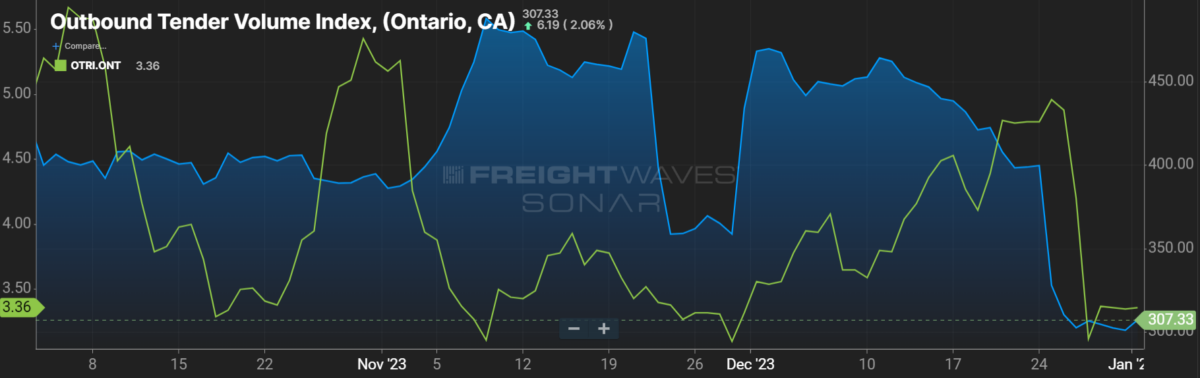
SONAR Tickers: OTVI.ONT, OTRI.ONT

Market Check. This week’s SONAR market is the behemoth in Southern California, Ontario. Capacity is loosening a little, a trend that should be seen in most markets as January gets into swing. January traditionally is a quiet time for the freight markets, especially following peak retail season, and this year it’s anticipated to be one of the bleaker Januaries in terms of freight rates. Outbound tender volumes are down 6.3% week over week, and outbound tender rejections are down 160 basis points in the same time frame.

Some volume will return to the market as everyone returns from the holiday, but it’s likely to remain a quiet January. Take care of carrier relationships and work with them when possible on rates as there is far too much supply in the market compared to demand.

(GIF:GetYarn)

Who’s with whom? Everyone’s favorite near and offshore staffing company, Lean Solutions Group, has sets its sights on Mexico. Given the rise of nearshoring in Mexico and companies looking to set up shop quickly, Lean Solutions’ doubling down on Mexico is a natural progression. It’s hard to find a 3PL or freight brokerage that hasn’t used the service, and as more shippers expand into Mexico, not everyone can afford to set up offices there.

In a FreightWaves article by Noi Mahoney, Daniel Agamez, Lean Solutions Group senior vice president of operations, said, “We see Mexico as a land of opportunity as huge companies have had major success operating out of Mexico. The Mexican market itself has strong ties and relationships with the U.S. business industry; therefore, we now offer our clients the opportunity to have their logistics workforce located in the same country, offering the possibility of direct logistics management where their supply chain begins.”

The more you know

Navigating the brokerage landscape in 2024

‘Not-in-my-backyard’ mindset threatens warehouse growth

California holds off on only allowing new zero-emission vehicles in drayage registry

Will Congress pass any rail safety bills in 2024?

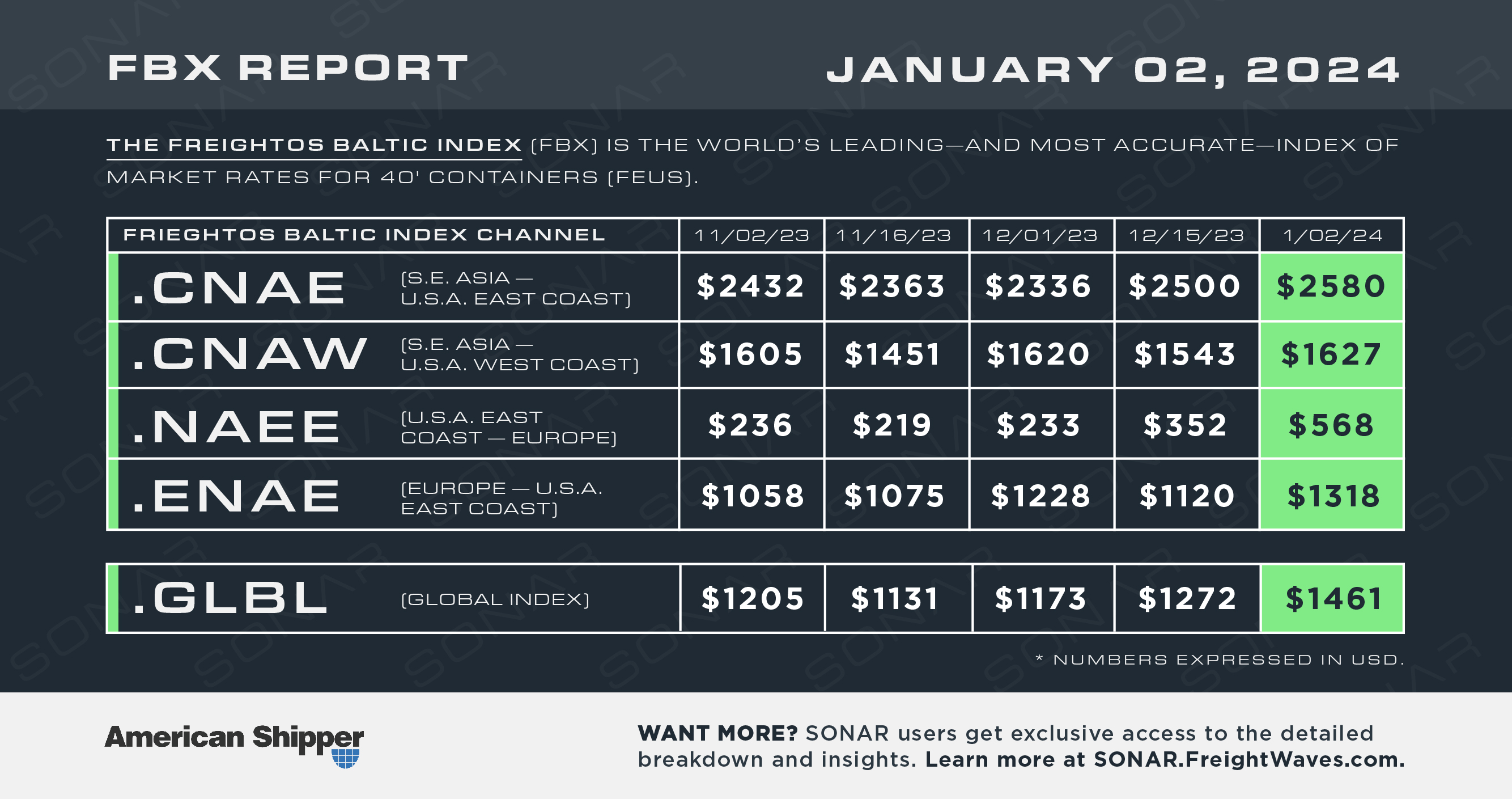
FBX Report: January 02, 2024


To learn more about FreightWaves SONAR, click here.

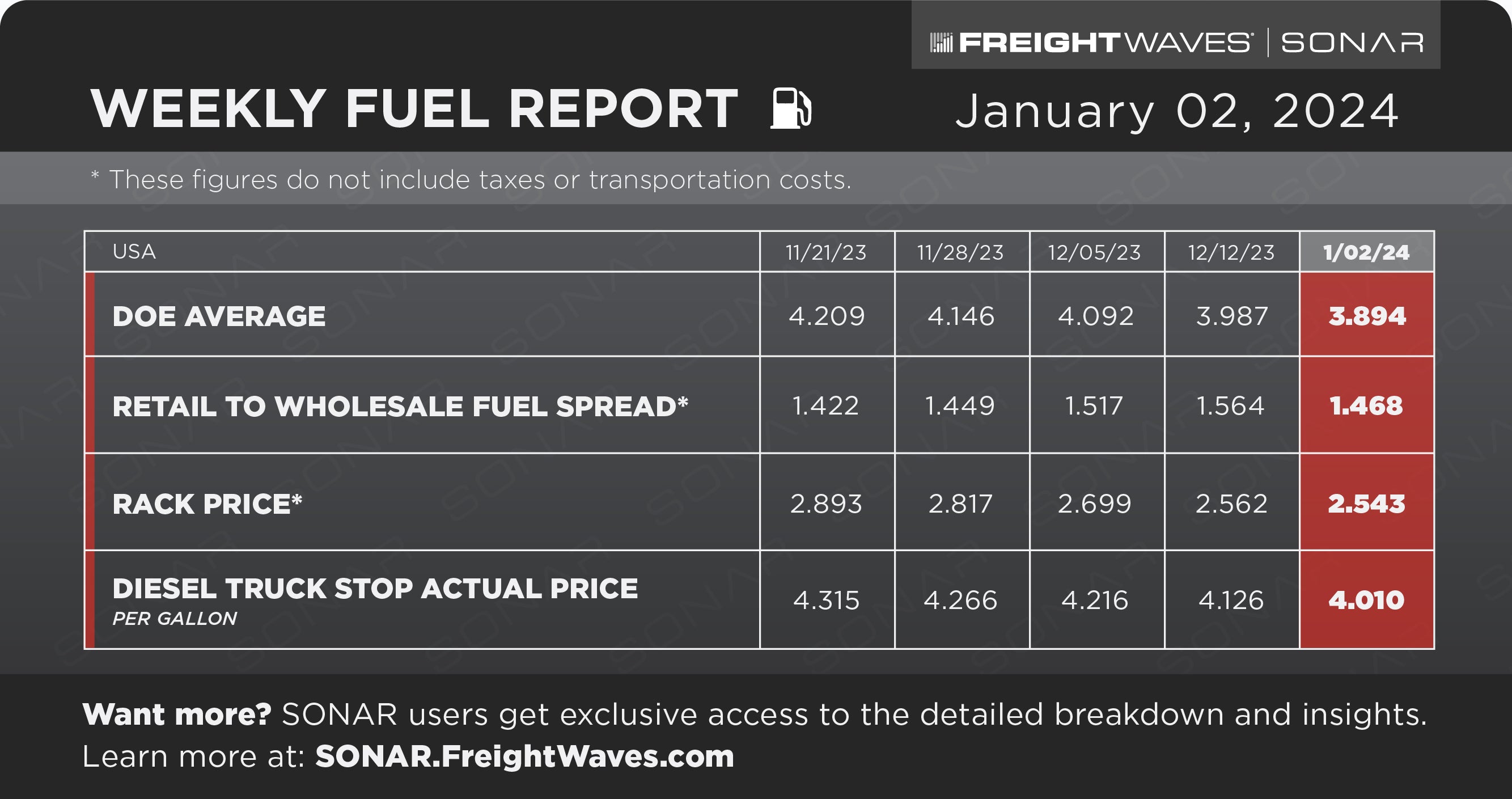
Weekly Fuel Report: January 02, 2024


Learn more at SONAR.FreightWaves.com

XPO is hitting record levels of LTL service

XPO recently saw a historic surge in service levels, signaling a new era for its less-than-truckload business.

With this service quality achievement, the freight giant is not just moving goods — it’s raising the bar for efficiency and customer satisfaction.

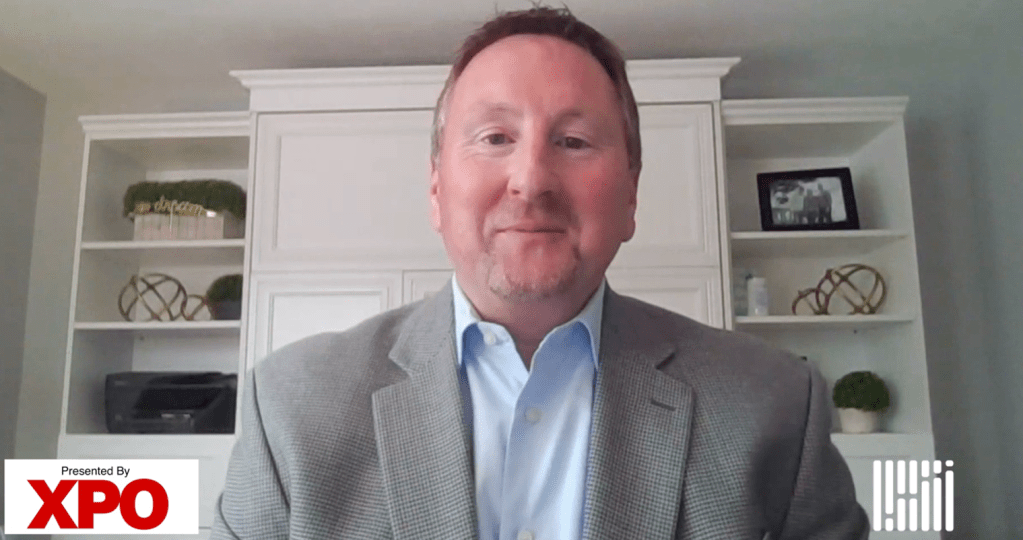
In a recent discussion with FreightWaves’ Isaiah Buchanan, Anthony Hoereth, senior vice president of sales at XPO, explained how the company has been able to reach the highest service levels in its 40-year LTL history.

In 2021, the company laid out its LTL 2.0 plan to strengthen its operations. Then, in 2022, XPO transitioned to a stand-alone North American LTL carrier, committing its entire focus to providing world-class LTL services to its customers. With this shift, XPO has seen a 35 percentage point improvement in service levels year-over-year and a 70% increase in damage-free delivery.

“As recently as November, we set a company record for damage-free delivery,” Hoereth said. “These improvements are translating into really happy customers who are giving us more business.”

To better take care of its customers’ freight, XPO has enhanced its training programs and loading procedures to equip its field operations with new service tools. For example, XPO launched a new airbag system that is driving significant improvements in damage frequency. XPO also started using high-caliber straps to better secure freight. The company also has launched new programs with its employees to ensure even better quality loading of its customers’ freight. This combination has led the company to reach new service quality records in the past year while also paving a clear runway for further service improvements across the board.

Under its LTL 2.0 strategy, XPO has been focused on preemptive investments in the network to stay ahead of customer demand. With the expansion of 10 service centers and the addition of 500 net new doors, XPO’s investments in capacity are driving the company’s improved service levels and growth. Recent investments include expansions in Garland, Texas to cater to the nearshoring trend and in Salt Lake City to support outbound shipping in the rapidly growing freight market.

XPO is also making investments to enhance its fleet. With the addition of 2,000 new tractors and 10,000 trailers — manufactured in-house at its Searcy, Arkansas, facility — the company is doubling-down on its efforts to take care of customers’ shipments with more efficiency.

“The investments in the network and the fleet are really at the core of what’s driving the service and quality improvements we’re seeing right now,” Hoereth said.

XPO’s operational excellence and new service offerings

Hoereth also shared that XPO is building out its premium service offerings as the company continues to focus on quality, on-time service performance and network investments. Notably, XPO’s “retail rollouts” service is offering dedicated support for time-sensitive retail displays, meeting the high demands of retail clients.

Additionally, XPO is launching a “must arrive by date” (MABD) service to provide tiered delivery options for retail customers, from basic transit time guarantees to dedicated shipment monitoring. This new service will ensure on-time deliveries to big box retailers, providing customers with peace of mind.

XPO has also responded to the growing need to ship heavier-weighted LTL-type shipments. As the company continues to add capacity, XPO will be better equipped to handle volume LTL shipments for its customers.

“At XPO, we’re always focused on how we can better serve our customers,” Hoereth said.

XPO’s strategic growth and market expansion

XPO is looking forward to continued strategic growth with its recent acquisition of 28 service center locations from Yellow. This move, which XPO describes as a “once-in-a-generation opportunity” for network expansion, will fuel the company’s next decade of growth as it focuses on providing best-in-class service to customers. 

Hoereth shared that the integration of these centers is being meticulously planned to maintain XPO’s high service standards. The plan includes bringing some centers online as early as the first quarter of 2024, with most becoming operational over the year and into early 2025.

Through the acquisition, XPO gained access to service centers in prime locations that are optimally situated to serve customers. The additional locations will allow XPO to handle additional shipments more efficiently, decrease transit times in some lanes, and deliver even better service quality.

These 28 service center properties are also primed to enhance its service offerings for customers. For example, XPO will be strengthening its cross-border offerings with additional service centers in Nogales, Arizona, and Minneapolis. In Las Vegas, which is a major hub for tourism and conventions, XPO’s new location in the city will better support its trade show offering for customers.

Looking ahead, XPO’s outlook is focused on continued growth and being a great carrier partner to its customers. With a sharp focus on operational efficiency, world-class service and continued investments in the network, XPO is not only catering to evolving market demands but also paving the way for future opportunities for its customers.

White Paper: Seneca Foods and Ruan Have a “Can” Do Partnership

Explore the synergistic partnership between Seneca Foods and Ruan in this one-page document, highlighting their successful ‘Can’ Do collaboration. Learn how Seneca Foods, a prominent shelf-to-table business, strategically selected Ruan for Dedicated Contract Transportation, achieving significant cost savings and ensuring consistent, efficient production.

Download the complimentary report today to access the full insights.

Daily Infographic: Railroading is safer than many major industries


To view more FreightWaves infographics, click here

‘Not-in-my-backyard’ mindset threatens warehouse growth

Attendees at Prologis Inc.’s investors day heard pretty much what they came to hear. That included the logistics warehousing giant’s assessment of the macro environment, plans to build facilities occupied solely by data centers, its efforts to expand solar power use, and a broadening of its customer value proposition, among other things.

What they may not have expected to hear were comments from Prologis (NYSE: PLD) President Dan Letter that it is becoming increasingly difficult to build warehouses because of opposition from community activists and residents of the surrounding areas. Letter went so far as to advise listeners during a Q&A at the mid-December event to consider skipping their next warehouse tour and instead attend or tune in to local planning and zoning commission meetings in key markets to understand what has become a core challenge for developers.

There has always been some degree of tension between warehouse development and the concerns of the communities and local governments that embody the not-in-my-backyard (NIMBY) mindset. But the pandemic and post-pandemic surge in warehouse demand, triggered by a surge in e-commerce, has raised the temperature. Hundreds of millions of square feet of warehousing — mostly for logistics use — entered the market from 2020 through 2022. This has forced developers to butt heads more frequently with activists who may have no trouble with the jobs, goods availability and expanding tax base that warehouse development can provide as long as it doesn’t occur next door.

The battle is being waged in many states and localities, in urban, suburban and rural communities alike, though less so in more sparsely populated areas where there is a surplus of land. In urban areas, there is pressure from residents not to build warehouses on locations that were homes for decades to industrial developments.

But the fight is most pronounced and high-profile in California and New Jersey, states that are home to dense populations, tough environmental and permitting regulations, and major air and seaports. In both states are growing numbers of residents who, tired of seeing most warehouse projects being rubber-stamped, are resisting development and pushing their local commissions and state legislatures to fight with them.

In California’s Inland Empire, about 60 miles east of Los Angeles, the number of warehouses has increased from 234 in 1980 to more than 4,000 today, CalMatters, a nonprofit news outlet funded by foundations, donors, sponsors and members, said in a September story. Nearly 300 additional projects have been approved for construction, the outlet reported. About 300 of the 4,000 existing facilities are within 100 feet of a school, according to the outlet.

Only a handful of applications have been rejected in the past five years, critics told the publication. The tremendous growth has turned the Inland Empire into the nation’s largest warehouse complex.

Three projects have been rejected by their respective city councils since October, CalMatters said. Critics have asked Gov. Gavin Newsom to declare a regional emergency, including a moratorium on new warehouse construction, according to the outlet. They have also called on the state legislature to intervene, the outlet said. So far, nothing has happened.

In New Jersey, lawmakers as of the end of November were due to consider at least two dozen warehouse-related bills in a lame-duck session that would respond to public calls for state action to cool the continuing warehouse construction boom across the state, according to NJSpotlight, an outlet funded by various foundations and business groups.

Among other things, the bills urge lawmakers to give financial help to towns to rezone their lands to prevent warehousing where they don’t want it; direct the State Planning Commission to draw up a model ordinance that towns can use to resist warehousing, and provide $50 million to the state agency that preserves farmland where many warehouse projects are planned, the outlet reported.

In what is believed to be an unprecedented move, New Jersey officials said in mid-November that they had bought 575 acres of farmland in Warren County, in the northern part of the state, to block plans for 2.8 million square feet of warehouse development. The head of the state’s farmland preservation agency said it stood ready to make similar deals to keep the land from being developed, according to NJSpotlight. The decision was driven in part by strong local opposition, the outlet reported.

None of this has gone unnoticed by developers who are long accustomed to give and take with communities but are now absorbing more than just glancing blows from the public backlash. Ian Britton, senior managing director of the Ontario, California, office of real estate services giant CBRE Group Inc. (NYSE: CBRE) said pushback in the Inland Empire against further warehouse development has gained “significant traction.”

Developers indicate that community resistance has given them pause on expansion, Britton said. Beyond rising labor and construction costs, developers have to contend with issues such as development moratoriums, increased fees and taxes, and permitting delays that “make it very difficult to get a project off the ground today,” he said. 

A company spokesperson said Britton’s direct experience is with Southern California. However, developers nationwide face similar obstacles, the spokesperson said.

Commercial interests in New Jersey, which has 565 municipalities, know these concerns well. Dan Kennedy, CEO of the New Jersey chapter of the NAIOP, the Commercial Real Estate Development Association, said no sector or subsector in the past 25 to 30 years has been so directly and persistently targeted in the state as warehousing. Developers face community opposition even on projects already zoned for warehousing use and where they are not asking for a variance, or an exception to an existing zoning law, Kennedy said in a phone interview. Developers also confront some of the toughest environmental laws and regulations in the country, he added.

Some New Jersey localities, flush with pandemic relief funds doled out by the state, may feel they have enough of a financial cushion to ignore the economic benefits that flow from warehouse development, Kennedy believes. As those funds dwindle, municipalities and their residents who today oppose these projects may take another look at what they bring to the table, he said. “How do (local officials explain to their tax base that they are scaring off revenue?,” he asked.

Developers in the state may take heart from a mid-August superior court judge’s ruling that reversed a decision by Harrison Township, a rural community outside Philadelphia, to deny approval of a 2.1 million-square-foot, four-warehouse complex. According to a story in CoStar, a provider of information, analytics and marketing services to the commercial property industry, Judge Benjamin Telsey said the municipality’s action was “arbitrary, capricious and unreasonable.”

The judge noted that the locality failed to provide solid evidence to support its decision, and that the township’s denial was unduly influenced by the outrage of 300 people at a raucous December hearing who tried to intimidate the developers and local officials, according to the CoStar story. 

Virtually no project sails through without some community friction, and developers are more than willing to work with residents and municipalities to address valid concerns, such as building near schools, Kennedy said. The problems arise, he said, when developers face communities that won’t accept any compromise. “There’s a group of citizens that don’t want anything there, no matter what it is,” he said.

At some point, if it hasn’t happened already, developers may vote with their feet. Craig Meyer, head of industrial at real estate services giant JLL Inc. (NYSE: JLL) and a California resident, said developers will move to neighboring states where the approval process is half as long and land is cheaper. The pendulum will swing back and forth between industry and communities, but “we have to find an equilibrium,” Meyer said. Developers that operate in New Jersey already have regional footprints, Kennedy said.

It needs to be better understood — or better communicated — that in the Inland Empire it was industrial development that led the way, with people, jobs and goods following the industry’s lead, Meyer said. Today’s development in the region brings jobs, more tax revenue, and quick and easy access to goods that people want and need, he said.

“What some fail to recognize is that the industrial and logistics sector represents the largest job creator in the region,” said Britton of CBRE, noting that transport and warehousing have accounted for 13% of the increase in Southern California jobs since 2012.

The tug of war between communities and developers is unlikely to abate over the long term, though a collapse in construction starts due to high borrowing costs and an uncertain economy may cool things down for a while. E-commerce demand will continue to grow, and more businesses will look to warehouses to stock goods in order to avoid any supply chain disruptions. Both trends are considered secular, so warehouse development isn’t going away. 

Developers will “still go where the opportunity is,” said Craig Hurvitz, director, national industrial research at Colliers, a Canada-based real estate services firm. “If the numbers make sense, they’ll move forward with these complicated projects,” Hurvitz said.

According to Britton, the key is improved communication with local stakeholders. “Developers who take the proactive steps to approach the community to determine their needs and formulate a plan to help achieve those goals together are the most successful,” he said.

Will Congress pass any rail safety bills in 2024?

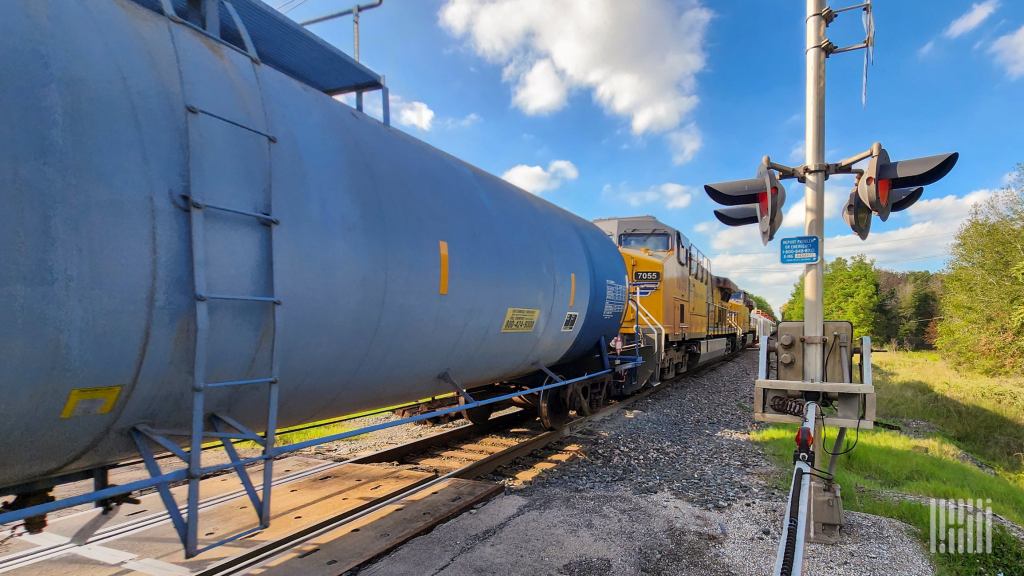
A freight locomotive pulls tank cars through a rail crossing.

The passage of any rail safety legislation in Congress next year is likely to be influenced by two things, industry observers told FreightWaves: the 2024 presidential election and the release of a report by the National Transportation Safety Board on the February 2023 derailment of a Norfolk Southern train in East Palestine, Ohio.

That February derailment — although it resulted in no injuries or deaths — has prompted calls to bolster rail safety because it led to the venting of tank cars carrying vinyl chloride, a hazardous material. That venting, conducted because of concerns that chemical reactions inside the derailed tank cars would eventually cause an explosion, resulted in a huge plume of smoke over the derailment site, rattling locals and raising concerns about the environmental health of communities in the area.

NTSB is expected to release its final investigative report in 2024. The report will include recommendations about what the industry and stakeholders can do to enhance rail safety. NTSB’s reports typically come out 12-16 months after an incident, so the report on the East Palestine derailment could come as soon as the first quarter of 2024 but is more likely to come out midyear, sources said.

That report and its recommendations could influence what kind of rail safety legislation is produced in the U.S. House of Representatives. Indeed, Republican House leaders indicated in 2023 that they would not move on rail safety legislation until NTSB’s report on East Palestine came out, multiple sources told FreightWaves.

In the Senate, a rail safety bill co-sponsored by the senators of Ohio and neighboring Pennsylvania and others passed the Senate Commerce Committee in May but never got to the Senate floor for a vote in 2023.

Ohio’s senators, Democrat Sherrod Brown and Republican J.D. Vance, “continue to be strongly motivated to move legislation through the Senate,” Ian Jefferies, president and CEO of the Association of American Railroads, told FreightWaves. “And we certainly see an opportunity for consensus legislation that all stakeholders can support, that’s targeted and data driven. We do think some changes might be necessary before anything does move through the Senate, and we want to be part of the solution and a productive part of the process.”

Republican Congressman Sam Graves of Missouri, who is also chairman of the House Transportation and Infrastructure Committee, “has been very clear that he wants to see the results of the NTSB investigation surrounding East Palestine, and then we’ll make a decision on how to most appropriately move forward,” Jefferies continued. “We want to continue to be engaged in the process and make sure that any legislation is something that really gets at any identified challenges that need to be addressed via legislation.”

Jefferies also said the Federal Railroad Administration is working on several issues with stakeholders, including regulations and advisories related to track inspection, hot box detectors and related wayside detection, and crew consists or train crew sizes. Meanwhile, the regulatory agenda that the U.S. Department of Transportation issued this fall also indicated that DOT is working on a rulemaking addressing high-hazard freight trains. 

Scott Jensen, director of communications for the American Chemistry Council, echoed Jefferies’ remarks. 

“I think the House has made it pretty clear that they’re really not interested in taking up the issue until they have seen the NTSB report. So I think that’s where things stand, and our position on the Senate legislation hasn’t changed. We’re supportive of elements of the bill and tried to work with the bill authors and sponsors on elements of that bill,” Jensen said. 

As chemicals shippers are waiting to see what rail safety legislation comes out, shippers are continuing to upgrade fleets of DOT-111 tank cars for flammable liquids with DOT-117 tank cars, Jensen said. The final deadline for upgrading those cars is 2029, although there are staggered deadlines for different types of chemical commodities between now and then.

Meanwhile, fuels and petrochemical shippers “feel like a lot of the previous rules that have come out on rail safety have been heavily focused on the tank car itself and not as focused on keeping the railcars in track in the first place,” said Rob Benedict, vice president of petrochemicals and midstream for American Fuel & Petrochemical Manufacturers (AFPM).

“Addressing the root cause of derailments is something we’d be looking for in any future legislation or regulation as this would have the greatest impact on rail safety. AFPM would note that the rail safety bill that ultimately came out of Senate Commerce Committee was a vast improvement on the initial bill.  We are interested to see how that bill lines up with whatever NTSB says when they eventually issue their final report on the East Palestine derailment and then how that guides the conversation moving forward,” Benedict said.

Although the Class I railroads and their network are the target of rail safety legislation, short-line railroads will also be watching what rail safety bill shapes up in 2024.

“Even if a bill did entirely exempt short lines, if it’s bad for the network and bad for our Class I partners and doesn’t advance safety, we still wouldn’t be supportive of such an idea because they’re our network partners and we share and we serve customers together,” said Chuck Baker, president of the American Short Line and Regional Railroad Association. “So if there’s a rule that hampers their ability to operate efficiently without a commensurate safety benefit, then we think that’s problematic.”

Could an election year slow momentum for rail safety legislation?

The other major factor that could influence whether rail safety legislation gets passed and signed into law in 2024 is election-year politics, sources said.

“Things tend to slow down in election years. Election years do often feature legislation … but a lot of what moves in an election year is tying up in the first few months of the election year the loose-ends deals that were almost cut at the end of the odd-numbered year,” said Loren A. Smith Jr., president of Skyline Policy Risk Group, a research and consulting firm focused on the supply chain. Smith previously served as deputy assistant secretary for policy at DOT.

What makes any rail safety bill potentially challenging to move in 2024 is not only the railroad industry’s and rail shippers’ reservations about the potential depth of changes in such a bill, but also how those changes might impact the efficiency of the freight rail system.

Those are the concerns that will “need to be hashed out. And in the partisan fire of an election year, it gets really hard to do that,” Smith said.

Greg Regan, president of the Transportation Trades Department (TTD), which is affiliated with the AFL-CIO, also said legislative priorities can tend to shift in election years.

“The election year complicates everything. It shortens the legislative calendar dramatically. That’s a concern in every regard,” Regan said.

He continued, “If we’re going to be able to move something, I think it’s going to be one of those things where if it gets out of the Senate and it builds enough pressure on the House, they have to do something. I would be concerned about the House, taking aspects of the bill to appease their funders in the railroad industry. But we will try to hold everyone accountable now: What exactly are they doing? What are they voting for or against? And we have a lot of allies in that regard right now.”

Another possible factor on whether rail safety legislation passes is current circumstances, such as the perceived health of the overall supply chain, according to Smith. 

The COVID-19 pandemic saw a supply chain crunch in 2021 and 2022, but that abated in 2023 and the supply chain actually saw a slowdown in part because of excess inventory, Smith said. In other words, it’s difficult to forecast what the rail industry and the overall supply chain might look like in 2024 because recent years were far from normal, and what happens — or doesn’t happen — in 2024 might affect the momentum to push things forward, Smith said. 

“There’s a lot of things that are changing right now. Even if no big reform bill is being passed by the House and the Senate in some sort of compromise form, the Federal Railroad Administration is considering new regulations,” Smith said. “At the same time the freight rail industry itself has been doing a lot to look at the operational changes they can make in terms of communicating more with not just state and local governments but also local communities. That was a big part of why people weren’t happy.”

Couple these factors with continued advancements in safety technology, and “all of that may give us a very different environment over the next few months,” Smith continued. “If we think not much is going to move in the election year, we might look at the situation differently [in 2025], and that could be good or bad. But I think people should be looking at what the industry is doing to improve their own risk modeling.”

Indeed, a potential shift in priorities in 2024 is why rail labor expects to continue its lobbying efforts next year.

“On FRA, we hope that we’ll see a final rule on crew size soon,” said TTD’s Regan. “There are [also] rulemakings on certification for signalmen and dispatchers. There is more that the administration could do, but similarly, we’re running out of time there too. So, you know, there’s no chance to take a break here. We have to keep pushing forward.”

Subscribe to FreightWaves’ e-newsletters and get the latest insights on freight right in your inbox.

Click here for more FreightWaves articles by Joanna Marsh.

Borderlands: Lean Solutions Group making big moves in Mexico

Borderlands is a weekly rundown of developments in the world of United States-Mexico cross-border trucking and trade. This week: Lean Solutions Group making big moves in Mexico; China-based tire maker opening $240M facility in Mexico; Mexican authorities again postpone Carta Porte tax document; and new logistics park begins construction along Texas-Mexico border.

Lean Solutions Group making big moves in Mexico

Lean Solutions Group, founded in 2012, began as a nearshore and offshore services provider to the transportation and logistics industry.

Today, the Coral Springs, Florida-based company has a workforce of 10,000 and has increased its offerings to include warehouse and distribution services, while also supporting other sectors including retail, manufacturing, software as a service, hospitality and health care solutions.

In the commercial transportation space, some of Lean Solutions Group’s clients include Riverstone Logistics, ARL Logistics and PGT Trucking.

Lean Solutions Group sees big opportunities in Mexico, which has more than 49 million workers between the ages of 20 and 49. In 2022, the company opened its eighth satellite office in Mexico City, as well as office locations in Guatemala and the Philippines.

“We have worked to diversify our locations to better serve our clients, and Mexico is a great extension to those efforts,” Robert Cadena, CEO and co-founder of Lean Solutions Group, said in a news release. “In Mexico, we can find a large, skilled and highly educated workforce that excels within a variety of industries.”

FreightWaves recently spoke with Daniel Agamez, Lean Solutions Group’s senior vice president of operations, about its expansion into Latin America, as well as trends in U.S.-Mexico trade. 

FREIGHTWAVES: How many employees do you have in Mexico City?

AGAMEZ: We currently have 60 employees and plan to expand in the first quarter of 2024. We’ve already hosted various tours to both current clients and interested prospects.

FREIGHTWAVES: What kind of demand is Lean Solutions seeing in Mexico? 

AGAMEZ: By the last quarter of 2022 and through 2023, the demand for Mexico operations increased considerably. This is mainly because of the rise of cross-border operations. 

Carrier sales as well as distribution are key to our Mexico operation since the current demand focuses around leaner services and end-to-end solutions, meaning the final consumer requires a complete A-to-Z portfolio ensuring pickup/delivery across the border in a single transaction.

Our ability to post loads and procure carriers as well as ensure the safekeeping of the cargo has created an opportunity to expand operations in Mexico City given the talent pool and competent workforce.

FREIGHTWAVES: What industries in Mexico are growing right now? 

AGAMEZ: Technology and transportation are certainly two of the top industries growing right now. Automation is also playing a huge role for most logistics companies around the world, as well as more high-end experiences. Given the geographic location of Mexico and latest agreements to facilitate ground transportation between the U.S., Mexico and Canada, it has only created a more speedy expansion of this market.

FREIGHTWAVES: What kind of services or added value do you think customers will be looking for in 2024?

AGAMEZ: We see Mexico as a land of opportunity as huge companies have had major success operating out of Mexico. We have seen great talent, as well as matching profiles for our clients’ job vacancies. So, we have in mind very specific roles for Mexico. The Mexican market itself has strong ties and relationships with the U.S business industry; therefore, we now offer our clients the opportunity to have their logistics workforce located in the same country, offering the possibility of direct logistics management where their supply chain begins.

China-based tire maker opening $240M facility in Mexico

Sailun Tire recently announced it is building its first North American tire manufacturing facility in Guanajuato, Mexico.

The $240 million facility is scheduled to open by the end of 2024. Company officials expect the facility to produce 6 million semi-steel radial tires annually.

“This expansion will not only allow us to meet the increasing demand for our products but also enable us to design, test and now build products for North America, in North America,” Peter Koszo, president of Sailun Tire North America, said in a news release.

Sailun Tire is based in Qingdao, China, and manufactures tires for passenger and commercial vehicles. The company has two factories in China and another in Vietnam. Sailun also has sales networks and logistics centers in Canada and Germany.

Mexican authorities again postpone Carta Porte tax document

The Mexican government announced it is indefinitely postponing the start of enforcement of the Carta Porte Complement (CCP) — a digital tax document issued to shipments aimed at protecting the transfer of legitimate goods across Mexico.

Enforcement of the CCP was set to begin after Jan. 1.

It’s the seventh time over the past three years the Mexican government has postponed the controversial measure.

The Mexican Tax Authority (SAT) announced the creation of the electronic CCP bill-of-lading requirement in May 2021. The CCP is a collection of over 120 data elements, including everything from shipper and consignee information to the cargo and its value and carrier equipment.

The CCP is being issued by trucking companies across Mexico. However, the SAT has not been imposing fines for incorrect information or mistakes when filing the document.

New logistics park begins construction along Texas-Mexico border

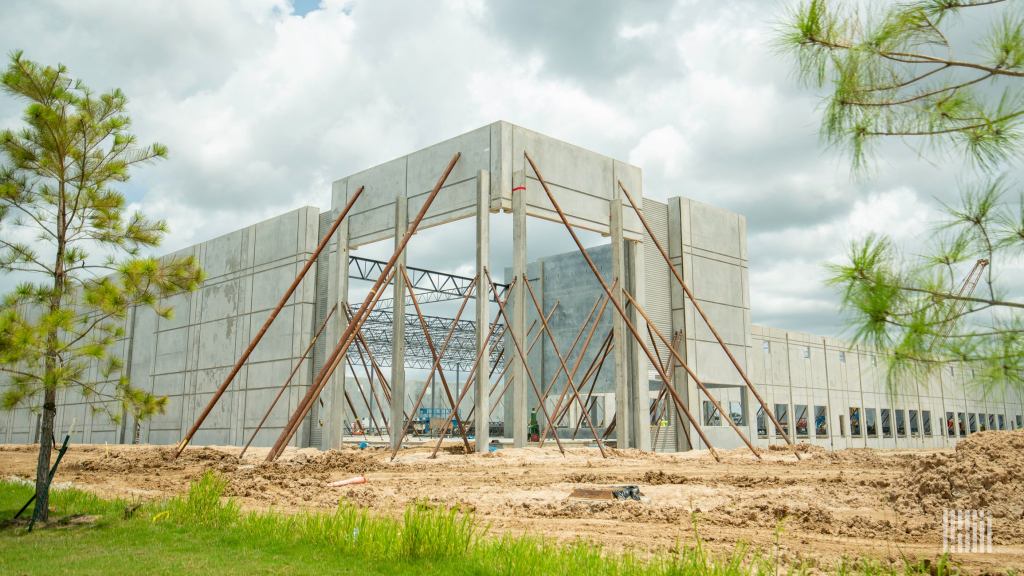
Panattoni Development Co. and Hunt Cos. announced a partnership to develop Project Grande,   a speculative logistics development in El Paso, Texas, according to Commercial Property Executive.

The project will be two Class A logistics facilities totaling 939,612 square feet. Completion is scheduled for the end of 2024. The buildings were over 50% pre-leased prior to breaking ground.

The development represents the first phase of a planned 1.8 million-square-foot industrial park. Upon completion, Project Grande will feature 36-to-40-foot clearance heights for trucks, as well as rear-load and cross-dock configuration.

Irvine, California-based Panattoni Development Co. is an international real estate developer specializing in industrial warehouses. El Paso-based Hunt Cos. is a family-owned holding company that invests in operating businesses, real estate assets and infrastructure assets. 

More articles by Noi Mahoney

Thieves spirit away 19,000 bottles of tequila from US distributor

Exports of Mexican-built cargo trucks fell in November

CBP halts rail operations at 2 Texas ports of entry

Lakota, North Dakota Post Office 58344

Lakota North Dakota Post Office

The Lakota, North Dakota Post Office serves ZIP Code 58344. Photo by Jimmy Emerson, some rights reserved. Photo shared under the Creative Commons License.

Lakota Post Office
209 Main St
Lakota, ND 58344

Location at Google Maps