Amazon drone unit loses head of safety, main liaison to FAA

This story originally appeared at Flyingmag.com.

It’s been almost one year since Amazon Prime Air launched drone delivery services in Lockeford, California, and College Station, Texas. The early returns have been … underwhelming, to say the least, despite the company’s recent international expansion.

This week, the business lost a key executive. First reported by CNBC, Sean Cassidy, who led Prime Air’s safety, flight operations and regulatory affairs and was Amazon’s primary liaison with the Federal Aviation Administration, has stepped down. An Amazon spokesperson confirmed Cassidy’s departure to FLYING, though the company has yet to name a replacement.

A former Alaska Airlines pilot and first vice president of the Air Line Pilots Association (ALPA), Cassidy was brought on in 2015 as Prime Air’s director of strategic partnerships before transitioning to a more expansive role.

As head of safety, flight operations and regulatory affairs, Cassidy represented Amazon to regulators worldwide, led airworthiness and certification flight programs, and developed public policy initiatives, rulemaking and regulatory language. He held the position for nearly eight years.

According to an internal company memo viewed by CNBC, Cassidy announced his departure last week.

“This is my last day at Prime Air and at Amazon, so a quick note to pass along my profound thanks to so many of my friends and colleagues here who have made this nearly nine year journey such an amazing experience,” Cassidy wrote.

While Prime Air will no doubt pick a new liaison to the FAA and other aviation regulators, the loss of a familiar face in Cassidy could pose a setback. The departing executive was influential in obtaining several key approvals, including the first standard Part 135 air carrier certificate awarded by the FAA to operate a drone larger than 55 pounds.

Cassidy has been on board for the vast majority of Prime Air’s decadelong existence. The unit was first teased by then-Amazon CEO Jeff Bezos in 2013, when he predicted the service would be operational within two years. That vision did not come to fruition. But at the end of 2022, nearly a decade later, Prime Air drones finally took to the skies above Lockeford and College Station.

Early turbulence

With a few exceptions — including Wing, a subsidiary of Google parent Alphabet — drone delivery companies are not yet serving the hundreds of thousands of customers many envisioned they would be by now. Prime Air, however, has struggled with scale more than most. And given Amazon’s bevy of cash and logistics capabilities, as well as the ambitious promises of Prime Air leadership, the firm’s early hiccups have been viewed in disappointing terms.

Trouble began in January, when Prime Air was impacted by companywide layoffs at Amazon. Confidential sources told CNBC the drone delivery unit lost a “significant number” of personnel, while former employees told DroneXL that up to 80% of its flight operations team had been let go.

In May, five months after launching its two commercial services, Amazon announced that Prime Air had completed just 100 deliveries — a far cry from the 10,000 trips predicted by Vice President David Carbon, a former Boeing executive. The company cited operational restrictions by the FAA on its Part 135 certificate as the culprit.

Among these are limitations on flying at night, over people or roads and beyond the visual line of sight (BVLOS) of the operator without a visual observer (VO). Under most BVLOS exemptions, the FAA requires VOs to be stationed along the route for safety purposes. Removing them, therefore, can lower an operator’s human capital costs and enable flights over longer distances.

Cassidy’s exit isn’t the only leadership loss Prime Air has faced in recent months. The business also lost chief pilot Jim Mullin and head of flight test operations Robert Dreer — who had been with the company for seven and four years, respectively — in August.

Correcting course?

Despite its setbacks, Prime Air has soldiered on, and it appears things are beginning to turn around. In October, the company added prescription drone delivery for its College Station customers and announced an international expansion to the U.K. and Italy, where it expects to fly in late 2024. New service locations — including a third, unnamed U.S. market — will be named in the coming months.

Accompanying that announcement was a first look at the firm’s new MK30 drone, which will replace its existing model in the United States. Prime Air said the design flies twice as far as its predecessor while producing half the noise. It can also operate in light rain, hot and cold temperatures and congested landing areas.

Adding to the recent momentum is a fresh exemption from the FAA, obtained in October. The regulator told FLYING the approval — which authorizes BVLOS flights without VOs — does not yet apply to Prime Air’s commercial services. As a Part 135 operator, the company’s operations specification documents, which are required to be held by certificated providers, do not allow for such flights.

However, the agency said Prime Air now has the opportunity to prove it can fly safely without VOs. If it does so, the FAA can add those permissions to the operations specification.

The regulator told FLYING that Prime Air’s exemption is a summary grant based on one of the BVLOS waivers it awarded in September to four operators: Zipline, UPS Flight Forward, Phoenix Air Unmanned and uAvionix. Summary grants are essentially streamlined authorizations for “copycat” companies with similar infrastructure, technology and operations to those who have already been approved.

According to CNBC, Cassidy led Amazon’s efforts to secure the approval, asking the FAA in July to sign off on the removal of VOs. Now, the company will need to find a way forward without its longtime liaison.

CNBC also reported that the National Transportation Safety Board is conducting a Class 4 investigation into a Nov. 10 crash at Prime Air’s test site in Pendleton, Oregon, per a federal crash report. No injuries or destruction to the site were reported, though the drone suffered “substantial” damage.

As things stand, Prime Air is playing catch-up in an increasingly crowded industry.

Zipline and Wing are the dominant players in medical and consumer drone delivery, respectively, each having made hundreds of thousands of deliveries. Both firms are partnered with Walmart, which has also made thousands of deliveries with a third company, DroneUp. Meanwhile, another operator with more than 150,000 flights logged, Ireland’s Manna, just launched in the U.S. Israel’s Flytrex has also cemented itself as a player.

This likely was not what Bezos envisioned when he revealed Amazon’s drone delivery plans a decade ago, and the loss of Cassidy will surely sting. But with its massive financial and logistical capabilities, the e-commerce giant is always a candidate for a rebound, and there’s still time for it to establish Prime Air as an industry stalwart.

Feds detail Elizabeth Holmes and Trevor Milton fraud case parallels

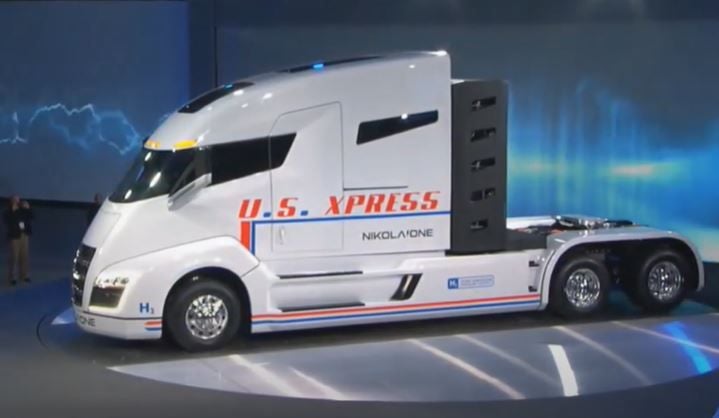
Nikola One prototype truck

The comparison doesn’t come up until page 36 of the 41-page federal sentencing recommendation for convicted Nikola founder Trevor Milton. How does his case compare to that of convicted Theranos blood-testing startup founder Elizabeth Holmes?

In his request for probation in advance of next Monday’s sentencing, Milton said he and Holmes share practically nothing in common other than being young founders with good ideas to make the world better. 


Also read: Feds seek 11-year prison term for Nikola founder


Holmes began serving a sentence of 11 years and three months in May. Federal prosecutors are seeking an 11-year sentence when Milton is sentenced Monday.

Comparisons aplenty between Elizabeth Holmes and Trevor Milton, feds say

“There, the defendant [Holmes] made misrepresentations to potential investors about Theranos’s financial condition and future prospects, including about the operability of the company’s technology and its expected revenue,” the federal sentencing motion said. 

“Here, Milton made numerous misrepresentations about multiple aspects of Nikola’s technology and future prospects. Just as Holmes lied about Theranos-manufactured blood analyzers, Milton lied about the operability of the Nikola One semitruck.

“Just as Holmes used third party, commercially available blood analyzers to trick investors into believing Theranos had an operating production, Milton used Ford pickup trucks to show [as battery-electric, fuel cell Nikola] Badger trucks. 

“And just as Holmes exaggerated Theranos’s revenue projections, Milton lied about the prices at which Nikola could obtain electricity and produce hydrogen, as well as lying about the revenue that Nikola could expect from reservations.”

No Theranos-like financial shenanigans, Milton defense attorneys say

Milton argued that Nikola’s ongoing existence — though operating under a notice of going concern filed in February — made the company he founded in 2015 different from Theranos, which no longer exists.

“In contrast, whatever Trevor may have done, he did it openly and with the full knowledge of Nikola’s executives and board of directors,” his attorneys wrote in a presentencing memo to U.S. District Judge Edgardo Ramos on Nov. 14. “There were no fake documents or financial shenanigans, and there were no threats to anyone to keep quiet.”

Lying to the company’s directors as Holmes did barely contrasts with Milton ignoring entreaties from company executives to tell the truth about Nikola in social media, television, print and podcast interviews, prosecutors said.

“The fact that Nikola was more established and publicly traded, while Theranos was not, is an aggravating factor that, at a minimum, is a reason to give Milton a sentence comparable to the sentence imposed on Holmes, if not a greater one,” the federal sentencing memo said. 

Additional facts weigh in favor of Milton getting a longer sentence than Holmes, the memo said.

More victims in Milton’s fraud case

“Nikola was publicly traded, the victim investors were not able to do due diligence in the same way Theranos’s investors could, and the number of victims involved is significantly greater.”

Milton, 41, also was two years older than Holmes, 39, when he committed fraud. Holmes argued that some key decisions at Theranos were pushed by her former boyfriend and business partner, Sunny Balwani. 

Milton claimed that company board members Steve Girsky and Jeffrey Ubben encouraged him to speak about Nikola publicly. During his trial, however, former Nikola CEO Mark Russell and former CFO Kim Brady said they and others encouraged Milton to tell the truth about the company.

Feds seek 11-year prison sentence for Nikola founder 

Nikola CEO says company executives tried ‘intervention’ with Trevor Milton

Nikola CFO: Milton statements ‘could be inaccurate or exaggerated’

Click for more FreightWaves articles by Alan Adler

UPS, FedEx post solid holiday on-time delivery performance

Two of the three major parcel-delivery carriers set multiyear records for delivery performance during the Black Friday/Cyber Monday cycle, a performance helped by less delivery demand and moves by two of the carriers to add an extra day to their holiday schedules, according to data published Tuesday by consultancy ShipMatrix Inc.

According to the data, UPS (NYSE: UPS) posted a 98% on-time delivery performance, while FedEx Corp. (NYSE: FDX) came in at 97.8%. During the same period in 2022, UPS posted a 96.6% on-time delivery rate, while FedEx posted a 95.3% on-time rate. It’s been several years since UPS and FedEx performed this well during the hectic front end of the holiday cycle.

The U.S. Postal Service posted a 95.2% on-time delivery rate during the 2023 cycle, down from 95.8% in 2022. Data from Amazon.com Inc. (NASDAQ: AMZN) was unavailable.

UPS and FedEx are expected to maintain high service levels through the holidays in part because there aren’t as many packages to ship as there were last year, ShipMatrix said. The consultancy projected that 82 million parcels will be delivered, on average, each day during the peak cycle. Last year, that number exceeded 90 million. Meanwhile, ShipMatrix said that the market has holiday delivery capacity equal to 120 million parcels, thus tight capacity will not be an issue.

In addition, UPS and FedEx have relaxed their transit times on many lanes by adding an extra day to their delivery schedules. For example, parcels shipped via UPS from New York to Chicago, which may have had a commit time of two days, now have a three-day commit time, ShipMatrix said. Parcels shipped via FedEx from Los Angeles to New Jersey now have a five-day commit time instead of a four-day window previously.

Another issue not cited in the data was the higher percentage of holiday orders placed as early as October in response to retailer promotions that began earlier than usual.

Satish Jindel, ShipMatrix’s president, said the moves allow for smoother, more effective load planning by the carriers. Retailers and consumers should have no trouble hitting their delivery and receiving cutoffs unless consumers wait until a day or two before Christmas to place their orders, he said.

Investment firm ITE acquires majority stake in chassis lessor, Trend

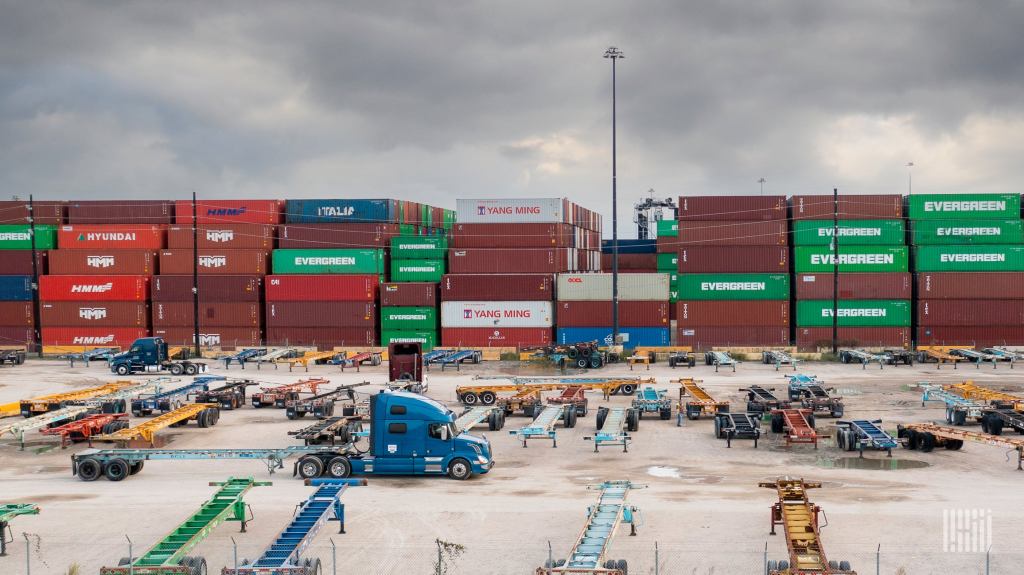
chassis at a container port

Investment firm ITE Management announced Tuesday it has acquired a majority stake in Trend Intermodal Chassis Leasing.

Based in Kearny, New Jersey, Trend leases a portfolio of chassis and gensets to intermodal trucking companies in the Northeast as well as other primary intermodal markets. Trend is a term lease provider of assets compared to most providers that operate in a chassis pool configuration.

Financial terms of the transaction were not provided.

“Trend is synonymous in the chassis market with fleet quality and best-in-class customer support,” said Jennifer Polli, ITE managing director, head of intermodal and senior operating partner. “They are the perfect chassis leasing platform to serve as ITE’s partner in pursuit of growth opportunities across the intermodal value chain.”

New York-based ITE primarily invests in operators of railcars, intermodal equipment, aircraft and marine assets.

Trend’s current management team will continue to run the business.

“We welcome ITE as a committed expert in the intermodal sector, said Ayman Awad, Trend founder and CEO. “Their operational and capital support is instrumental in the next chapter for Trend and will create long-term value for our existing customers.”

More FreightWaves articles by Todd Maiden

Enhancing customer experience with supply chain technology

Technology plays an increasingly large role in how supply chains operate and has created a sea change for the industry. Innovations such as analytics, virtual reality and warehouse automation have enabled lower costs, streamlined operations and happier customers. In fact, a majority of supply chain organizations embrace technology integration as a competitive advantage and are making sizable investments in it.

Let’s explore several innovations supply chain companies rely on in their day-to-day operations.

Data analytics

Data is the key to any successful business and supply chains are no exception. Data predicts demand, optimizes inventory and travel routes and roots out cost savings wherever they may be. Analytics tend to group into five categories:

  • Descriptive, which helps analysts understand how all parts of the supply chain work.
  • Diagnostic, which helps identify supply chain issues, like missed sales targets or late shipments.
  • Predictive, which forecasts future events, such as seasonal fluctuations or global interruptions.
  • Prescriptive, which helps develop solutions to overcome issues like operational efficiency or inventory management.
  • Cognitive, which uses machine learning and AI to manage the reams of data that supply chains produce daily.

Each method uses data in different ways to make your supply chain more efficient.

Internet of Things (IoT)

IoT allows a wide variety of devices and everyday objects to contribute valuable data to the supply chain process. Tools such as RFID tags and sensors make it easier to track shipments and boost efficiency.

Other uses for IoT in supply chains include:

  • Tracking shipments in real time with connected IoT devices on containers or products.
  • Monitoring storage conditions such as temperature, humidity, pressure and light intensity.
  • Precise prediction of arrival times by monitoring shipment speed and any traffic conditions, as well as instant notification of delays.
  • Finding what you want in storage with a simple tap on the screen; each item will have its own IoT tag.

These make it easier to manage inspections and invoices after goods have arrived.

Automation and robotics

The role of warehouse automation has grown in supply chain logistics. From robotic process automation (RPA) to automated guided vehicles (AGVs), it reduces the need for manual labor, streamlines warehouse processes and improves accuracy.

Experts predict that by 2026, three-quarters of large supply chain operations will use smart robots in their warehouses and distribution centers. Logistics experts like Ryder use Locus Robots and AutoStore towers to efficiently identify and move goods.

Visibility and collaboration

Visibility allows everyone in your supply chain — manufacturers, suppliers, carriers, partners, customers and your internal team — to find any one item in the supply chain at any given time with real-time monitoring. Your logistics managers and engineers can become experts in all phases of the supply chain, without relying on specialization that can slow down operations and inhibit quick, informed decisions.

Collaboration is fairly straightforward: Cooperation with all stakeholders along the supply chain lowers costs, improves product quality and safety and upholds high ethical and environmental standards. The ability to interact with partners and customers and monitor changes and track notifications in real time helps build transparency and collaboration.

Luckily, some digital platforms like RyderShare combine both into one convenient solution.

Augmented Reality (AR) and Virtual Reality (VR)

AR and VR technologies have created opportunities for supply chain companies to optimize how they train workers, repair vehicles and generally do their jobs more efficiently. AR wearable devices enable workers to optimize warehouse and transport operations by allowing them to scan for the most efficient packing process.

Virtual reality reduces time spent training new employees by immersing them in experiences that quickly give them more information on products, safety and company processes.

AI’s emergence in supply chain management

Gradually, artificial intelligence has been introduced, modified and upgraded to optimize supply chain logistics. Here are some of the examples of AI in the supply chain:

  • Machine learning.
  • Natural language processing.
  • Warehouse robots.
  • Predictive analysis.

These types of AI share three common goals — simplify operations to reduce labor, enhance productivity and maximize profits. However, the role of AI affects various aspects of the supply chain, from demand forecasting and process improvement to optimized routing and delivery.

Harnessing AI for supply chain optimization

The rise of AI has been a hot topic of discussion in the workforce. Understandably, professionals across multiple industries have wondered if artificial intelligence would cause setbacks to their daily routines. Some people have even questioned if AI would replace their roles entirely. Relying solely on AI in the world of supply chains, however, is detrimental to success because it cannot handle every function without some form of supervision. Instead, artificial intelligence is designed to assist the human workforce.

For example, forecasting product demand for slow months or peak seasons can be a hassle without the proper tools to help. Having the latest hardware and advanced AI technology can analyze historical data, market trends and external factors while providing real-time tracking for dynamic inventory management. Furthermore, AI examines risk management while enhancing warehouse automation processes and optimizes routing and delivery by offering predictive analytics for commercial truck maintenance. AI acts as an intelligent decision-maker to provide supply chain managers with a “second opinion,” making services like warehouse management, order fulfillment and last-mile delivery even more efficient.

Let technology enhance your supply chain experience

Real-time visibility, convenience, personalized service and speedy troubleshooting are key benefits of supply chain technology. Companies that take advantage of these innovations will exceed customer expectations, create loyalty and provide remarkable service.

Ryder’s technology-driven, forward-thinking logistics expertise provides the tools needed to meet supply chain needs. The RyderShare platform provides stakeholders with constant real-time collaboration and visibility using automation thoughtfully. Ryder ShopMod enhances truck maintenance by giving technicians more control over the process and shortening customer wait times.

Check Call: The brink of broker-carrier relationships

people gathered around a desk of computers. Check Call news and analysis for 3pls and brokers
(Gif: GetYarn)

A story that is seeming to become all too familiar is carriers being left high and dry following a broker’s bankruptcy filing. Earlier this year there was Surge Transportation that went through Chapter 11, a restructuring bankruptcy, but all outstanding debt before the filing date is subject to court approval for payments. 

Now as Convoy truly winds down operations, carriers are left holding the metaphorical bag, not the physical bag as that would indicate they had received money, which they have not. One of the bigger outstanding claims reported is the Convoy owes a carrier’s factoring company almost $160,000. Since the factoring company hasn’t gotten paid, neither has the carrier. Convoy also used QuickPay, the speedy two-day payment service used by just about everyone in the brokerage world. 

As the financial state of more and more brokers becomes questionable, more and more carriers will turn to freight factoring companies to ensure they can still get paid for the work they complete. As part of the relationship building between carriers and brokers, payment should be a cornerstone of that development, ensuring carriers can and will get paid in a timely manner and having transparency about what the rate is as well as when payment can be expected. Consistency and communication are significant aspects of a strong relationship between carriers and brokers. 

Given all the uncertainty with other brokers, someone has to be the rock for carriers in the coming months. 

(GIF: Tenor)

Presented with the option to come back from the brink of death once again is Yellow, the LTL carrier everyone has strong feelings about. The company was given one final lifeline from Sarah Amico, executive chair at Jack Cooper Transportation. The bid was set to include $1.1 billion of new financing and $1.5 billion in preferred equity and Jack Cooper would assume more than $700 million for the COVID-relief loan from the Treasury. 

This move would allow Yellow to resume operations and attempt to get back in business, despite all of its freight being absorbed by other carriers. Yellow has opted to continue with its current liquidation plan, which includes auctioning off its terminals. It has already sold off its equipment. 

According to FreightWaves’ Todd Maiden’s article, a “Delaware court filing showed multiple less-than-truckload carriers held winning bids for 130 of Yellow’s more than 300 terminals. The allocations totaled nearly $1.9 billion, with XPO holding a winning bid of $870 million for 28 properties.”

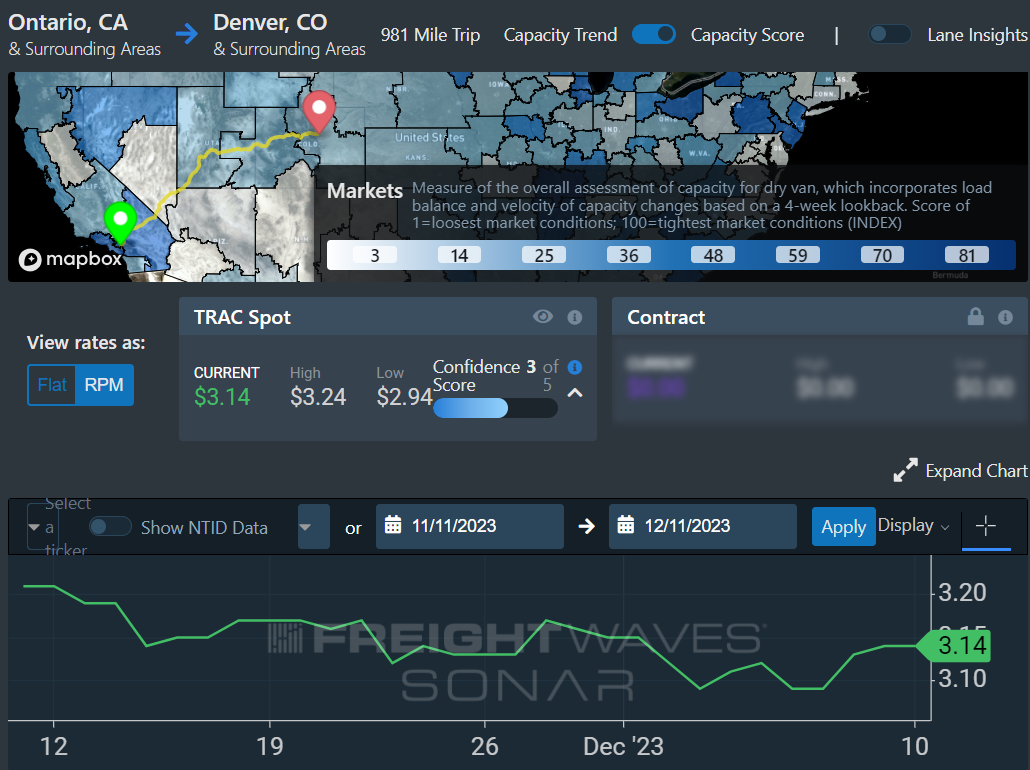
SONAR TRAC Market Dashboard Ontario, California, to Denver

TRAC Tuesday. This week’s TRAC lane of the week is Ontario, California, to Denver. Ontario, near the ports of Los Angeles and Long Beach, has seen a steady increase in outbound tender volumes over the past few months as import volumes have flipped back to West Coast ports. As a result, spot rates coming out of Ontario have risen to $3.14, specifically heading to Denver. The promising thing for brokers and shippers is that there has been very little volatility in Denver or Ontario for the start of December, which means that rates should remain around the same rate to finish out the year. It’s likely that spot rates will start to fall as the month and quarter come to an end and the freight markets prepare for a tight January and February.

(Image: makeameme.org)

Who’s with whom? The man who wrote the book on “How to Make a Few Billion Dollars,” Brad Jacobs, is attempting to do just that once again. The former CEO of XPO is looking to set out on a new venture and make $1 billion in his first year. 

The new venture is creatively named QXO, sticking with the “XO” that the XPO spinoffs have. According to Jacobs’ statement, “QXO’s strategy is to create a tech-forward leader in the building products distribution industry through accretive M&A and organic growth, including greenfield openings, with the goal of generating outsized stockholder value.”

With ambitious plans to reach a revenue run rate of $5 billion within the first three years, it’s quite a challenge to accomplish, but for the man who literally wrote the book on making a few billion dollars, it should be light work. 

The more you know 

Borderlands: Texas company aims to help keep returns out of landfills

The one pandemic-era trend that has stuck

Trailer side-guard rule likely delayed until at least October 2024

Forward Air plans 5.9% general rate increase 

How Venezuelan invasion of Guyana could impact tanker shipping

See you on the internet.

Mary

Join the community in freight and subscribe for more at www.freightwaves.com/subscribe.

‘Tremendous outcome,’ judge says in approval of Yellow terminal sales

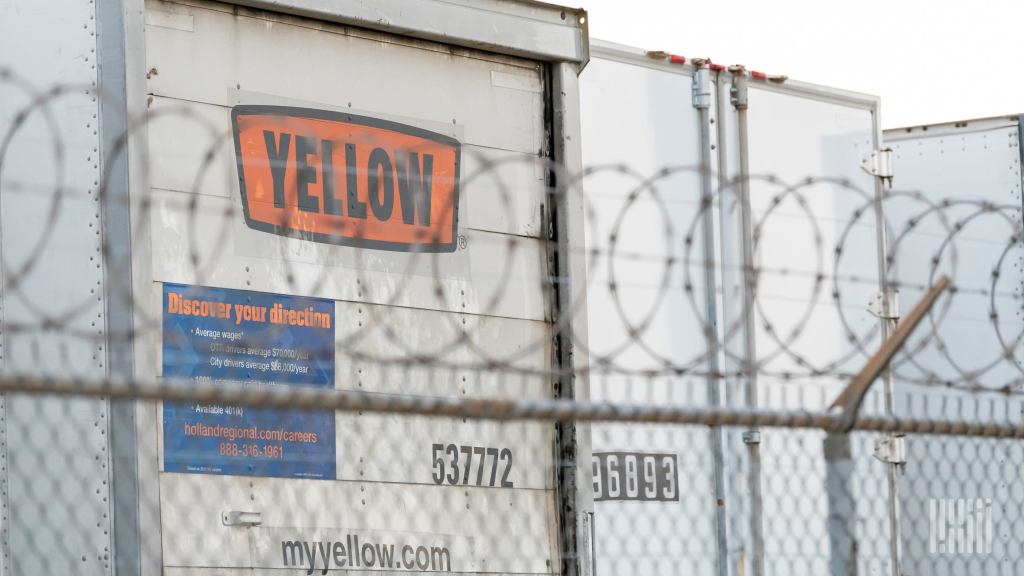
Yellow trailers parked along a fence at a terminal

The $1.88 billion sale of 130 of Yellow’s less-than-truckload terminals was approved by a Delaware bankruptcy court on Tuesday. A revised sale order is expected to be received by the court and entered into record Tuesday afternoon.

“Preliminarily based on what’s represented, this is obviously a tremendous outcome,” Judge Craig Goldblatt said.

The process included more than 400 interested parties completing nondisclosure agreements with 70 qualified bidders taking part in the auction that began Nov. 28. This first wave of terminal sales ends with 21 entities, mostly LTL carriers and their real estate arms, committing to purchase the properties at values that far exceed a prior appraised value of $1.1 billion.

The auction of Yellow’s more than 140 leased terminals is set to resume on Monday with a sale hearing set for Jan. 12. Yellow’s estate is still in the process of selling the remaining 46 owned locations.

Individual acquisition agreements filed with the court show the property closings are expected to occur by Feb. 6, with the allowance of a one-time 30-day extension. However, a recent filing asked the court for a quick approval on the sale so the estate could take advantage of tax benefits and reduce interest expenses. The document showed that closing “at least a portion of the Sale Transactions” before year-end would save the estate $37 million in taxes. Interest expense for a portion of the bankruptcy financing package is costing the estate $230,000 per day.

BidderTerminal countPurchase price
XPO28$870M
Estes24$248.7M
Saia17$235.7M
RAMAR Land Corp. (R+L Carriers)8$211.5M
Terminal Properties, LLC (Pitt Ohio)7$83.8M
Knight-Swift Transportation13$51.3M
ArcBest 3$30.2M
A. Duie Pyle4$29.4M
TForce2$16M
Southeast Consolidators1$8.5M
Skylark Logistics2$8M
Z Brothers Trucking1$4.2M
Unis2$2.4M
Table: Court filings

XPO (NYSE: XPO) will spend $870 million for 28 of Yellow’s terminals, a prior filing showed. Its acquisition will also include a leased terminal in Brooklyn, New York, the transfer of which had been contested by the landlord. Yellow’s attorney said on Tuesday the estate will pay $300,000 in costs to cure the lease and make repairs.  

XPO recently announced a bridge loan to fund the acquisition. It’s targeting a $585 million private notes offering and seeking $400 million in term loans to repay the bridge and other debt.

Estes, which set the price floor for the process with a $1.525 billion stalking horse bid, is expected to walk with 24 terminals valued at nearly $250 million. Saia (NASDAQ: SAIA) rounds out the top three bidders with an agreement for 17 properties valued at $236 million.

Yellow’s 12,000 tractors and 35,000 trailers were previously approved by the court for sale through auction houses. Those assets could fetch a few hundred million dollars as the middle tiers of that fee structure range from $475 million to $800 million.

Yellow’s liquidation is expected to generate proceeds in excess of the roughly $1.8 billion in debt held by secured lenders and the hedge funds providing bankruptcy financing.

There are approximately 200 potential claims, “substantially all of which allege bodily injury or property damage stemming from automobile incidents involving the Debtors’ trucks and/or drivers,” a recent filing showed. The court was informed Tuesday by Yellow’s counsel that alternate dispute resolution procedures have been established to settle the claims. Prior filings show Yellow has liability insurance commitments, which carry self-retention limits of $6 million.

Yellow recently objected to nearly $6 billion in claims filed by the Central States Pension Fund. Approximately, $4.8 billion of the amount stems from the company’s withdrawal from the pension fund with the remainder tied to unpaid contributions.

Yellow asserts the fund is attempting a “double recovery,” noting that it received $35.8 billion from a federal rescue package for multiemployer pension plans. Yellow said it doesn’t have any withdrawal liability as the fund no longer has unfunded vested benefits. It also said its participation in the fund was terminated by Central States in July when it failed to make required contributions, thus ending its exposure to accruals.

Yellow estimates any exposure to be “far below $1 billion, even if there is withdrawal liability at all.”

A Jan. 22 hearing has been set on the matter.

More FreightWaves articles by Todd Maiden

Viewpoint: Norwegian tanker attack signals new threat to global trade

In the investing world, the Yemen Houthi rebels’ attacks on global shipping have been shrugged off, but they should certainly not be ignored. 

Over the weekend, the Iran-backed Houthis warned they would attack all vessels in the Red Sea with links to Israel — a threat that needs to be taken seriously. But what’s developing now marks an even greater risk.

On Tuesday, a Norwegian-flagged, owned and operated tanker, Strinda, was attacked, despite having no clear ties to Israel and not being immediately bound for there. According to the Ashdod port website and maritime security firm Ambrey reporting, the vessel was not expected to be in Israel until January, meaning the level of risk has just increased for the maritime world.

Read more: What Red Sea attacks mean for shipping

“Ultimately, vessels bound for Israel, no matter what arrival date, are at risk,” explained Daniel Mueller, lead analyst of Ambrey’s Middle East region. “It’s hard to manage at this point. It takes a lot of oversight for the operators to review all of their calls.”

Mueller told American Shipper that the rebels are using port data as well as automatic identification system data to track what vessels — both in the near and short term — are bound to call Israel. Both American Shipper and Ambrey have attempted several times to access Israel’s Port of Ashdod website only to receive an error that it is currently down.

In an email to American Shipper explaining the site’s status, Ashdod spokesman Igal Ben Zikry said, “The company’s website works and works properly. The company has recently performed several maintenance operations, so in some areas there are difficulties browsing the site.” 

Following Tuesday’s attack, the U.S. Navy destroyer USS Mason responded to the Strinda’s mayday call.

In an email to American Shipper, U.S. Central Command (Centcom) wrote, “The Houthi strikes against commercial vessels in international waters underscore the fact that this is an international problem. With the Houthi attacks, the ships were sailing in international waters and represented a variety of countries in terms of where they were flagged and who they were crewed by.”

Discussions took place among the U.S. and the 39 member countries involved in the Combined Maritime Forces to see if there will be an announcement of the naval forces to do an official escort of all vessels through the Red Sea and the Strait of Bab-el-Mandeb.

When asked about an announcement of an official formation of a maritime task force to escort vessels, Centcom said, “Discussions are ongoing. There are not any specifics to announce however, the framework is in place to enable such a task force and we expect an update in the coming week.”

So why the concern? 

It seems there’s a global lack of understanding just how connected the world of trade is. Trade is made possible through a web of companies around the world. Ocean carriers and tankers move the world of trade on vessel routes. So while your container may not have a destination of Israel, the vessel that it’s on could be bound for Israel on its route at some point. Nearly every major ocean carrier serves Israel. The fact that Houthi rebels have expanded their targets of Israeli-connected vessels is one that has changed the logistics security game. 

Some logistics managers have told me they have shippers asking if their cargo can be placed on a vessel that is not calling Israel.

Mueller said that while some container vessels have been going around the Horn of Africa to avoid the Red Sea risk, as of now, no tankers are observed diverting. 

“However, this is likely because the voyage change is already confirmed when in port so that the vessel is not at sea and visibly changing voyages,” he added. “Tanker voyages are also not as fixed as container transits. It is a matter of risk appetite. The tanker trade may be less averse to risk, as profits can be higher. Any other measure will likely lead to an increased financial burden, whether through change of cargo, insurance premiums or longer voyage routes.”

Feds seek 11-year prison term for Nikola founder

Trevor Milton at Nikola World in 2019

Federal prosecutors want Nikola Corp. founder Trevor Milton sentenced to 11 years in prison for inflating the price of the electric truck maker’s stock to enrich himself.

The proposed sentence is in line with a presentence investigation report. But it fell well below the 60 years in prison called for based on calculations of the seriousness of Milton’s crimes. The government is also seeking a $5 million fine, forfeiture of a ranch in Utah that was subject of one of three fraud convictions, and an undetermined amount of restitution to investors to be determined after Monday’s scheduled sentencing n U.S. District Court in Manhattan, New York.

Milton, 41, was convicted of one count of securities fraud and two counts of wire fraud in October 2022 following a 3 1/2-week jury trial.

‘Misleading investors in public and in person’

Milton “engaged in a sustained scheme to take advantage of individual, non-professional investors, repeatedly misleading investors both in public and in person in order to inflate the stock price of his company, Nikola, and ultimately with the goal of enriching himself,” the government said in a 41-page memo filed early Tuesday.

Attorneys for Milton argued in a presentencing memo Nov. 14 that he should receive probation because his actions had not caused any harm. Milton has been free on a $100 million bond.

According to data from the U.S. Sentencing Commission’s Judiciary Sentencing Information database, 29 white-collar crime defendants convicted during the last five years received an average sentence of 16 years and four months. 

The government sentencing memo recounts several false and misleading statements about Nikola’s achievements and technology prowess including that it had:

  • Early success in creating a “fully functioning” semi-truck prototype known as the “Nikola One.”
  • Engineered and built an electric- and hydrogen-powered pickup truck known as “the Badger” from the “ground up” using Nikola’s parts and technology.
  • Begun producing hydrogen at a reduced cost.
  • Reservations for the future delivery of Nikola’s semi-trucks that were binding orders represented billions in revenue.

‘Real harm to investors who were misled’

“The conduct not only distorted the market — at one time driving Nikola’s market capitalization higher than that of Ford’s, despite Nikola never having produced a vehicle for sale at the time — it brought real harm to investors who were misled as to the risks of their investments, which, for those who held onto their stock at the encouragement of Milton, became effectively worthless once the truth became known.”

Milton’s only interest was money, prosecutors said. 

During the course of his scheme to inflate the value of Nikola’s stock, the value of Milton’s holdings rose from approximately $1.1 billion in March 2020 to a peak of approximately $7.3 billion in June 2020.

Prior to the closing of a reverse merger with special purpose acquisition company VectoIQ in June 2020, Milton sold a portion of his Nikola stock for about $100 million. By September 2020, he had spent approximately $83.5 million, “including on luxuries like an airplane and hangar and an estate in Turks & Caicos,” the memo said.

The government said Milton’s “lack of remorse and failure to accept any form of responsibility for his actions only emphasize the need for just punishment in this case. Milton deflects, suggests others may be at fault and offers excuses for his behavior.

‘Greed, selfishness and lack of concern’

“Milton’s offenses, like so many other white-collar crimes, were the result of greed, selfishness, and lack of concern for the potential impact on others.”

Investors lost between $660.8 million to $673.6 million by following Milton’s lies and bidding up Nikola’s stock price. Shares plummeted after a short seller’s report detailing Milton’s chicanery. Both figures exceed the $550 million threshold that adds years to a recommended sentence.

“There is no reason to doubt that Milton is a loving husband, and Milton’s admirable qualities should be taken into account,” the government said in a brief reference to Milton’s positive acts. But that should not spare him from punishment, the sentencing memo said.

“There are many examples of first-time fraudsters in this district who become recidivists. Were the Court to impose the sentence requested by the defendant, he would be in his early 40s and would be fully capable of starting a new company and repeating his past conduct without fear of significant jail time.”

Editor’s note: Adds recommended $5 million fine, forfeiture and restitution and minor edits.

‘Ambitious dreamer’ Trevor Milton seeks probation instead of prison

Nikola founder Trevor Milton guilty on 3 fraud counts

Nikola claws back $165M from founder Trevor Milton

Click for more FreightWaves articles by Alan Adler.

Weekly Fuel Report: December 12, 2023


Learn more at SONAR.FreightWaves.com