Creditor challenges bankruptcy plan of ILWU dockworkers union

photo of ILWU dockworkers

One of the world’s largest and highest-profile dockworker unions, the International Longshore and Warehouse Union (ILWU), filed for Chapter 11 bankruptcy protection on Sept. 30, seeking to shield itself from a crippling damage award owed to Philippines-based International Container Terminal Services Inc. (ICTSI).

But the bankruptcy filing is not the end of the saga. The legal battle continues.

Under the proposed reorganization plan, the ILWU would give $6.1 million to terminal operator ICTSI, which is substantially all of its remaining cash, then “rebuild” over the coming years, finally closing the book on a courtroom fight with ICTSI that began in 2013.

The hearing to confirm the reorganization plan will not take place until February at the earliest. In the meantime, ICTSI is crying foul — and telegraphing arguments it will make to oppose the plan’s confirmation.

ICTSI has argued that ILWU’s bankruptcy filing is “what appears to be forum shopping” and expressed concerns that “the full nature and extent of the debtor’s assets have not been fully disclosed.”

ILWU — a small business?

The ILWU filed its case under bankruptcy law’s Subchapter 5, a streamlined process that applies to small businesses with debts of $7.5 million or less. (That ceiling was previously $2.7 million, but was raised in March 2020 as part of COVID relief legislation.)

A jury in Oregon decided in November 2019 that the ILWU owed ICTSI $93.6 million in damages for unlawful labor practices starting in 2013 at ICTSI’s terminal in Portland, Oregon.

A judge ruled in March 2020 that the award was too generous and set maximum damages at $19.06 million — if both sides agreed. 

ICTSI didn’t agree, so a new trial on damages was set to begin in February 2024, with ICTSI seeking $48 million-$142 million this time around. 

Because the damage amount had yet to be confirmed when the ILWU filed for bankruptcy, it didn’t count against the $7.5 million debt limit, and the ILWU, which has no bank debt, qualified under Subchapter 5.

Debt is deemed “liquidated” when the amount is legally certain. “This debt has not been liquidated,” said Judge Hannah Blumenstiel of the ICTSI damages during the initial Chapter 11 hearing in October.

“Eligibility [for Subchapter 5] is determined as of the petition date. And I don’t think there’s any argument to be made that this debt was liquidated as of the petition date.”

This month, a hearing before Blumenstiel on the ILWU case was preceded by a bankruptcy hearing for a pancake restaurant called Stacks. How can a union with 40,000 members serving ports from Los Angeles to the Pacific Northwest — whose president, Willie Adams, speaks with President Joe Biden — fall in the same category as Stacks?

The answer is that the ILWU bankruptcy case only applies to the union management division that lobbies and educates, which has four officers and 21 support staff. “The locals and affiliate unions are separate legal autonomous entities and are not debtors or otherwise involved in this Chapter 11 case,” said Adams in his affidavit.

ICTSI’s main focus now is to shed light on how separate these entities are for the purposes of the bankruptcy case, with the goal of derailing confirmation of the proposed plan.

Its implied argument is that the ILWU could have a lot more assets than it lists and shouldn’t be allowed to hide from the decade-long Oregon litigation using a bankruptcy shield for one portion of its structure.

Alleged ‘entanglement’ with Longshore Division

ICTSI specifically highlighted the ILWU’s Coast Longshore Division (CLD). According to the ILWU’s website, “The core of the union, historically, has been the Longshore Division.”

The terminal operator said in a filing on Nov. 9, “Discerning the true nature and extent of the relationship between the debtor and the CLD has predictably been a primary focus of ICTSI in the discovery process.

“The various overlaps in management, operations and potentially assets between the debtor and the CLD, and the absence of any mention of the CLD in the debtor’s schedules of assets and liabilities or statement of financial affairs, other than three transfers made within 90 days prepetition, are anticipated to arise in connection with plan confirmation.”

ICTSI said that the ILWU’s general counsel, Lindsay Nicholas, provided testimony at creditor meetings on Oct. 24 and Nov. 6 on the debtor’s connections to and interactions with the CLD.

According to ICTSI, Nicholas testified that the CLD is currenting paying ILWU legal fees on 11 of its 12 litigation cases — the ICTSI litigation being the sole exception.

“Nicholas testified that, for more than a decade, the CLD also paid the ILWU’s legal and defense fees incurred in connection with the ICTSI litigation. However, on the eve of the debtor’s bankruptcy filing, the CLD stopped such payments and that obligation moved to the debtor.”

ICTSI also pointed to annual financial reports called LM-2 forms that unions file with the Department of Labor. 

“Nicholas testified that the CLD historically listed the contingent liability associated with the ICTSI litigation on its own LM-2 forms,” but this was “transferred to the ILWU mere months before the debtor’s bankruptcy filing.”

“ICTSI is coming to appreciate the extent of the entanglement between the debtor and the CLD. ICTSI is further concerned that this type of entanglement and overlap could extend to other divisions and entities under the broader ILWU organizational umbrella.”

Click for more articles by Greg Miller 

Carriers must act now to avoid FMCSA portal lockouts

Cybersecurity is a growing concern across industries. In the transportation and logistics space, cyberattacks can wreak havoc on day-to-day operations, leading to an avalanche of disruptions and delays. 

The Washington State Department of Transportation experienced this firsthand earlier this month. The agency’s website — which allows users to track ferries and check the changing status of mountain passes — was down for days after it was targeted in a cyberattack, causing rampant confusion for visitors, commuters and transportation professionals alike. 

In light of the growing prevalence of cybersecurity breaches, the Biden administration issued a mandate requiring all federal agencies to conduct multifactor authentication (MFA) as part of the government’s zero trust security strategy.

In order to comply with this mandate and make its portal more secure, FMCSA has rolled out security updates that will impact motor carriers. All FMCSA portal users will need to update their log-in information this month. The process involves creating a login.gov account and then setting up an additional layer of security for that account. 

FMCSA has posted a step-by-step how-to guide in order to help companies through the process of making these changes. Motor carriers will need to complete this process by Dec. 1 in order to avoid account disruptions. After this date, users will only be able to access their FMCSA portals via a login.gov account.

These updated security measures could also affect how some motor carriers access their Drug and Alcohol Clearinghouse accounts.

“If the trucking company accesses their Drug and Alcohol Clearinghouse account through the [Safety Measure System] portal, the login will be the same. If they access it as a stand-alone, they will have two separate logins,” Reliance Partners VP of Safety Brian Runnels said. 

Motor carriers may be frustrated by the process of changing their log-in procedures, but the shift offers both individual users and FMCSA as a whole a significant security boost — preventing breaches and leading to reduced frustration down the road.

“Malicious cyber actors are increasingly capable of phishing or harvesting passwords to gain unauthorized access. They take advantage of passwords you reused on other systems,” according to the U.S. Cybersecurity and Infrastructure Security Agency. “MFA adds a strong protection against account takeover by greatly increasing the level of difficulty for bad actors.”

This security shift is not unique to FMCSA. Since all federal agencies are affected by the recent cybersecurity mandate, any government agency that has not already implemented changes will be required to roll out heightened security protocols and MFA in the near future. 

Making it harder for hackers to access accounts is a good way to fend off cyberattacks, but motor carriers should also consider adding an additional layer of protection through cyber liability insurance. 

“A traditional business liability policy is extremely unlikely to protect against most cyber exposures,” according to Reliance Partners. “Standard commercial policies are written to insure against injury or physical loss and will do little, if anything, to shield you from electronic damages and the associated costs they may incur.”

Motor carriers are vulnerable to multiple types of cyberattacks, from data breaches to extortion. Cyber liability insurance policies are specifically designed to protect companies against these modern-day threats, whether they result from a direct attack or damage to a third-party system. 

As the world becomes more dependent on technology, security protocols designed to protect that technology will continue to evolve and tighten. Players across all industries — as well as everyday citizens — should expect these types of updates to continue well into the future.

Click here to learn more about Reliance Partners.

Amazing machines, bankruptcies mount and supply chain cyber risk – WTT

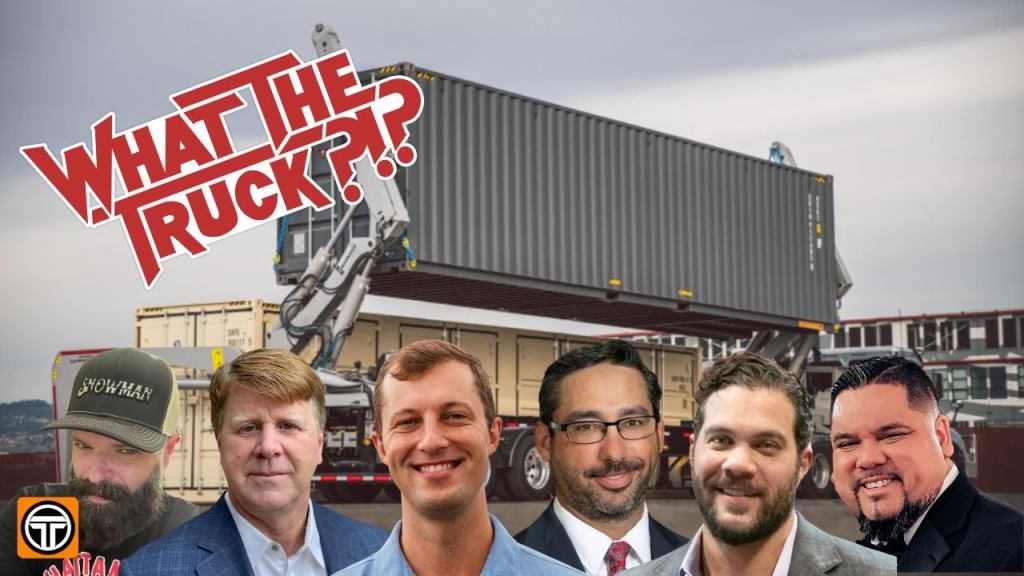
On today’s episode of WHAT THE TRUCK?!? Dooner is talking about layoffs and bankruptcies piling up in logistics amid this shocking downturn.

Gnosis Freight’s Jake Hoffman tells us all about the tech driving container life cycle management and how it is empowering shippers.

Travelers’ Tim Francis is talking about its Risk Index Report and has some startling revelations about the scope of cyber crime in supply chain.

Acme Works’ Bill Hall shows off his heavy machinery and shows us how the Hammar Lift works. Not only will we see some side loaders in action but we’ll also break down what’s going on in drayage.

Spartan Carrier Group’s Carlos Llanes Jr. and Tim Perkins talk about giving thanks in a down year, how it’s beating the market and its new good Samaritan driver award.

Plus, how not to fry a turkey, truckers at F1 in Vegas, when gantry cranes go wrong and more.

Watch on YouTube

Visit our sponsor

Subscribe to the WTT newsletter

Apple Podcasts

Spotify

More FreightWaves Podcasts

Logistics gets a digital makeover: Automation as a service steals the spotlight

It’s incredible to see how the logistics industry is evolving with automation. Thanks to robots, algorithms and advanced technology, tedious tasks are now being streamlined at an unprecedented rate. According to our observation, up to 98% of manual tasks can now be automated, which leads to significantly improved productivity and cost-effectiveness. And automation isn’t just about eliminating manual tasks. Emtec Digital found that many businesses face familiar challenges hindering logistics operations in an evolving automation landscape. For instance, a logistics manager aiming to implement automation often encounters issues such as limited resources, higher costs and the scarcity of specialized skills in a dynamic digital terrain. These hurdles cast a shadow over the potential of embracing digital transformation (DT) for the betterment of the industry.

Companies that lack a long-term vision of how digital transformation is instrumental in businesses are at a significant disadvantage. They may achieve short-term gains by automating tasks and streamlining processes, but competitors will eventually overtake them with a more strategic digital transformation approach. To realize their long-term vision for DT, companies must embrace automation as a strategic tool that empowers innovation, efficiency and growth.

The real value for you — introducing OptimateIQ

Logistics is a dynamic, ever-evolving field in which challenges emerge like uncharted routes for companies of all sizes. Logistics leaders must develop agile strategies for their supply chains to tackle them. It takes adaptability, strategy and reliable automated technologies to unlock efficiency, transparency and a path to sustainable growth in this logistical maze.

One way to overcome business challenges is by leveraging automation solutions such as robotic process automation and large language models. These AI-powered tools outshine cloud computing and other technologies because they directly tackle precise business challenges. However, the significant cost involved in their implementation and operation presents a major hurdle for many businesses, especially the smaller ones. These expenses can be categorized into three main areas:

  1. Initial investment: Initial investment in automation can be expensive due to licensing fees, installation and maintenance costs.
  2. Expensive technical expertise: Automation solutions require specialized technical expertise and may result in significant labor costs for businesses without in-house knowledge.
  3. Integrating solutions with existing business models: Integrating automation solutions into existing business processes often incurs additional costs. This may involve process redesign, data migration and team member training.

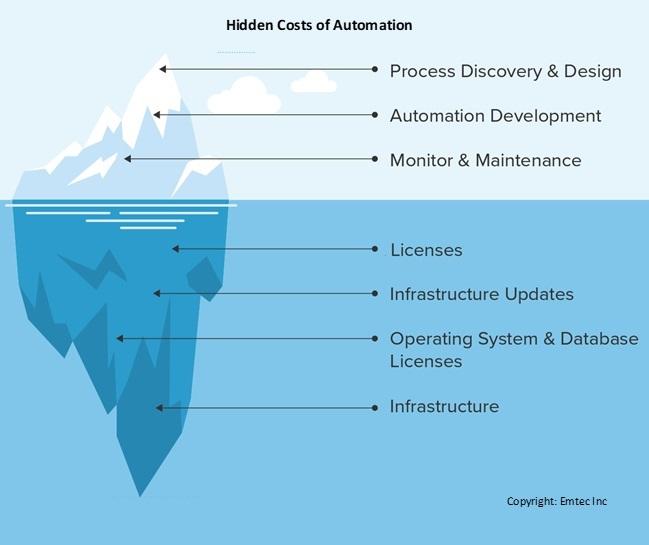
Besides the costs, automation involves hidden expenses depicted in an iceberg diagram below. The metaphor highlights unseen aspects of the problem. Hence, business leaders must consider hidden automation costs beyond the development and subscription fees.

Hidden Costs of Automation

Businesses can certainly rise above these challenges by exploring an alternative avenue: automation as a service.

Emtec Digital’s OptimateIQ is an automation-as-a-service platform that streamlines logistics operations. This solution fosters effortless cooperation between human expertise and digital automation, facilitating no-touch conversational and autonomous workflows. OptimateIQ has been designed to cause minimum disruption to customers’ IT operations during the initial implementation or later enhancements. The platform can eventually scale to automate every repetitive manual task that will free up your resources.

Let’s see how OptimateIQ can be the driver of your growth:

  • Simplified workflows: Automating 50%-98% of manual work improves employee well-being, lowers labor costs and provides time for value-adding activities. OptimateIQ simplifies workflows by automating manual tasks and streamlining processes, reducing the need for human intervention.
  • Seamless collaboration: OptimateIQ enables seamless collaboration between digital and knowledge workers. By providing a centralized platform for real-time data sharing, task assignment and tracking, collaborative decision-making, and communication, OptimateIQ ensures that digital and knowledge workers can work together effortlessly, optimizing efficiency and productivity.
  • Zero-trust approach: OptimateIQ simplifies workflow through a no-touch approach by eliminating the need for extensive integrations and custom development. It allows users to integrate their existing systems and applications with minimal effort seamlessly. Just bring your API keys.

Besides automation as a service, OptimateIQ offers two more components promising to give your business a competitive edge:

  1. Copilots — Copilots are the buzz lately! These AI-powered tools can help you with various tasks, such as data analysis and process automation. In fact, you can have your own variety of AI copilots with OptimateIQ so you can get intelligent assistance in decision-making, supply chain management and reduced human intervention in repetitive tasks. 
  1. Conversation as a service — Do your employees spend hours switching between various applications to complete the work? Prazna, our conversation-as-a-service platform, integrates your in-house and external applications under one seamless interface that can interact through simple, human-like conversation. Prazna eliminates app fatigue and gives instant access to data across any device, anywhere and anytime.

Savings in the supply chain: The impact of pay-per-transaction 

The revolutionary pay-per-transaction model redefines the traditional approach to investment in the relentless pursuit of efficiency and excellence. The platform charges users based on the documents they process or their actions rather than a flat fee, subscription or one-time payment. Adopting a pay-per-transaction model eliminates the need for upfront capital investment and resource-intensive software management (refer to the image below). This smart approach helps organizations manage and save their company spending on fixed subscriptions. 

“Utilizing automation as a service is the way forward for greater efficiency and productivity. And OptimateIQ ensures that every interaction is smooth, every need is met and every expectation is surpassed, solidifying the reputation as a provider that understands and delivers customer desires,” said Sreenivas Vemulapalli, associate vice president, Emtec Digital.

Use case

TL and LTL spot quoting: On-demand pricing, tailor-made for cost-effective transportation

Spot quoting for truckload and less-than-truckload freight can be a complex and time-consuming process. A trucking company simplified its spot quoting process by implementing OptimateIQ. The company previously used a labor-intensive manual process that caused frequent errors, wasted time and incurred significant costs. To optimize pricing and reduce inefficiencies, the company implemented OptimateIQ. 

OptimateIQ’s data-driven approach analyzed data from various sources, including TMS, freight marketplaces and fuel price databases. This reduced quoting time, ensured competitive rates for TL and LTL freight, and eliminated the potential for costly human errors. The implementation of Emtec Digital’s OptimateIQ resulted in a remarkable transformation for the trucking company. It overcame the challenges of labor-intensive and error-prone spot quoting and achieved substantial cost savings. This newfound cost efficiency, competitive pricing and a reduction in costly errors strengthened the company’s financial position and client relationships. 

Experience the transformative power of OptimateIQ — where financial freedom, comprehensive goal management and unwavering support converge to propel the business forward. Click here to start your journey with OptimateIQ today and elevate the productivity of your logistics operations. For more information, reach us at digital@emtecinc.com.

Running on Ice: Gobble gobble, it’s turkey time  

Blue Truck on a sheet of ice over a blue background and Running on Ice Logo

Hello, and welcome to the first Monday edition of Running on Ice. Just for this week we are moving to Monday instead of Friday because of Thanksgiving. Honestly, who needs another email to read on Black Friday?

We’ve swapped some of the cold chain news for more pressing news surrounding turkey this year. Without further ado, let’s get into it. 

All thawed out 

(Photo: Jim Allen/FreightWaves)

Thanksgiving is this week and for those who are celebrating and hosting this year, there is some good news in the form of price. This year Thanksgiving is expected to be cheaper than last year — still higher than 2019 but lower than 2022. That leaves extra room in the budget for beverages, because a 12-pack of soda is now about $7. 

According to a Forbes article, Americans can expect to pay about $6.12 per guest. Based on a 10-person dinner, that’s a 4.5% decline from last year. Obviously, the turkey is the most expensive part of the meal, with frozen turkey prices averaging $27.35. 

The article continues on to say that “other classic items that will also cost a little less this year include whipping cream (down 22.8%), cranberries (down 18.3%), cubed stuffing (down 2.8%) and frozen peas (down 1.1%). Pumpkin pie mix (up 3.8%), dinner rolls (up 2.9%) and sweet potatoes (up 0.3%), however, will cost consumers a little more than in 2022.”

However much you are planning to spend or consume, it’s all thanks to the cold chain for getting it there. 

Temperature checks

Thawing the turkey is a crucial step in Thanksgiving prep — and there’s still time to defrost the frozen bird. The preferred method of defrosting a turkey is to let it sit in the fridge for a few days and then roast it. Thawing in cold water is fine but water changes are crucial, and I don’t have that kind of attention span. 

Here’s the breakdown per bird size: 

4-12 pounds need one to three days in the fridge or two to six hours in cold water.

12-16 pounds need three to four days in the fridge or six to eight hours in cold water. 

16-20 pounds need four to five days in the fridge or eight to 10 hours in cold water.

20-24 pounds need five to six days in the fridge or 10-12 hours in cold water.

For those with 24-pound birds still in the freezer, it looks like cold-water thawing is the best option. That being said, if anyone tries to put a 24-pound turkey in the microwave to thaw, please record the video of trying to fit it in the microwave and share it on social media. 

Food and drugs

(Photo: Jim Allen/FreightWaves)

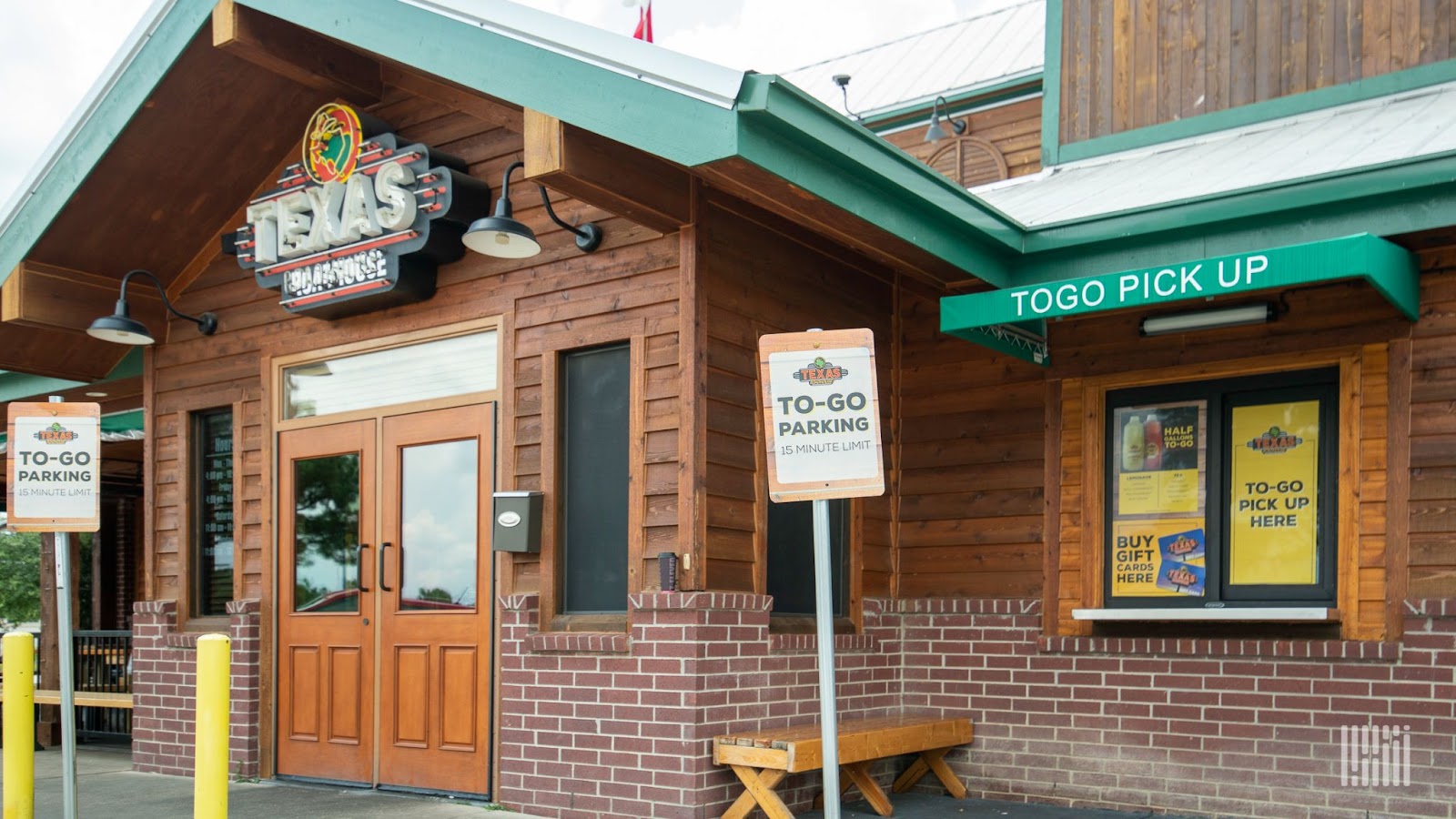
Not to be outdone by the main event, Texas Roadhouse really said you can’t have Thanksgiving without the best rolls around. Now anytime of the year you can get a box of Texas Roadhouse rolls to go, complete with the honey butter. Around the holidays, though, it sells frozen rolls to customers who want to expedite their holiday prep. 

This year is no different. The week leading up to Thanksgiving customers may call or stop by in person to their local Texas Roadhouse to be placed on the frozen roll list. It’s important to note that not all employees are aware of this, so it might be the one time to actually ask to speak to the manager, but do it nicely. 

According to a Food Republic article, a dozen rolls cost about $4.99 and a half-dozen costs about $2.49. It makes me a little sad that the frozen rolls aren’t available year-round. The one nice thing is that year-round you can order the fully cooked rolls. The more you know. 

Cold chain lanes

SONAR Ticker: ROTVI.MN, ROTRI.MN

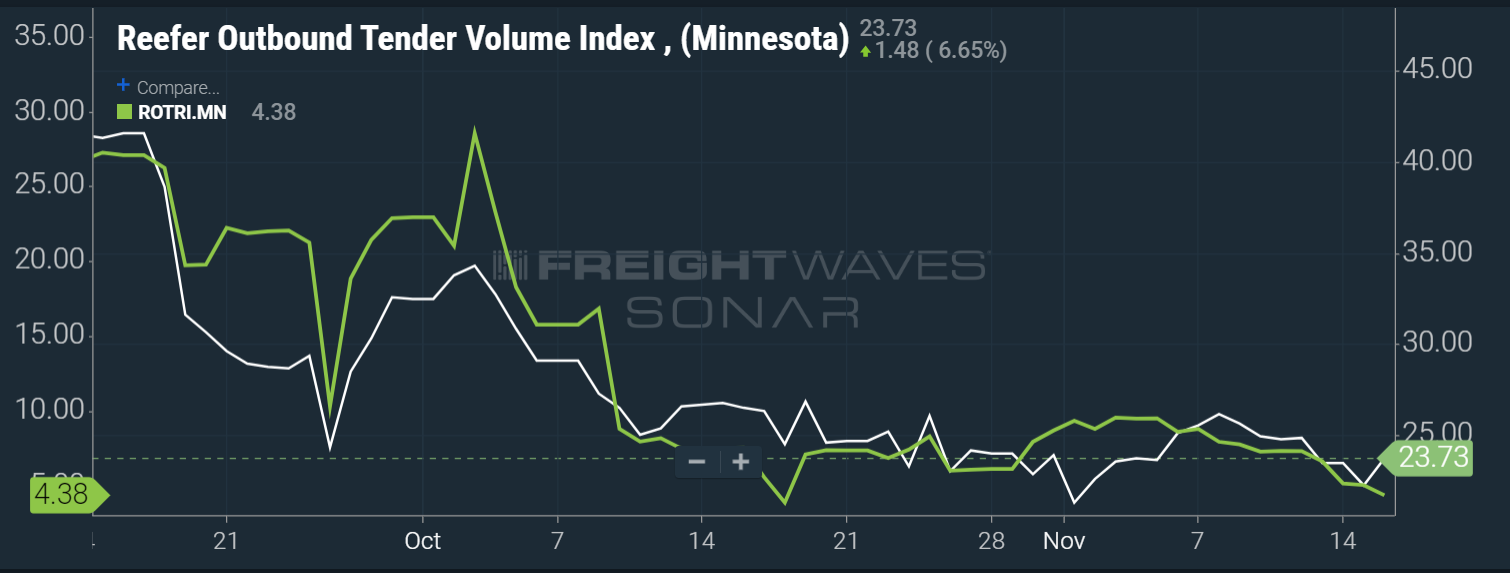
This week’s reefer market is the state of Minnesota. Fun fact: Minnesota is the state that produces the most amount of turkeys annually, roughly 40.5 million birds/1.04 billion pounds. Both outbound tender rejections and outbound tender volumes have fallen from the beginning of the month, which is not much of a surprise as turkeys started popping up in the grocery store over the past few weeks. A rejection rate of 4.38% is nearly half the national average of 9.75% for reefer loads. Spot rates in Minnesota are significantly more favorable than those of the rest of the country. It wouldn’t be the best market for carriers to move excess capacity to, but it’s great for shippers looking for savings on their refrigerated freight. 

Is SONAR for you? Check it out with a demo!

Wanna chat in the cooler? Shoot me an email with comments, questions or story ideas at moconnell@www.freightwaves.com.

See you on the internet.

Mary

If this newsletter was forwarded to you, you must be pretty chill. Join the coolest community in freight and subscribe for more at www.freightwaves.com/subscribe.

How Amazon Freight’s customer-first ethos is changing the industry

Amazon Freight has pivoted to a more regionalized network model in response to the changing consumer landscape, Amazon Freight Director Rebecca Salt said at the F3: Future of Freight Festival.

This shift means products are closer to customers, enabling quicker deliveries and a reduction in transportation miles — a win for both service efficiency and environmental impact.

The company has also significantly expanded its network, now boasting more than 50,000 trailers. This growth reflects a broader commitment to the kind of infrastructure enhancements that open more logistical lanes and options for customers. It’s a strategic move to reduce empty miles, aligning operational goals with the company’s wider Climate Pledge, which aims to reach the Paris Agreement 10 years early and net-zero carbon emissions by 2040. 

Salt also discussed the lessons learned from rapid scaling during the pandemic. The crisis highlighted the supply chain’s critical role in daily life and prompted Amazon Freight to collaborate more closely with shippers.

A survey conducted with FreightWaves earlier in 2023 showed that shippers are seeking more diversity and reliability in their carrier portfolios, calling for enhanced flexibility and customer service. 

“What shippers are looking for is a carrier that, when there’s volatility or when there’s an issue in the supply chain, they’re asking, ‘How can I help? What can I do to support?’” Salt said.

Amazon Freight’s focus remains firmly on customer needs, prioritizing a dynamic and flexible supply chain. The company’s growth strategy involves integrating more assets into its network, allowing for increased reliability and responsiveness to market volatility. Salt’s presentation illustrated how Amazon Freight is steering the evolution of the industry by centering on customer-centric innovation and robust technological integration.

Leveraging technology for network efficiency and customer service

Amazon Freight’s strides in technology integration have become a cornerstone of its strategy. The insights from the FreightWaves survey reveal a shift in shippers’ priorities toward carriers that offer not only reliability but also the agility to adapt to dynamic market conditions.

The persistence of traditional methods like email for load bookings, as highlighted by Salt, marks a significant opportunity in the industry. It underscores a latent potential for more sophisticated tech adoption that can streamline operations and elevate supply chain visibility.

Source: “Out With the Old” Industry Paper, Amazon Freight & FreightWaves

In response, Amazon Freight is pioneering the move toward advanced booking portals and integrated tech solutions. These efforts look to enrich the customer experience and reflect Amazon Freight’s commitment to fostering a customer-focused, responsive service environment.

The introduction of Amazon Shipping — Amazon’s new parcel delivery service — mirrors this dedication to innovation. This service complements the full truckload offerings, leveraging Amazon’s extensive network to deliver speed and reliability.

Concurrently, an intermodal transport pilot is indicative of the company’s approach. It looks to innovate deliberately based on customer feedback, which helps ensure the final product meets the market’s needs and preferences.

This is the balancing act for Amazon Freight: a tightrope between steadfast reliability and the flexibility required to navigate the freight sector’s fluctuations.

Market projections and commitment to sustainability

Salt delved into Amazon’s strategic pivot toward sustainability, a commitment that permeates every facet of its operation. This push for environmental stewardship is exemplified by the ambitious goal set forth in the Climate Pledge: to achieve net-zero carbon by 2040.

Amazon’s strategy includes a fleet of renewable natural gas vehicles and, notably, a foray into electrified trucking —in the EU — signaling a robust effort to slash carbon emissions.

“In every planning doc that anybody writes — doesn’t matter where you are in the company — you always have to have a question … about sustainability,” Salt said. “We’re not just investing on the road; there’s a lot of investment, for example, in the air side as well.”

Weekly NTI Update: November 20, 2023


Learn more at SONAR.FreightWaves.com

The transformative impact of rapid TMS integrations

In the freight logistics landscape, transportation management systems (TMS) have long been key players, working efficiently behind the scenes. Now, the rise of technology integration services is significantly broadening the capabilities of the TMS.

Speaking at the F3: Future of Freight Festival in Chattanooga, Tennessee, on Nov. 7, Eric Rempel, Redwood’s chief innovation officer, and Daniel Pickett, FreightWaves’ chief technology officer, highlighted the ongoing transformation of TMS. They emphasized how integrating new technologies into existing TMS infrastructures is enhancing and revitalizing these systems. 

This blend of traditional and modern approaches is revolutionizing logistics and supply chain management, making operations smoother, increasing transparency and fostering smarter, data-driven decisions.

But with these advancements in technology come new challenges. A critical issue is balancing a company’s established strengths with its ambition to grow and reach new markets.

Here is where the role of integration services becomes pivotal. When effectively implemented, they can significantly enhance the functionality and impact of TMS. Pickett used an analogy to illustrate this point.

“Spreadsheets did not get rid of accountants — not by any stretch of the imagination,” he said. “[They] let them do much more advanced things.”

Navigating the future of freight technology with strategic integration

Embracing new technologies and their strategic integration is crucial within freight. This approach goes beyond merely adopting advanced systems. It involves smartly leveraging these technologies to boost efficiency and gain a competitive edge.

RedwoodConnect, an integration Platform as a Service built for logistics (iPaaS), exemplifies this approach as a leading platform for seamless integrations in the supply chain. Built specifically for logistics, RedwoodConnect enables businesses to effortlessly combine various systems, partners and processes. This capability is crucial, especially in an industry where speed and reliability are key. By allowing companies to work with different technologies and formats, RedwoodConnect helps create a supply chain that fits each organization’s unique needs.

For software companies, RedwoodConnect simplifies the integration process, which is vital for efficiency. It allows teams to focus on their core competencies, as seen with FreightWaves’ SONAR platform. By taking on the integration tasks, RedwoodConnect enabled the SONAR team to concentrate on their areas of expertise: data aggregation and analysis.

Shippers benefit significantly from RedwoodConnect. It streamlines the alignment between digital supply chain management and the actual shipping process, covering everything from pricing to tracking and payments. This comprehensive integration is vital for maintaining just-in-time delivery commitments, particularly during frequent market disruptions.

Logistics service providers, particularly those in third-party logistics (3PLs), also find value in RedwoodConnect. It provides end-to-end visibility and connects various operational elements, from quoting to final payments. This kind of integration is not only about enhancing user interfaces or efficiency metrics. It’s also about leveraging specialized knowledge and data analytics for deeper insights and more informed decision-making.

Rempel highlighted the efficiency of such integrations. 

“Follow the Pareto Principle, right?” he said. “You can automate 80% of it with 20% of the effort and leave the rest there.”

The integrated approach is crucial for larger enterprises, which often face challenges in adopting new solutions due to their complex operations. Through strategic partnerships with platforms like RedwoodConnect, they can overcome these obstacles, benefiting from a future where efficiency, specialization and technology integration coexist seamlessly.

As the freight industry charts its course through changing times, embracing technological integration is not just a step forward — it’s a complete transformation. With innovative platforms like RedwoodConnect leading the way, industry stakeholders are boldly redefining efficiency and setting new standards for growth. 

And this era of innovation is not just reshaping the freight logistics of today. It’s carving out a future where adaptability and vision are the driving forces of consistently more transparent supply chains.

Are we in an unprecedented parcel rate war?

Parcel-delivery industry pundits predicted at the start of 2023 that it would be the year of the shipper. For the most part, that forecast has come to pass. Now as 2024 comes into fuller view, indications are that shippers will be in even higher cotton than they are in 2023, or for that matter, in the past four years or longer.

The two national carriers, FedEx Corp. (NYSE: FDX) and UPS Inc. (NYSE: UPS), are pushing discounts that are extraordinary in their depth and breadth, according to parcel consultants who have reviewed contract proposals presented to their shipper clients. At a minimum, one needs to return to the pre-pandemic period to see pricing as shipper-friendly as what is being offered today, consultants said. Nate Skiver, founder of consultancy LPF Spend Management LLC, said he doesn’t recall a period of such heavy discounting pressure since the Great Recession of 2008-09.

Discounts are being offered almost across the board and to big and small businesses alike, consultants said. Price breaks are being used to acquire new business and retain existing accounts. Small to midsize businesses (SMB) that typically lack the buying power to qualify for sizable breaks have become eligible for discounts normally set aside for enterprise customers with big volumes. Bigger shippers can command better rates because their volumes go a long way toward providing the shipment density the carriers need to fill their expanding networks.

“Discounts that were reserved for companies with multimillion-dollar annual shipping budgets prior to August are now being given to shippers that, in extreme examples, spend less in a year than those larger shippers spend in a week,” said Josh Taylor, senior director of professional services for Shipware LLC, a consultancy. “This includes unprecedented discounts off base rates and even [discounts off] surcharges like fuel, large package, demand/peak, additional handling and literally dozens more.”

FedEx, UPS and other carriers impose hefty surcharges for the handling of outsize packages that generally aren’t run through their processing systems.

FedEx and UPS are also offering to pay each other’s early termination penalties and providing signing bonuses to both new and existing customers, said Taylor, who has analyzed contract proposals on behalf of multiple customers. FedEx has been more insistent than UPS about including minimum commitment clauses and early termination language in its contracts, he said.

The discounts accelerated in August after the Teamsters union agreed to a five-year contract with UPS. The Atlanta-based carrier set about recapturing between 1.2 million and 1.5 million daily parcels diverted to other carriers, while looking to win new business. FedEx, the U.S. Postal Service and regional delivery carriers, meanwhile, were just as adamant about keeping the diverted business, while going after new accounts as well.

Overhanging all of this is the presence of Amazon.com Inc.’s (NASDAQ: AMZN) new stand-alone shipping service, Amazon Shipping. Amazon’s rates are extremely competitive, according to consultants. In addition, it levies no residential delivery fees or weekend delivery surcharges, thus widening the gap with competitors.

Today’s rate wars may seem amplified compared to the 2020-22 cycle when pandemic-related delivery volumes spiked hard and carriers had the effective run of the pricing table. In contrast, delivery demand today is quite soft, mirroring the broader goods-ordering weakness pervading the general economy. Parcel carriers invested billions of dollars during the pandemic and post-pandemic years to expand their processing networks. Now faced with huge sunk costs and a downshift in demand, carriers have turned to discounting in a bid to elevate their volumes.

Skiver said that the UPS-Teamsters contract situation is contributing to the current discount cycle as the carrier tries to win back business. However, the weak demand picture is likely a much bigger factor driving carrier pricing strategy, he said. To that end, the current environment would persist even if UPS and the union were not in a contract-renewal year, he said.

Not every consultant is seeing widespread discounting. Mike Erickson, founder of AFMS LLC, said that although FedEx and UPS are aggressively courting each other’s business, the current level of discounting is not unprecedented. “There may be some one-offs for a specific target account, but we’re not seeing large-scale, deep discounting going on,” Erickson said. The companies are “both very calculated in how they approach discounting.”

As the macro economy and e-commerce go, so goes delivery demand. With 2024 growth forecasts bumping along in very low single digits, nothing in the cards over the next 13 months signals a meaningfully upward reversal in demand. If those forecasts turn out to be accurate, it could have a profound impact on the state of the U.S. parcel market.

The past two-plus years have seen a proliferation of new entrants in parcel shipping. They have also seen expansion on the part of regional parcel carriers like OnTrac, LSO, GLS and Better Trucks, among others. All carriers will face an uphill battle as long as there is less demand to go around. However, should UPS, FedEx and the Postal Service’s discounting efforts succeed in narrowing the cost gap between them and other players, that could persuade shippers who might have opted to shift their business to stay with the big guys. A combination of the two may make it difficult for many providers to sustain their models.

According to Skiver of LPF, shippers prize carrier simplification as much as low prices. “It is just easier to work with fewer carriers,” he said. It may augur unfavorably for regional carriers should more shippers choose to consolidate most or all of their business with FedEx and UPS, and get cheaper rates to boot, he said.

The result of all this is a rethinking of the popular mantra of carrier diversification, Skiver said. In the current environment, the diversification approach may either “stagnate or lose ground,” he said.

Daily Infographic: Mexico remains top US trade partner


To view more FreightWaves infographics, click here