The Port of Long Beach is among the ports highlighted in a maritime electrification proposal that calls for electricity to supply at least 35% of international shipping’s final energy demand by 2035, placing shore-power infrastructure at the center of a broader effort to reduce fossil-fuel use.
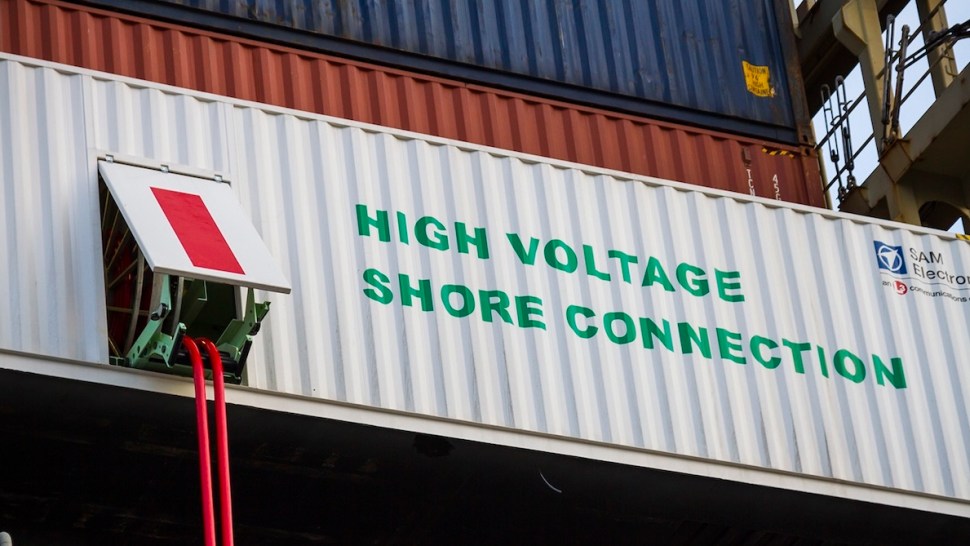
The “Maritime Electrification Breakthrough Goal,” released today at a climate conference in Ankara, identifies Long Beach alongside Los Angeles, Seattle and Miami as North American examples of extensive shore-power deployment. Those systems supply electricity to docked vessels through high-voltage connections, primarily serving container and cruise berths, according to the document.
Electricity currently accounts for 20% of maritime energy needs.
The announcement came as part of the coalition co-convened in Ankara by Turkey and Australia. The proposal presents existing port infrastructure as a foundation for a larger transition involving battery-powered ships, expanded electricity networks and renewable generation.
The framework comes as the United Nations’ International Maritime Organization’s debates adoption of the Net-Zero Framework, a global policy aimed at driving increased usage of alternative energy on ships, Nov. 23 in London.
For ports such as Long Beach, shore power connects an existing maritime operation—supplying energy to vessels at berth—with the proposed international target.
Electricity delivered to international ships while docked would count toward the goal, alongside electricity used directly aboard vessels.
The target is specific to international shipping’s final energy demand, rather than the number of ships or the share of port equipment electrified. It represents approximately 2 exajoules of electricity against an estimated shipping energy demand of around 10 exajoules.
One exajoule is a massive amount of energy, equivalent to 278 billion kilowatt-hours, or burning 170 million barrels of oil.
Electricity used by terminal equipment, port-related trucks and trains, domestic shipping and renewable-fuel production would fall outside that calculation. But the framework argues that those activities must be planned together because they rely on interconnected infrastructure.
“Ports sit at the intersection of these systems and will be critical energy and implementation nodes for the transition,” the document states.
Coordinating demand across vessels, terminals and landside freight could improve infrastructure use, support investment in grid capacity and renewable generation, and reduce the risk of projects becoming fragmented or underused, according to the proposal.
The framework links electrification to potential health benefits for communities near ports and freight corridors, where transportation-related pollution can create disproportionate exposure. It says replacing fossil-fuel energy with electricity can reduce particulate matter, nitrogen oxides and sulfur oxides, as well as greenhouse gas emissions. The climate benefits depend on how the electricity is generated.
Shore power is one of several routes identified for expanding electricity use. The document also points to battery-electric vessels, particularly on shorter international voyages, and the electrification of cargo-handling equipment. It cites more than 1,600 fully electric and hybrid vessels operating globally, while noting persistent challenges involving charging infrastructure, maintenance and local technical capacity.
Long-haul shipping, however, will still need liquid fuels, according to the framework. Producing renewable alternatives such as green hydrogen and ammonia would create additional demand for renewable electricity, even though that electricity would not count toward the direct-electrification target.
The proposal warns that available technology alone will not deliver the transition. High upfront costs, uncertain demand, electricity-price risks and long infrastructure development timelines can delay projects, as can disagreements over how ports, terminal operators, utilities and shipowners should divide costs and risks.
It calls for long-term commitments to use infrastructure, utility participation, cost-sharing arrangements, public financing and guarantees to make projects more attractive to investors. Public investment could be particularly important in absorbing early-stage risk and drawing in private capital.
The framework also emphasizes workforce development, including support for shipboard and port workers whose jobs could change as new technologies are introduced. Participating organizations would commit to sharing lessons, supporting demonstrations, facilitating access to finance and reviewing progress annually through 2035.
For developing economies, the proposal sees maritime electricity demand as a potential anchor for broader investment in renewable generation and stronger grids. But it cautions that higher financing costs, constrained electricity infrastructure and limited public budgets can make initial projects especially difficult.
The document urges governments to incorporate maritime electrification into national climate plans and support international measures that provide clearer investment signals.
Why it matters: Expanding shore power and vessel charging requires ports, utilities, terminal operators and shipowners to coordinate grid capacity, infrastructure investment and electricity demand. The proposal treats ports as central to that coordination, not simply as places where ships load and unload.
Read more articles by Stuart Chirls here.
Read more:
Retailers forecast U.S. imports to stay elevated through 2026 after breakout peak season
Cosco profit rockets 81% as ocean freight revenue climbs in Q3
Asia-U.S. West Coast ocean container spot rates up 343% since start of Iran war, says Xeneta
Strike at Los Angeles-Long Beach port delayed as union contract talks continue
North America container imports rise 9% as as freight pricing pressures mount