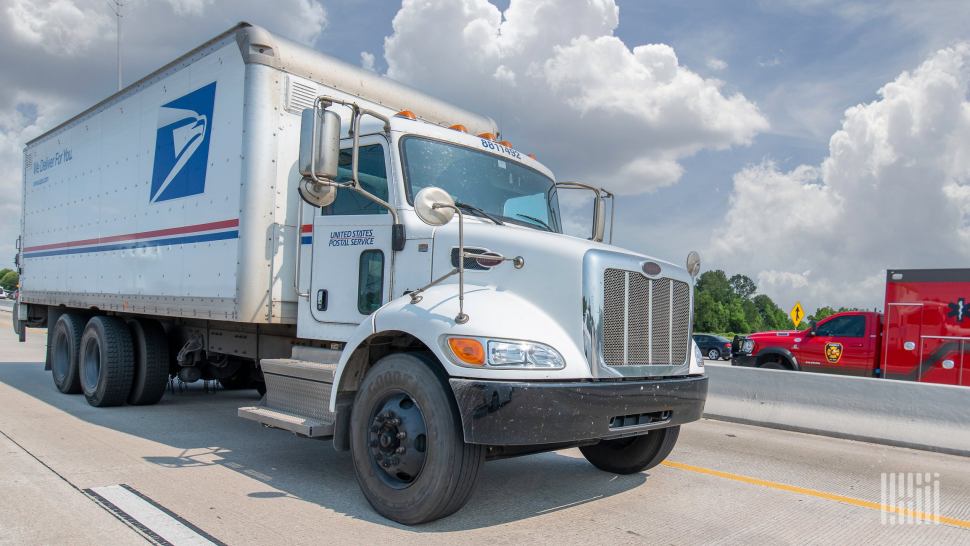
The U.S. Postal Service on Thursday reported that revenue in its fiscal 2023 first quarter, which included the holiday season, rose 1% over year-earlier levels to $21.5 billion, while total volumes declined 4.8% to 1.7 billion pieces.
Shipping and packages revenue rose 2.4% to $8.8 billion, up from $8.637 billion in the year-earlier period. Shipping and package volume fell 3.5%, or 70 million pieces, compared with the same period a year ago.
The falloff reflects a continued drop in e-commerce activity that had swelled during the pandemic, the Postal Service said. However, volumes remain above pre-pandemic levels, according to the quasi-governmental agency.
The Postal Service reported a $1 billion net loss in the quarter, a $519 million reduction from the same period in fiscal 2022.
Like all businesses, the Postal Service is feeling the effects of rising cost inflation. CFO Joe Corbett said rising costs have slowed its efforts to reach break-even in 2023. Still, a 5.3% increase in controllable expenses in January was an improvement over December 2022 levels, Corbett said.
Transportation and other expenses increased 5.8% due to higher fuel prices across-the-board as well as rising rental costs, the Postal Service said.
In a statement, Postmaster General Louis DeJoy said the agency is working to modernize its fleet and facilities as part of its 10-year “Delivering for America” plan. However, the agency remains hamstrung by a slow-moving bureaucracy as well as higher inflation and post-pandemic “economic realignment” issues, DeJoy said.
Brokerage Compliance Symposium
The day before F3. Every compliance issue you face - fraud exposure, carrier liability, FMCSA rules, cargo theft, insurance gaps - navigated by attorneys and operators defining best practices in a changing industry.
F3 Awards Dinner
The night before F3. FreightTech100 companies honored. FreightTech 25 and Shipper of Choice winners revealed live. Cocktail reception into dinner and live music - 300 industry leaders in one purpose-built room.
F3: Future of Freight Festival
Industry-defining keynotes, rapid-fire technology demos, and industry leaders networking in experiences across Chattanooga - plus the inaugural F3 Awards Dinner featuring the FreightTech and Shipper of Choice reveals.
The day before F3. Every compliance issue you face - fraud exposure, carrier liability, FMCSA rules, cargo theft, insurance gaps - navigated by attorneys and operators defining best practices in a changing industry.
The Signal at Chattanooga Choo Choo • Chattanooga, TN Register NowThe night before F3. FreightTech100 companies honored. FreightTech 25 and Shipper of Choice winners revealed live. Cocktail reception into dinner and live music - 300 industry leaders in one purpose-built room.
The Signal at Chattanooga Choo Choo • Chattanooga, TN Register NowIndustry-defining keynotes, rapid-fire technology demos, and industry leaders networking in experiences across Chattanooga - plus the inaugural F3 Awards Dinner featuring the FreightTech and Shipper of Choice reveals.
The Signal at Chattanooga Choo Choo • Chattanooga, TN Register Now