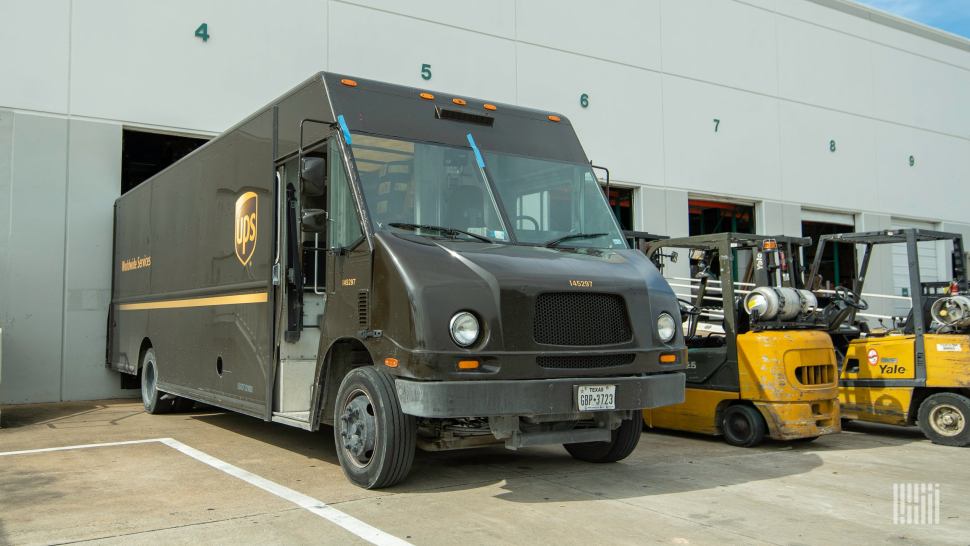
The U.S. Supreme Court on Monday let stand a lower court ruling that denied a UPS Inc. driver’s request to force the company to allow him to operate a smaller delivery vehicle with a softer suspension due to back, hip and buttocks injuries sustained while driving a larger, heavier vehicle.
The justices declined to review an appeal of a 4th U.S. Circuit Court of Appeals decision earlier this year that found that Jay Hannah’s request to keep driving his designated route with a smaller truck or a van wasn’t a reasonable accommodation under the Americans with Disabilities Act (ADA). Hannah, a West Virginia-based driver, said the larger vehicle he was driving had a stiff suspension that’s harsher on his hip, back and buttocks.
UPS instead argued that allowing Hannah to use a smaller vehicle such as a van or a light truck would violate the collective bargaining agreement between UPS (NYSE: UPS) and the Teamsters union by requiring other drivers to operate more than 9.5 hours a day. The company also maintained that putting Hannah in a smaller vehicle would require him to make more trips and would be unsafe and non cost-effective.
According to the petition before the justices, Hannah said he wasn’t sure if he could fit all his packages in a smaller vehicle because he never had the chance to try it out.
The main question before the justices was whether an employer’s decision not to modify the equipment used by a union employee considered enough evidence to find that the employer can’t offer a reasonable accommodation to the employee. The corollary question was whether an employer’s selection of the equipment used to perform a job precludes a court from considering whether the modification of the equipment would still allow a union employment to perform his or her job’s essential functions under the parameters of the ADA.
The high court’s action was first reported on Bloomberg Law. Hannah’s attorney declined to comment.
Brokerage Compliance Symposium
The day before F3. Every compliance issue you face - fraud exposure, carrier liability, FMCSA rules, cargo theft, insurance gaps - navigated by attorneys and operators defining best practices in a changing industry.
F3 Awards Dinner
The night before F3. FreightTech100 companies honored. FreightTech 25 and Shipper of Choice winners revealed live. Cocktail reception into dinner and live music - 300 industry leaders in one purpose-built room.
F3: Future of Freight Festival
Industry-defining keynotes, rapid-fire technology demos, and industry leaders networking in experiences across Chattanooga - plus the inaugural F3 Awards Dinner featuring the FreightTech and Shipper of Choice reveals.
The day before F3. Every compliance issue you face - fraud exposure, carrier liability, FMCSA rules, cargo theft, insurance gaps - navigated by attorneys and operators defining best practices in a changing industry.
The Signal at Chattanooga Choo Choo • Chattanooga, TN Register NowThe night before F3. FreightTech100 companies honored. FreightTech 25 and Shipper of Choice winners revealed live. Cocktail reception into dinner and live music - 300 industry leaders in one purpose-built room.
The Signal at Chattanooga Choo Choo • Chattanooga, TN Register NowIndustry-defining keynotes, rapid-fire technology demos, and industry leaders networking in experiences across Chattanooga - plus the inaugural F3 Awards Dinner featuring the FreightTech and Shipper of Choice reveals.
The Signal at Chattanooga Choo Choo • Chattanooga, TN Register Now