CSX plans extra training after deaths of 2 conductor trainees
After two recent deaths of conductor trainees, CSX is recalling about 350 people to their home terminals for additional training.
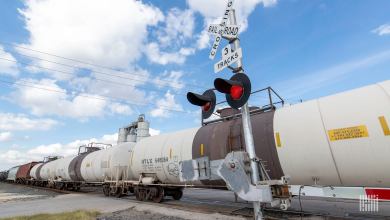
The Federal Railroad Administration and the Occupational Safety and Health Administration separately released reports Wednesday on how Norfolk Southern can improve rail safety.
A policy think tank is urging lawmakers and regulators to carefully examine what economic and environmental outcomes could occur if the federal government decides to regulate the length of freight trains.
The National Transportation Safety Board says more frequent track inspections could have helped prevent a fatal September 2021 Amtrak derailment that was caused by “poor track conditions.”
The Federal Railroad Administration wants more data on train lengths so that the agency can better assess what impact, if any, longer trains might have on operations.
The Competitive Enterprise Institute, the Rio Grande Foundation and others are urging senators to leave some items out of the rail safety bill before Congress.
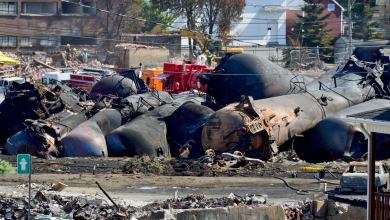
The rail industry has taken steps to prevent another Lac-Mégantic derailment, but more needs to be done, said the chair of the Transportation Safety Board of Canada.
Research and development initiatives in the freight rail industry should turn their focus on integrating systems that are typically siloed in railroad operations, sources tell FreightWaves.
“There are qualified mechanical inspectors at all these points, and they were not allowed to inspect this car at any of those locations,” Jason Cox, of the Transportation Communications Union, testified at a National Transportation Safety Board hearing Friday.
The National Transportation Safety Board is holding a field hearing in East Palestine, Ohio, to garner more information on why the Feb. 3 derailment of a Norfolk Southern train happened.
The heads of the International Association of Machinists and Aerospace Workers and the International Brotherhood of Electrical Workers want swift action on the rail safety bill that passed the Senate Commerce Committee last month.
Three groups representing state and local governments have asked Senate leaders to move forward with debate on the rail safety bill.
CPKC seeks to extend or make permanent a waiver that allows the railway to dispatch trains for three locations at its Calgary office.
The Federal Railroad Administration is planning to expand its assessment of safety culture to include all of the Class I railroads, the agency’s head said recently.
A federal court in Canada sided with union members and determined that Canadian Pacific had failed to adequately limit the number of hours that train crews worked in a number of instances in 2018 and 2019.
How industry stakeholders are responding to efforts to legislate rail safety reforms was one of the themes percolating at the recent North American Rail Shippers annual conference.
Two regulations proposed by the Federal Railroad Administration call for freight railroads to create programs to certify train dispatchers and signal employees.
NS employees received a letter signed by President and CEO Alan Shaw and the presidents of 12 unions pledging collaboration to improve rail safety.
The Transportation Trades Department of the AFL-CIO wants Congress to pass a rail safety bill that addresses train crew sizes, train lengths and inspection times.
The Senate Commerce Committee passed the Railway Safety Act, sending the bill to the Senate floor for a vote. But will it have smooth sailing?